LightBlog

mercredi 21 septembre 2022

The canceled LG Rollable shows up in another hands-on video, and it looks fantastic

Before LG pulled out of the smartphone market, the company was working on a unique rollable smartphone. It first teased the device during the LG Wing launch event in September 2020 and then showcased a working prototype at CES 2021. While the company officially confirmed that the LG Rollable would make it to the market in 2021, we all know how that turned out.

Although the LG Rollable never made it to the market, we’ve already seen it out in the wild. That’s probably because the company allegedly sold the device to its employees. Earlier this year, the phone appeared in a short hands-on video showcasing its rollable display mechanism. Now, a South Korean YouTube channel has published an in-depth video giving us our best look at LG’s canceled rollable so far.

The video starts by showcasing the unique retail packaging for the LG Rollable, which slides open like the device’s display. On the inside, you get the device, some paperwork, a charging brick, and a USB cable.

LG Rollable smartphone retail packaging on gray table.

Credit: BullsLab

We then get to see the device in all its glory and learn all about its hardware specifications. According to the video, the LG Rollable packs Qualcomm’s Snapdragon 888 SoC, 12GB RAM, 256GB storage, and a 4,500mAh battery. The device features a 6.8-inch flexible POLED display on the front that expands into a larger 7.4-inch screen.

LG Rollable in hand on gray background

Credit: BullsLab

On the back, the LG Rollable features a dual camera setup consisting of a 64MP primary camera with OIS and a 12MP ultra-wide angle camera. It also sports a circular fingerprint scanner right underneath the rear-facing camera modules.

LG Rollable in hand with close up on volume rocker and power button

Credit: BullsLab

Interestingly, the LG Rollable doesn’t feature a traditional power button or volume rocker. Instead, the device features touch-sensitive controls on the left edge to help users turn on the display and adjust the volume.

The video then goes on to showcase the LG Rollable’s display, which you can expand and contract seamlessly with a two-finger swipe gesture. As the phone transitions, its UI automatically adjusts to the changing form factor. The UI transition looks quite smooth, even in apps like YouTube.

LG Rollable in hand with display extended and Youtube open on screen

Credit: BullsLab

While having a rollable display means that the phone doesn’t have a crease like Samsung’s foldables, the rollable part of the display does seem to have a few wrinkles. In addition, the rollable section is not as structurally sound as the rest of the display, and it easily flexes when pressed. While LG could’ve addressed that in subsequent releases, the company will not be releasing a new smartphone anytime soon.

Other OEMs are, however, working on similar smartphones, and you can expect to get your hands on a device with a rollable display in the future. Until then, check out the full video to see the canceled LG Rollable.

The post The canceled LG Rollable shows up in another hands-on video, and it looks fantastic appeared first on XDA.


from XDA https://ift.tt/a6ES8TI
via IFTTT

The canceled LG Rollable shows up in another hands-on video, and it looks fantastic

Before LG pulled out of the smartphone market, the company was working on a unique rollable smartphone. It first teased the device during the LG Wing launch event in September 2020 and then showcased a working prototype at CES 2021. While the company officially confirmed that the LG Rollable would make it to the market in 2021, we all know how that turned out.

Although the LG Rollable never made it to the market, we’ve already seen it out in the wild. That’s probably because the company allegedly sold the device to its employees. Earlier this year, the phone appeared in a short hands-on video showcasing its rollable display mechanism. Now, a South Korean YouTube channel has published an in-depth video giving us our best look at LG’s canceled rollable so far.

The video starts by showcasing the unique retail packaging for the LG Rollable, which slides open like the device’s display. On the inside, you get the device, some paperwork, a charging brick, and a USB cable.

LG Rollable smartphone retail packaging on gray table.

Credit: BullsLab

We then get to see the device in all its glory and learn all about its hardware specifications. According to the video, the LG Rollable packs Qualcomm’s Snapdragon 888 SoC, 12GB RAM, 256GB storage, and a 4,500mAh battery. The device features a 6.8-inch flexible POLED display on the front that expands into a larger 7.4-inch screen.

LG Rollable in hand on gray background

Credit: BullsLab

On the back, the LG Rollable features a dual camera setup consisting of a 64MP primary camera with OIS and a 12MP ultra-wide angle camera. It also sports a circular fingerprint scanner right underneath the rear-facing camera modules.

LG Rollable in hand with close up on volume rocker and power button

Credit: BullsLab

Interestingly, the LG Rollable doesn’t feature a traditional power button or volume rocker. Instead, the device features touch-sensitive controls on the left edge to help users turn on the display and adjust the volume.

The video then goes on to showcase the LG Rollable’s display, which you can expand and contract seamlessly with a two-finger swipe gesture. As the phone transitions, its UI automatically adjusts to the changing form factor. The UI transition looks quite smooth, even in apps like YouTube.

LG Rollable in hand with display extended and Youtube open on screen

Credit: BullsLab

While having a rollable display means that the phone doesn’t have a crease like Samsung’s foldables, the rollable part of the display does seem to have a few wrinkles. In addition, the rollable section is not as structurally sound as the rest of the display, and it easily flexes when pressed. While LG could’ve addressed that in subsequent releases, the company will not be releasing a new smartphone anytime soon.

Other OEMs are, however, working on similar smartphones, and you can expect to get your hands on a device with a rollable display in the future. Until then, check out the full video to see the canceled LG Rollable.

The post The canceled LG Rollable shows up in another hands-on video, and it looks fantastic appeared first on XDA.


from XDA https://ift.tt/QJI762R
via IFTTT

Google app gets new option to help users request removal of Search results with personal information

Google has offered users an option to request the removal of personally identifiable information (PII) from Search for quite a while. Ahead of this year’s I/O developer conference, the company announced some changes to its policy that allowed users to request the removal of more PII, like personal contact information and confidential log-in credentials, from Search. Following the announcement, Google showcased a new tool to streamline the process of removing Search results with PII. This tool is now finally showing up for some users in the Google app on Android devices.

The tool is part of a new Results about you menu item that you can access by tapping your profile photo in the Google app. As shown in the attached screenshots (via 9to5Google), tapping on this option opens a new page that explains how you can request the removal of Search results with PII.

Results about you section in the Google app on Android Results about you walkthrough screenshot Results about you walkthrough screenshot

If you find a result that shows your personal contact info, you can tap the three-dot menu icon next to it to open the About this result menu. In it, you’ll find a new Remove result option that will guide you “through sending a request to have the result removed from Search.”

Once you submit your request, you can monitor its progress in the new Results about you section in the Google app. If you have multiple submissions, you can narrow down the results using the All requests, In progress, and Approved filters. Furthermore, the page has an option to make a new removal request with a walkthrough that includes an additional “Why would you like to remove this result?” step with the following options:

  • It shows my personal contact info
  • It shows my contact info with an intent to harm me
  • It shows other personal info
  • It contains illegal info
  • It’s outdated

Currently, the new Results about you section in the Google app on Android is available in beta for a small number of users in the U.S. and Europe. It is not available on any of our devices, but we expect Google to roll it out widely in the coming days.

Have you received the new Results about you section in the Google app on your Android device? Let us know in the comments section below.


Via: 9to5Google

The post Google app gets new option to help users request removal of Search results with personal information appeared first on XDA.


from XDA https://ift.tt/VscIemX
via IFTTT

mardi 20 septembre 2022

The Meta Quest v44 update brings enhanced video features for creators

A new update, v44, is rolling out to Meta Quest owners. The update will feature new advanced video settings that are meant to empower and give creators more flexibility with their content. However, the new settings won’t be available by default, and creators will need to pop into the experimental settings to enable it.

Once the new experimental settings are enabled, creators will gain access to a wide variety of features that has to do with recording footage from their VR headset. One common problem with VR footage is that it captures the user’s movements. So if the user is bobbing or shaking their head, this will also show up in video. Now, creators will be able to access an image stabilization mode that will offer different degrees of stabilization. While this is a great idea, in practice, it might not be such a good thing, as more stabilization is added, the less field of view the footage will have.

Quest v44 experimetnal menua

Furthermore, users will now also be able to choose their desired aspect ratio, shooting either 16:9 horizontal,  9:16 vertical videos, and in a 1:1 aspect ratio as well. In addition, frame rates can now be chosen, but as a warning, higher frame rates will effect app performance. Those looking to get the best quality videos from their VR sessions will be happy to know that Meta has added a way to set the compression quality for videos with different bit rates, with a higher bit rate having higher quality but an increased file size.

Meta is also introducing new parental supervision tools that will block teens from accessing developer mode. This will prevent any unauthorized apps from being installed on the Quest headset. Furthermore, the Quest will improve on the App Unlock feature that was added in the v40 update. Going forward, parents will now to be able to lock multiple apps using a single PIN. In addition, parents will also be able to lock or filter apps based on the rating categories.

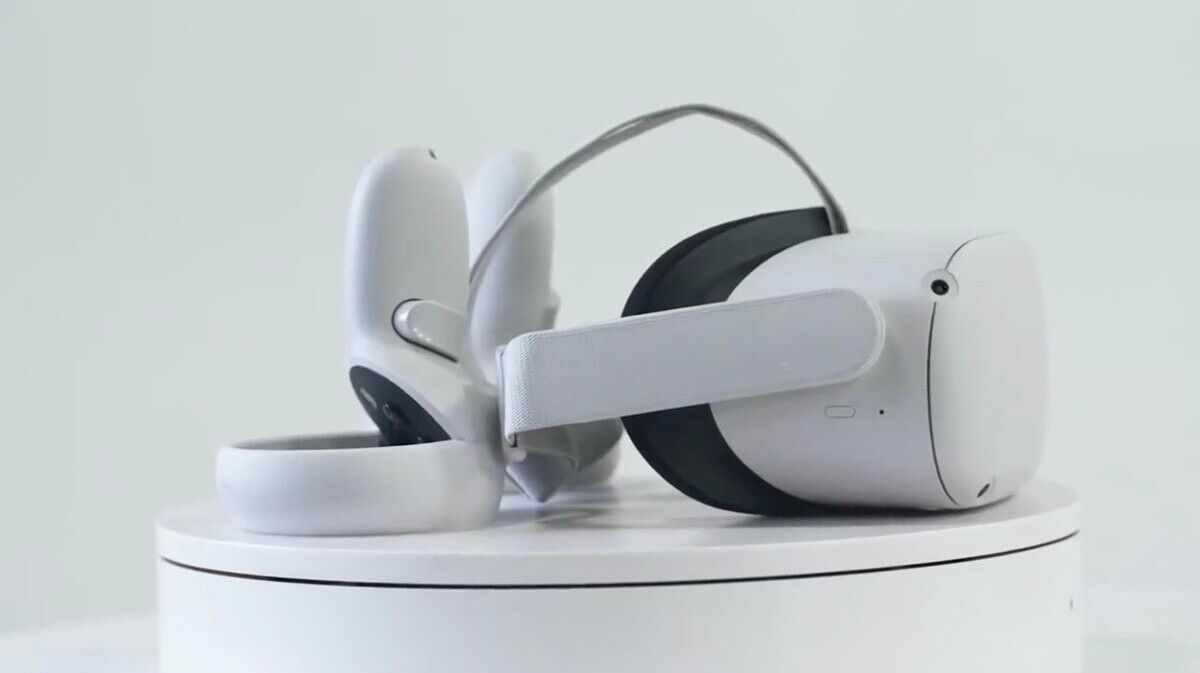
The v44 update is currently rolling out to Quest and Quest 2 headsets. If interested in experiencing VR, you can purchase the Quest 2 starting at $399.99.

    Meta Quest 2
    The Meta Quest 2 is an entry-level VR headset that can work as a stand-alone unit or connected to a PC.

Source: Oculus Blog

The post The Meta Quest v44 update brings enhanced video features for creators appeared first on XDA.


from XDA https://ift.tt/AfgsKPJ
via IFTTT

YouTube Shorts creators will soon be able to join the YouTube Partner Program

The YouTube Partner Program (YPP) has been around since 2007 and since that time, a lot has changed. Currently, YouTube offers a lot of ways to make money if you are a creator on its platform. As reported last week, the company is now introducing new ways for its Shorts creators to enter the program. Starting in 2023, Shorts creators will be able to apply for the YPP by having at least 1,000 subscribes and ten million views over 90 days. Of course, those that qualify will enjoy all of the perks of the program.

In addition, YouTube will now create a lower threshold for new creators. The new level of the YouTube Partner Program will allow creators to take advantage of features like Super Thanks, Super Chat, Super Stickers, and Channel Memberships. YouTube doesn’t seem to have all of the details fleshed out for this new program, but stated it would provide an update sometime in 2023. For those hoping to gain quick access to the YPP, YouTube states that nothing will change for its existing criteria. Unfortunately, that means that if you want to properly get into the YPP, you will still need to have 1,000 subscribers and 4,000 watch hours, which is quite a lofty goal for creators just starting out.

So what’s changing for Shorts creators that are in the YouTube Partner Program in 2023? Creators that can monetize their content will have ads that run between videos in the Shorts Feed. From these ads, creators will be paid every month and will be able to keep 45 percent of the revenue generated from ads. The ad revenue will also be used to cover the cost of music licensing. Now, you might be asking yourself, what music licensing? YouTube Shorts and long form creators will be able to use copyrighted music freely in their videos, without it impacting the content in a negative way.

Furthermore, Creator Music will be a special section within YouTube Studio that will give creators access to popular music that can be used in long form videos. The creator will have to purchase a license for the music but they will still be able to monetize their content and earn revenue from it. If the creator chooses not to purchase a license but still uses a copyrighted song, the revenue from the video will be split with the artist and the song’s rights holder. This feature is currently in beta within the United States and will expand to other regions next year. This new changes coming to YouTube should be a welcome one, as there has been an explosion of creators making short-form content on the platform in the past year.


Source: YouTube Blog 

The post YouTube Shorts creators will soon be able to join the YouTube Partner Program appeared first on XDA.


from XDA https://ift.tt/eUD498P
via IFTTT

Google Pixel 7 and Pixel 7 Pro: Everything we know about Google’s 2022 flagships

Google’s 2022 I/O Developer keynote was packed with a lot of interesting announcements, but the company couldn’t let it pass without teasing its next flagship phones — the Pixel 7 and Pixel 7 Pro. Rather than let leakers have their fun leaking, Google decided to do an official tease-release by itself, giving us an early look at its 2022 flagships. More details will come over the coming months. In the meantime, we’ve decided to gather all the currently available bits and pieces of info on the upcoming phones to help you keep up with all developments leading up to the official launch. Here’s everything you need to know about Google’s 2022 flagships — the Pixel 7 and Pixel 7 Pro.

Before we begin, it’s worth noting that we’ve included all the leaks and rumors in this post, along with the info officially out there. A lot of what you’re about to read isn’t official information unless specified otherwise.

Navigate this article:

Google Pixel 7 and Pixel 7 Pro: Price and Availability

Google has confirmed that it will be hosting a live, in-person event in New York on October 6 to officially introduce the latest Google Pixel phones and the Pixel Watch. And if the previously leaked information is something to go by, then you can expect the new phones to be available for pre-order starting on October 6, before hitting the shelves on October 13.


One thing that remains to be seen is whether or not the Pixel 7 family will make it to all markets across the globe. If the rollout is similar to the Pixel 6 series, then the 2022 flagships likely won’t make it to markets like India. We’ll have more on the availability of these phones closer to or after the final launch in a few weeks, so stay tuned. As for the price, all we have is speculation at the moment. Google delivered the current flagships at competitive prices. The Pixel 6 and Pixel 6 Pro managed to steal the limelight from the competition because of their low starting price of $599 and $899, respectively. We expect Google to stick with a similar pricing strategy with the Pixel 7 series.

Google Pixel 7 and Pixel 7 Pro: Specifications

At I/O 2022, Google announced that the new Pixel 7 and Pixel 7 Pro will pack the “next-generation” Tensor chip. It has now been confirmed that the new chip is called the ‘Google Tensor G2’ and it’s the sequel to the company’s first in-house chipset that debuted on the Pixel 6 series last year. We’re not entirely sure what this new chipset brings to the table at the moment, but Google has promised faster performance. If we were to guess, the Tensor G2 would likely bring significant performance gains, along with better imaging capabilities. Rumor has it that the new chipset might arrive with an unreleased Samsung Exynos 5300 modem.

Google Tensor G2 chip

In case you’re wondering, the original Tensor shipped with an octa-core CPU with two Cortex-X1, two Cortex-A76, and four Cortex-A55 cores, a Mali-G78 MP20 GPU, and Tensor machine learning silicon. The rumor mill suggests that the new chipset could come with an AMD GPU, just like Samsung’s latest Exynos chipset. However, there’s no official confirmation on this yet. We also expect the Pixel 7 series to be available in the same memory and storage configuration as the current flagships, but we’ll have to wait for the official launch to confirm the same.

There’s no word on the battery size for the Pixel 7 series so far, but we’d love to see some improvements in this area. As we mentioned in our review of the Pixel 6 Pro, the device couldn’t last nearly as long as we expected it to, and the battery life was just average for the most part. It’s a shame because the Pixel 5 set a very high bar in the battery department. We’ll talk about battery life and charging in the Pixel 7 series wishlist section below.

Google Pixel 7 and Pixel 7 Pro: Design

The Pixel 6 series saw a complete design overhaul, so Google has decided to go easy on the redesign for this year’s models. Looking at the official Pixel 7 series renders from the Google I/O keynote, it’s safe to say that the design is largely similar for 2022. That being said, there are some important tweaks that we think are worth pointing out. The horizontal camera visor at the back, for instance, is here to stay, but the camera array itself appears to be changing. The Pixel 7 sports two cameras inside a pill-shaped cutout, while the Pixel 7 Pro includes an additional circular cutout. We expect this to be a telephoto lens, although there’s no official word from Google on that front.

Google Pixel 7 series colors

Google Pixel 7 and Pixel 7 Pro in different colors

Notably, the glass back of the Pixel’s camera bar is also changing to metal. This particular change makes the new phones look radically different from the back, but we’re yet to see these phones in real life to confirm if that’s the case. Besides that, we’re also getting new colors this time around for the Pixel 7 series. The Pixel 7 will be available in Obsidian, Snow, and Lemongrass colorways, while the Pixel 7 Pro will come in Obsidian, Snow, and Hazel finishes.

Google only gave us a glimpse of the new Pixel 7 phones from the back, which means there’s only so much we can confirm officially. The upcoming Pixel 7 flagships will have a glossy glass back, just like the previous generation. You can also see a USB Type-C port at the bottom, a SIM tray on the left edge, and the power and volume rockers on the right edge of both devices. We don’t know anything about the durability and build quality of the phones, though it’s safe to assume that the Pixel 7 series will also come with an IP68 rating for dust and water resistance and Gorilla Glass Victus (Plus?) for protection.

Now to the part in which we discuss the design based on leaked renders. The images shared by Google during the I/O keynote largely align with the leaked renders that showed up earlier this year. Here, take a look:

Pixel 7 in white color Pixel 7 Pro leak from OnLeaks

The Google Pixel 7, as you can see, is said to sport a flat display with a centered hole-punch cutout for the selfie camera. It reportedly measures 155.6mm x 73.1mm x 8.7mm, making it slightly smaller and slimmer than the Pixel 6. That said, the phone looks indistinguishable from last year’s model. The same is the case with the Pixel 7 Pro. We’re looking at a footprint of 163 × 76.6 × 8.7 mm for the Pro model. For reference, the Pixel 6 Pro measures 163.9 × 75.9 × 8.9 mm. The slight change in dimensions could mean that Pixel 6 series cases probably won’t fit the Pixel 7 series, which is a bummer.

More recently, we got an extensive look at the Pixel 7 and the Pixel 7 Pro prototypes courtesy of Unbox Therapy on YouTube. This, obviously, wasn’t the first time we saw the Pixel 7 and the Pixel 7 Pro in the wild, but this video gave us our best look at the phones yet. Here, take a look:
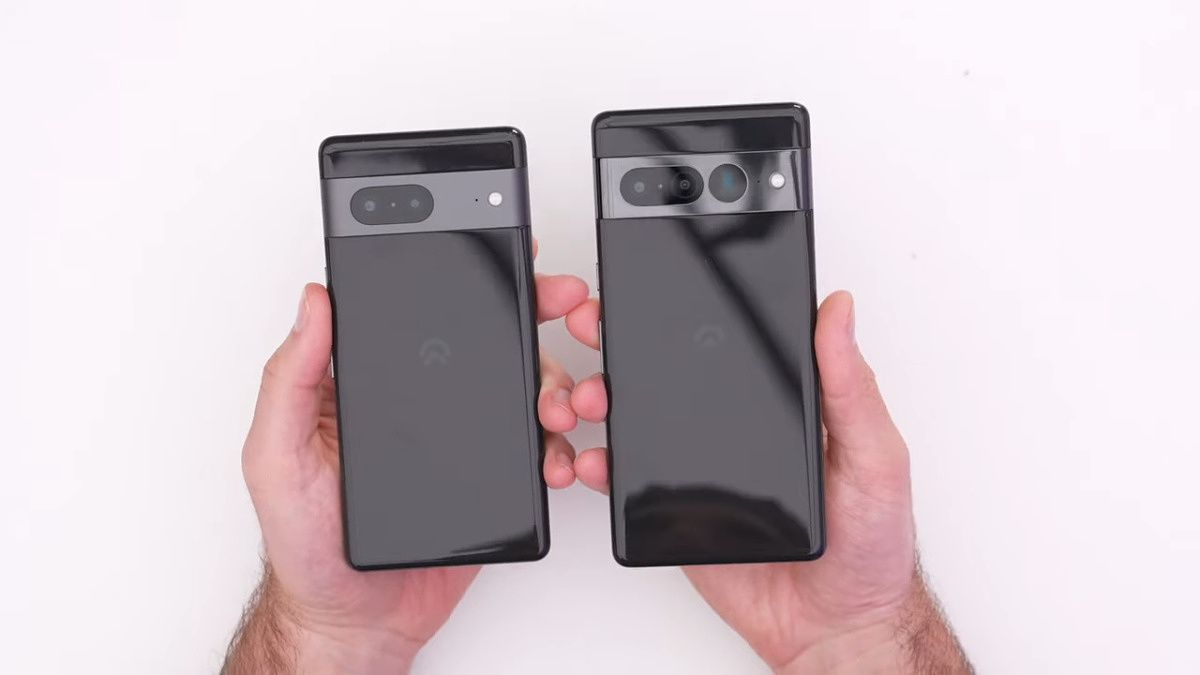
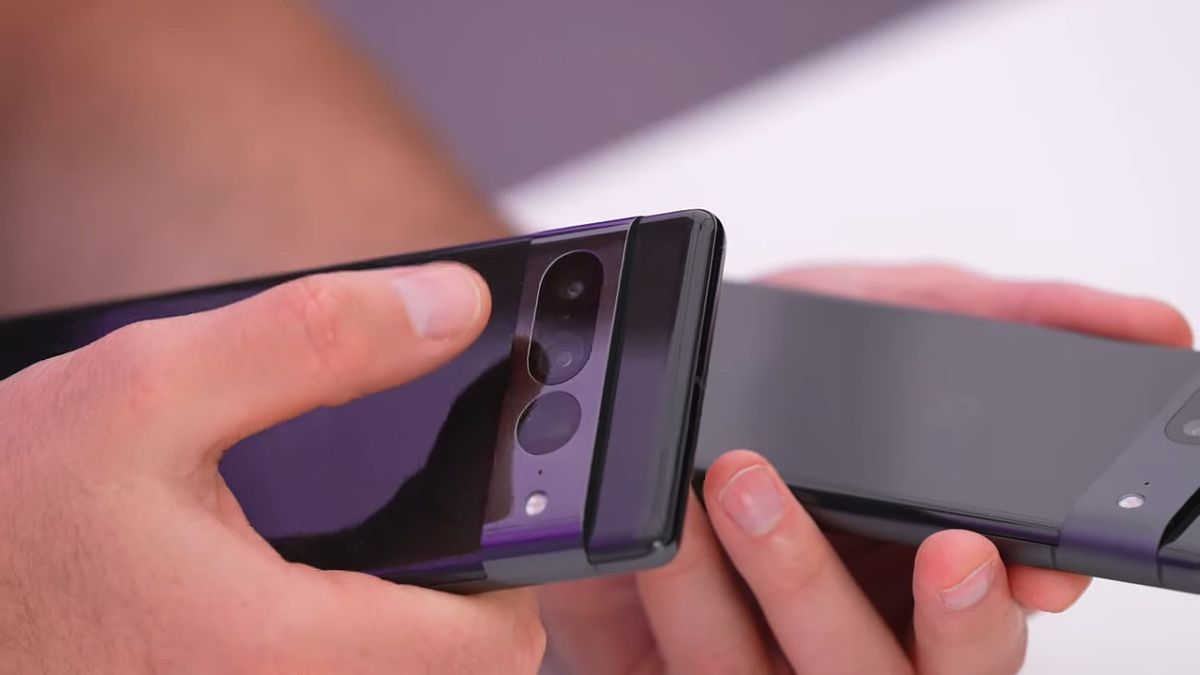
Google Pixel 7 + Pixel 7 Pro Early Hands Google Pixel 7 + Pixel 7 Pro Early Hands Google Pixel 7 + Pixel 7 Pro Early Hands

We didn’t learn anything new about Google’s new Tensor processor, but the bootloader revealed that the Pixel 7 Pro had 12GB RAM and 256GB storage while the Pixel 7 had 8GB RAM and 128GB storage. We suggest you take these figures with a pinch of salt as the final products may have entirely different configurations.

Soon after Unbox Therapy’s video, a retailer in Bangladesh also posted a short video on Facebook showcasing a working retail model of the Pixel 7 Pro. The video has now been removed for some obvious reasons, but here are some screenshots that we managed to grab while it was available:

Google Pixel 7 Pro unboxing

Google Pixel 7 and Pixel 7 Pro: Display

As you can see from the renders above, the upcoming Pixel 7 series phone will have roughly the same dimensions as Google’s current-gen flagships. We don’t have exact figures for the display sizes, but the Pixel 7’s screen is said to be between 6.2-inch and 6.4-inch, and the Pixel 7 Pro’s screen is said to be either 6.7 or 6.8-inches. DSCC’s Ross Young, a prominent industry analyst, also claimed that the Pixel 7 would have a smaller 6.3-inches panel this year.

What remains to be seen is whether or not Google will use the same fingerprint sensor as last year’s models. While software updates have resolved most of the annoyances with those sensors, it’s safe to say that they have only improved a modest amount since last year, and they’re still no match to the sensors fitted on other flagships.

Google Pixel 7 and Pixel 7 Pro: Cameras

It’s hard to argue with the fact that Google’s Pixel phones offer a great camera experience. These phones benefit from a combination of great optics and Google’s computational photography chops to deliver reliable cameras. The Pixel 6 series marks the first time in years that Google offered a new main camera sensor. The Pro variant even got a versatile triple-camera system, which you can learn more about in our Pixel 6 Pro camera review. The Pixel 6 series offered a pretty good camera experience overall, but there’s still some room for improvement.

We know that Google is retaining the dual rear camera system for the Pixel 7 and a triple rear camera setup for the Pro model, but we’re not sure if we’ll be getting new optics. According to Kuba Wojciechowski — a developer who has seemingly identified the camera hardware Google intends to use — both the Pixel 7 and the Pixel 7 Pro will use the same main and ultra-wide sensors found on the Pixel 6 series.

This means the new phones will use the same 50MP Isocell GN1 main camera sensors along with the 12MP Sony IMX381 ultrawide shooter. The Pixel 7 Pro is also said to swap the 48MP Sony IMX586 sensor in exchange for a 48MP Samsung GM1 sensor. Both phones are also expected to see the 11MP Samsung 3J1 sensor on the front for selfies and video calling. Wojciechowski uncovered these specifications while digging through the GS101 Camera Hardware Abstraction Layer (HAL) from Android 13 Beta 4. There’s obviously no way to tell if we’ll end up seeing the same camera hardware in the upcoming phones, so we suggest you keep your eyes peeled for more information.

Google Pixel 7 and Pixel 7 Pro: Our Wishlist

You may have a laundry list of not-so-good things about the Pixel 6 series, but there’s no denying that it’s the most premium line of phones Google has ever created. From a unique design to an in-house chipset and reliable cameras, there’s a lot to like about the Pixel 6 family. But as is the case with every new phone, there are a few things that might take the Pixel 7 series a step further when it debuts later this year. Here are some improvements we’d like to see on the Google Pixel 7 series:

Better fingerprint sensor

To be fair, Google has improved the fingerprint sensors on the Pixel 6 series quite a bit since its launch. But we expect more than just a tolerable experience from a Google flagship. We think Google should use better sensors on the Pixel 7 series. Almost all flagship phones out there, including the best from Samsung, OnePlus, Vivo, etc., have had reliable sensors for years now. This just seems like an oversight on Google’s part, so that’s something that absolutely needs to be fixed with the Pixel 7 series.

Better cameras

The Pixel 7 and Pixel 7 Pro will have a dual-camera and a triple camera system, respectively. We know that by looking at the official renders shared by Google. But there’s no official confirmation on whether or not the company is using the same image sensors this year. The Pixel 6 Pro, for instance, had a great main camera, but the other lenses failed to reach the same heights. And being “good enough” is unfortunately not enough in 2022 when we have smartphones like the Vivo X80 Pro on the market taking some stellar shots. But given how Google’s flagships have long been renowned for great cameras, we expect them to bounce back with the Pixel 7 series.

Faster charging

As we mentioned in our Google Pixel 6 Pro review, it takes over an hour to fully charge it. That’s a bit of a hard pill to swallow when you have several other devices on the market (often cheaper) that can charge up to 70% in around ten minutes. The Pixel 6 Pro also tends to throttle the charging speeds, which is something we hope gets fixed. Considering the new Pixel 7 phones are said to have almost the same dimensions, we doubt if Google is throwing in a bigger battery this time around. So the least we can expect from Google is faster and more reliable charging speeds.

Return of the fabric cases

If you don’t remember, Google debuted trendy fabric cases with the Pixel 2 back in 2017. They’ve changed a bit over time, but they continue to remain fan favorites. If you’ve never used one yourself, the fabric on the case is very similar to the material used on the Nest speakers. The new Pixel 6 cases are great, but they’re no match for the fabric cases with their unique and satisfying finish. Not to mention, they also came in some fun colorways. The fabric cases may not offer the best protection, but they make up for it with a unique look and a satisfying in-hand feel. Please bring them back, Google!

Bug-free software at launch

The Pixel 6 series was received well generally. But there’s no denying that the software experience included a bunch of bugs, which took a while to get ironed out. And by a while, we mean months. Google took its own sweet time to fix issues, with newer patches causing more issues, and so on. But they did fix them, although in the process, the experience from Day 1 remains soured for many. A lot of it was expected since the Pixel 6 was radically different from its predecessors, but end users are not beta testers for hardware or software. So we do expect better polish on end-user hardware.

What we hope to see from Google with the Pixel 7 series is a good, bug-free software experience from Day 1. Google is a software company, the company that exerts unmatched control over Android as a platform. And now they control a big chunk of the hardware stack too. And further, with the Pixel 6 series doing the “beta testing” for Tensor, there really remains no discernible reason for Google to serve a sub-par experience. Let’s make this a good phone to unbox and use from Day 1?


This brings us to the conclusion of our Pixel 7 wishlist. If Google somehow manages to check all the boxes in our list while keeping the price the same or at least in the same ballpark, we don’t see why the Pixel 7 family can’t make it to the top of our recommendation list this year.

We’re still months away from an official announcement for the Pixel 7 series, and we’ll continue to add more details to this page leading up to the big day. In the meantime, be sure to stop by our collection of the best Android phones, if you don’t want to wait till the fall to buy a new smartphone.

The post Google Pixel 7 and Pixel 7 Pro: Everything we know about Google’s 2022 flagships appeared first on XDA.


from XDA https://ift.tt/v3gXrLF
via IFTTT

Apple’s iPhone 14 series explained: What’s the difference between the regular, Plus, Pro, and Max versions?

Apple’s new iPhone 14 and iPhone 14 Pro have arrived. The company has once again launched the same number of iPhones this year as it did the last time and the year before that. This year’s iPhone line-up, however, is more convoluted mainly because of how Apple decided to name the new iPhones and also due to the feature disparity. If you want to buy one of the new iPhones but are wondering which one to pick, then here’s a quick explainer highlighting the key differences between the regular, Plus, Pro, and Max version.

Navigate this article:

New iPhone 14 and iPhone 14 Pro lineup: Summary of Differences

DO NOT USE YET EMBARGOED UNTIL SEPT 15 8PM ET

Apple has introduced a total of four new iPhones this year — iPhone 14, iPhone 14 Plus, iPhone 14 Pro, and the iPhone 14 Pro Max. The iPhone 14 Plus is an entirely new product that’s here instead of a “Mini” version, while the rest of the three iPhones are essentially just an upgraded version of what we already have on the market. Even out of those three phones, we think only the “Pro” models bring big and meaningful upgrades to last year’s iPhone 13 Pro handsets.

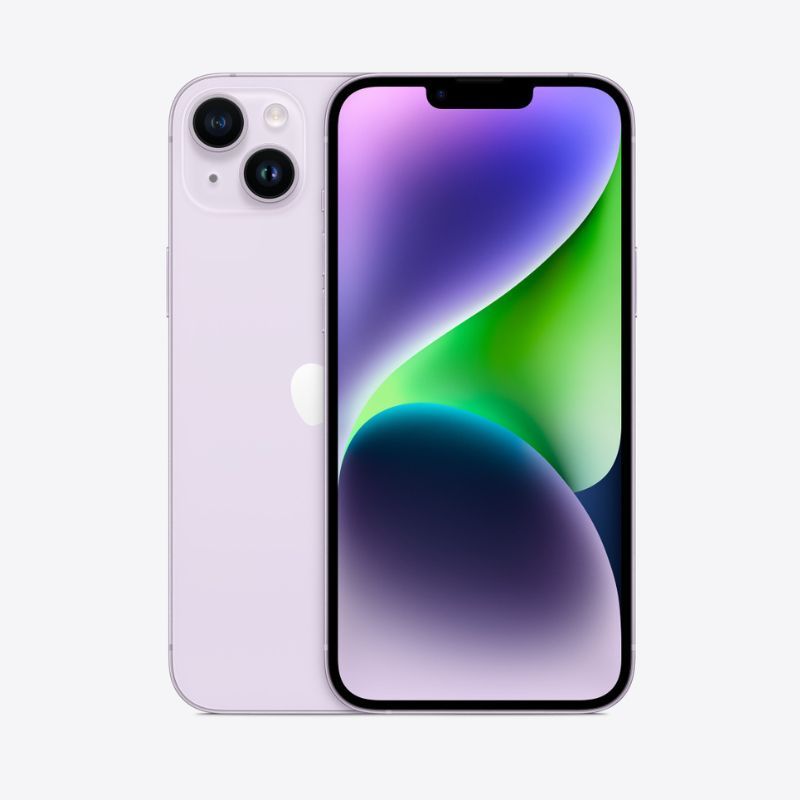
iPhone 14 in Starlight color held in hand

Apple iPhone 14 in Starlight colorway

The iPhone 14 and the iPhone 14 Plus are essentially the same phones in two different sizes. Similarly, the iPhone 14 Pro and the iPhone 14 Pro Max are both cut from the same cloth, except one is bigger than the other. There’s not a lot of difference when you go from an iPhone 14 to an iPhone 14 Plus or from an iPhone 14 Pro to an iPhone 14 Pro Max. However, the iPhone 14 to an iPhone 14 Pro is a significant leap, both in terms of features and price. Similarly, going from an iPhone 14 Plus to an iPhone 14 Pro Max will be a big leap in terms of experience even though they almost have the same physical dimensions overall.

Difference between regular and Pro series of iPhone 14:

  • Newer chip on the Pro
  • Different build materials for chassis: aluminum on regular vs stainless steel on Pro
  • Higher 120Hz refresh rate on Pro
  • Higher outdoor peak brightness on Pro
  • Always On Display on Pro
  • New notch design and related software functions on Pro
  • Higher storage options on Pro
  • Higher MP count primary camera on Pro
  • An additional third camera on Pro, handling telephoto
  • Night Portraits, ProRaw, and Macro are Pro-exclusive camera features
  • LiDAR Scanner on Pro

Difference between regular iPhone 14 and 14 Plus; and iPhone 14 Pro and 14 Pro Max:

  • Size difference for display and overall chassis: Plus and Pro Max are bigger
  • Battery size difference: Plus and Pro Max have a bigger battery and will last longer, but will also take longer to charge
    AT&T
    AT&T is selling the iPhone 14 models in various finishes and storage options. You can pay through monthly installments and get credits if you trade in an eligible phone.
    AT&T
    AT&T is selling the iPhone 14 models in various finishes and storage options. You can pay through monthly installments and get credits if you trade in an eligible phone.

Pricing and Availability

Name Starting price Availability
Apple iPhone 14 $799 September 16
Apple iPhone 14 Plus $899 October 7
Apple iPhone 14 Pro $999 September 16
Apple iPhone 14 Pro Max $1,099 September 16

The standard iPhone 14 starts at $799 in the US whereas the iPhone 14 Plus starts at $899. The regular iPhone 14 is now available to purchase while the iPhone 14 Plus model arrives later on October 7. As for the Pro models, we’re looking at a starting of $999 for the smaller variant and $1,099 for the bigger “Max” variant. Unlike the regular iPhone 14 models, both the Pro are now available to purchase.

Long story short, the new iPhone 14 Plus model won’t be available until next month, so you’ll have to pick either the standard iPhone 14 or one of the Pro models if you don’t want to wait that long to get your hands on a new iPhone. But how do they stack up against each other?


Specifications

Here’s how each new model in the iPhone 14 series stacks up against one another on paper:

Specification iPhone 14 iPhone 14 Plus iPhone 14 Pro iPhone 14 Pro Max
Build
  • Ceramic shield front
  • Glass back
  • Aluminum mid-frame
  • IP68 dust and water resistance
  • Ceramic shield front
  • Glass back
  • Aluminum mid-frame
  • IP68 dust and water resistance
  • Ceramic shield front
  • Glass back
  • Stainless steel mid-frame
  • IP68 dust and water resistance
  • Ceramic shield front
  • Glass back
  • Stainless steel mid-frame
  • IP68 dust and water resistance
Dimensions & Weight
  • 146.7 x 71.5 x 7.8mm
  • 172g
  • 160.8 x 78.1 x 7.8mm
  • 203g
  • 147.5 x 71.5 x 7.85 mm
  • 206 g
  • 160.7 x 77.6 x 7.85 mm
  • 240 g
Display
  • 6.1-inch Super Retina XDR OLED Display
  • 2532 x 1170p resolution, 460PPI
  • HDR
  • True Tone
  • Wide color (P3)
  • 2,000,000:1 contrast ratio
  • 800nits max brightness, 1200nits peak brightness
  • Fingerprint-resistant oleophobic coating
  • 6.7-inch Super Retina XDR OLED Display
  • 2778 x 1284p resolution, 458PPI
  • HDR
  • True Tone
  • Wide color (P3)
  • 2,000,000:1 contrast ratio
  • 800nits max brightness, 1200nits peak brightness
  • Fingerprint-resistant oleophobic coating
  • 6.1-inch Super Retina XDR OLED Display
  • 2556 x 1179p resolution, 460PPI
  • ProMotion technology (120Hz)
  • Always-On Display
  • Dynamic Island
  • HDR
  • True Tone
  • Wide color (P3)
  • 2,000,000:1 contrast ratio
  • 1000 nits max brightness,
  • 2000 nits peak brightness (outdoors)
  • Fingerprint-resistant oleophobic coating
  • 6.7-inch Super Retina XDR OLED Display
  • 2796 x 1290p resolution, 460PPI
  • ProMotion technology (120Hz)
  • Always-On Display
  • Dynamic Island
  • HDR
  • True Tone
  • Wide color (P3)
  • 2,000,000:1 contrast ratio
  • 1000 nits max brightness,
  • 2000 nits peak brightness (outdoors)
  • Fingerprint-resistant oleophobic coating
SoC
  • Apple A15 Bionic
  • 6-core CPU
  • 2 performance cores
  • 4 efficiency cores
  • 5-core GPU
  • 16-core Neural Engine
  • Apple A15 Bionic
  • 6-core CPU
  • 2 performance cores
  • 4 efficiency cores
  • 5-core GPU
  • 16-core Neural Engine
  • Apple A16 Bionic
  • 6-core CPU
  • 2 performance cores
  • 4 efficiency cores
  • 5-core GPU
  • 16-core Neural Engine
  • Apple A16 Bionic
  • 6-core CPU
  • 2 performance cores
  • 4 efficiency cores
  • 5-core GPU
  • 16-core Neural Engine
RAM & Storage
  • 128GB
  • 256GB
  • 512GB
  • 128GB
  • 256GB
  • 512GB
  • 128GB
  • 256GB
  • 512GB
  • 1TB
  • 128GB
  • 256GB
  • 512GB
  • 1TB
Battery & Charging
  • Battery rated for
    • up to 20 hours of video playback
    • up to 16 hours of video streaming
    • Up to 80 hours of audio playback
  • Fast-charge capable
    • Up to 50% charge in about 30 minutes with 20W adapter or higher (sold separately)
  • MagSafe and Qi wireless charging
  • Battery rated for
    • up to 26 hours of video playback
    • up to 20 hours of video streaming
    • up to 100 hours of audio playback
  • Fast-charge capable
    • Up to 50% charge in about 30 minutes with 20W adapter or higher (sold separately)
  • MagSafe and Qi wireless charging
  • Battery rated for
    • up to 23 hours of video playback
    • up to 20 hours of video streaming
    • Up to 75 hours of audio playback
  • Fast-charge capable
    • Up to 50% charge in about 30 minutes with 20W adapter or higher (sold separately)
  • MagSafe and Qi wireless charging
  • Battery rated for
    • up to 29 hours of video playback
    • up to 25 hours of video streaming
    • Up to 95 hours of audio playback
  • Fast-charge capable
    • Up to 50% charge in about 30 minutes with 20W adapter or higher (sold separately)
  • MagSafe and Qi wireless charging
Security Face ID Face ID Face ID Face ID
Rear Camera(s)
  • Primary: 12MP f/1.5, sensor-shift OIS
  • Ultra-wide: 12MP f/2.4, 120-degree FoV
  • Sapphire crystal lens cover
  • True Tone flash
  • Primary: 12MP f/1.5, sensor-shift OIS
  • Ultra-wide: 12MP f/2.4, 120-degree FoV
  • Sapphire crystal lens cover
  • True Tone flash
  • Primary: 48MP f/1.78, second-gen sensor-shift OIS
  • Ultra-wide: 12MP f/2.2, 120-degree FoV
  • Telephoto: 12MP, f/2.8, 3x optical zoom in
  • Sapphire crystal lens cover
  • True Tone flash
  • Primary: 48MP f/1.78, second-gen sensor-shift OIS
  • Ultra-wide: 12MP f/2.2, 120-degree FoV
  • Telephoto: 12MP, f/2.8, 3x optical zoom in
  • Sapphire crystal lens cover
  • True Tone flash
Front Camera(s) 12MP f/1.9, autofocus with Focus Pixels 12MP f/1.9, autofocus with Focus Pixels 12MP f/1.9, autofocus with Focus Pixels 12MP f/1.9, autofocus with Focus Pixels
Port(s) Lightning connector Lightning connector Lightning connector Lightning connector
Audio Stereo speakers Stereo speakers Stereo speakers Stereo speakers
Connectivity
  • 5G (sub-6GHz, mmWave) with 4×4 MIMO
  • 4G LTE with 4×4 MIMO and LAA
  • Wi-Fi 6 with 2×2 MIMO
  • Bluetooth 5.3
  • Ultra Wideband chip for spatial awareness
  • NFC
  • Dual eSIM support (U.S. models are not compatible with physical SIM cards)
  • 5G (sub-6GHz, mmWave) with 4×4 MIMO
  • 4G LTE with 4×4 MIMO and LAA
  • Wi-Fi 6 with 2×2 MIMO
  • Bluetooth 5.3
  • Ultra Wideband chip for spatial awareness
  • NFC
  • Dual eSIM support (U.S. models are not compatible with physical SIM cards)
  • 5G (sub-6GHz, mmWave) with 4×4 MIMO
  • 4G LTE with 4×4 MIMO and LAA
  • Wi-Fi 6 with 2×2 MIMO
  • Bluetooth 5.3
  • Ultra Wideband chip for spatial awareness
  • NFC
  • Dual eSIM support (U.S. models are not compatible with physical SIM cards)
  • 5G (sub-6GHz, mmWave) with 4×4 MIMO
  • 4G LTE with 4×4 MIMO and LAA
  • Wi-Fi 6 with 2×2 MIMO
  • Bluetooth 5.3
  • Ultra Wideband chip for spatial awareness
  • NFC
  • Dual eSIM support (U.S. models are not compatible with physical SIM cards)
Software iOS 16 iOS 16 iOS 16 iOS 16
Other Features
  • Barometer
  • High dynamic range gyro
  • High-g accelerometer
  • Proximity sensor
  • Dual ambient light sensor
  • Barometer
  • High dynamic range gyro
  • High-g accelerometer
  • Proximity sensor
  • Dual ambient light sensor
  • Barometer
  • High dynamic range gyro
  • High-g accelerometer
  • Proximity sensor
  • Dual ambient light sensor
  • Barometer
  • High dynamic range gyro
  • High-g accelerometer
  • Proximity sensor
  • Dual ambient light sensor

Regular vs the “Pro” iPhones

Looking at the specs sheet, it’s safe to say that the non-Pro iPhone 14 and the iPhone 14 Plus are pretty much identical except for the display size and the battery capacity. That’s also true in the case of the iPhone 14 Pro and the iPhone 14 Pro Max. And now that we’ve established that, it’s time to highlight how the Pro variants push the envelope with their upgrades over the regular iPhone 14 and the iPhone 14 Plus:

Notch vs Dynamic Island

  • All iPhones have a Super Retina XDR display with support for HDR.
  • The regular iPhone 14 and the iPhone 14 Plus still have a notch on the display while the Pro models have moved on with the new Dynamic Island.
  • Also, no Always-On display on the regular iPhone 14 and the iPhone 14 Plus.

The new iPhone 14 Pro and the iPhone 14 Pro Max have a pill-shaped cutout instead of a notch on top of the display. This is a big change for the new iPhones as they’re the first ones  — besides the affordable SE models — without a notch since the iPhone X debuted back in 2018. It’s called Dynamic Island and it moves around and animates to show you different UI elements.

iPhone 14 Pro Max compared to iPhone 13 Pro Max

It definitely looks better than anything we’ve seen in the Android space, you can learn more about it in our iPhone 14 Pro Max hands-on. The Dynamic Island, however, is exclusive to the Pro models, meaning the regular iPhone 14 and the iPhone 14 Plus still have a notch. In fact, Apple didn’t even reduce the size of the notch on the iPhone 14, so it’s visually identical to the iPhone 13’s notch.

In addition to Dynamic Island, the Pro models are still the only iPhones with support for ProMotion technology with adaptive refresh rates up to 120Hz. The regular iPhone 14 and the iPhone 14 Plus still top out at 60Hz. Also new to the Pro models this year is support for Always-On display. This is said to be enabled by A16 Bionic’s new display engine, which is also responsible for insanely high brightness support of up to 2,000 nits on the iPhone 14 Pro and the iPhone 14 Pro Max. The cheaper iPhone 14 models are still powered by the last year’s A15 Bionic chipset, meaning they don’t support Always-On display and they top out at 1,200 nits of peak brightness.

iPhone 14 showing the welcome screen

A15 Bionic vs A16 Bionic

  • The Pro models are now powered by Apple’s new A16 Bionic chip while the non-Pro ones are using last year’s A15 Bionic.
  • The non-Pro iPhone 14 models top out at 512GB storage whereas the Pro variants can go up to 1TB.
  • All the new iPhones are fast-charge capable with a 20W charger adapter or higher, and they all support MagSafe and Qi wireless charging too.

As expected, only the Pro models have seen a spec bump this year, meaning you’ll have to spend more money to get the best Apple silicon. The company’s new A16 Bionic brings a lot of meaningful upgrades to the table but it’s limited to the iPhone 14 Pro and the iPhone 14 Pro Max. The standard iPhone 14 and the iPhone 14 Plus, on the other hand, will use last year’s A15 Bionic. It’s still an upgrade from the iPhone 13 because new ones use the A15 Bionic with a 5-core GPU instead of the 4-core SKU.

Apple A16 Bionic chip

Apple’s A16 Bionic may not bring any significant upgrades to the overall performance, but it adds things like the display engine for a significantly better experience. Not to mention, it’s also significantly more power-efficient so you can expect to see better battery life on the Pro models this year.

Another obvious difference is on the storage front. The non-Pro iPhones start at 128GB and top out at 512GB storage for the top-of-the-line variant, whereas the new iPhone 14 Pro models can be purchased with up to 1TB of storage. Do keep in mind that you’ll have to pick up at least the 256GB variant of the Pro variants to take advantage of features like ProRes video recording at 4K-30fps.

Apple hasn’t shared the official battery specs, but it’s safe to say that both the bigger iPhones will have significantly better battery life than the smaller ones. All the iPhones are fast-charge capable with a 20W adapter or higher and they also support MagSafe and Qi wireless charging.

Pro camera vs Advanced dual-camera system

  • Only the Pro variants have received camera upgrades this year. The standard iPhone 14 models still use the same dual-camera system as iPhone 13.
  • All the new iPhones will benefit from features like Photonic Engine and Action Mode, but only the Pro models get a 48MP wide sensor.

It is safe to say that the Pro models have received all the camera upgrades this year as the standard iPhone 14 and the iPhone 14 Plus use the same dual-camera system from last year’s regular iPhone 13. The cameras are one of the biggest draws for the Pro models, so you’ll have to decide whether you want the absolute best of what Apple has to offer or stick with a basic, yet reliable camera system.

For the first time ever, the iPhone is moving away from a 12MP sensor to a 48MP one. This is expected to be a big leap for “professional” users who take photography and videography rather seriously. You can expect to see some major improvements in low-light photography thanks to the new photonic engine. You can also expect to see some minor improvements in the shots captured using the ultra-wide and telephoto lens compared to last year’s iPhone 13 Pro models. The real show-stopper, however, is that 48MP sensor, which is exclusive to the Pro models.

Here are some samples captured using the iPhone 14 Pro Max:

The non-Pro iPhones also benefit from the new Photonic Engine, but they continue to have a dual-camera setup with 12MP main and ultra-wide sensors. We don’t have any samples to compare right now, but we think the photos captured using the iPhone 14 and the iPhone 14 Plus will look pretty much the same as the ones taken on, say, the iPhone 13 for daytime shots. Improvements, if any, are likely to be for lower-light photography.

iPhone 14 action mode

On the video front, you’ll have to once again pick up the Pro models for ProRes and Macro video recording. The Pro models also support 3x optical zoom-in, something which is missing on the standard iPhones. All the new iPhones have a 12MP selfie shooter on the front, but once again only the Pro iPhones support ProRes video recording using the selfie camera, not the regular ones.


Closing Thoughts

Besides the obvious size differences, it’s very easy to say that the Pro models bring significantly better features to the table compared to the standard iPhones this year. Not only do you get a very unique camera cutout on the top, but you also get a better screen overall with support for a higher refresh rate, and higher peak brightness. You also get a better chipset inside the Pro models instead of just a storage bump on the top end. Lastly, the biggest difference between the Pro and the regular iPhone 14 models has to be the camera. The Pro gives you a new 48MP wide sensor which is said to be up to 65-percent larger.

If you care about these advanced “Pro” features then it might be worth spending more money to get the Pro models this year for you. But if you’re not chasing cutting-edge technology and just want an iPhone that can last you for a few years then you’ll find plenty of value in the regular iPhone 14 too. The differences between the smaller and the “Plus” or “Max” variants, as we mentioned earlier, are only limited to the screen and the battery size. You don’t get a SIM card tray on either of these phones, so keep that in mind. It essentially comes down to a personal preference, so we’ll leave it up to you to decide which size works best for you.

    Apple iPhone 14 Pro
    Apple's new Pro models this year really push the envelope with their upgrades in display and camera department.
    Apple iPhone 14
    The non-Pro iPhone models this year offer incremental upgrades over the last year iPhone 13.

If none of the new iPhones have managed to catch your fancy, then you can also consider buying the iPhone 13 or the iPhone 13 Mini, both of which are still available to purchase at a cheaper price now. We’ve highlighted some of the best iPhone 14 deals as well, but there’s no denying that the older iPhones, especially the iPhone 13, still offer a lot of bang for your buck.

The post Apple’s iPhone 14 series explained: What’s the difference between the regular, Plus, Pro, and Max versions? appeared first on XDA.


from XDA https://ift.tt/H7YQMej
via IFTTT