
LightBlog

lundi 29 août 2022

These are the Best Google Pixel Phones to buy in 2022

Google Pixel phones are often ranked close to the “god tier” of best Android devices, often earning praise from reviewers and users alike. After all, Google makes Android, so a phone made by Google running Android should be the perfect Android phone, right? Well, some people would definitely agree. While Pixels have slowly made their way to the mainstream, there’s still a lot of improvement needed to get there. While that happens though, they still have their charm. It’s not a coincidence they consistently become fan favorites and they’re often considered among the best smartphones. You can’t truly experience Pixel phones without trying one out, though. So if you’re interested in getting a Google Pixel phone, we’ve compiled a list of some of the best Pixel phones you can currently get.

From flagship devices like the Pixel 6 Pro to cheaper ones like the Pixel 5a (5G), Google’s lineup has gotten extensive enough to warrant making a list.

Navigate this guide:

Best Overall: Google Pixel 6 Pro

Google Pixel 6 Pro back with shadow

If money is no object, the Pixel 6 Pro is the best Google phone you can buy right now. It showcases the best smartphone hardware Google has on offer, including a gorgeous display and versatile camera system. It was launched in October alongside the standard Pixel 6. While the Pixel 6 Pro shares the same general design and chipset with the standard model, it differs in a few key areas. The most striking difference and immediately noticeable difference is the display. The Pixel 6 Pro has a large 6.7-inch OLED display with QHD+ resolution and up to 120Hz refresh rate. QHD+ resolution means everything on the display, including photos, videos, graphics, etc., look crisp. The panel is curved on its edges, similar to the Galaxy S22 Ultra, offering a more immersive viewing experience. Peak brightness is sufficient for using the phone under direct sunlight, and you also get support for HDR10 and HDR10+ content on Netflix and other streaming platforms. Since it’s an LTPO display, you also get support for an adaptive refresh rate, meaning the display can automatically adjust the refresh rate between 10Hz to 120Hz based on content and screen interaction. Both the front and back are protected by Corning’s Gorilla Glass Victus.

The Pixel 6 Pro also gets a more versatile camera package. In addition to the same 50MP main camera and a 12MP ultra-wide shooter as the standard Pixel 6, the Pro model has an additional 48MP telephoto lens that lets you take better zoom shots without sacrificing details.

Powering the Google Pixel 6 Pro is Tensor, Google’s first in-house SoC. It’s not as fast as Qualcomm’s Snapdragon 8 Gen 1, but you’re unlikely to notice any slowdowns or stutters in day-to-day activity no matter what you throw at it. The only thing about the Pixel 6 Pro’s performance that’s not so Pro is gaming. The phone heats quite a bit and throttles when put under a heavy load for a prolonged period.

The Pixel 6 Pro delivers average battery life, and its 30W fast charging is nothing to write home about when the competition is offering up to 150W speeds. But if you’re not a heavy user, you can still expect the phone to provide a full day battery life. Wireless charging support is also on board, and the phone also lets you reverse wireless charge your smartwatch or earphones at up to 5W speed.

As for software, Google has promised three years of Android version updates and five years of security patches on the Pixel 6 Pro. It comes with the latest Android 12 out of the box with all the Material You goodness. If you’re looking for a flagship Pixel with excellent cameras, this is the one to get.

    Google Pixel 6 Pro
    The Pixel 6 Pro is the larger sibling that comes with Google's new Tensor chip, a modern design, and an extra telephoto camera.

Best for most people: Google Pixel 6

Pixel 6 performance

For those who do not care about the curved display and telephoto camera, the standard Pixel 6 would be a better choice. The Pixel 6 is the most balanced phone in the company’s lineup, offering a great hardware package without any obvious shortcomings and for a much lower price than the Pixel 6 Pro. The Pixel 6 follows the same design language as the Pro model, packing a two-tone back and a striking camera visor that spans the phone’s width.

You get a nice 6.4-inch OLED display with FHD+ resolution and a 90Hz refresh rate. The panel doesn’t get as bright as the Pixel 6 Pro, nor does it support LTPO tech for dynamic refresh rate. But the small screen size and 1080p resolution mean the Pixel 6’s display isn’t a battery hog similar to the QHD+ panel of the Pixel 6 Pro. With a maximum brightness of 500 nits, the screen isn’t all that bright, but it’s sufficient for outdoor use.

In the performance department, you have nothing to worry about. The Pixel 6 performs similarly to the Pro model in day-to-day tasks as it’s powered by the same Tensor Soc. However, it may not be able to hold as many apps as the Pixel 6 Pro due to the lower amount of RAM. Still, 8GB of RAM is more than enough for most people and is unlikely to affect the general performance.

You get two excellent cameras on the back: a 50MP primary shooter and a 12MP ultra-wide shooter. The phone misses out on a dedicated zoom lens. As always, Google has nailed the performance, and thanks to the newer primary camera, the Pixel 6 brings massive improvements to low-light performance. You’ll be hard-pressed to find a phone that delivers camera performance as good as the Pixel 6 in this price range. As it stands, the Pixel 6 is the best camera phone in this price range.

The camera on the front isn’t as wide as the one on the Pro and also drops the resolution to 8MP. Other than that, there’s not a lot you’re missing out on with the standard Pixel 6. The Pixel 6 is also slightly smaller than the Pixel 6 Pro, which a few people may prefer. You get the same sort of software support on the Pixel 6 too. The battery is slightly smaller at 4600mAh, but the smaller screen and lower refresh rate mean that the battery life is going to be as good as the Pro, if not better. For $300 lesser than the Pro, the Pixel 6 is a great value offering and should be the phone most people should get if you want the best value flagship.

    Google Pixel 6
    The Pixel 6 comes with Google's new Tensor chip, a modern design, and flagship cameras.

Best affordable: Google Pixel 6a

Google Pixel 6a in hand with blurred background.

If you don’t need all the bells and whistles that come with the Google Pixel 6, you will do just fine with the Pixel 6a. The Pixel 6a is a repetition of a successful formula. Like previous Pixel A series phones, the new model brings the best features of the flagship Pixels down to a more accessible price point while dropping some premium features in the process. The compromises come in the form of fewer premium materials, a downgraded display, and older camera hardware. Rather than Gorilla Glass Victus on the front, you get Gorilla Glass 3, and instead of a glass back, you get a plastic one.

The Pixel 6a sports a 6.1-inch OLED display with FHD+ resolution. It’s a shame the panel doesn’t offer a higher refresh rate, topping out at 60Hz. There’s a hope the Android tinkering community might be able to surpass this limitation and unlock the 90Hz refresh rate. But the fact that Google didn’t ship a higher refresh rate panel on a 2022 mid-range phone is definitely disappointing and puts the phone at a disadvantage. But on the bright side, the display is sunlight legible and offers vibrant colors and deep blacks you expect from an OLED panel.

The most exciting thing about the Pixel 6a is that it uses the same flagship Tensor SoC as the Pixel 6 and Pixel 6 Pro. However, before you get too excited, note that the phone doesn’t perform as well as the top models. This is due to the fact that the Pixel 6a only packs 6GB of RAM and lacks the smoothness of a higher refresh rate panel. For what it’s worth, the Pixel 6a performs respectably in day-to-day use. Unless you’re a power user, you’ll be perfectly content with the overall performance.

The camera situation is a bit tricky. Instead of borrowing the new camera hardware from the Pixel 6 series, the latest affordable Pixel packs the same old camera modules that have appeared on all previous Pixel A series phones. Despite older cameras, the Pixel 6a produces the same high-quality photos we’ve come to expect from the Pixel line, thanks to Tensor’s new image signal processor and Google’s machine-learning magic.

The Pixel 6a packs a 4,410mAh battery, slightly smaller than the Pixel 6’s 4,614mAh cell. But the smaller screen and a lower refresh rate mean you won’t be reaching for the charger in the middle of the day. And speaking of the charger, you don’t get one inside the box. You’ll have to use your existing one or choose from the best Pixel 6a chargers.

For $449, the Pixel 6a packs a lot of value, offering a delightful mix of fantastic camera performance and a thoughtful software experience. The three-year Android OS support is the icing on the cake.

    Google Pixel 6a
    The Pixel 6a is a great mid-range smartphone, packing powerful cameras and Google's in-house Tensor chipset.

Best Older: Google Pixel 5a (5G)

Google Pixel 5a on wooden deck

If you’re tight on budget and don’t mind older hardware, the Pixel 5a is a solid option. Except for its boring and rather unassuming design, the Pixel 5a is a well-rounded offering. It has got the same amazing cameras as the Pixel 6a, a sleek body that feels great in hand, and stellar battery life.

It was launched in August 2021 for around $450, but you can often find it on sale for $400 or less. You’d also find a bunch of these on the second-hand phone market, which is why the Pixel 5a makes its way onto our list. It’s a nice no-nonsense smartphone that will give you a good entry into the Google Assistant and Google Pixel ecosystems.  It only comes in one color: Mostly Black. In case it wasn’t clear, the Pixel 5a is closer to the Pixel 5 than it is to the Pixel 4a.

The phone is powered by Qualcomm’s Snapdragon 765G SoC, which is not as fast as the Tensor chipset in the Pixel 6a but is still a capable driver as far as day-to-day performance is concerned. The camera performance is the main highlight of the Pixel 5a’s hardware package. You get a 12MP main shooter and 16MP ultra-wide camera, both of which deliver excellent results in most lighting conditions. While the Pixel 6a and Pixel 5a use the same main camera, the Pixel 6a features Tensor’s new image signal processor, giving it an edge in image processing.

The battery is an area where the Pixel 5a excels. Its 4,680mAh will easily get you through a full day of heavy usage. Remember that the Pixel 5a launched with Android 11 out of the box, and Google generally only provides three major Android OS updates to Pixel phones. That means the Pixel 5a likely won’t receive OS updates after Android 14. If you’re planning to use your phone for longer than that, we would recommend picking up the Pixel 6a instead.

That said, the Pixel 5a is one of the best Pixel phones to get if you’re looking into something to get into the Google ecosystem, don’t want to break the bank, and still want to get the absolute most out of it.
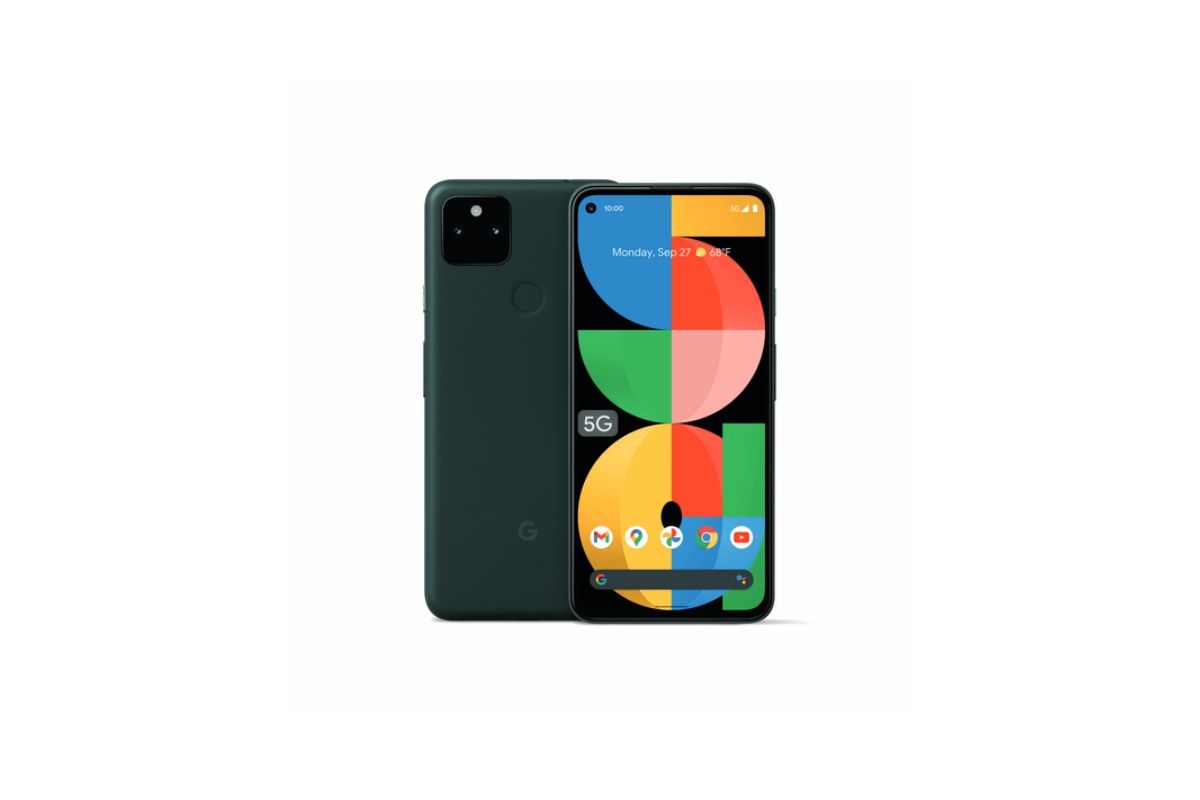
    Google Pixel 5a
    The Pixel 5a delivers stellar battery life, a great software experience and amazing camera performance.

This is pretty much it for our list of the best Pixel phones you can get right now. The most logical choices you can get right now include the Google Pixel 6 Pro and the Pixel 6. They are arguably the best Pixels phones ever made. If you don’t have $700 to pony up on a smartphone though, then you might be well served by the Pixel 6a. Ideally, you’d not pick up the Pixel 5a 5G, but you can look at it if you find it on a very sweet deal or in the second-hand phone market.

The post These are the Best Google Pixel Phones to buy in 2022 appeared first on XDA.


from XDA https://ift.tt/F40yvgX
via IFTTT

samedi 27 août 2022

What satellite navigation systems does the Google Pixel 6a support?

Google revealed the Pixel 6a during its annual I/O conference. This mid-range phone packs a decent camera, Google’s Tensor chip, and the fluid Android experience you know and love. For $449 only, you can buy a Pixel 6a and get your hands on Google’s hardware and software — without leaving a hole in your pocket. Now, if you plan on getting your hands on a Google Pixel 6a, you must be wondering — what satellite navigation systems does it support? Here’s what you need to know about this particular matter.

Satellite navigation systems are invaluable nowadays. Thanks to digital maps, we now get to use apps for locating nearby restaurants and other places of interest. The lists are continuously updated, and you get to view relevant information like businesses’ phone numbers, email addresses, opening hours, etc. There are several systems available out there, and the Google Pixel 6a supports a handful of them.

The Google Pixel 6a supports the following satellite navigation systems — GPS, GLONASS, Galileo, QZSS. Through these, you get to navigate around, share your precise location with others, and do more!

    Google Pixel 6a
    The Pixel 6a is a middle-range phone from Google. It packs the Tensor chip and runs Android 12.

The Google Pixel 6a is a great device for those who want the pure Google experience without spending too much on the higher-end models of this phone. It’s not the best-performing smartphone out there. However, it still comes with decent offerings — while missing out on other ones. For example, you get a great FHD+ AMOLED display that lacks 120Hz support. Nonetheless, average users likely wouldn’t care about the difference between the Pixel 6a and the higher-end Pixel phones. If you go for it, don’t forget to protect it with a case because it’s always better to be safe than sorry. A case not only provides protection but also acts as a cosmetic accessory. It refreshes the appearance of your phone and prevents it from becoming mundane.

The post What satellite navigation systems does the Google Pixel 6a support? appeared first on XDA.


from XDA https://ift.tt/au6k4NL
via IFTTT

What satellite navigation systems does the Google Pixel 6a support?

Google revealed the Pixel 6a during its annual I/O conference. This mid-range phone packs a decent camera, Google’s Tensor chip, and the fluid Android experience you know and love. For $449 only, you can buy a Pixel 6a and get your hands on Google’s hardware and software — without leaving a hole in your pocket. Now, if you plan on getting your hands on a Google Pixel 6a, you must be wondering — what satellite navigation systems does it support? Here’s what you need to know about this particular matter.

Satellite navigation systems are invaluable nowadays. Thanks to digital maps, we now get to use apps for locating nearby restaurants and other places of interest. The lists are continuously updated, and you get to view relevant information like businesses’ phone numbers, email addresses, opening hours, etc. There are several systems available out there, and the Google Pixel 6a supports a handful of them.

The Google Pixel 6a supports the following satellite navigation systems — GPS, GLONASS, Galileo, QZSS. Through these, you get to navigate around, share your precise location with others, and do more!

    Google Pixel 6a
    The Pixel 6a is a middle-range phone from Google. It packs the Tensor chip and runs Android 12.

The Google Pixel 6a is a great device for those who want the pure Google experience without spending too much on the higher-end models of this phone. It’s not the best-performing smartphone out there. However, it still comes with decent offerings — while missing out on other ones. For example, you get a great FHD+ AMOLED display that lacks 120Hz support. Nonetheless, average users likely wouldn’t care about the difference between the Pixel 6a and the higher-end Pixel phones. If you go for it, don’t forget to protect it with a case because it’s always better to be safe than sorry. A case not only provides protection but also acts as a cosmetic accessory. It refreshes the appearance of your phone and prevents it from becoming mundane.

The post What satellite navigation systems does the Google Pixel 6a support? appeared first on XDA.


from XDA https://ift.tt/dnBeO2g
via IFTTT

How to change the voice and accent Siri uses on your iPhone

Siri is the virtual assistant that lives in some of the greatest iPhones, iPads, and Macs. Despite it not being as smart or helpful as Google Assistant, it still can come in handy for basic tasks and questions. Depending on your iPhone model, you can either trigger it by pressing and holding on the Side or Home buttons. Of course, you also get to enable the Hey Siri voice command for a hands-free experience. When you first set up your iPhone, iOS asks you to choose a voice for Siri. However, sometimes we get bored of or annoyed by our past decisions. Fortunately for all of us, you can indeed change the voice and accent Siri uses on your iPhone. Here are the detailed steps you need to follow to change these settings on iOS.

Changing the voice and accent Siri uses on iOS

How to view saved WiFi passwords on iOS 16 and iPadOS 16 1

  • Launch the Settings app on your iPhone.

How to change the voice and accent Siri uses on your iPhone

  • Scroll down, and click on the Siri & Search section.

How to change the voice and accent Siri uses on your iPhone

  • Choose the Siri Voice section.

How to change the voice and accent Siri uses on your iPhone

  • There you will find two main sections — Variety and Voice. Variety includes the available accents, while Voice refers to the actual voice tone. Try them out one by one and select the pair you like the most. Do note that the available voice and variety options vary depending on the chosen language. For English, you get five voices and six varieties:
    • American
    • Australian
    • British
    • Indian
    • Irish
    • South African

Once you set the Siri Voice and Variety, they should sync to all of your compatible iCloud devices automatically. This means you won’t need to tweak your Apple Watch, iPad, or Mac settings to get the same voice you’ve chosen on your iPhone.

Do you actively use Siri to get tasks done? If so, which Voice and Variety pair will you go for? Let us know in the comments section below.

The post How to change the voice and accent Siri uses on your iPhone appeared first on XDA.


from XDA https://ift.tt/ogYwZIh
via IFTTT

How to change the voice and accent Siri uses on your iPhone

Siri is the virtual assistant that lives in some of the greatest iPhones, iPads, and Macs. Despite it not being as smart or helpful as Google Assistant, it still can come in handy for basic tasks and questions. Depending on your iPhone model, you can either trigger it by pressing and holding on the Side or Home buttons. Of course, you also get to enable the Hey Siri voice command for a hands-free experience. When you first set up your iPhone, iOS asks you to choose a voice for Siri. However, sometimes we get bored of or annoyed by our past decisions. Fortunately for all of us, you can indeed change the voice and accent Siri uses on your iPhone. Here are the detailed steps you need to follow to change these settings on iOS.

Changing the voice and accent Siri uses on iOS

How to view saved WiFi passwords on iOS 16 and iPadOS 16 1

  • Launch the Settings app on your iPhone.

How to change the voice and accent Siri uses on your iPhone

  • Scroll down, and click on the Siri & Search section.

How to change the voice and accent Siri uses on your iPhone

  • Choose the Siri Voice section.

How to change the voice and accent Siri uses on your iPhone

  • There you will find two main sections — Variety and Voice. Variety includes the available accents, while Voice refers to the actual voice tone. Try them out one by one and select the pair you like the most. Do note that the available voice and variety options vary depending on the chosen language. For English, you get five voices and six varieties:
    • American
    • Australian
    • British
    • Indian
    • Irish
    • South African

Once you set the Siri Voice and Variety, they should sync to all of your compatible iCloud devices automatically. This means you won’t need to tweak your Apple Watch, iPad, or Mac settings to get the same voice you’ve chosen on your iPhone.

Do you actively use Siri to get tasks done? If so, which Voice and Variety pair will you go for? Let us know in the comments section below.

The post How to change the voice and accent Siri uses on your iPhone appeared first on XDA.


from XDA https://ift.tt/kDGh1M6
via IFTTT

Xiaomi CEO Lei Jun confirms a global release for the 12 S Ultra successor

Xiaomi CEO Lei Jun declared via Twitter that Xiaomi would be available in global markets. More specifically, Jun was talking about the next iteration of the Xiaomi 12 S Ultra. It is unclear whether Jun was talking about a true successor to the Xiaomi 12 S Ultra, or a 12 S Ultra that will be made specifically for the global market.

Xiaomi has been around for a little over a decade and sold its first smartphone in 2011. A few years later it would dominate its local region having the largest marketshare in China. For the most part, Xiaomi’s main business lies in China, but it has expanded to other regions like India and Europe. The one market that it has not managed to enter is the United States. While it has never formally entered the market, it did previously experience some unpleasantness with the US government. Thankfully, the issues were later resolved.

Xiaomi going after global consumers is an important step, not only for the company but also for consumers. Despite there being a wealth of options for Android devices, the push forward to create something special has stagnated. Our own Adam Conway discussed this for mid-range devices, but it applies to flagship models too. Samsung has long had a stranglehold on the U.S. market and because of this, it has erred on the side of caution and continued to deliver iterative updates to its smartphones. With more competition, companies like Samsung would be forced to push hard and deliver more innovation.

The Xiaomi 12S Ultra is a perfect example of what happens when a company pushes the envelope. You end up with a smartphone that has an alluring design that is supported by top specifications, and has an amazing camera. Furthermore, pricing for the 12S Ultra is in line with other flagships, which is great. While Xiaomi has enforced a sales strategy in its home territory, it will be interesting to see how much it invests into the global market going forward. Unfortunately for now, there isn’t a timeline of when its devices will begin to arrive to the global market.


Source: Lei Jun (Twitter)

The post Xiaomi CEO Lei Jun confirms a global release for the 12 S Ultra successor appeared first on XDA.


from XDA https://ift.tt/P26umTo
via IFTTT

Xiaomi CEO Lei Jun confirms a global release for the 12 S Ultra successor

Xiaomi CEO Lei Jun declared via Twitter that Xiaomi would be available in global markets. More specifically, Jun was talking about the next iteration of the Xiaomi 12 S Ultra. It is unclear whether Jun was talking about a true successor to the Xiaomi 12 S Ultra, or a 12 S Ultra that will be made specifically for the global market.

Xiaomi has been around for a little over a decade and sold its first smartphone in 2011. A few years later it would dominate its local region having the largest marketshare in China. For the most part, Xiaomi’s main business lies in China, but it has expanded to other regions like India and Europe. The one market that it has not managed to enter is the United States. While it has never formally entered the market, it did previously experience some unpleasantness with the US government. Thankfully, the issues were later resolved.

Xiaomi going after global consumers is an important step, not only for the company but also for consumers. Despite there being a wealth of options for Android devices, the push forward to create something special has stagnated. Our own Adam Conway discussed this for mid-range devices, but it applies to flagship models too. Samsung has long had a stranglehold on the U.S. market and because of this, it has erred on the side of caution and continued to deliver iterative updates to its smartphones. With more competition, companies like Samsung would be forced to push hard and deliver more innovation.

The Xiaomi 12S Ultra is a perfect example of what happens when a company pushes the envelope. You end up with a smartphone that has an alluring design that is supported by top specifications, and has an amazing camera. Furthermore, pricing for the 12S Ultra is in line with other flagships, which is great. While Xiaomi has enforced a sales strategy in its home territory, it will be interesting to see how much it invests into the global market going forward. Unfortunately for now, there isn’t a timeline of when its devices will begin to arrive to the global market.


Source: Lei Jun (Twitter)

The post Xiaomi CEO Lei Jun confirms a global release for the 12 S Ultra successor appeared first on XDA.


from XDA https://ift.tt/YtKmRB1
via IFTTT