The Samsung Galaxy Z Fold 4 is here, and it brings further polish and refinement to a foldable series that was already the best overall foldable. While the improvements this year aren’t immediately attention-grabbing, they do add up to more than the sum of their parts. These upgrades include a newly designed hinge that doesn’t protrude as much in folded form, resulting in a folded form factor that’s a bit more symmetrical. The Fold 4 is also a bit lighter than the Fold 3. The cameras also got an upgrade, to a new 50MP main camera sensor with a larger 1/1.55-inch image sensor, plus a quality 3X telephoto zoom lens. The ultra-wide camera remains as useful as ever.
One of the things that Samsung has focused on in recent years is it wants to make the Fold 4 as durable as possible. And starting with last year’s Z Fold 3, Samsung introduced a new “Armor Aluminum” coating for the frame, plus IPX8 official water resistance.
These same features return for this year for the Galaxy Z Fold 4. While Samsung claims its “Armor Aluminum” is stronger than before, the IPX8 water resistance rating is identical to last year’s Z Fold 3.
What does this mean? Well, an IP (Ingress Protection) rating represents the documented level of protection provided by a device against dust or liquid. These are presented by two numbers. For an IPX8, which only has one number, this means the device is not protected against dust, but is protected against water. The “8” rating means the device can withstand immersion in over one meter (3.2 feet) of water. This means if you were to accidentally drop the Galaxy Z Fold 4 in the swimming pool, or a sink full of water, you can expect the phone to survive unscathed if you pull it out within a reasonable amount of time. This means, yes, the Galaxy Z Fold 4 is water resistant.
Note that no phone is waterproof, and the same remains the case here too. Despite having an official rating, it’s worth mentioning that phone warranties still do not cover water damage, so you should try to avoid purposely dipping the Galaxy Z Fold 4 in water. Look at the IP rating as a “just-in-case” protection against heavy rains or accidental dips in the water, not an open invitation to take the Fold 4 underwater on purpose. The lack of dust resistance is a bummer, so you may want to protect your investment with a case.
If you’re interested in buying the Galaxy Z Fold 4, there are lots of deals right now so be sure to check them out.
The Samsung Galaxy Z Fold 4 is Samsung's latest flagship foldable, packing high-end specs and up to 512GB of internal storage. You can't expand it with a microSD card, though.
The Samsung Galaxy Z Fold 4 is here, and it brings further polish and refinement to a foldable series that was already the best overall foldable. While the improvements this year aren’t immediately attention-grabbing, they do add up to more than the sum of their parts. These upgrades include a newly designed hinge that doesn’t protrude as much in folded form, resulting in a folded form factor that’s a bit more symmetrical. The Fold 4 is also a bit lighter than the Fold 3. The cameras also got an upgrade, to a new 50MP main camera sensor with a larger 1/1.55-inch image sensor, plus a quality 3X telephoto zoom lens. The ultra-wide camera remains as useful as ever.
One of the things that Samsung has focused on in recent years is it wants to make the Fold 4 as durable as possible. And starting with last year’s Z Fold 3, Samsung introduced a new “Armor Aluminum” coating for the frame, plus IPX8 official water resistance.
These same features return for this year for the Galaxy Z Fold 4. While Samsung claims its “Armor Aluminum” is stronger than before, the IPX8 water resistance rating is identical to last year’s Z Fold 3.
What does this mean? Well, an IP (Ingress Protection) rating represents the documented level of protection provided by a device against dust or liquid. These are presented by two numbers. For an IPX8, which only has one number, this means the device is not protected against dust, but is protected against water. The “8” rating means the device can withstand immersion in over one meter (3.2 feet) of water. This means if you were to accidentally drop the Galaxy Z Fold 4 in the swimming pool, or a sink full of water, you can expect the phone to survive unscathed if you pull it out within a reasonable amount of time. This means, yes, the Galaxy Z Fold 4 is water resistant.
Note that no phone is waterproof, and the same remains the case here too. Despite having an official rating, it’s worth mentioning that phone warranties still do not cover water damage, so you should try to avoid purposely dipping the Galaxy Z Fold 4 in water. Look at the IP rating as a “just-in-case” protection against heavy rains or accidental dips in the water, not an open invitation to take the Fold 4 underwater on purpose. The lack of dust resistance is a bummer, so you may want to protect your investment with a case.
If you’re interested in buying the Galaxy Z Fold 4, there are lots of deals right now so be sure to check them out.
The Samsung Galaxy Z Fold 4 is Samsung's latest flagship foldable, packing high-end specs and up to 512GB of internal storage. You can't expand it with a microSD card, though.
It’s no secret that the United States has a terrible smartphone market, and you’d be hard pressed to find evidence to the contrary. Between the stranglehold that carriers have on the market, coupled with the lack of options available, consumers in the U.S. get screwed over on both options and pricing in contrast to Europe and Asia. The recently-released Google Pixel 6a‘s value proposition in North America proves exactly that problem.
For context, the Google Pixel 6a is the latest mid-range flagship from Google. It packs the last generation of Pixel cameras and Google Tensor into a more affordable package, promising five years of updates on top of that. You get all of Google’s software smarts too, though some have felt let down by the sub-par specifications and higher price tag when compared to the competition. Some of those downsides include a 60Hz screen, slower charging, and the fact that it’s the last generation’s cameras instead of the current generation, which other “a” series phones had.
To be clear, the Google Pixel 6a is a good phone. I like it a lot, and I think that Google has consistently nailed the basics of a good phone for years at this point. However, time and time again, particularly with its flagships, there has been some kind of compromise. For example, the Google Pixel 5 had the Snapdragon 765G and the Pixel 6 series has Tensor with all of its inefficiencies. Typically, the “a” series has generally made sense in its pricing and its features relative to the rest of the competition, but that changes with the Google Pixel 6a.
The problem with the U.S. phone market
The U.S. phone market’s biggest issue comes down to carriers and their stranglehold. It’s very hard to get a phone that works on a U.S. carrier, and the easiest way to get a phone is through a carrier deal. You can spend more for unlocked variants, but carriers will try to rope you in by offering a deal that you can only get by buying one of their phones. Phones can be made cheaper thanks to trade-in deals and other offers, which makes this the most appealing option for many.
Not only that, but if you buy into a carrier’s ecosystem, you immediately open yourself to the world of carrier deals and trade-in offers. They offer financing, carrier-specific features like Wi-Fi calling and VoLTE, and even phone-specific features at times if you buy the phone through their stores. Phones that are unlocked for the U.S. region should be compatible with carriers too, but their support can be inconsistent.
The U.S. phone market's biggest issue comes down to carriers and their stranglehold
In contrast to phones that you buy locked, there are a few other problems. For starters, you may lose out on all of those carrier trade-in deals that you could get by buying from a carrier. There are also two “tiers” of unlocked phones: international phones, and those unlocked for the U.S. market. Samsung is the most well-known example of this, where you can buy U.S. versions of the company’s flagship phones that are unlocked for all U.S. carriers. These then switch the CSC (Country Specific Code) which changes what carrier features are enabled depending on the SIM card installed. Internationally unlocked Samsung devices will have the same CSC-switching feature but don’t include the necessary configurations for US carriers
Generally, all phones also have to be approved to work on a specific carrier, and there’s a good reason for this: band support.
In Europe, if you buy an international phone, chances are that phone will just work across the litany of carriers across the continent. That’s not quite the case in the U.S., as fewer international devices support the necessary bands. What’s more, even if your phone is compatible on a technical level, if it isn’t approved for use on the carrier, it may simply not connect. It’s a bit complicated though because roaming might work, but a native SIM might not activate — it depends on how strict the carrier’s activation requirements are. U.S. phones generally work in Europe, but the contrary isn’t always true. This might be part of what adds to the cost of a U.S. phone, as they support a lot of European bands (which may come with a licensing cost) whereas the inverse is not usually true.
Band support is why if you take a recently launched Xiaomi or OPPO phone to America, you might not get a signal at all and almost certainly will only have partial 5G support at best. Your odds of getting one working perfectly as if it was officially launched in the country, is almost zero.
The Google Pixel 6a compared to the competition
The thing about the Google Pixel 6a is that in the U.S. market, it’s a great value phone. There are basically no other offerings in the U.S. that can provide as complete an experience at that price range. Flagship chipset? Check. Great cameras? Check. Long-term software support with timely updates? Check. It’s got all the basic boxes of an excellent phone… but it costs $449. That’s a good price in the U.S, but it being a good price in the U.S. is more indicative of the high costs over there than anything else.
Taking a look at the European and Asian markets, competition is a lot tougher for the Google Pixel 6a. Unless you value excellent photos over everything else, there’s tough competition in this price bracket, and even cheaper. I can buy a OnePlus Nord 2T for less than a Google Pixel 6a. It has what I would call a more practical chipset, a better display, better speakers, longer battery life, and much faster charging. While Tensor is good, any long-term usage will see heavy thermal throttling and reduced performance as a result, which the Dimensity 1300 doesn’t suffer from anywhere near as much. You get better software on the Pixel 6a and a better camera, but it’s tough competition.
If OnePlus isn’t your cup of tea, let’s look at the new kid on the block. The Nothing Phone 1 arrived with much bravado, and again, we’re in a situation where it packs a whole lot of punch that the Google Pixel 6a does not. We’re talking about a better display (with some controversy, mind you…), great battery life, a better chipset (for the same reason that the Dimensity 1300 does a better job than Tensor in my opinion), and just as unique a design. On the software front, Nothing is a bit of a question mark, so it’s completely understandable that you may be wary of stepping into an all-new ecosystem like that.
Well, what about Xiaomi? Xiaomi has a ton of mid-range phones, either through Poco or Redmi. The Poco F4, for example, comes in cheaper and it’s the same story as the above. Better screen, better chipset, worse camera, faster charging… in every case with each of these phones, you’re trading a lot to simply own a Pixel.
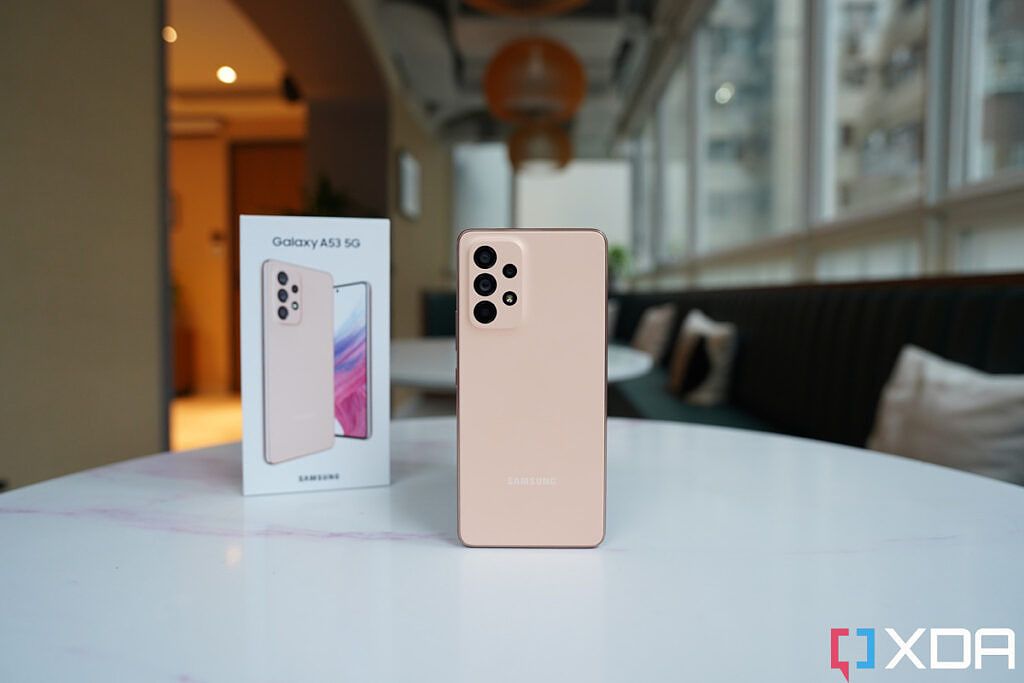
Finally, let’s look at an old reliable — Samsung. The Samsung Galaxy A53 is a mid-range offering from Samsung that a lot of people have touted as a better alternative to the Pixel 6a even in the U.S. In some ways, I can see why. It has wireless charging, it has a better display (Samsung is one of the best in the business for that), and for some people, One UI is much better than Google’s Pixel software. However, I would argue that the Pixel 6a is a compelling buy against the Galaxy A53 for its better camera, much better chipset, and better battery life. There’s just one problem though: the phone that is inferior to the Pixel 6a is the only mid-range phone in this list that’s available in the U.S.
If you are in an Asian market, like India, then there are a whole host of other options from Realme, Vivo, Oppo, and more. Each has its own pros and cons, but all of them assemble their phones in India which Google does not. As a consequence, they enjoy cheaper pricing while the Google Pixel 6a deals with import duties, dealing it a rather heavy blow for pricing in a market that is supremely competitive. The Pixel 6a starts encroaching into premium-mid-range or even flagship territory pricing, at which point, one really needs to assess all of their options.
You must really want a Pixel
Look, I get it. The Google Pixel 6a is a good phone, and the software and that camera are both compelling. If those are your prerogative and you value those highly above all else, then sure, go for it.
But I feel like some of the other features are what the non-tech enthusiasts really care about. Most people care if their phone can last a long time, if it can charge fast and if they can use it to do their daily bits and pieces without worrying about it dying on them. A friend of mine recently handed me her Pixel 6 that she got at launch, worried that it was too hot, and was afraid of the damage it was doing as the phone slowed down every time it got hot. She’s essentially considering getting a new phone just because of Tensor. These are the “normal” consumers. The heat of the Google Pixel 6 is the only constant complaint I have heard from multiple “average” consumers that have asked me if it’s normal. Two of them are going to buy a new phone, and one of them is even switching to the Nothing Phone 1 and refuses to go near a Pixel with Tensor after his experience.
I’m sure all of us know people who got annoyed by software updates, especially given how slow they can be on Google Pixel phones too. I have waited for a long time to finish a simple security update on a Pixel, whereas other devices are much quicker. The Google Pixel 6a is good, it takes great photos, and it has great software. Nevertheless, that doesn’t change the fact that it’s missing quite a bit of what other people are looking for. Most people don’t care if their phone has the best camera in whatever class their phone is in, they just want a phone that takes good photos for social media. The OnePlus Nord 2T will manage that, and the Nothing Phone 1 can as well.
No matter what, I think the Google Pixel 6a being such a good option in the U.S. is not indicative of Google making an excellent phone. Instead, I think it points to how little competition there actually is in the region, and how the one phone people are pointing towards being an alternative isn’t really better at all. It solves the wireless charging and the screen “issue” (if you can call it that), but the rest, well, the Pixel 6a simply smokes the Galaxy A53.
Despite all of that, I can’t wait to see Tensor 2. Google is on to such a good concept with the Google Pixel 6 series currently, and if it can solve throttling and heating issues with the Pixel 7 series, then it’s on the road to creating a winner.
Thanks Zachary Wander for his assistance in the writing of this article!
It’s no secret that the United States has a terrible smartphone market, and you’d be hard pressed to find evidence to the contrary. Between the stranglehold that carriers have on the market, coupled with the lack of options available, consumers in the U.S. get screwed over on both options and pricing in contrast to Europe and Asia. The recently-released Google Pixel 6a‘s value proposition in North America proves exactly that problem.
For context, the Google Pixel 6a is the latest mid-range flagship from Google. It packs the last generation of Pixel cameras and Google Tensor into a more affordable package, promising five years of updates on top of that. You get all of Google’s software smarts too, though some have felt let down by the sub-par specifications and higher price tag when compared to the competition. Some of those downsides include a 60Hz screen, slower charging, and the fact that it’s the last generation’s cameras instead of the current generation, which other “a” series phones had.
To be clear, the Google Pixel 6a is a good phone. I like it a lot, and I think that Google has consistently nailed the basics of a good phone for years at this point. However, time and time again, particularly with its flagships, there has been some kind of compromise. For example, the Google Pixel 5 had the Snapdragon 765G and the Pixel 6 series has Tensor with all of its inefficiencies. Typically, the “a” series has generally made sense in its pricing and its features relative to the rest of the competition, but that changes with the Google Pixel 6a.
The problem with the U.S. phone market
The U.S. phone market’s biggest issue comes down to carriers and their stranglehold. It’s very hard to get a phone that works on a U.S. carrier, and the easiest way to get a phone is through a carrier deal. You can spend more for unlocked variants, but carriers will try to rope you in by offering a deal that you can only get by buying one of their phones. Phones can be made cheaper thanks to trade-in deals and other offers, which makes this the most appealing option for many.
Not only that, but if you buy into a carrier’s ecosystem, you immediately open yourself to the world of carrier deals and trade-in offers. They offer financing, carrier-specific features like Wi-Fi calling and VoLTE, and even phone-specific features at times if you buy the phone through their stores. Phones that are unlocked for the U.S. region should be compatible with carriers too, but their support can be inconsistent.
The U.S. phone market's biggest issue comes down to carriers and their stranglehold
In contrast to phones that you buy locked, there are a few other problems. For starters, you may lose out on all of those carrier trade-in deals that you could get by buying from a carrier. There are also two “tiers” of unlocked phones: international phones, and those unlocked for the U.S. market. Samsung is the most well-known example of this, where you can buy U.S. versions of the company’s flagship phones that are unlocked for all U.S. carriers. These then switch the CSC (Country Specific Code) which changes what carrier features are enabled depending on the SIM card installed. Internationally unlocked Samsung devices will have the same CSC-switching feature but don’t include the necessary configurations for US carriers
Generally, all phones also have to be approved to work on a specific carrier, and there’s a good reason for this: band support.
In Europe, if you buy an international phone, chances are that phone will just work across the litany of carriers across the continent. That’s not quite the case in the U.S., as fewer international devices support the necessary bands. What’s more, even if your phone is compatible on a technical level, if it isn’t approved for use on the carrier, it may simply not connect. It’s a bit complicated though because roaming might work, but a native SIM might not activate — it depends on how strict the carrier’s activation requirements are. U.S. phones generally work in Europe, but the contrary isn’t always true. This might be part of what adds to the cost of a U.S. phone, as they support a lot of European bands (which may come with a licensing cost) whereas the inverse is not usually true.
Band support is why if you take a recently launched Xiaomi or OPPO phone to America, you might not get a signal at all and almost certainly will only have partial 5G support at best. Your odds of getting one working perfectly as if it was officially launched in the country, is almost zero.
The Google Pixel 6a compared to the competition
The thing about the Google Pixel 6a is that in the U.S. market, it’s a great value phone. There are basically no other offerings in the U.S. that can provide as complete an experience at that price range. Flagship chipset? Check. Great cameras? Check. Long-term software support with timely updates? Check. It’s got all the basic boxes of an excellent phone… but it costs $449. That’s a good price in the U.S, but it being a good price in the U.S. is more indicative of the high costs over there than anything else.
Taking a look at the European and Asian markets, competition is a lot tougher for the Google Pixel 6a. Unless you value excellent photos over everything else, there’s tough competition in this price bracket, and even cheaper. I can buy a OnePlus Nord 2T for less than a Google Pixel 6a. It has what I would call a more practical chipset, a better display, better speakers, longer battery life, and much faster charging. While Tensor is good, any long-term usage will see heavy thermal throttling and reduced performance as a result, which the Dimensity 1300 doesn’t suffer from anywhere near as much. You get better software on the Pixel 6a and a better camera, but it’s tough competition.
If OnePlus isn’t your cup of tea, let’s look at the new kid on the block. The Nothing Phone 1 arrived with much bravado, and again, we’re in a situation where it packs a whole lot of punch that the Google Pixel 6a does not. We’re talking about a better display (with some controversy, mind you…), great battery life, a better chipset (for the same reason that the Dimensity 1300 does a better job than Tensor in my opinion), and just as unique a design. On the software front, Nothing is a bit of a question mark, so it’s completely understandable that you may be wary of stepping into an all-new ecosystem like that.
Well, what about Xiaomi? Xiaomi has a ton of mid-range phones, either through Poco or Redmi. The Poco F4, for example, comes in cheaper and it’s the same story as the above. Better screen, better chipset, worse camera, faster charging… in every case with each of these phones, you’re trading a lot to simply own a Pixel.
Finally, let’s look at an old reliable — Samsung. The Samsung Galaxy A53 is a mid-range offering from Samsung that a lot of people have touted as a better alternative to the Pixel 6a even in the U.S. In some ways, I can see why. It has wireless charging, it has a better display (Samsung is one of the best in the business for that), and for some people, One UI is much better than Google’s Pixel software. However, I would argue that the Pixel 6a is a compelling buy against the Galaxy A53 for its better camera, much better chipset, and better battery life. There’s just one problem though: the phone that is inferior to the Pixel 6a is the only mid-range phone in this list that’s available in the U.S.
If you are in an Asian market, like India, then there are a whole host of other options from Realme, Vivo, Oppo, and more. Each has its own pros and cons, but all of them assemble their phones in India which Google does not. As a consequence, they enjoy cheaper pricing while the Google Pixel 6a deals with import duties, dealing it a rather heavy blow for pricing in a market that is supremely competitive. The Pixel 6a starts encroaching into premium-mid-range or even flagship territory pricing, at which point, one really needs to assess all of their options.
You must really want a Pixel
Look, I get it. The Google Pixel 6a is a good phone, and the software and that camera are both compelling. If those are your prerogative and you value those highly above all else, then sure, go for it.
But I feel like some of the other features are what the non-tech enthusiasts really care about. Most people care if their phone can last a long time, if it can charge fast and if they can use it to do their daily bits and pieces without worrying about it dying on them. A friend of mine recently handed me her Pixel 6 that she got at launch, worried that it was too hot, and was afraid of the damage it was doing as the phone slowed down every time it got hot. She’s essentially considering getting a new phone just because of Tensor. These are the “normal” consumers. The heat of the Google Pixel 6 is the only constant complaint I have heard from multiple “average” consumers that have asked me if it’s normal. Two of them are going to buy a new phone, and one of them is even switching to the Nothing Phone 1 and refuses to go near a Pixel with Tensor after his experience.
I’m sure all of us know people who got annoyed by software updates, especially given how slow they can be on Google Pixel phones too. I have waited for a long time to finish a simple security update on a Pixel, whereas other devices are much quicker. The Google Pixel 6a is good, it takes great photos, and it has great software. Nevertheless, that doesn’t change the fact that it’s missing quite a bit of what other people are looking for. Most people don’t care if their phone has the best camera in whatever class their phone is in, they just want a phone that takes good photos for social media. The OnePlus Nord 2T will manage that, and the Nothing Phone 1 can as well.
No matter what, I think the Google Pixel 6a being such a good option in the U.S. is not indicative of Google making an excellent phone. Instead, I think it points to how little competition there actually is in the region, and how the one phone people are pointing towards being an alternative isn’t really better at all. It solves the wireless charging and the screen “issue” (if you can call it that), but the rest, well, the Pixel 6a simply smokes the Galaxy A53.
Despite all of that, I can’t wait to see Tensor 2. Google is on to such a good concept with the Google Pixel 6 series currently, and if it can solve throttling and heating issues with the Pixel 7 series, then it’s on the road to creating a winner.
Thanks Zachary Wander for his assistance in the writing of this article!
Samsung has been quite consistent when it comes to pushing software updates to its devices. It’s one of those companies that has consistently shown how reliable it is when it comes to software support. A lot of the flagship Samsung devices, in case you don’t know, are eligible for four major Android updates and up to five years of security updates. That’s even better than what Google promises for its Pixel phones. The list of Samsung devices that are eligible to receive four major Android updates is already quite exhaustive, and the company is adding its Galaxy Z Flip 4 to that list as well.
That’s right, Samsung’s new Galaxy Z Flip 4 and the Galaxy Z Fold 4 will both get four years of Android OS updates. The Galaxy Z Flip 4 runs Android 12 out of the box, meaning it will be supported all the way up to Android 16 — or whatever Google decides to call it at that time. This, of course, is subject to change depending on how Google approaches its updates in the future, but this is where the Galaxy Z Flip 4 stands right now. Additionally, it’ll also receive security updates for the next five years, meaning it’s covered till 2027. It may not receive them frequently towards the end of this tenure, but you can expect to get these security patches every month for now.
Samsung has consistently proved that it’s the best in the business when it comes to software updates, so you can expect the foldables to be treated the same way. The fact that these smartphones will be supported for such a long time in the future also makes them very easy for us to recommend.
If you’re interested in buying the new Galaxy Z Flip 4, then be sure to hit the link in the box above to find the best price for it online. We’ve also rounded up some of the best Galaxy Z Flip 4 deals you can explore to save some money on your purchase and splurge on one of the best cases for it.
Samsung has been quite consistent when it comes to pushing software updates to its devices. It’s one of those companies that has consistently shown how reliable it is when it comes to software support. A lot of the flagship Samsung devices, in case you don’t know, are eligible for four major Android updates and up to five years of security updates. That’s even better than what Google promises for its Pixel phones. The list of Samsung devices that are eligible to receive four major Android updates is already quite exhaustive, and the company is adding its Galaxy Z Flip 4 to that list as well.
That’s right, Samsung’s new Galaxy Z Flip 4 and the Galaxy Z Fold 4 will both get four years of Android OS updates. The Galaxy Z Flip 4 runs Android 12 out of the box, meaning it will be supported all the way up to Android 16 — or whatever Google decides to call it at that time. This, of course, is subject to change depending on how Google approaches its updates in the future, but this is where the Galaxy Z Flip 4 stands right now. Additionally, it’ll also receive security updates for the next five years, meaning it’s covered till 2027. It may not receive them frequently towards the end of this tenure, but you can expect to get these security patches every month for now.
Samsung has consistently proved that it’s the best in the business when it comes to software updates, so you can expect the foldables to be treated the same way. The fact that these smartphones will be supported for such a long time in the future also makes them very easy for us to recommend.
If you’re interested in buying the new Galaxy Z Flip 4, then be sure to hit the link in the box above to find the best price for it online. We’ve also rounded up some of the best Galaxy Z Flip 4 deals you can explore to save some money on your purchase and splurge on one of the best cases for it.
A few weeks ago, it was reported that Google’s timer and stopwatch tool had gone missing. The tools could be found through a simple Google search for “timer” or “stopwatch,” making it convenient and easy to use. Luckily, after a brief hiatus, the tools are now back.
Google’s Danny Sullivan, the company’s Search Liaison, tweeted that the feature was now back and available for use. While there isn’t a specific date, the timer was reportedly removed sometime in mid-July. Sullivan confirmed on August 1 that the timer and stopwatch had indeed been pulled because of an issue. At the time, he did not confirm what kind of issue the tools were having. On August 17, Sullivan tweeted, letting everyone know that timer and stopwatch had been restored. He went on to thank the team at Google for working on the problem but again did not go into detail about what kind of issue it might have had.
If this is all news to you, the Google timer and stopwatch were first made available almost a decade ago. If you’ve never had the pleasure of using it, it is extremely convenient. To activate the timer, simply perform a google search for “timer” or “stopwatch.” This will bring up the tool in the web browser. You can also type “set a timer for (value) minutes” and have it set a timer for whatever value you have entered.
Since it is a simple tool, the timer does have limitations, like having a maximum time of 99 hours for its timer function. Like a real timer, once the countdown is complete, it will sound off an alert, signaling that the countdown has been completed. Of course, if you are doing something more serious, you will most likely want to use a dedicated stopwatch or your phone’s timer app. But for quick access, the Google search timer is an excellent choice.