LightBlog

jeudi 20 janvier 2022

Garmin Venu 2 Plus launched in India with up to 9 days of battery life and advanced health tracking

At CES 2022 earlier this month, Garmin unveiled a new smartwatch called the Garmin Venu 2 Plus. An upgraded version of the Garmin Venu 2, the new smartwatch retains all the best features from the last year’s model while also adding a built-in microphone for calls, animated on-screen workouts, and an additional navigation button. While the Venu 2 Plus was initially limited to markets like the US, the company has now officially launched its latest smartphone in India.

The Garmin Venu 2 Plus comes in three colorways: Graphite Black, Cream Gold, and Powder Grey. It’s priced at ₹46,990 (~$632) in India and will be available from leading online retailers including Amazon India, Flipkart, Tata CLiQ, and synergizer.co.in. It’ll also be available from offline channels like Croma, Just in Time, Helios, and GBS stores.
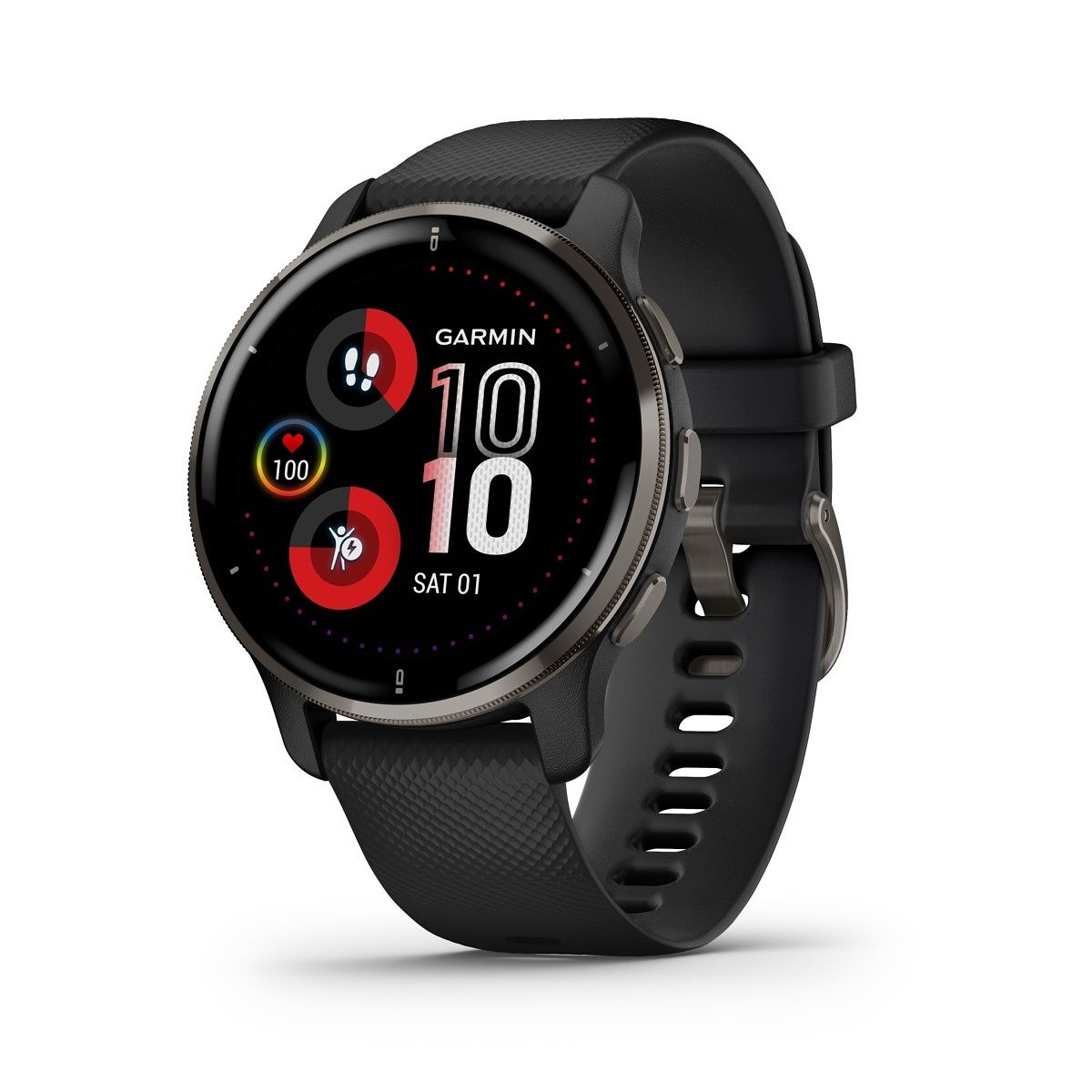
    Garmin Venu 2 Plus
    The Garmin Venu 2 Plus offers a robust set of fitness tracking features and a sporty design.

The Garmin Venu 2 Plus has a 43mm watch case with stainless steel bezel and a 20mm quick-release silicone strap. It sports a 1.3-inch AMOLED display with Gorilla Glass 3 protection on top and Alway-on display support.
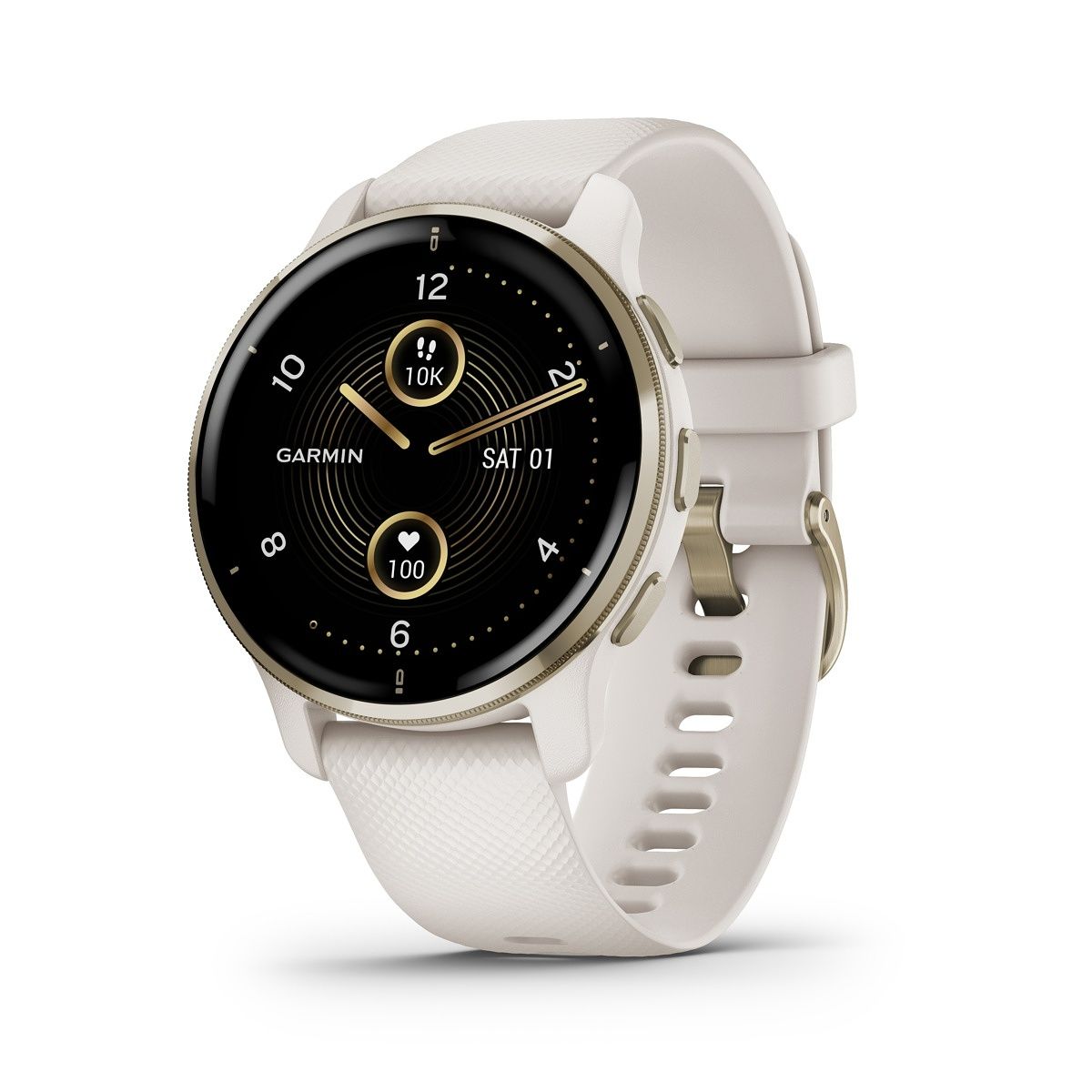
Garmin Venu 2 Plus in Cream Gold color Garmin Venu 2 Plus in Powder gray color Garmin Venu 2 Plus in black colorway

The smartwatch offers a robust set of fitness tracking features. It comes pre-loaded with 25+ indoor and GPS sports apps including walking, running, HIIT, cycling, pool swimming, Pilates, yoga, indoor climbing, hiking, advanced strength training with muscle map graphics, and more. In addition, the Venu 2 Plus also has more than 75 preset animated workouts for cardio, yoga, strength, and HIIT, demonstrating proper form and technique right on your wrist.

Another important highlight of the Venu 2 Plus is a built-in microphone that lets users make phone calls or summon voice assistants like Google Assistant and Siri right from their wrist.

The Garmin Venu 2 lets you download music playlists (up to 650 songs) from Spotify, Amazon Music, and Deezer4. It also supports PayTM contactless payments. The battery life is rated for up to 9 days in smartwatch mode, up to 24 hours in GPS mode, and up to 8 hours in GPS with Music mode.

The post Garmin Venu 2 Plus launched in India with up to 9 days of battery life and advanced health tracking appeared first on xda-developers.


from xda-developers https://ift.tt/3ImAnTw
via IFTTT

mercredi 19 janvier 2022

Google brings Android games to Windows in limited beta

You’ve always been able to play Android games on your PC, though it’s never really been easy. Projects like Android x86 and Bluestacks have typically been your best bet. Back in December of 2021, Google announced that it intended on bringing Android games to Windows, making use of the Android app layer that comes as part of Windows 11. Now, Google has brought the Google Play Games app to Windows through a very limited beta only available to some users in Hong Kong, South Korea, and Taiwan.

As reported by Ars Technica, Google says you’ll be able to “play a catalog of Google Play games on… Windows PC via a standalone application built by Google.” The company then goes on to say that it’s “excited to announce that some of the most popular mobile games in the world will be available at launch, including Mobile Legends: Bang BangSummoners WarState of Survival: The Joker Collaboration, and Three Kingdoms Tactics.”

In addition, games that use the Google Play Games cloud to store achievements and progress will be able to sync their progress across all of your devices, including PC, mobile, and Chrome OS. Note that this does not include regular apps on the Google Play Store, and it’s only games. For regular apps, you’ll still have to download them through the Amazon App Store or through sideloading.

Google has launched pages for the beta sign-up and a developer site, and both have some more information, though the company doesn’t go into detail about how Google Play Games works yet. All we know so far is that it’s not built on existing technology from Microsoft, Bluestacks, or others, and that it also isn’t game streaming. The company has released a set of minimum requirements that you’ll need to meet:

  • Windows 10 (v2004)
  • Solid state drive (SSD)
  • Gaming-class GPU
  • 8 logical cores of CPU
  • 8 GB of RAM
  • 20 GB of available storage space
  • Windows admin account
  • Hardware virtualization must be turned on
  • Compatible PC device and configuration

Google says that the official release date will vary among regions. The company will start with the beta regions of Hong Kong, South Korea, and Taiwan, and will expand to other regions later in 2022 and beyond.

The post Google brings Android games to Windows in limited beta appeared first on xda-developers.


from xda-developers https://ift.tt/3ry3n41
via IFTTT

Calculator on Chrome OS is now a Progressive Web App

Google has been slowly moving away from legacy Chrome apps, now that platform-agnostic Progressive Web Apps are a capable replacement. The Calculator application on Chrome OS was one such legacy application, but starting with the recent Chrome OS 97 update, it has now become a PWA that you can use on any browser.

The new Progressive Web app is hosted at calculator.apps.chrome (via 9to5Google). It has a web manifest file with an icon and offline caching, so Chromium-based browsers can install it to your device. It also works just fine with any web browser, and functions almost identically to the old calculator. Basic addition, subtraction, multiplication, and division is available, as well as some more complex functions like square roots, logarithms, and exponents.

Even though the calculator can now be used on any device with a web browser, it’s clearly still intended to be used on a computer — resizing the window to smaller sizes or a portrait orientation results in some controls being hidden.

Google Calculator app

The calculator is still styled to match older Material Design, complete with a corner wipe effect when you click the Clear button. Google hasn’t updated it yet to match the newer Material You design language, but it’s just a calculator, so it doesn’t really need to. There are also plenty of other math and calculator tools available on Chrome OS, if the default Calculator doesn’t do everything you need. Wolfram Alpha is my personal favorite.

This comes after many other changes and improvements to Chrome OS over the past few months, such as an in-development Shelf Share feature, camera improvements, enhanced integration with Android phones, and more voices for Select-to-speak. The platform is also dealing with (slightly) more competition, as Microsoft pushes Windows 11 SE in K-12 classrooms where Chromebooks have dominated for much of the past decade.

The post Calculator on Chrome OS is now a Progressive Web App appeared first on xda-developers.


from xda-developers https://ift.tt/3tI8Cks
via IFTTT

YouTube introduces annual YouTube Premium & Music plans at a discounted price

YouTube has introduced new annual subscription plans for YouTube Premium and YouTube Music. The new plans are currently available at a discounted price, but the promotion ends soon. If you’re a YouTube Premium or YouTube Music subscriber, you should check out the new annual subscription plans below and consider subscribing before the offer ends.

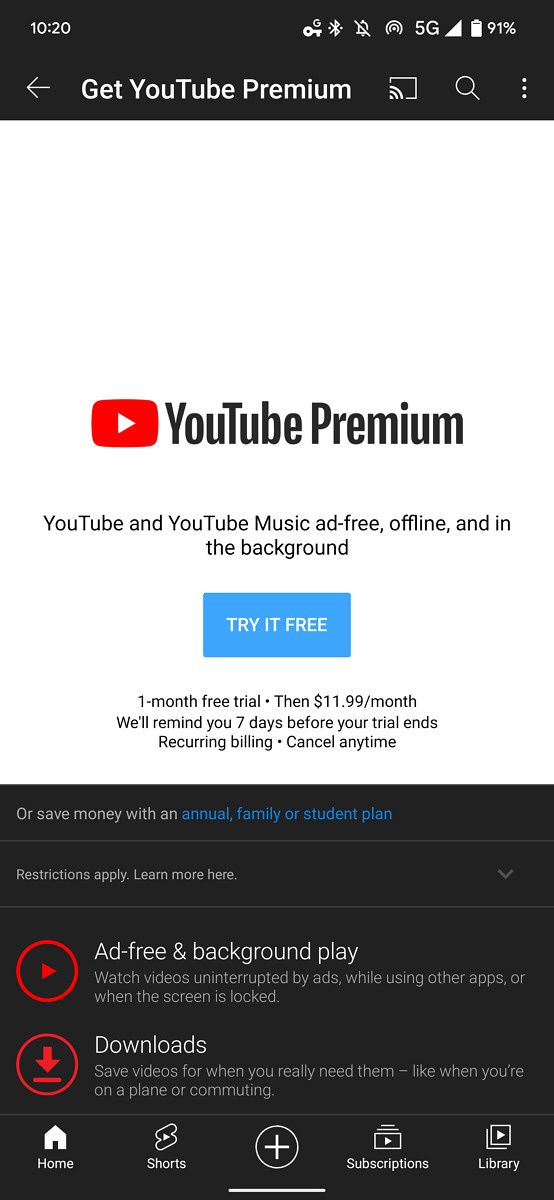
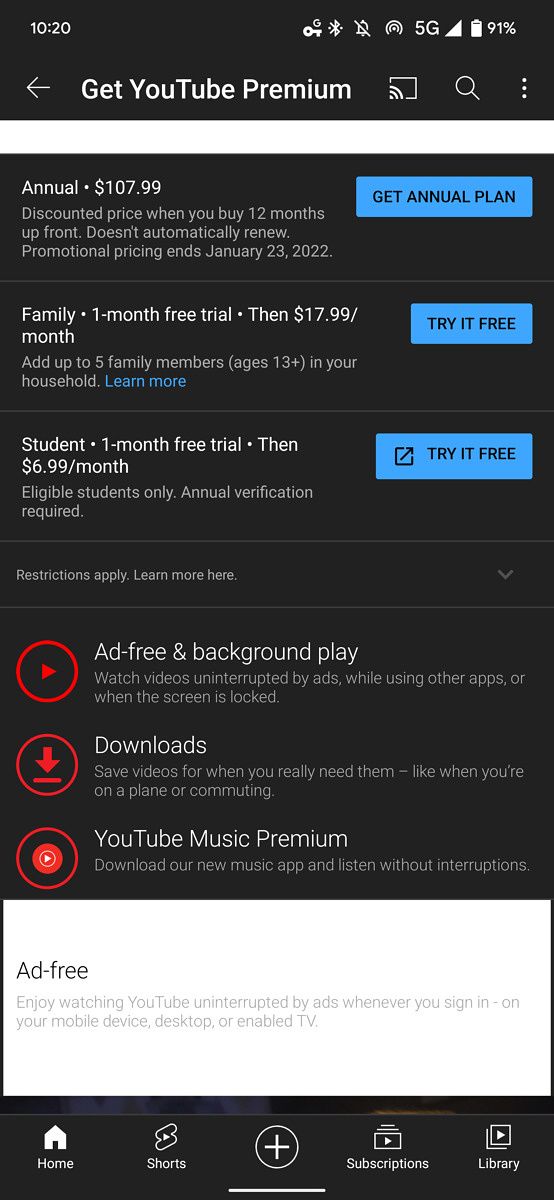
According to 9to5Google, the new YouTube Premium annual plan is currently available for $107.99. In comparison, YouTube Premium’s monthly plan, which costs $11.99 per month, is about $36 more expensive annually. Both existing and new subscribers can get this plan, but you need to hurry because the promotional pricing ends on January 23.

YouTube Premium annual subscription YouTube Premium annual subscription YouTube Music Premium annual subscription

Screenshots: 9to5Google

The new YouTube Music Premium annual subscription is also available at a discounted price of $89.99, which is around $2.50 per month cheaper than the monthly subscription plan. After the promotion ends on January 23, the YouTube Premium annual subscription plan will set you back $119.99, while the YouTube Music Premium annual plan will cost $99.99.

A YouTube support page further adds that the new annual plans are non-recurring subscriptions. This means that users will have to manually renew their subscriptions every year. It’s also worth noting that YouTube will not offer partial refunds on these plans if you want to stop using its services after a few months. The new annual subscription plans are only available to individual subscribers in the following regions: the United States, Canada, Mexico, Brazil, Russia, Turkey, Germany, Thailand, India, and Japan.

Along with the new annual subscription plans, YouTube has announced that it will scale back a significant portion on YouTube Originals. In a statement on Twitter (via The Verge), YouTube’s Chief Business Officer Robert Kyncl said: “Going forward, we will only be funding programs that are part of our Black Voices and YouTube Kids Funds. We will honor our commitment for already contracted shows in progress and creators who are involved with those shows should expect to hear from us directly in the coming days.”

Kyncl provided a couple of reasons behind this decision, including a shift to other initiatives like YouTube’s Creator Shorts Fund, Black Voices Fund and Live Shopping programming, and YouTube Global Head of  Original Content Susanne Daniels’s departure from the company.

The post YouTube introduces annual YouTube Premium & Music plans at a discounted price appeared first on xda-developers.


from xda-developers https://ift.tt/3FIkwNB
via IFTTT

Qualcomm, Vodafone, and Thales demonstrate major development in iSIM technology

Qualcomm today demonstrated a working smartphone featuring the next-gen integrated SIM (iSIM) technology in partnership with Vodafone and Thales. The new technology integrates the functionality offered by a physical SIM card to the main processor, which allows for “greater system integration, higher performance, and increased memory capacity.” Integrating the SIM with the main processor also frees up some valuable space, as it doesn’t require a separate chip like eSIM solutions or a SIM card tray, which has quite a few additional benefits.

In its press release, Qualcomm states that its iSIM technology offers the following benefits:

  • Simplifies and enhances device design and performance by releasing space previously occupied within a device
  • Consolidates the SIM functionality into the device’s main chipset alongside other critical capabilities such as GPU, CPU, and modem
  • Enables remote SIM provisioning by the operator leveraging the existing eSIM infrastructure
  • Opens mobile service connection capabilities to a host of devices that previously could not have SIM capabilities built-in

The press release further reveals that Qualcomm’s proof of concept (POC) demonstration took place in Europe at Samsung’s R&D labs and it illustrates the “technology’s commercial readiness and efficiency working on existing infrastructure, leveraging Vodafone’s advanced network capabilities.” In the demonstration, Qualcomm used a Samsung Galaxy Z Flip 3, which features the Snapdragon 888 SoC. The Snapdragon 888 has a built-in Secure Processing Unit that runs the Thales iSIM operating system.

Qualcomm iSIM marketing image

Talking about the demonstration Qualcomm’s Enrico Salvatori, said: “iSIM solutions offer great opportunities to MNOs, free-up valuable space in devices for OEMs, and provide flexibility for device users to benefit from the full potential of 5G networks and experiences across a wide range of device categories. Some of the areas that will benefit most from iSIM technology include smartphones, mobile PCs, VR/XR headsets, and industrial IoT. By engineering the iSIM technology into the SoC, we are able to create additional support for OEMs in our Snapdragon platform.”

At the moment, Qualcomm hasn’t shared any info on when we can expect to see its iSIM technology on a commercial device. We’ll make sure to let you know as soon as Qualcomm reveals more details.

The post Qualcomm, Vodafone, and Thales demonstrate major development in iSIM technology appeared first on xda-developers.


from xda-developers https://ift.tt/3tGfWNw
via IFTTT

Qualcomm, Vodafone, and Thales demonstrate major development in iSIM technology

Qualcomm today demonstrated a working smartphone featuring the next-gen integrated SIM (iSIM) technology in partnership with Vodafone and Thales. The new technology integrates the functionality offered by a physical SIM card to the main processor, which allows for “greater system integration, higher performance, and increased memory capacity.” Integrating the SIM with the main processor also frees up some valuable space, as it doesn’t require a separate chip like eSIM solutions or a SIM card tray, which has quite a few additional benefits.

In its press release, Qualcomm states that its iSIM technology offers the following benefits:

  • Simplifies and enhances device design and performance by releasing space previously occupied within a device
  • Consolidates the SIM functionality into the device’s main chipset alongside other critical capabilities such as GPU, CPU, and modem
  • Enables remote SIM provisioning by the operator leveraging the existing eSIM infrastructure
  • Opens mobile service connection capabilities to a host of devices that previously could not have SIM capabilities built-in

The press release further reveals that Qualcomm’s proof of concept (POC) demonstration took place in Europe at Samsung’s R&D labs and it illustrates the “technology’s commercial readiness and efficiency working on existing infrastructure, leveraging Vodafone’s advanced network capabilities.” In the demonstration, Qualcomm used a Samsung Galaxy Z Flip 3, which features the Snapdragon 888 SoC. The Snapdragon 888 has a built-in Secure Processing Unit that runs the Thales iSIM operating system.

Qualcomm iSIM marketing image

Talking about the demonstration Qualcomm’s Enrico Salvatori, said: “iSIM solutions offer great opportunities to MNOs, free-up valuable space in devices for OEMs, and provide flexibility for device users to benefit from the full potential of 5G networks and experiences across a wide range of device categories. Some of the areas that will benefit most from iSIM technology include smartphones, mobile PCs, VR/XR headsets, and industrial IoT. By engineering the iSIM technology into the SoC, we are able to create additional support for OEMs in our Snapdragon platform.”

At the moment, Qualcomm hasn’t shared any info on when we can expect to see its iSIM technology on a commercial device. We’ll make sure to let you know as soon as Qualcomm reveals more details.

The post Qualcomm, Vodafone, and Thales demonstrate major development in iSIM technology appeared first on xda-developers.


from xda-developers https://ift.tt/3tGfWNw
via IFTTT

Xiaomi 11T Pro with Snapdragon 888, 120W fast charging launched in India

After launching the Xiaomi 11T series in Europe back in September last year, Xiaomi is now bringing the Xiaomi 11T Pro to the Indian market. The flagship device features Qualcomm’s Snapdragon 888 chip, a large, high refresh rate AMOLED display, up to 12GB LPDDR5 RAM, and up to 256GB of UFS 3.1 storage. The phone also packs some impressive camera hardware, insane fast charging capabilities, and more. Here’s everything you need to know about the new Xiaomi 11T Pro.

Xiaomi 11T Pro: Specifications

Specification Xiaomi 11T Pro
Dimensions & Weight
  • 164.1 x 76.9 x 8.8mm
  • 204g
Display
  • 6.67-inch AMOLED
  • FHD+ (2400 x 1080)
  • 120Hz refresh rate
  • Up to 480Hz touch sampling rate
  • 20:9 aspect ratio
  • 1000nits peak brightness
  • HDR10+
  • Dolby Vision
  • Corning Gorilla Glass Victus
SoC
  • Qualcomm Snapdragon 888
    • 1x ARM Cortex-X1 @2.84GHz
    • 3x ARM Cortex-A78 @2.4GHz
    • 4x ARM Cortex-A55 @1.8GHz
    • Adreno 660
RAM & Storage
  • 8GB LPDDR5 + 128GB UFS 3.1
  • 8GB + 256GB
  • 12GB + 256GB
Battery & Charging
  • 5,000mAh
  • 120W fast charging support
  • 120W charger included
Security Side-mounted fingerprint scanner
Rear Camera(s)
  • Primary: 108MP f/1.75, 7P lens
  • Ultra-wide: 8MP f/2.2, 120° FoV
  • Macro: 5MP
Front Camera(s) 16MP
Port(s) USB Type-C
Audio Dual speakers tuned by Harman Kardon
Connectivity
  • 5G
  • 4G LTE
  • NFC
  • Wi-Fi 6
  • Bluetooth 5.2
Software MIUI 12.5 based on Android 11

The Xiaomi 11T Pro is one of the best affordable flagships launched last year and, while it’s a bit late to the Indian market, it should still be a great buy for several reasons. The device features a fantastic 6.67-inch FHD+ AMOLED display with a 120Hz peak refresh rate, up to 480Hz touch sampling rate, 1000nits of peak brightness, 10-bit color, HDR10+ support, and Dolby Vision certification.

The front of the Xiaomi 11T Pro

As mentioned earlier, the Xiaomi 11T Pro packs Qualcomm’s flagship Snapdragon 888 chip, up to 12GB LPDDR5 RAM, and up to 256GB of fast UFS 3.1 storage. Therefore, it offers impressive performance, no matter what you throw at it. As Adam mentioned in his review of the Xiaomi 11T Pro, the device can easily handle everything from emulation to games without any issues.

In the camera department, the Xiaomi 11T Pro features a 108MP primary camera, an 8MP ultra-wide camera, and a 5MP macro camera on the back. Over on the front, it has a single 16MP selfie shooter. Other noteworthy features include a dual speaker setup tuned by Harman Kardon, 5G support, Wi-Fi 6, Bluetooth 5.2, and a USB Type-C port.

Xiaomi 11T Pro back

Rounding off the hardware is a 5,000mAh battery, which supports 120W wired fast charging with the included charger. In our testing, we found that the 120W fast charger can charge the 5,000mAh battery from 1% to 71% in just 10 minutes. So, even if you’re a heavy user, you shouldn’t face any battery woes with the device.

On the software front, the Xiaomi 11T Pro runs MIUI 12.5 based on Android 11 out of the box. At the moment, Xiaomi has not shared the MIUI 13/Android 12 release timeline for the device. However, the company has promised three years of OS upgrades and four years of security updates for the device.

Pricing & Availability

The Xiaomi 11T Pro will go on sale in India starting today through Mi.com, Amazon, and other retail outlets. It will be available in three colors — Celestial Magic, Meteorite Black, and Moonlight White. The device will be available in three RAM/storage configurations, which are priced as follows:

  • 8GB + 128GB: ₹39,999 (~$535)
  • 8GB + 256GB: ₹41,999 (~$563)
  • 12GB + 256GB: ₹43,999 (~$590)

The post Xiaomi 11T Pro with Snapdragon 888, 120W fast charging launched in India appeared first on xda-developers.


from xda-developers https://ift.tt/3tGhYgE
via IFTTT