Over time YouTube Music has brought over many useful features from the now-defunct Play Music service. And this trend continues as YouTube Music is picking up yet another Play Music feature that makes it easier to save songs in your queue.
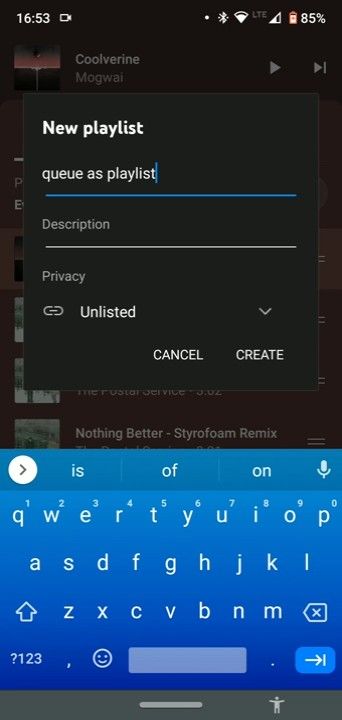
As spotted by 9to5Google, YouTube Music is rolling out a new “save” button in the app that lets you save your song queue as a playlist. When you’re playing an album or a playlist, YouTube Music’s Now Playing screen shows an “Up Next” tab in the bottom left corner that reveals the list of upcoming songs. The new save button appears in the Next Up tab and will allow users to save the entire song queue as a playlist in a few taps.
Tapping on the “save” button brings up the “Add to playlist” dialogue, allowing you to save the queue to one of your existing playlists or create a new one. The feature should also work on radio queues.
Screenshots credit: 9to5Google
The new save button in the Up Next tab hasn’t started rolling out widely. It’s most likely a server-side rollout as it wasn’t available for me on the latest version of YouTube Music. We’ll update this post with more details, once this feature starts rolling out to more users.
YouTube Music recently received a new widget that lets you access playback controls and recently played tracks right from your home screen. The app has also picked up a new Energize mood filter to help you boost your energy when you’re having a long day or feeling unmotivated. Other noteworthy features that YouTube Music has received over the past few months include free background playback in select regions, community-generated playlists, a Material You widget, and more.
Have you received the new save queue as playlist feature in YouTube Music? Let us know in the comments below.
Over the last few months, we’ve seen several leaks about Samsung’s upcoming flagship tablet lineup. The leaks have revealed that Samsung will likely launch three Galaxy Tab S8 models next year, including a new ‘Ultra’ variant with a massive battery and display. Rumors claim that Samsung could launch the Galaxy Tab S8 lineup alongside the Galaxy S22 series in February next year and leaked renders suggest that the tablets will sport a familiar back panel design. While Samsung hasn’t shared any official details so far, Evan Blass has now posted more renders that give us a closer look at their displays.
The new renders showcase the displays and surrounding bezels of all three Samsung Galaxy Tab S8 models. As you can see in the attached images, the top-of-the-line Galaxy Tab S8 Ultra appears to have the slimmest bezels out of the lot and two front-facing cameras housed within a relatively small notch in the top bezel. The render also reveals that the tablet’s power button and volume rocker will reside on the top edge.
The Galaxy Tab S8 Plus render suggests that it will also feature two front-facing cameras like the Ultra variant. However, one of its cameras will reside in the top bezel, while the other will be on the left bezel. In addition to the two front-facing cameras, the Galaxy Tab S8 Plus looks to have an additional sensor in the top edge, possibly for face unlock.
Lastly, the vanilla Galaxy Tab S8 will have thicker bezels like the Plus variant, but with only one front-facing camera on the top bezel. The power button and volume rocker on both models will be on the top edge. Although the renders don’t reveal much else about the tablets, previous leaks suggest that the Galaxy Tab S8 lineup will pack 8,000mAh, 10,090mAh, and 11,500mAh batteries, respectively. The Ultra variant will likely feature Qualcomm’s latest Snapdragon 8 Gen 1 chip, while the other two models will pack the Snapdragon 888.
For more information about the upcoming Galaxy Tab S8 lineup, check out our previous coverage by following the links above.
Featured image: Leaked render of the Galaxy Tab S8 Ultra via @evleaks
Over the last few months, we’ve seen several leaks about Samsung’s upcoming flagship tablet lineup. The leaks have revealed that Samsung will likely launch three Galaxy Tab S8 models next year, including a new ‘Ultra’ variant with a massive battery and display. Rumors claim that Samsung could launch the Galaxy Tab S8 lineup alongside the Galaxy S22 series in February next year and leaked renders suggest that the tablets will sport a familiar back panel design. While Samsung hasn’t shared any official details so far, Evan Blass has now posted more renders that give us a closer look at their displays.
The new renders showcase the displays and surrounding bezels of all three Samsung Galaxy Tab S8 models. As you can see in the attached images, the top-of-the-line Galaxy Tab S8 Ultra appears to have the slimmest bezels out of the lot and two front-facing cameras housed within a relatively small notch in the top bezel. The render also reveals that the tablet’s power button and volume rocker will reside on the top edge.
The Galaxy Tab S8 Plus render suggests that it will also feature two front-facing cameras like the Ultra variant. However, one of its cameras will reside in the top bezel, while the other will be on the left bezel. In addition to the two front-facing cameras, the Galaxy Tab S8 Plus looks to have an additional sensor in the top edge, possibly for face unlock.
Lastly, the vanilla Galaxy Tab S8 will have thicker bezels like the Plus variant, but with only one front-facing camera on the top bezel. The power button and volume rocker on both models will be on the top edge. Although the renders don’t reveal much else about the tablets, previous leaks suggest that the Galaxy Tab S8 lineup will pack 8,000mAh, 10,090mAh, and 11,500mAh batteries, respectively. The Ultra variant will likely feature Qualcomm’s latest Snapdragon 8 Gen 1 chip, while the other two models will pack the Snapdragon 888.
For more information about the upcoming Galaxy Tab S8 lineup, check out our previous coverage by following the links above.
Featured image: Leaked render of the Galaxy Tab S8 Ultra via @evleaks
I love a good portable charger – I spend enough time on the go that keeping all my tech charged is an absolute nightmare. But until now, all battery packs have had one big issue: they just took way too long to charge. In a few years, we’ve gone from 5W charging in our mobile devices to over 100W in some phones. While all smartphones now include some form of fast charging, and battery packs themselves support fast charging output, this technology never really transitioned to charging the things that keep our tech charged on the go. What good is a battery pack that takes hours to charge, only to deplete with a few charges of your mobile device? This is where Elecjet enters the conversation with the Apollo Ultra graphene battery pack.
Elecjet Apollo Ultra: What I like
Elecjet – which just sold to Alpine 4 holdings who plans to add production sites in the US eventually, albeit we’re not sure if this includes this battery pack – has returned to Indiegogo with a product that sets the standard for portable battery packs.
After using the Elecjet Apollo Ultra, I have no intention of going back to other power banks
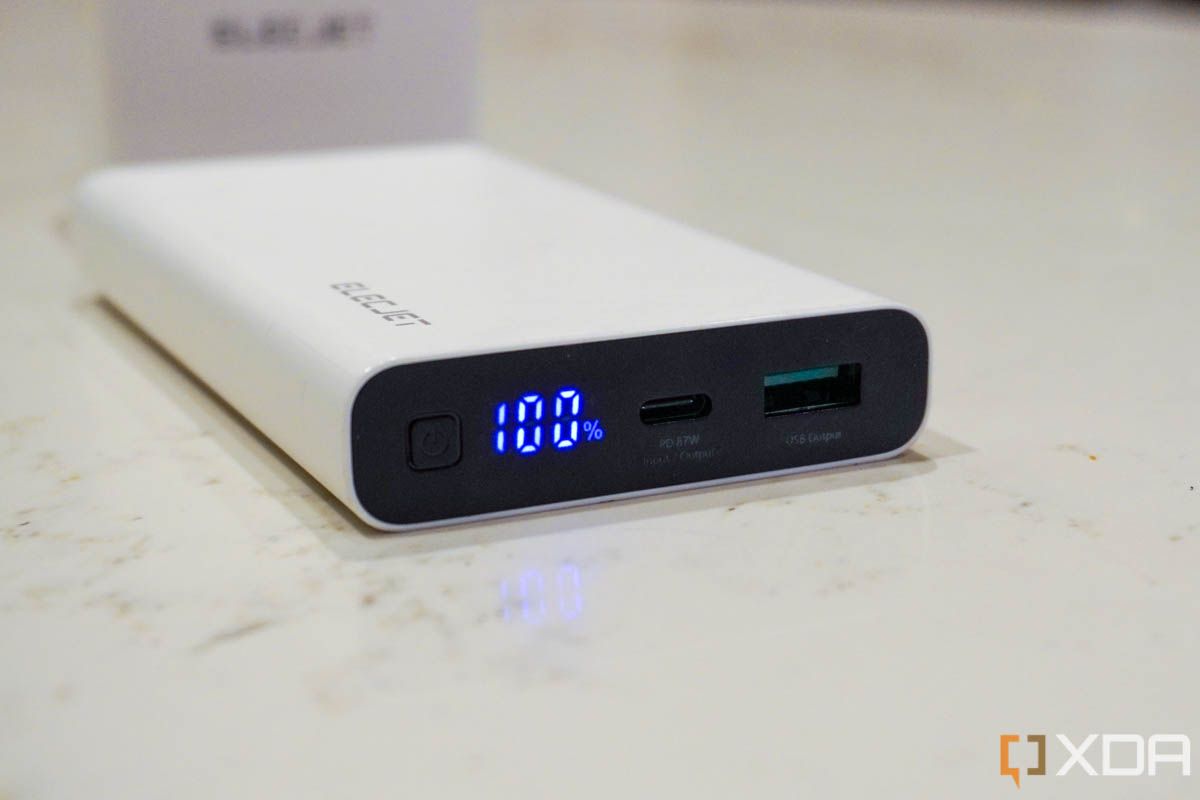
I’ve used the Elecjet Apollo Ultra for a couple of months now. I have zero intention of ever going back to the battery packs I was using before. The Elecjet Apollo Ultra is a 37Wh (10,000 mAh) power bank that can be charged at 100W and outputs 87W across the USB-C and USB-A ports. By far, my favorite part – aside from the super-fast input charging – is the digital display that tells you the percentage. Still, when you’re charging, it also lets you see just how fast it’s charging by displaying the percentage to one decimal place. It also has passthrough charging, so you can charge devices while you charge the power bank.
Most power banks charge between 15W and 20W, although some go as high as 40W, but this is the fastest power bank I’ve ever had to charge. This fully charges its 10,000 mAh capacity within a couple of hours and is ready to go. Before using this, I used Samsung’s 10,000mAh USB-C wireless power bank, and I love that, but it now sits looking at me forlornly whenever I open the drawer it’s in. The Elecjet Apollo Ultra also makes me think graphene is the future to faster charging of traditional power banks, albeit it comes with its own set of caveats that we need to go into.
I spent almost a month in the hospital in September and October and wouldn’t have survived without the Elecjet Apollo Ultra. In the second room that I spent about ten days in, an entire bank of outlets didn’t work, so I was charging this once or twice per day and using it to charge all my mobile devices. Without the 100W fast charging, this wouldn’t have been possible.
I can’t begin to count how many times I’ve gone to leave my house and picked up a battery pack only to discover it was empty. The Elecjet Apollo Ultra solves this as charging it for 10 minutes is enough to charge my iPhone 13 Pro to full or Galaxy Z Fold 3 to a considerable amount. Regardless of which device I’m using, it ensures I have enough power to get through most of the day. This pre-production unit I’ve been using is limited to 87W input, so it takes about 37 minutes to charge to full, but the final retail unit should charge in full in just under half an hour. Either of those numbers is pretty insane for 10,000 mAh.
Elecjet Apollo Ultra: The bits to be wary about
The USB-C port can provide up to 65W of power, while the USB-A port supports 18W output. If your device supports the PPS power spec, it can output at 68.25W, but regardless of which devices you’ve connected, it doesn’t quite add up to the 87W that Elecjet claims.
At 10,000 mAh, the Elecjet Apollo Ultra also has a smaller capacity than we’d have liked to see. Ideally, I would have wanted a 55Wh capacity or even 70Wh, which would result in a bigger size but provide the capacity needed to power all the devices we use today. For example, the Apollo Ultra can only charge my Macbook Air to about two-thirds, and charging at the full 65W speed will deplete the battery in 35-40 minutes. It’s less of a problem than other devices as you can charge it quickly, and I’m yet to be in a position where I need the charger and it’s empty, but as we all return to traveling, it’s worth keeping in mind.
It’s also worth mentioning that Elecjet doesn’t have the best reputation amongst crowdfunding backers. Previous campaigns have left backer questions unanswered, and there were some quality assurance problems. Still, the Elecjet Apollo Ultra has been pleasantly surprising, and I have no doubts about the company’s ability to deliver on its crowdfunding campaign promises. If you’d rather wait, the company has a sizeable array of products on Amazon, so you can always wait for the Apollo Ultra to be listed there.
Elecjet Apollo Ultra: Setting a new standard in portable chargers, somewhat
The Elecjet Apollo Ultra has changed what I expect from a portable charger. Instead of blindly accepting that I’ll have to judge the battery based on four or five LED lights and hoping it’ll charge quickly, I’ve now begun checking these two ‘specs’ as part of how I judge any portable charger. Similarly, any portable charger I buy or recommend now has these features: easy battery level indication and really quick charging.
The Elecjet Apollo Ultra is priced at $65 for Indiegogo backers, which is one of the more expensive portable chargers compared to the generally accepted <$50 pricing depending on features. Take, for example, my Samsung’s wireless portable charger: it charges within a couple of hours, has two USB-C ports, the same capacity, and a wireless charging pad, and costs less than $50. That said, this isn’t egregiously expensive, and I wouldn’t hesitate to recommend it to anyone who needs a new portable charger and can spare the cash.
The Elecjet Apollo Ultra is the only power bank I recommend now. With 100W fast charging, you can recharge it in under 30 minutes and it supports up to 87W total output through the USB-C and USB-A ports. It's good enough to power all your devices, and after a couple of months with it, I don't want to use any other power bank!
I love a good portable charger – I spend enough time on the go that keeping all my tech charged is an absolute nightmare. But until now, all battery packs have had one big issue: they just took way too long to charge. In a few years, we’ve gone from 5W charging in our mobile devices to over 100W in some phones. While all smartphones now include some form of fast charging, and battery packs themselves support fast charging output, this technology never really transitioned to charging the things that keep our tech charged on the go. What good is a battery pack that takes hours to charge, only to deplete with a few charges of your mobile device? This is where Elecjet enters the conversation with the Apollo Ultra graphene battery pack.
Elecjet Apollo Ultra: What I like
Elecjet – which just sold to Alpine 4 holdings who plans to add production sites in the US eventually, albeit we’re not sure if this includes this battery pack – has returned to Indiegogo with a product that sets the standard for portable battery packs.
After using the Elecjet Apollo Ultra, I have no intention of going back to other power banks
I’ve used the Elecjet Apollo Ultra for a couple of months now. I have zero intention of ever going back to the battery packs I was using before. The Elecjet Apollo Ultra is a 37Wh (10,000 mAh) power bank that can be charged at 100W and outputs 87W across the USB-C and USB-A ports. By far, my favorite part – aside from the super-fast input charging – is the digital display that tells you the percentage. Still, when you’re charging, it also lets you see just how fast it’s charging by displaying the percentage to one decimal place. It also has passthrough charging, so you can charge devices while you charge the power bank.
Most power banks charge between 15W and 20W, although some go as high as 40W, but this is the fastest power bank I’ve ever had to charge. This fully charges its 10,000 mAh capacity within a couple of hours and is ready to go. Before using this, I used Samsung’s 10,000mAh USB-C wireless power bank, and I love that, but it now sits looking at me forlornly whenever I open the drawer it’s in. The Elecjet Apollo Ultra also makes me think graphene is the future to faster charging of traditional power banks, albeit it comes with its own set of caveats that we need to go into.
I spent almost a month in the hospital in September and October and wouldn’t have survived without the Elecjet Apollo Ultra. In the second room that I spent about ten days in, an entire bank of outlets didn’t work, so I was charging this once or twice per day and using it to charge all my mobile devices. Without the 100W fast charging, this wouldn’t have been possible.
I can’t begin to count how many times I’ve gone to leave my house and picked up a battery pack only to discover it was empty. The Elecjet Apollo Ultra solves this as charging it for 10 minutes is enough to charge my iPhone 13 Pro to full or Galaxy Z Fold 3 to a considerable amount. Regardless of which device I’m using, it ensures I have enough power to get through most of the day. This pre-production unit I’ve been using is limited to 87W input, so it takes about 37 minutes to charge to full, but the final retail unit should charge in full in just under half an hour. Either of those numbers is pretty insane for 10,000 mAh.
Elecjet Apollo Ultra: The bits to be wary about
The USB-C port can provide up to 65W of power, while the USB-A port supports 18W output. If your device supports the PPS power spec, it can output at 68.25W, but regardless of which devices you’ve connected, it doesn’t quite add up to the 87W that Elecjet claims.
At 10,000 mAh, the Elecjet Apollo Ultra also has a smaller capacity than we’d have liked to see. Ideally, I would have wanted a 55Wh capacity or even 70Wh, which would result in a bigger size but provide the capacity needed to power all the devices we use today. For example, the Apollo Ultra can only charge my Macbook Air to about two-thirds, and charging at the full 65W speed will deplete the battery in 35-40 minutes. It’s less of a problem than other devices as you can charge it quickly, and I’m yet to be in a position where I need the charger and it’s empty, but as we all return to traveling, it’s worth keeping in mind.
It’s also worth mentioning that Elecjet doesn’t have the best reputation amongst crowdfunding backers. Previous campaigns have left backer questions unanswered, and there were some quality assurance problems. Still, the Elecjet Apollo Ultra has been pleasantly surprising, and I have no doubts about the company’s ability to deliver on its crowdfunding campaign promises. If you’d rather wait, the company has a sizeable array of products on Amazon, so you can always wait for the Apollo Ultra to be listed there.
Elecjet Apollo Ultra: Setting a new standard in portable chargers, somewhat
The Elecjet Apollo Ultra has changed what I expect from a portable charger. Instead of blindly accepting that I’ll have to judge the battery based on four or five LED lights and hoping it’ll charge quickly, I’ve now begun checking these two ‘specs’ as part of how I judge any portable charger. Similarly, any portable charger I buy or recommend now has these features: easy battery level indication and really quick charging.
The Elecjet Apollo Ultra is priced at $65 for Indiegogo backers, which is one of the more expensive portable chargers compared to the generally accepted <$50 pricing depending on features. Take, for example, my Samsung’s wireless portable charger: it charges within a couple of hours, has two USB-C ports, the same capacity, and a wireless charging pad, and costs less than $50. That said, this isn’t egregiously expensive, and I wouldn’t hesitate to recommend it to anyone who needs a new portable charger and can spare the cash.
The Elecjet Apollo Ultra is the only power bank I recommend now. With 100W fast charging, you can recharge it in under 30 minutes and it supports up to 87W total output through the USB-C and USB-A ports. It's good enough to power all your devices, and after a couple of months with it, I don't want to use any other power bank!
OPPO first showcased ColorOS 12 based on Android 12 in China back in September. The company then rolled out the first beta build to Find X3 Pro users in Indonesia and Malaysia in early October. Shortly thereafter, OPPO shared the release timeline for several more devices, including the Reno 6 series, the Reno 5 series, the Find X2 series, etc. But the release timeline didn’t include exact dates for the rollout. OPPO has now shared more details about the ColorOS 12 beta rollout in India, highlighting specific rollout dates for the Find X2, Reno 6 series, F19 Pro+, A74 5G, and more.
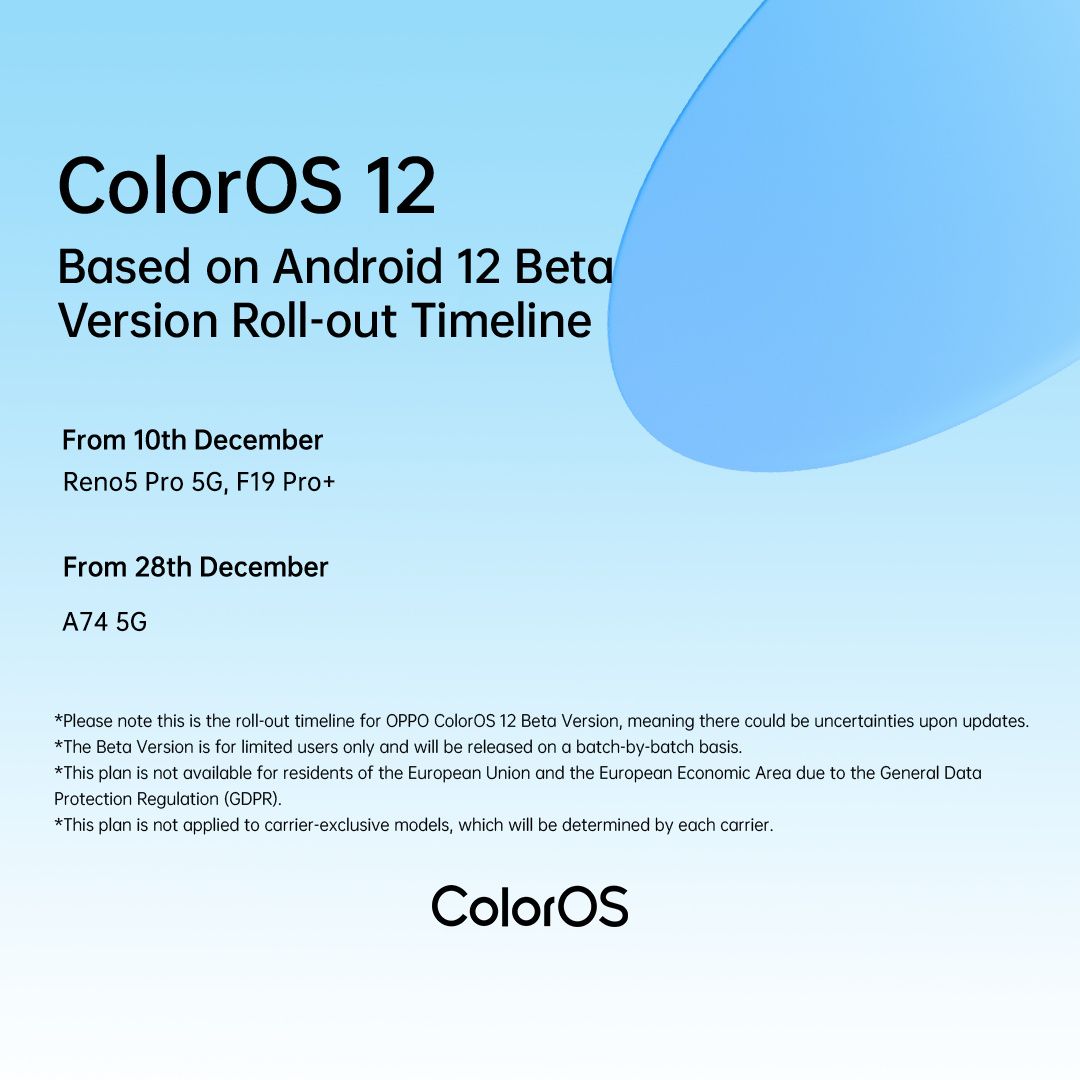
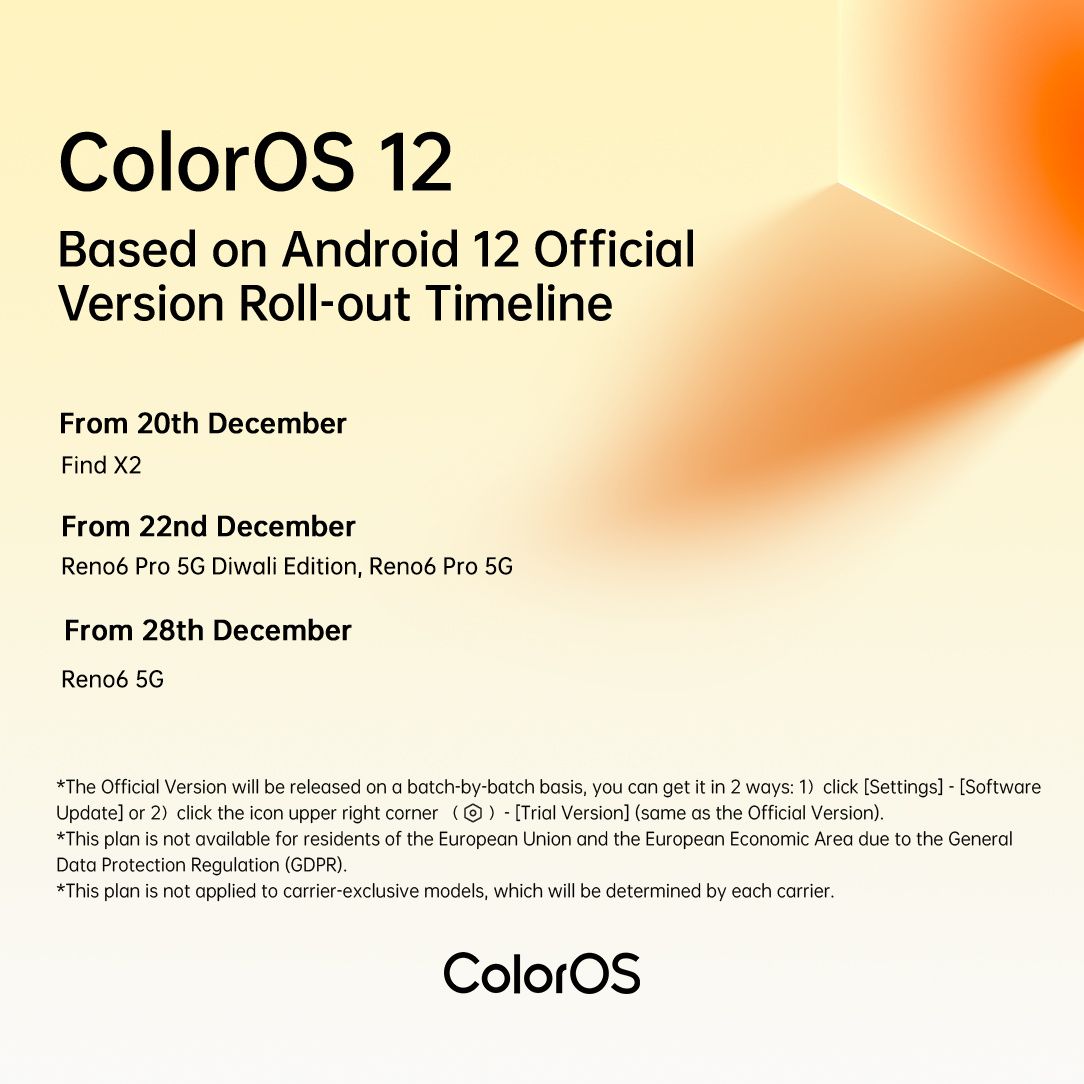
In a recent press release, OPPO revealed that it will start rolling out ColorOS 12 betas based on Android 12 to the OPPO F19 Pro+ and the Reno 5 Pro 5G in India on December 10. The beta build will also roll out to the OPPO A74 5G starting December 28. In addition, the company has announced that it will start rolling out the stable release to the Find X2 on December 20, the Reno 6 Pro 5G and Reno 6 Pro 5G Diwali Edition on December 22, and the vanilla Reno 6 5G on December 28.
OPPO notes that the ColorOS 12 update for the devices mentioned above will start rolling out in batches on the given dates. So you might have to wait for a few days if you don’t receive the update on the first day. If the update notification doesn’t pop up automatically on your phone, you can manually check for it by heading over to the Software Update section in device settings and tapping on the cog icon in the top-right corner.
At the moment, OPPO hasn’t shared a similar release timeline for other regions. But we expect the company to release more information in the coming days. Until then, you can learn more about ColorOS 12 and all the new features included in the release by checking out our hands-on preview of the software.
OPPO first showcased ColorOS 12 based on Android 12 in China back in September. The company then rolled out the first beta build to Find X3 Pro users in Indonesia and Malaysia in early October. Shortly thereafter, OPPO shared the release timeline for several more devices, including the Reno 6 series, the Reno 5 series, the Find X2 series, etc. But the release timeline didn’t include exact dates for the rollout. OPPO has now shared more details about the ColorOS 12 beta rollout in India, highlighting specific rollout dates for the Find X2, Reno 6 series, F19 Pro+, A74 5G, and more.
In a recent press release, OPPO revealed that it will start rolling out ColorOS 12 betas based on Android 12 to the OPPO F19 Pro+ and the Reno 5 Pro 5G in India on December 10. The beta build will also roll out to the OPPO A74 5G starting December 28. In addition, the company has announced that it will start rolling out the stable release to the Find X2 on December 20, the Reno 6 Pro 5G and Reno 6 Pro 5G Diwali Edition on December 22, and the vanilla Reno 6 5G on December 28.
OPPO notes that the ColorOS 12 update for the devices mentioned above will start rolling out in batches on the given dates. So you might have to wait for a few days if you don’t receive the update on the first day. If the update notification doesn’t pop up automatically on your phone, you can manually check for it by heading over to the Software Update section in device settings and tapping on the cog icon in the top-right corner.
At the moment, OPPO hasn’t shared a similar release timeline for other regions. But we expect the company to release more information in the coming days. Until then, you can learn more about ColorOS 12 and all the new features included in the release by checking out our hands-on preview of the software.