LightBlog

jeudi 22 octobre 2020

Huawei announces the Mate 40 Series with the 5nm Kirin 9000

Despite all odds stacked against it, Huawei recently hosted its Smart Life event for 2020 where it unveiled a host of new devices. During the event, the company unveiled the new Huawei EyeWear II, FreeBuds Studio, Porsche Design Huawei Watch GT2, and the Huawei Mate 40 Series. The Huawei Mate 40 Series consists of 4 new devices, including the Huawei Mate 40, Mate 40 Pro, Mate 40 Pro+, and the Porsche Design Mate 40 RS. Here’s everything you need to know about the latest flagship smartphones from the Chinese OEM.

Huawei Mate 40 Series: Specifications

Specification Huawei Mate 40 Huawei Mate 40 Pro Huawei Mate 40 Pro+
Dimensions & Weight <information not available>
  • 162.9 x 75.5 x 9.1mm
  • 212g
  • Mate 40 Pro+
    • 162.9 x 75.5 x 8.8 mm
    • 230g
  • Porsche Design Mate 40 RS
    • 162.9 x 75.5 x 10.1 mm
    • 234g
Display
  • 6.5-inch flexible OLED
  • 2376 x 1080p
  • 90Hz refresh rate
  • 240Hz touch sampling rate
  • 6.76-inch flexible OLED
  • 2772 x 1344p
  • 456ppi
  • 90Hz refresh rate
  • 240Hz touch sampling rate
  • 6.76-inch flexible OLED
  • 2772 x 1344p
  • 456ppi
  • 90Hz refresh rate
  • 240Hz touch sampling rate
SoC <information not available>
  • HiSilicon Kirin 9000
    • 1x ARM Cortex A-77 @ 3.13GHz
    • 3x ARM Cortex A-77 @2.54GHz
    • 4x ARM Cortex A-55 @2.04GHz
  • 5nm TSMC process
  • ARM Mali-G78MP24 GPU
  • HiSilicon Kirin 9000
    • 1x ARM Cortex A-77 @ 3.13GHz
    • 3x ARM Cortex A-77 @2.54GHz
    • 4x ARM Cortex A-55 @2.04GHz
  • 5nm TSMC process
  • ARM Mali-G78MP24 GPU
RAM & Storage
  • 8GB RAM
  • 128GB UFS 3.1 storage
  • 8GB RAM
  • 256GB UFS 3.1 storage
  • Huawei’s NM card expansion slot
  • 12GB RAM
  • 256GB UFS 3.1 storage (512GB on Porsche edition)
  • Huawei’s NM card expansion slot
Battery & Charging <information not available>
  • 4,400mAh dual cell battery
  • 66W SuperCharge wired fast charging
  • 50W wireless fast charging
  • Reverse wireless charging
  • 4,400mAh dual cell battery
  • 66W SuperCharge wired fast charging
  • 50W wireless fast charging
  • Reverse wireless charging
Security
  • In-display fingerprint scanner
  • 3D Face unlock
  • In-display fingerprint scanner
  • 3D Face unlock
  • In-display fingerprint scanner
Rear Camera(s)
  • 50MP f/1.9, RYYB primary camera with OIS
  • 16MP f/2.2, wide-angle camera
  • 8MP f/2.4, telephoto camera with OIS
  • 50MP f/1.9, RYYB primary camera with OIS
  • 20MP f/1.8, wide-angle camera
  • 12MP f/3.4, 5x periscope telephoto camera
  • 50MP f/1.9, RYYB primary camera with OIS
  • 20MP f/2.4, wide-angle camera
  • 12MP f/2.4, 3x telephoto camera with OIS
  • 8MP f/4.4, 10x periscope telephoto camera
  • ToF sensor
  • Color Temperature Sensor (Porsche Edition only)
Front Camera(s) <information not available>
  • 13MP f/2.4, wide-angle camera
  • 3D ToF sensor
  • 13MP f/2.4, wide-angle camera
  • 3D ToF sensor
Port(s) USB 3.1 Type-C port USB 3.1 Type-C port USB 3.1 Type-C port
Audio <information not available> Dual stereo speakers Dual stereo speakers
Connectivity
  • 5G
  • Bluetooth 5.2
  • Wi-Fi 6
  • NFC
  • 5G
  • Bluetooth 5.2
  • Wi-Fi 6
  • NFC
  • 5G
  • Bluetooth 5.2
  • Wi-Fi 6
  • NFC
Software EMUI 11 based on Android 10 with Huawei Mobile Services EMUI 11 based on Android 10 with Huawei Mobile Services EMUI 11 based on Android 10 with Huawei Mobile Services
Other Features
  • IP53 certification
  • IP68 certification
  • IR Blaster
  • IP68 certification

As seen in previous leaks, the Huawei Mate 40 Series features a new circular ring design on the back for the camera module. Huawei calls it the “Space Ring Design” as it echoes the spirit of exploring and unraveling the mysteries of the universe(?). Over on the front, the Mate 40 Pro and Mate 40 Pro+ feature a 6.67-inch flexible OLED display that curves around the edges at an 88° angle. The display offers a resolution of 2772×1344 pixels, a 90Hz refresh rate, and a pixel density of 456ppi. It has minimal bezels on the top and bottom edges, with a pill-shaped hole punch cutout for the front-facing camera module on both the higher-end variants. The regular Mate 40, however, features a smaller 6.5-inch FHD+ OLED display with a resolution of 2376 x 1080 pixels and a 90Hz refresh rate. Unlike the Pro variants, the edges of the display on the Mate 40 are curved at a 68° angle.
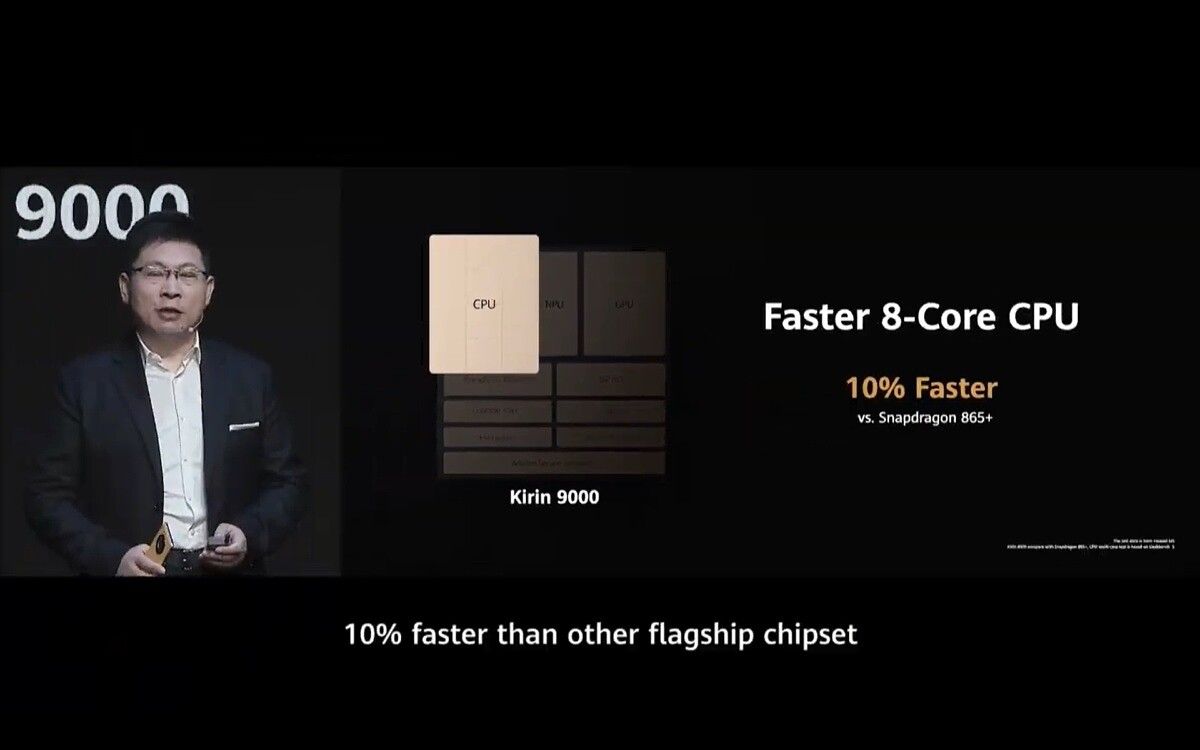
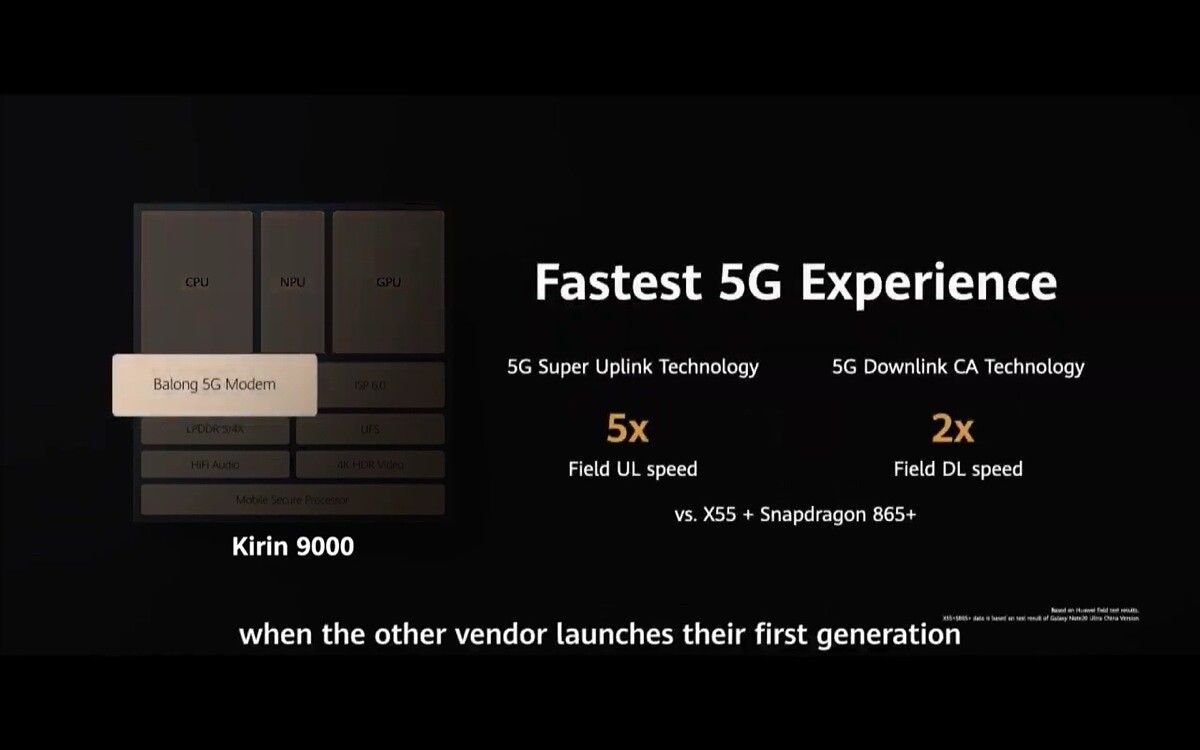
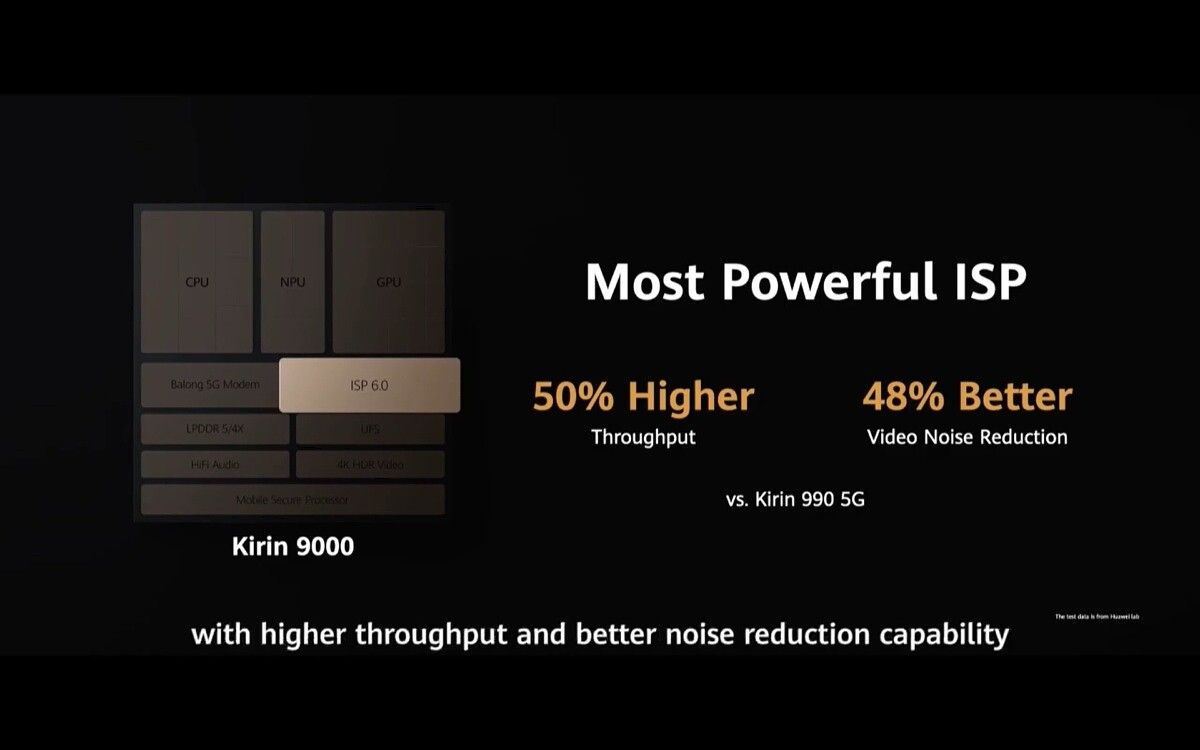
Huawei HiSilicon Kirin 9000 10 faster than Snapdragon 865 Plus HiSilicon Kirin 9000 fastest NPU HiSlicon Kirin 9000 52 faster GPU than Snapdragon 865 Plus HiSilicon Kirin 9000 SoC 5x faster upload and 2x faster download compared to Snapdragon 865 Plus HiSilicon Kirin 9000 powerful ISP 50 higher throughput and 48 better video noise reduction than Kirin 990 HiSilicon Kirin 9000 25 better CPU power efficiency than Snapdragon 865 Plus

The Huawei Mate 40 Series is the first from the company to feature the Kirin 9000 SoC, which is an octa-core chip built on a 5nm process. The chip has 4x big ARM Cortex A-77 cores, with one core clocked at 3.13GHz and three clocked at 2.54GHz, and 4x small ARM Cortex A-55 cores clocked at 2.04GHz. It’s the world’s first 5nm chip to feature an integrated 5G modem, and it includes ARM’s Mali-G78MP24 GPU. The SoC is paired with 8GB of RAM and 256GB of UFS 3.1 storage on the Mate 40 Pro and 12GB of RAM on the Mate 40 Pro+, with a dedicated Huawei NM card expansion slot. The Porsche Design variant features 512GB of storage.

5 colors of the Huawei Mate 40 Pro on white background

Huawei Mate 40 Pro

In the camera department, the Huawei Mate 40 features a 50MP f/1.9 primary camera, a 16MP f/2.2 wide-angle camera, and an 8MP f/2.4 telephoto camera. The Mate 40 Pro features the same primary camera, but it includes a 20MP f/1.8 wide-angle camera and a 12MP f/3.4 5x periscope camera. The top-end Mate 40 Pro+ also features the same primary camera, but it includes a 20MP f/2.4 wide-angle camera, an 8MP f/4.4 10x periscope camera with OIS, a 12MP f/2.4 telephoto camera, and a ToF sensor. The Porsche Design Mate 40 RS features the same camera setup as the Mate 40 Pro+, but it includes an additional color temperature sensor.

Black and white Huawei Mate 40 Pro Plus on white background

Huawei Mate 40 Pro Plus

The front-facing camera module on the Mate 40 Pro and Mate 40 Pro+ includes a 13MP f/2.4 wide-angle selfie shooter and a 3D ToF sensor. The selfie camera on the device offers a feature called intelligent FoV, which automatically detects if there are multiple people in the frame and adjusts the field of view to accommodate all people.

Porsche Design Huawei Mate 40 RS

Rounding off the hardware on both Pro variants is a 4,400mAh dual-cell battery that offers support for 66W wired fast charging and 50W wireless fast charging. The devices also offer support for reverse wireless charging, which will let users charge other devices wirelessly by placing them on the back panel.

In terms of software, the Huawei Mate 40 Series runs Huawei’s custom Android skin EMUI 11 based on Android 10. As expected, the device includes Huawei Mobile Services with Huawei AppGallery, Petal Maps, and other Huawei services built-in.

While the software is still stuck on Android 10, Huawei has included a couple of new features for the Huawei Mate 40 Series, including a new Eyes on Display (EOD) feature which only brings up the AOD content when you’re looking at the phone, air gesture controls, multi-screen collaboration, email conversation mode, and smart multi-window mode.

Pricing & Availability

The Huawei Mate 40 Series is priced as follows:

  • Huawei Mate 40 (8GB+128GB): €899
  • Huawei Mate 40 Pro (8GB+256GB): €1,199
  • Huawei Mate 40 Pro+ (12GB+256GB): €1,399
  • Porsche Design Huawei Mate 40 RS (12GB+512GB): €2,295

The Huawei Mate 40 and Mate 40 Pro will be available in 5 color variants: Black, White, Mystic Silver, Green, and Yellow. The Huawei Mate 40 Pro+ will be available in two color variants: Ceramic white and Ceramic black. As of now, Huawei hasn’t shared any info regarding the availability of these new devices. We’ll update the post with the missing info as soon as it’s available.

The post Huawei announces the Mate 40 Series with the 5nm Kirin 9000 appeared first on xda-developers.


from xda-developers https://ift.tt/3michP3
via IFTTT

Huawei announces the Mate 40 Series with the 5nm Kirin 9000

Despite all odds stacked against it, Huawei recently hosted its Smart Life event for 2020 where it unveiled a host of new devices. During the event, the company unveiled the new Huawei EyeWear II, FreeBuds Studio, Porsche Design Huawei Watch GT2, and the Huawei Mate 40 Series. The Huawei Mate 40 Series consists of 4 new devices, including the Huawei Mate 40, Mate 40 Pro, Mate 40 Pro+, and the Porsche Design Mate 40 RS. Here’s everything you need to know about the latest flagship smartphones from the Chinese OEM.

Huawei Mate 40 Series: Specifications

Specification Huawei Mate 40 Huawei Mate 40 Pro Huawei Mate 40 Pro+
Dimensions & Weight
  • 162.9 x 75.5 x 9.1mm
  • 212g
  • Mate 40 Pro+
    • 162.9 x 75.5 x 8.8 mm
    • 230g
  • Porsche Design Mate 40 RS
    • 162.9 x 75.5 x 10.1 mm
    • 234g
Display
  • 6.5-inch flexible OLED
  • 2376 x 1080p
  • 90Hz refresh rate
  • 240Hz touch sampling rate
  • 6.76-inch flexible OLED
  • 2772 x 1344p
  • 456ppi
  • 90Hz refresh rate
  • 240Hz touch sampling rate
  • 6.76-inch flexible OLED
  • 2772 x 1344p
  • 456ppi
  • 90Hz refresh rate
  • 240Hz touch sampling rate
SoC
  • HiSilicon Kirin 9000
    • 1x ARM Cortex A-77 @ 3.13GHz
    • 3x ARM Cortex A-77 @2.54GHz
    • 4x ARM Cortex A-55 @2.04GHz
  • 5nm TSMC process
  • ARM Mali-G78MP24 GPU
  • HiSilicon Kirin 9000
    • 1x ARM Cortex A-77 @ 3.13GHz
    • 3x ARM Cortex A-77 @2.54GHz
    • 4x ARM Cortex A-55 @2.04GHz
  • 5nm TSMC process
  • ARM Mali-G78MP24 GPU
RAM & Storage
  • 8GB RAM
  • 128GB UFS 3.1 storage
  • 8GB RAM
  • 256GB UFS 3.1 storage
  • Huawei’s NM card expansion slot
  • 12GB RAM
  • 256GB UFS 3.1 storage (512GB on Porsche edition)
  • Huawei’s NM card expansion slot
Battery & Charging
  • 4,400mAh dual cell battery
  • 66W SuperCharge wired fast charging
  • 50W wireless fast charging
  • Reverse wireless charging
  • 4,400mAh dual cell battery
  • 66W SuperCharge wired fast charging
  • 50W wireless fast charging
  • Reverse wireless charging
Security
  • In-display fingerprint scanner
  • 3D Face unlock
  • In-display fingerprint scanner
  • 3D Face unlock
  • In-display fingerprint scanner
Rear Camera(s)
  • 50MP f/1.9, RYYB primary camera with OIS
  • 16MP f/2.2, wide-angle camera
  • 8MP f/2.4, telephoto camera with OIS
  • 50MP f/1.9, RYYB primary camera with OIS
  • 20MP f/1.8, wide-angle camera
  • 12MP f/3.4, 5x periscope telephoto camera
  • 50MP f/1.9, RYYB primary camera with OIS
  • 20MP f/2.4, wide-angle camera
  • 12MP f/2.4, 3x telephoto camera with OIS
  • 8MP f/4.4, 10x periscope telephoto camera
  • ToF sensor
  • Color Temperature Sensor (Porsche Edition only)
Front Camera(s)
  • 13MP f/2.4, wide-angle camera
  • 3D ToF sensor
  • 13MP f/2.4, wide-angle camera
  • 3D ToF sensor
Port(s) USB 3.1 Type-C port USB 3.1 Type-C port USB 3.1 Type-C port
Audio Dual stereo speakers Dual stereo speakers
Connectivity
  • 5G
  • Bluetooth 5.2
  • Wi-Fi 6
  • NFC
  • 5G
  • Bluetooth 5.2
  • Wi-Fi 6
  • NFC
  • 5G
  • Bluetooth 5.2
  • Wi-Fi 6
  • NFC
Software EMUI 11 based on Android 10 with Huawei Mobile Services EMUI 11 based on Android 10 with Huawei Mobile Services EMUI 11 based on Android 10 with Huawei Mobile Services
Other Features
  • IR Blaster
  • IP68 certification

As seen in previous leaks, the Huawei Mate 40 Series features a new circular ring design on the back for the camera module. Huawei calls it the “Space Ring Design” as it echoes the spirit of exploring and unraveling the mysteries of the universe(?). Over on the front, the Mate 40 Pro and Mate 40 Pro+ feature a 6.67-inch flexible OLED display that curves around the edges at an 88° angle. The display offers a resolution of 2772×1344 pixels, a 90Hz refresh rate, and a pixel density of 456ppi. It has minimal bezels on the top and bottom edges, with a pill-shaped hole punch cutout for the front-facing camera module on both the higher-end variants. The regular Mate 40, however, features a smaller 6.5-inch FHD+ OLED display with a resolution of 2376 x 1080 pixels and a 90Hz refresh rate. Unlike the Pro variants, the edges of the display on the Mate 40 are curved at a 68° angle.

Huawei HiSilicon Kirin 9000 10 faster than Snapdragon 865 Plus HiSilicon Kirin 9000 powerful ISP 50 higher throughput and 48 better video noise reduction than Kirin 990 HiSilicon Kirin 9000 SoC 5x faster upload and 2x faster download compared to Snapdragon 865 Plus HiSilicon Kirin 9000 25 better CPU power efficiency than Snapdragon 865 Plus HiSilicon Kirin 9000 fastest NPU HiSlicon Kirin 9000 52 faster GPU than Snapdragon 865 Plus

The Huawei Mate 40 Series is the first from the company to feature the Kirin 9000 SoC, which is an octa-core chip built on a 5nm process. The chip has 4x big ARM Cortex A-77 cores, with one core clocked at 3.13GHz and three clocked at 2.54GHz, and 4x small ARM Cortex A-55 cores clocked at 2.04GHz. It’s the world’s first 5nm chip to feature an integrated 5G modem, and it includes ARM’s Mali-G78MP24 GPU. The SoC is paired with 8GB of RAM and 256GB of UFS 3.1 storage on the Mate 40 Pro and 12GB of RAM on the Mate 40 Pro+, with a dedicated Huawei NM card expansion slot. The Porsche Design variant features 512GB of storage.

5 colors of the Huawei Mate 40 Pro on white background

Huawei Mate 40 Pro

In the camera department, the Huawei Mate 40 features a 50MP f/1.9 primary camera, a 16MP f/2.2 wide-angle camera, and an 8MP f/2.4 telephoto camera. The Mate 40 Pro features the same primary camera, but it includes a 20MP f/1.8 wide-angle camera and a 12MP f/3.4 5x periscope camera. The top-end Mate 40 Pro+ also features the same primary camera, but it includes a 20MP f/2.4 wide-angle camera, an 8MP f/4.4 10x periscope camera with OIS, a 12MP f/2.4 telephoto camera, and a ToF sensor. The Porsche Design Mate 40 RS features the same camera setup as the Mate 40 Pro+, but it includes an additional color temperature sensor.

Black and white Huawei Mate 40 Pro Plus on white background

Huawei Mate 40 Pro Plus

The front-facing camera module on the Mate 40 Pro and Mate 40 Pro+ includes a 13MP f/2.4 wide-angle selfie shooter and a 3D ToF sensor. The selfie camera on the device offers a feature called intelligent FoV, which automatically detects if there are multiple people in the frame and adjusts the field of view to accommodate all people.

Porsche Design Huawei Mate 40 RS

Rounding off the hardware on both Pro variants is a 4,400mAh dual-cell battery that offers support for 66W wired fast charging and 50W wireless fast charging. The devices also offer support for reverse wireless charging, which will let users charge other devices wirelessly by placing them on the back panel.

In terms of software, the Huawei Mate 40 Series runs Huawei’s custom Android skin EMUI 11 based on Android 10. As expected, the device includes Huawei Mobile Services with Huawei AppGallery, Petal Maps, and other Huawei services built-in.

While the software is still stuck on Android 10, Huawei has included a couple of new features for the Huawei Mate 40 Series, including a new Eyes on Display (EOD) feature which only brings up the AOD content when you’re looking at the phone, air gesture controls, multi-screen collaboration, email conversation mode, and smart multi-window mode.

Pricing & Availability

The Huawei Mate 40 Series is priced as follows:

  • Huawei Mate 40 (8GB+128GB): €899
  • Huawei Mate 40 Pro (8GB+256GB): €1,199
  • Huawei Mate 40 Pro+ (12GB+256GB): €1,399
  • Porsche Design Huawei Mate 40 RS (12GB+512GB): €2,295

The Huawei Mate 40 and Mate 40 Pro will be available in 5 color variants: Black, White, Mystic Silver, Green, and Yellow. The Huawei Mate 40 Pro+ will be available in two color variants: Ceramic white and Ceramic black. As of now, Huawei hasn’t shared any info regarding the availability of these new devices. We’ll update the post with the missing info as soon as it’s available.

The post Huawei announces the Mate 40 Series with the 5nm Kirin 9000 appeared first on xda-developers.


from xda-developers https://ift.tt/3michP3
via IFTTT

Huawei Mate 40 Pro Hands-on: Another low light and zooming powerhouse

The Huawei Mate 40 Pro is arguably the most intriguing smartphone launch of the year, what with it being potentially the very last Huawei phone to use a Kirin chip due to ongoing U.S. sanctions that prevent most of the world’s chipmakers, including Huawei’s longtime partner TSMC, from supplying silicon for Huawei.

But even without the U.S. scrutiny drama, the Huawei Mate 40 Pro would still have been one of the more interesting launches of the year anyway. Ever since 2018’s Huawei P20 Pro, every Huawei flagship has brought with it a breakthrough in camera hardware, whether it be RYYB sensors that can literally see in the dark, a true 10x lossless optical zoom lens, or computational night mode photography before Google and Apple did it.

I’ve been testing a pre-production unit of the Huawei Mate 40 Pro for about a day and a half. Here are my first impressions.

Huawei Mate 40 Pro: Specifications

Specification Huawei Mate 40 Pro
Dimensions & Weight
  • 162.9 x 75.5 x 9.1mm
  • 212g
Display
  • 6.76-inch flexible OLED
  • 2772 x 1344 resolution
  • 456ppi
  • 90Hz refresh rate
SoC
  • HiSilicon Kirin 9000
    • 1x ARM Cortex A-77 @ 3.13GHz
    • 3x ARM Cortex A-77 @2.54GHz
    • 4x ARM Cortex A-55 @2.04GHz
  • 5nm TSMC process
  • ARM Mali-G78MP24 GPU
RAM & Storage
  • 8GB RAM
  • 256GB UFS 3.1 storage
  • Huawei’s proprietary NM card expansion slot
Battery & Charging
  • 4,400mAh dual-cell battery
  • 66W SuperCharge wired fast charging
  • 50W wireless fast charging
  • Reverse wireless charging
Security
  • 3D Face unlock
  • In-display fingerprint scanner
Rear Cameras
  • 50MP f/1.9, RYYB primary camera with OIS
  • 20MP f/1.8, wide-angle camera
  • 12MP f/3.4, 5x periscope telephoto camera
  • 3D ToF sensor
Front Cameras
  • 13MP f/2.4, wide-angle camera
  • 3D ToF sensor
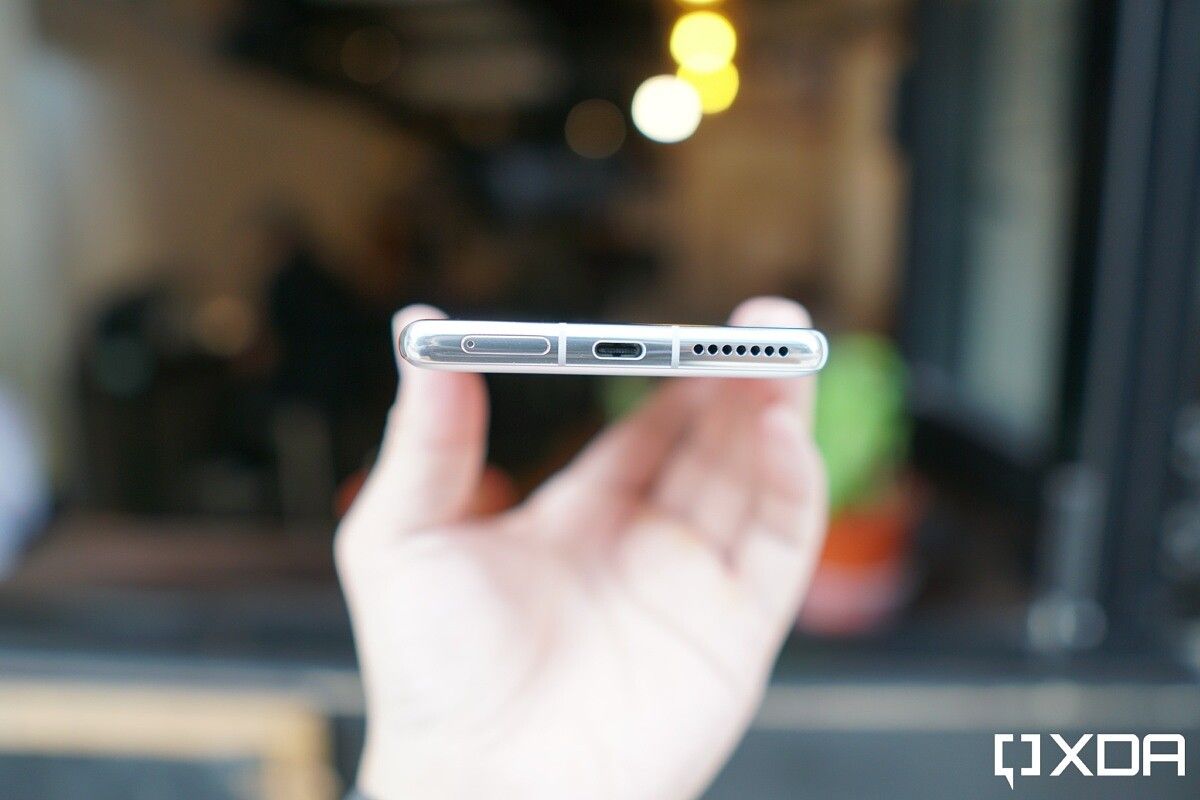
Ports USB 3.1 Type-C port
Audio Dual stereo speakers
Connectivity
  • 5G
  • Bluetooth 5.2
  • Wi-Fi 6
  • NFC

Design: Evolution of an established look

Huawei Mate 40 Pro looking shiny.

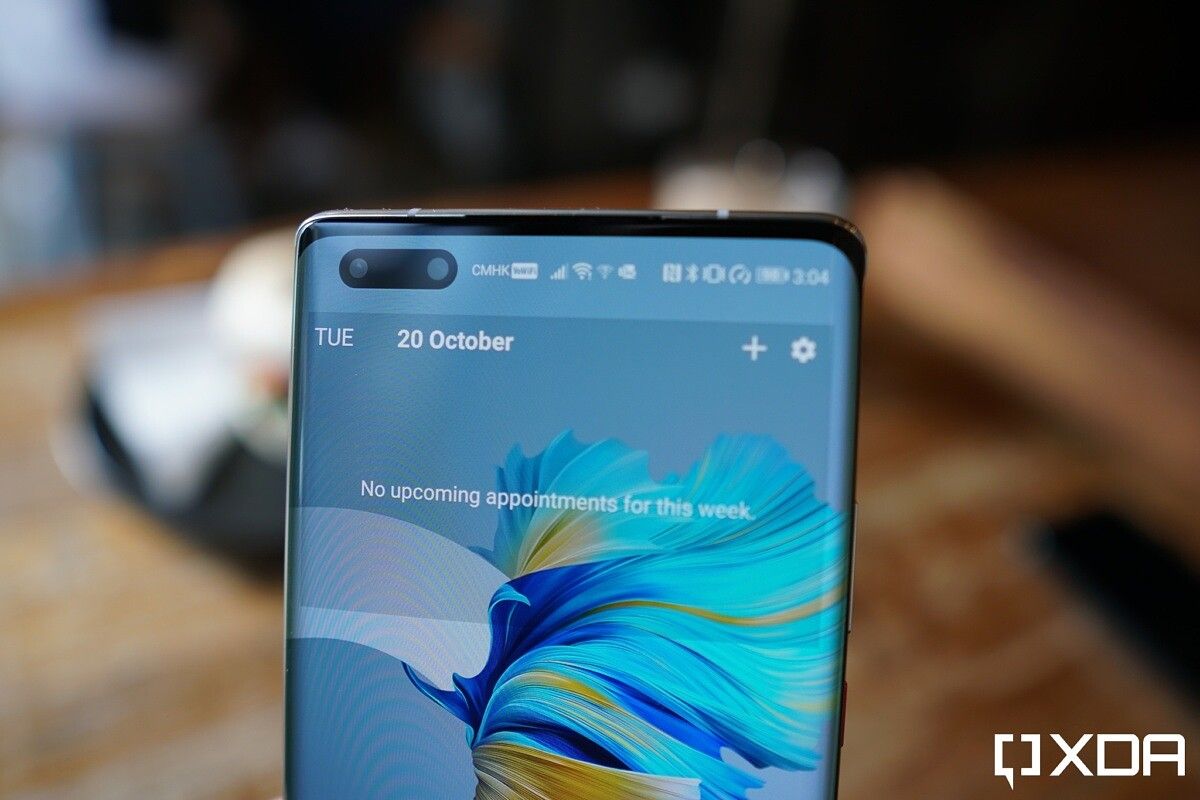
The Huawei Mate 40 Pro continues the design aesthetics established with the Mate 20 series: a centrally-placed camera module with a 2×2 camera layout, a curved screen, and real 3D face scanning — a rarity in the Android space. Thankfully, the angular, unsightly notch of the Mate 30 is gone. In its place is a hole-punch cut-out housing a selfie camera, a TOF sensor, and an infrared camera, similar to what we saw in the P40 series.

The Mate 40 Pro brings back the waterfall screen with an 88-degree slope.

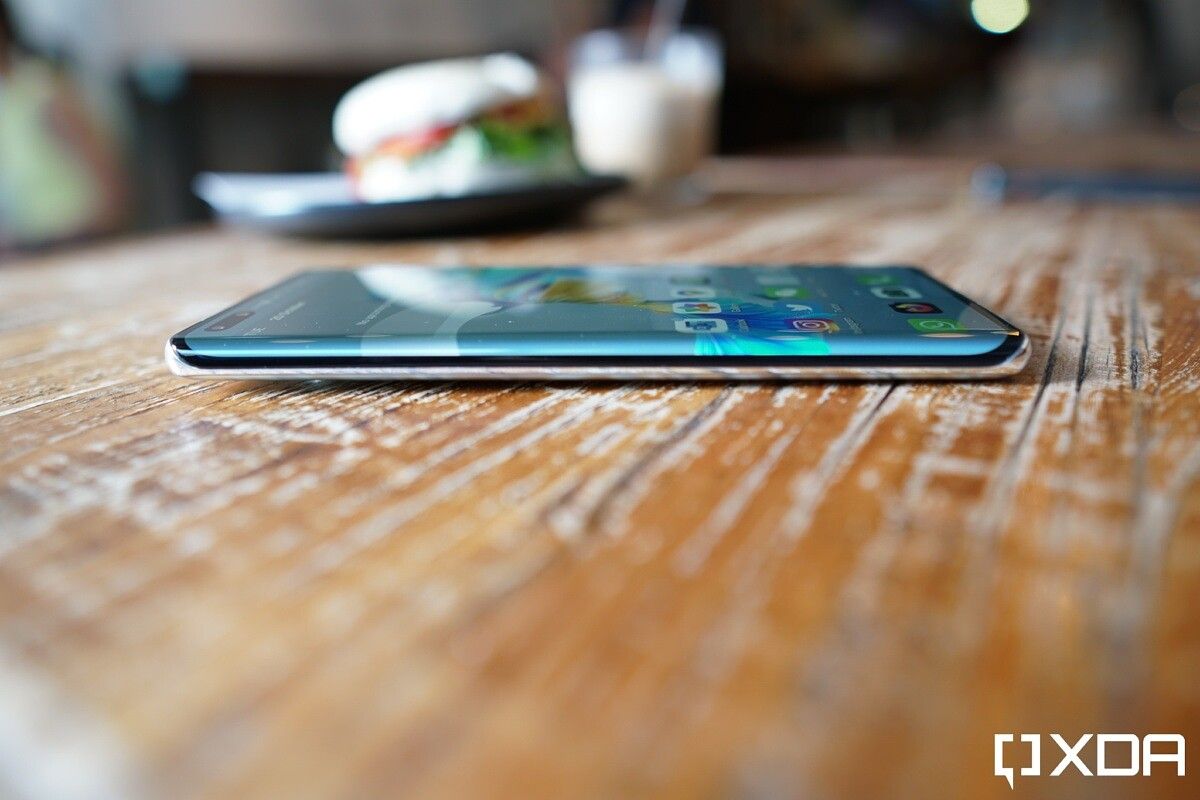
The “waterfall” curved display first seen in last year’s Mate 30 Pro — meaning the sides of the screen slope at a more dramatic 88-degree angle and curves further down the sides of the phone — is back. Many people in the tech space criticized this design last year (mostly from looking at product shots), but those who actually reviewed the Mate 30 Pro reported no false touch issues across the board. The same can be said here — even with my palm rubbing all over the side, it doesn’t get in the way of scrolling or tapping. The 6.67-inch OLED panel is “just” 90Hz, so it’s technically slower than the 120Hz seen in rivals, but animations appear very smooth to my eyes. I suppose the OnePlus 8T’s animations zip around a hair more fluidly, but I don’t think many people will look at this 90Hz panel and complain.

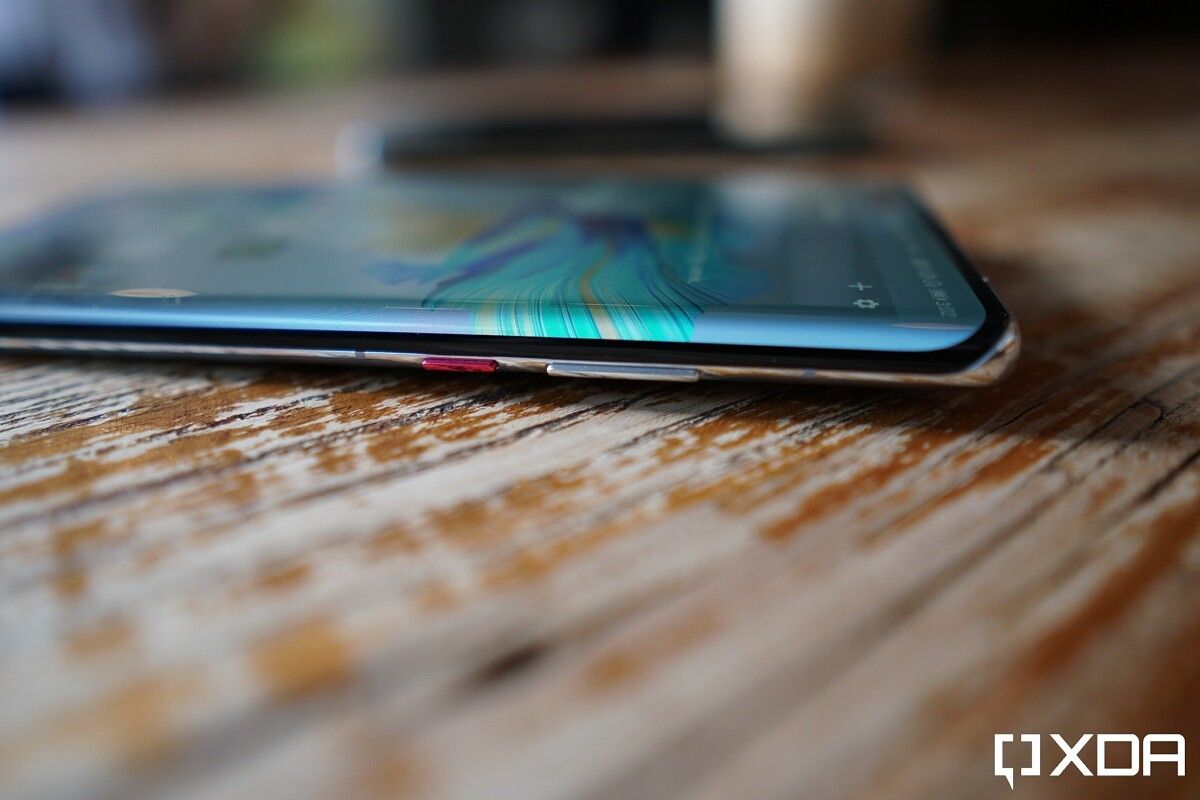
The Mate 40 Pro is curvy The Mate 40 Pro with a dual selfie camera. The Mate 40 Pro with a waterfall display. Mate 40 pro with a red power button.

The back of the Huawei Mate 40 Pro is glass, covered in this soft-touch matte coating that fights off fingerprints quite well. My unit has this silver color that subtly changes shade depending on how the light hits the back. The volume rocker, which had been removed from last year’s Mate 30 series, is back, but it is placed further towards the back edge than usual since the waterfall display curves substantially. However, the double-tap-side-of-screen to trigger the on-screen volume control trick is still here.

The Kirin 9000 SoC: 5nm and 5G

The Huawei Mate 40 Pro is packed with the HiSilicon Kirin 9000, a 5nm chip that also has a 5G modem built-in. This is an impressive feat of engineering, as even Apple’s 5nm A14 Bionic requires a separate radio for 5G.

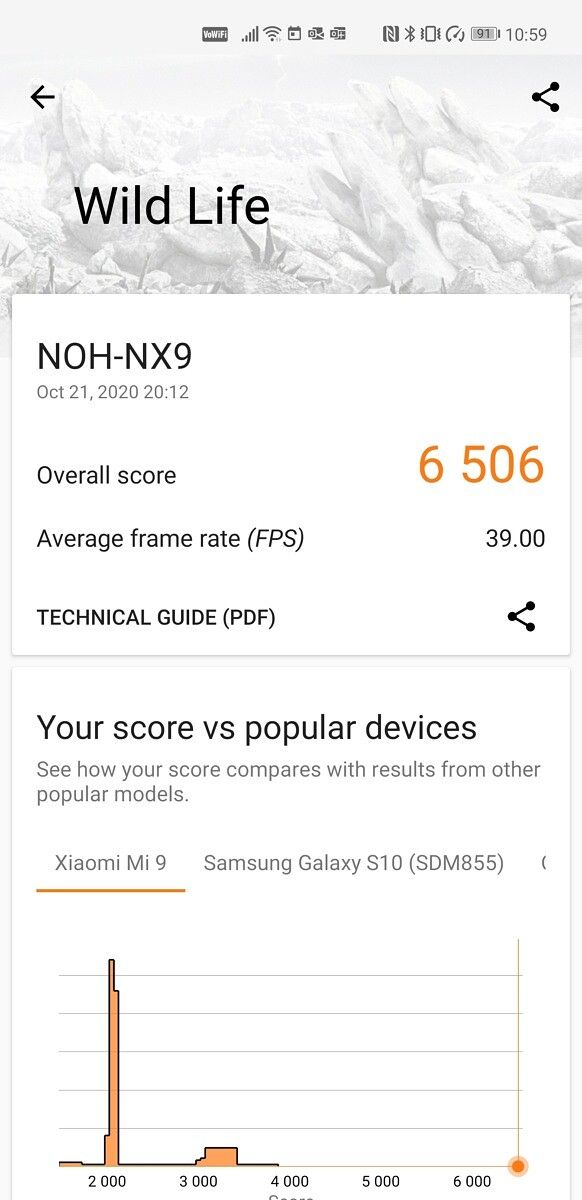
Because this phone is running pre-production software, I was unable to install many benchmark apps, such as Geekbench 5, PCMark, and GFX Bench. However, I did successfully install 3D Mark, and in the “Wild Life” test that benchmarks graphic performance, the Kirin 9000 beat the Snapdragon 865 running in the Galaxy S20 FE with a score of 6,505 to 3,723. The score on the Mate 40 Pro is ~2x that from the Kirin 990 on the Huawei P40 Pro, and ~1.5x of the score from the Snapdragon 865+ in the ROG Phone 3. It is too early to arrive at a conclusion, but the Kirin 9000 showcases immense potential as far as improvements in the GPU performance is concerned. We’ll be doing more benchmarks in the near future.

Huawei Mate 40 Pro with Kirin 9000 vs. Samsung Galaxy S20 FE with Snapdragon 865

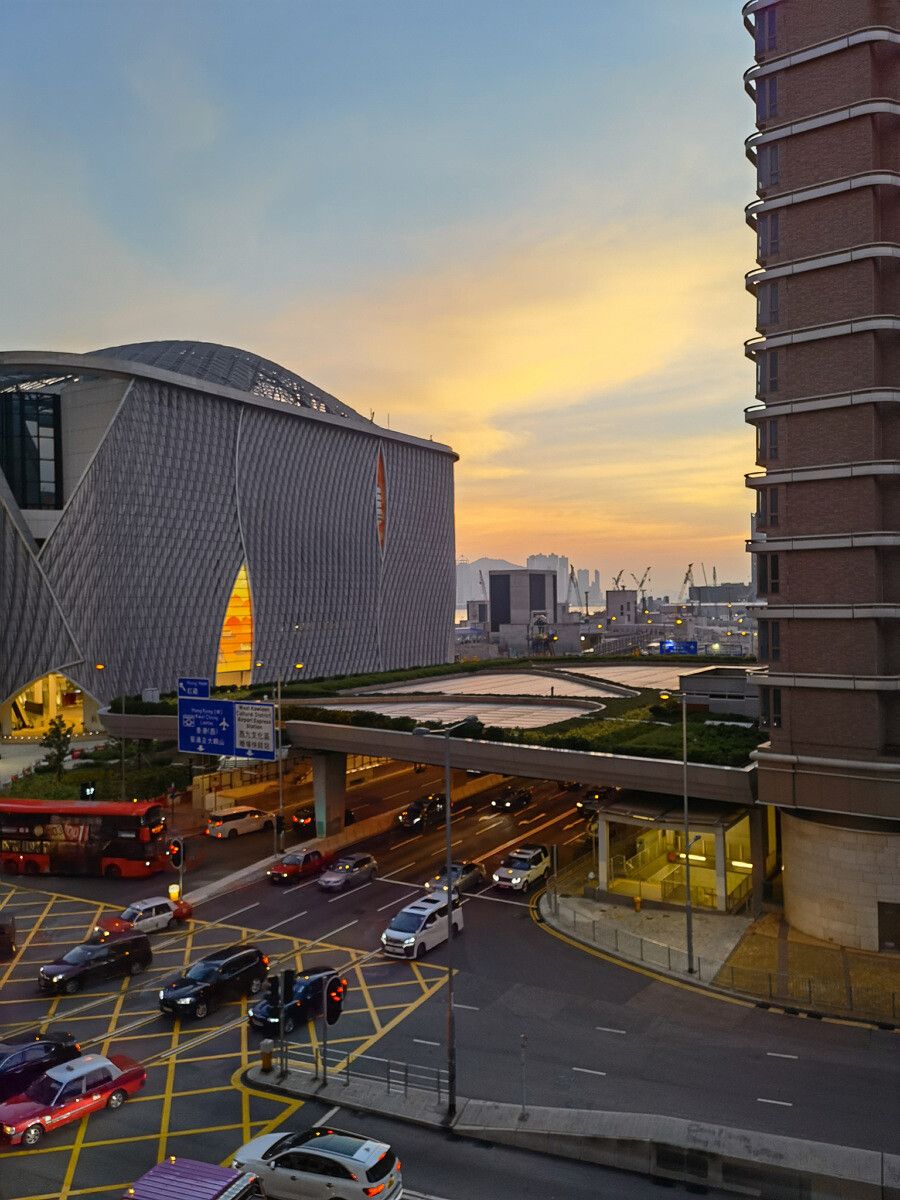
I was able to test the 5G in Hong Kong, and in the Speedtest from the Ookla app, data speeds were very similar to what the iPhone 12 has been getting.

Cameras: Another zoom and low-light beast

Whether you like the look of the Mate series’ centrally-located camera module or not, you can’t deny that it is fairly unique and stands out from the sea of similar-looking camera modules on the market. This year’s design, dubbed “Space Ring,” houses a 50MP, f/1.9, RYYB primary camera, and a 12MP, f/3.4 Periscope zoom lens. Both of these sensors appear to be the exact same ones used in the P40 Pro earlier this year. The other two cameras consist of a 3D ToF sensor and a 20MP ultra-wide-angle camera.

Huawei Mate 40 Pro's quad camera system.

The Mate 40 Pro module houses a 50MP main camera (bottom left), 20MP ultra-wide angle camera (bottom right), a 12MP Periscope zoom lens (upper left), and a 3D ToF sensor (upper right).

The latter camera — the ultra-wide — is interesting. It’s still an 18mm lens (meaning the field-of-vision is 100-degrees, relatively narrow compared to other phones’ ultra-wide sensors), but the pixel count has been halved from the 40MP lens used in the Mate 30 Pro and P40 Pro. Huawei has not released a spec sheet or early information at the time of me writing this article, so I don’t know why this change happened, but I can tell the ultra-wide camera is still the sharpest in the mobile space (but with framing being a bit too tight), and excels even more in even extreme low light condition. See the ultra-wide samples below. The Mate 40 Pro’s ultra-wide shots are sharper, and at night, they exhibit a lot less noise than the iPhone 12’s ultra-wide.

Ultra-wide: Huawei Mate 40 Pro vs iPhone 12

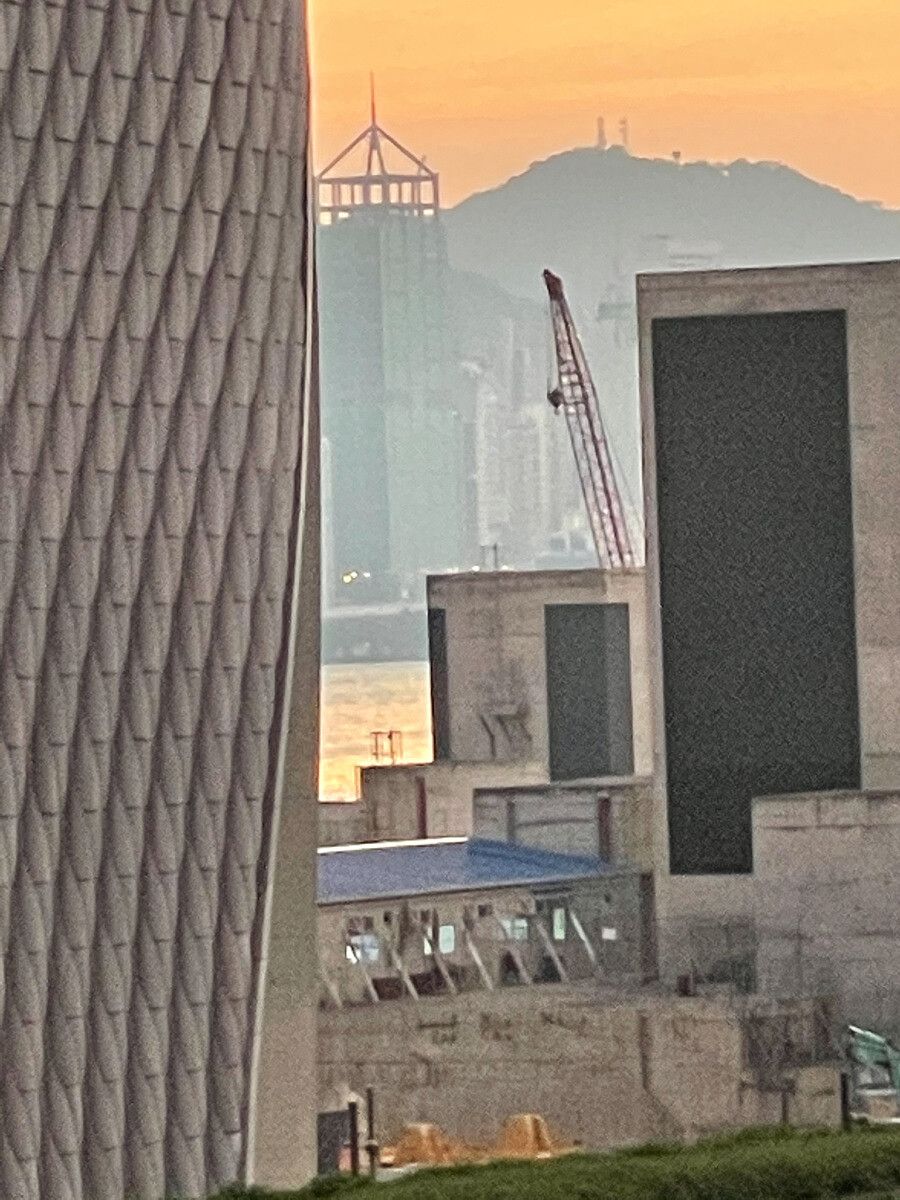
In the below set, I took ultra-wide, 1X, and 10X zoom shots with both the Huawei Mate 40 Pro and the Apple iPhone 12 Pro, and to my eyes, Huawei won the ultra-wide and 10X zoom, but loses the 1X to Apple’s new shooter.

Ultra-wide, 1x, 10x: Huawei Mate 40 Pro vs iPhone 12

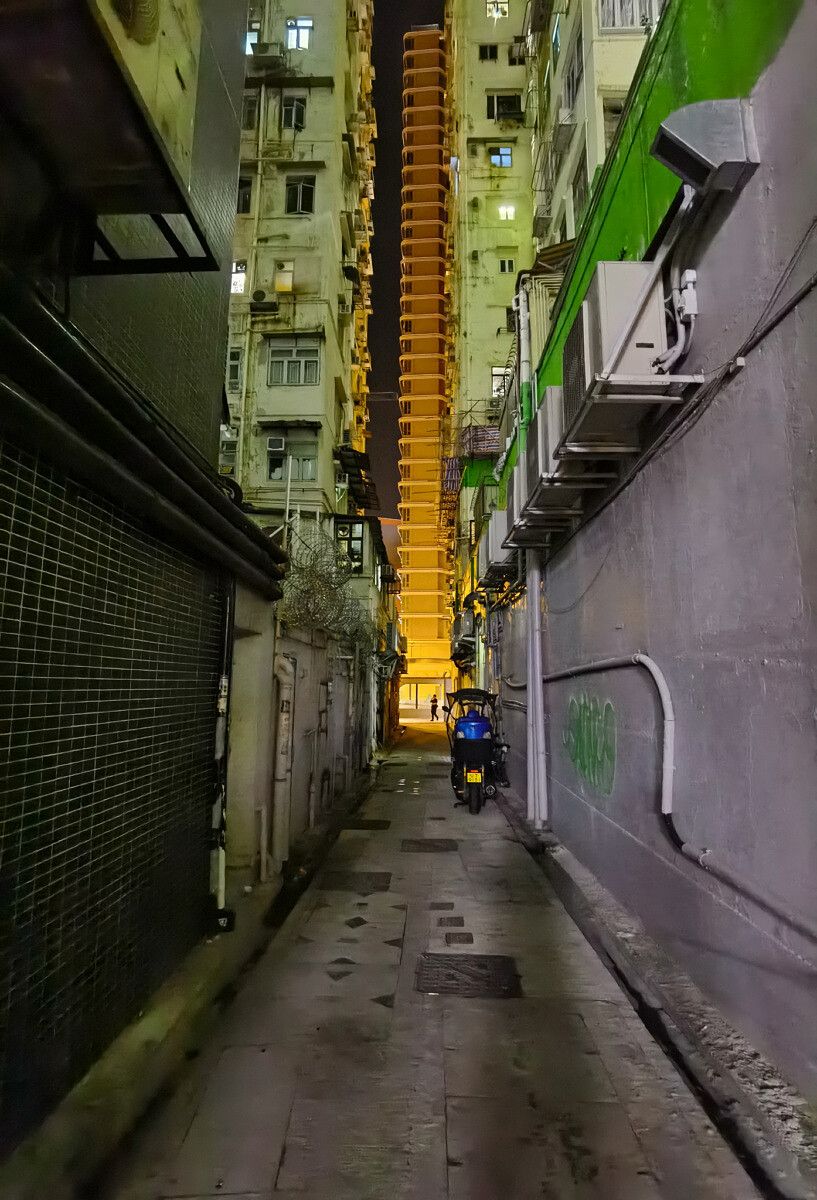
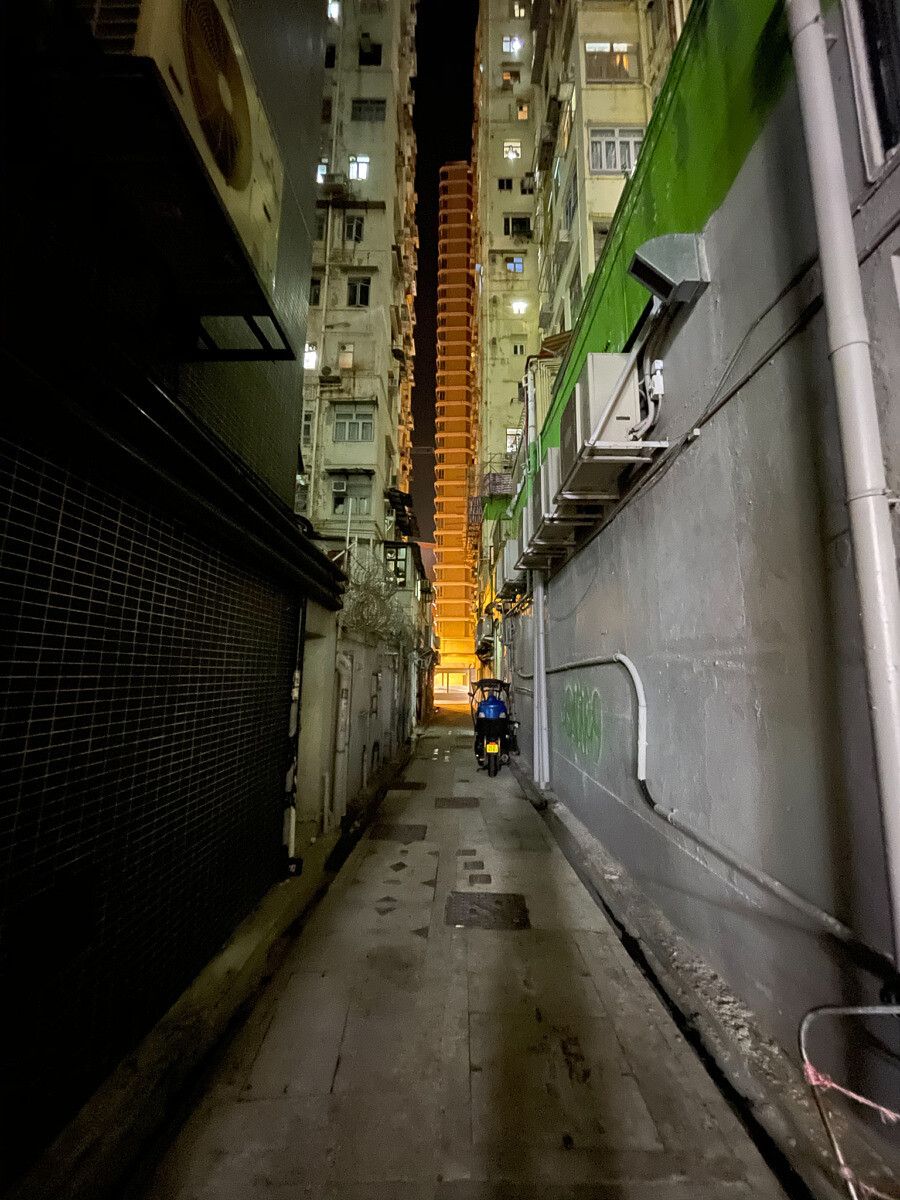
In night time photography, I’m a fan of the Mate 40 Pro’s contrasty vibe. For example, the neon lights in the image below look far cleaner than on the iPhone 12’s shot.

Night Shots: Huawei Mate 40 Pro vs iPhone 12

Huawei added a similar ultra-wide camera to its front shooter this year, giving it also a 100-degree field-of-view. For the most part, selfies on the Huawei Mate 40 Pro appear excellent. In the set below, the Mate 40 Pro’s selfie camera has the widest field-of-view, and is a happy medium between the iPhone 12’s all-natural look and Samsung’s overly beautified, skin-smoothened aesthetic. Notice the Mate 40 Pro’s shot is the only one that didn’t completely blow out the sky behind me — you can actually see some semblance of clouds.

A selfie with the Mate 40 Pro. Selfie with iPhone 12 Pro Selfie with S20 FE

Selfies: Huawei Mate 40 Pro vs iPhone 12 vs Samsung Galaxy S20 FE

Software — You already know where the issue is

The Huawei Mate 40 Pro runs EMUI 11 over Android 10. I haven’t had time to dive too deep into the software yet, but my early impressions are that the UI mostly feels the same as previous Huawei phones, with the most notable addition being improved multitasking in the form of a slide-over menu that allows the user to launch apps in a floating window.

There’s also a new Always-On Display that intelligently only turns on when you move your head towards the screen. It works like magic — anytime I tilt my head over at the phone screen, the AOD lights up. Huawei hasn’t explained how exactly it’s doing this at the time of writing this article, but I’m assuming it’s using the 3D face scanning system to detect head movement, perhaps?

But of course, the elephant in the room: The Huawei Mate 40 Pro does not ship with Google’s Mobile Services core and they cannot be installed without some sort of hack or unofficial methodology. I’ve used the last two non-GMS Huawei devices so I’ve gotten pretty familiar with what apps I can use and what I can’t: key Google services like YouTube, Drive, Docs, Keep are all no go. But Google Maps and Chrome work. Other widely-used apps (for me) like WhatsApp, Instagram, Twitter all work.

Thoughts so far

As is the case with the last four or five Huawei flagships, the Huawei Mate 40 Pro has absolutely top-notch hardware — arguably the best in Android. But the software issue is going to require compromises in usage habits for many people around the world. I’m going to be testing this phone thoroughly over the upcoming days, so stay tuned for more coverage.

Huawei Mate 40 Pro Forums

The post Huawei Mate 40 Pro Hands-on: Another low light and zooming powerhouse appeared first on xda-developers.


from xda-developers https://ift.tt/3dPd7j2
via IFTTT