LightBlog

jeudi 22 octobre 2020

Chrome 86 will block notification permission requests for sites that send abusive notification content

Google started rolling out Chrome 86 on the stable channel earlier this month. The update introduced security improvements to alert users if any of their saved passwords had been compromised, new menu icons to help users easily navigate large menus, a Native File Sytem API, Enhanced Safe Browsing for Android, and several developer-facing technical changes. According to a recent post on the Chromium blog, Chrome 86 also includes changes to the notification permission requests to prevent websites from sending abusive notification content.

For the unaware, Google introduced the quiet Notification permission UI in Chrome 80. With the Chrome 84 update, the company released auto-enrolment in quiet notification UI for websites that used deceptive patterns to request notification access. Now, with Chrome 86, the company has started blocking notification permission requests for websites that push abusive notification content.

Google Chrome quiet notifications desktop UI on abusive websites

The updated UI now actively discourages users from granting notification access to websites that use web notifications to send malware or mimic system messages to obtain user credentials. To effectively detect websites that indulge in such behavior, Google’s automated web crawling service will occasionally subscribe to website push notifications if the push notification permission is requested. Notifications that are sent to the automated Chrome instances will be evaluated for abusive content, and sites sending abusive notifications will be flagged for enforcement if the issue is unresolved.

In case the crawler identifies a website for any type of notification abuse, Search Console will alert the registered site owners and users in the site’s Search Console at least 30 days before the new UI is enforced. During this period, offending websites can address the issue and request another review. In an attempt to further reduce notification permission abuse in Chrome, Google is now working on a feature that will automatically revert notification access for offending websites. The feature will be released in a future update.


Source: Chromium blog

The post Chrome 86 will block notification permission requests for sites that send abusive notification content appeared first on xda-developers.


from xda-developers https://ift.tt/2Hokn9t
via IFTTT

Chrome 86 will block notification permission requests for sites that send abusive notification content

Google started rolling out Chrome 86 on the stable channel earlier this month. The update introduced security improvements to alert users if any of their saved passwords had been compromised, new menu icons to help users easily navigate large menus, a Native File Sytem API, Enhanced Safe Browsing for Android, and several developer-facing technical changes. According to a recent post on the Chromium blog, Chrome 86 also includes changes to the notification permission requests to prevent websites from sending abusive notification content.

For the unaware, Google introduced the quiet Notification permission UI in Chrome 80. With the Chrome 84 update, the company released auto-enrolment in quiet notification UI for websites that used deceptive patterns to request notification access. Now, with Chrome 86, the company has started blocking notification permission requests for websites that push abusive notification content.

Google Chrome quiet notifications desktop UI on abusive websites

The updated UI now actively discourages users from granting notification access to websites that use web notifications to send malware or mimic system messages to obtain user credentials. To effectively detect websites that indulge in such behavior, Google’s automated web crawling service will occasionally subscribe to website push notifications if the push notification permission is requested. Notifications that are sent to the automated Chrome instances will be evaluated for abusive content, and sites sending abusive notifications will be flagged for enforcement if the issue is unresolved.

In case the crawler identifies a website for any type of notification abuse, Search Console will alert the registered site owners and users in the site’s Search Console at least 30 days before the new UI is enforced. During this period, offending websites can address the issue and request another review. In an attempt to further reduce notification permission abuse in Chrome, Google is now working on a feature that will automatically revert notification access for offending websites. The feature will be released in a future update.


Source: Chromium blog

The post Chrome 86 will block notification permission requests for sites that send abusive notification content appeared first on xda-developers.


from xda-developers https://ift.tt/2Hokn9t
via IFTTT
mercredi 21 octobre 2020

Truecaller brings Call Reason support, letting callers state their intention when calling

Caller ID has been one of the most crucial features that users desire on their smartphones. The demand has inspired Google as well as other smartphone manufacturers to pre-build a caller ID system in their dialer apps, especially to restrict scammers and spam calls. With the COVID-19 pandemic disrupting how we operate and communicate, and increasing our dependency on modes of virtual communications, especially calls, this kind of filtering has become essential. Truecaller, one of the most popular caller ID app on Android and iOS devices for several years, is now adding a feature that will help callers add a reason for their call while allowing receivers to judge whether to pick the call at the moment or not.

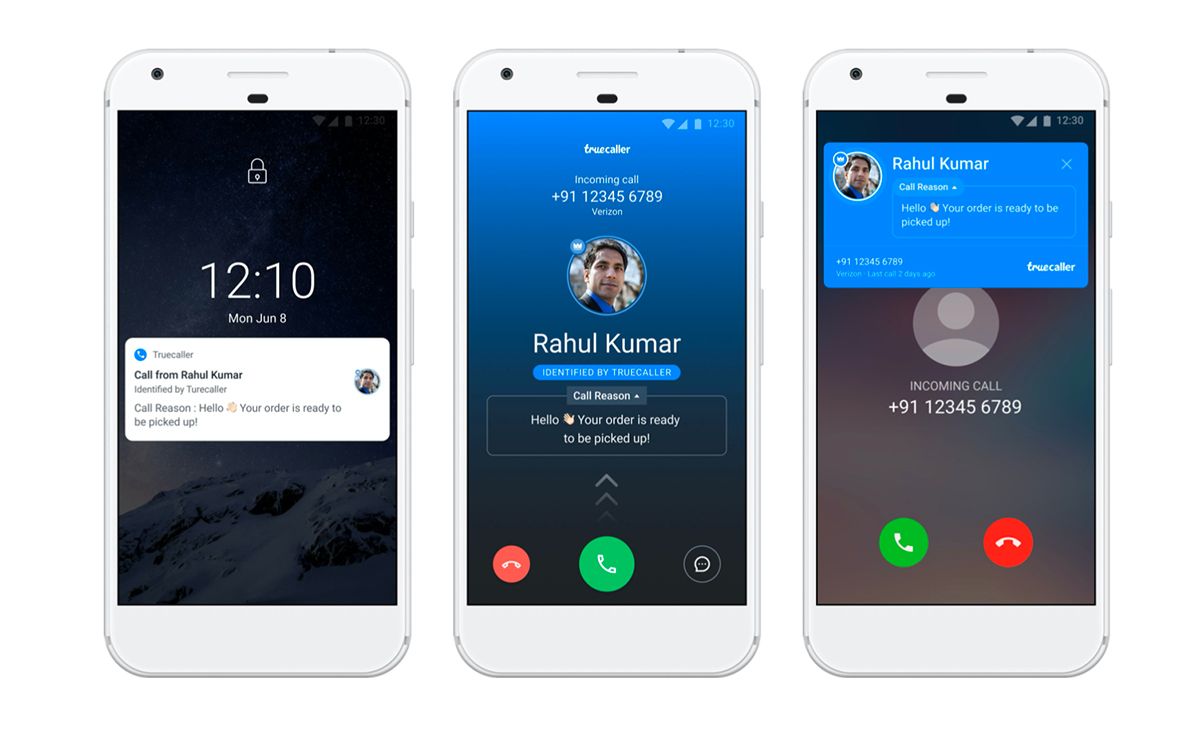
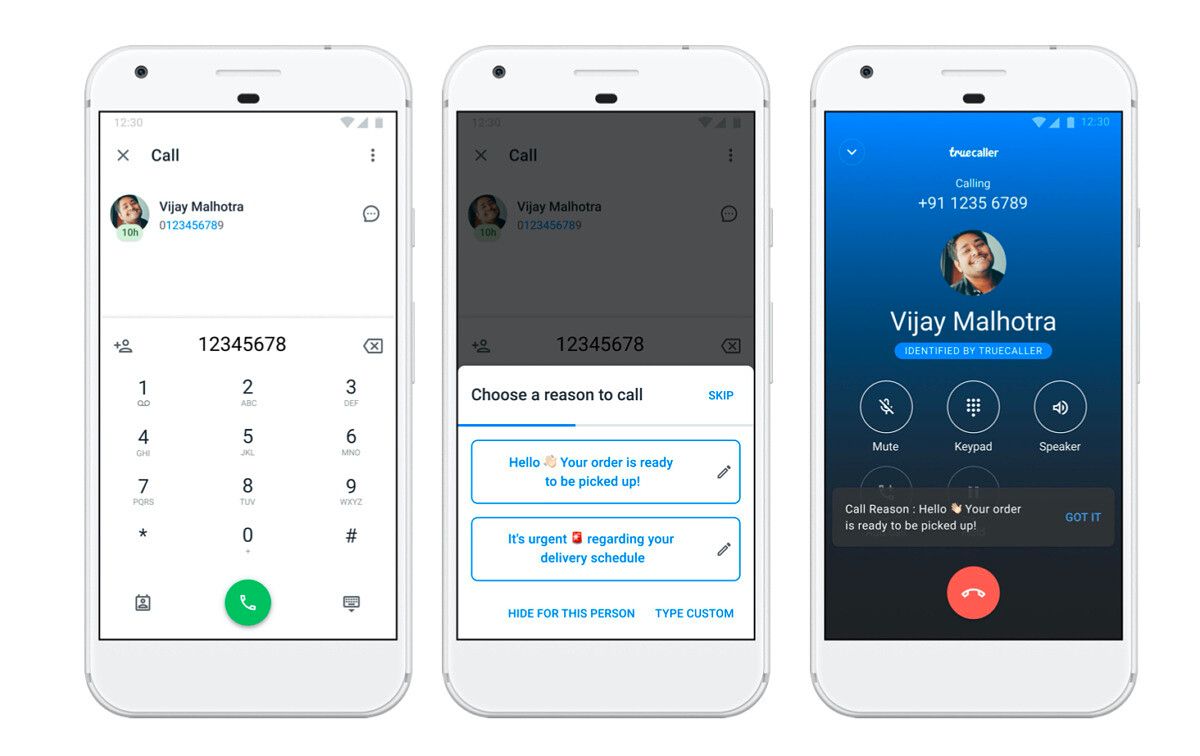
Truecaller adds the extra step for callers using their app as the default dialer to set a “Call Reason” before getting on the call. Users can choose from a set of default messages curated from their previous messages or create new messages. The receiver of the call will be able to see this message and decide whether the call is relevant or not.

truecaller call reason message when you call truecaller call reason message received in caller id

To be able to see the message, the receiver must have Truecaller installed and set up on their device even though they would not need to set it as the default dialer app. The company also claims the messages are encrypted and not visible to them but, they have AI algorithms to filter out objectionable messages.

Truecaller hopes that specifying the reason for the call will increase the call pickup rate for callers. In reality, it might also allow users to avoid more calls While the feature is currently going live for users, Truecaller plans to onboard businesses and show calls from them with specific badges and different color tones. These features may aid users in making a quicker decision about which calls to pick and which ones to avoid. The company will also bring integration for call center calls.

Truecaller Call Reason business

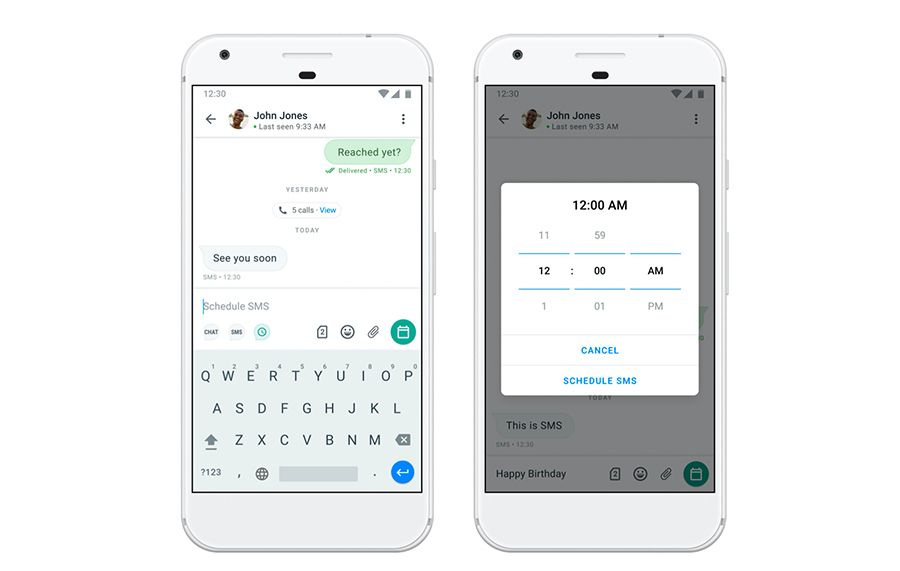
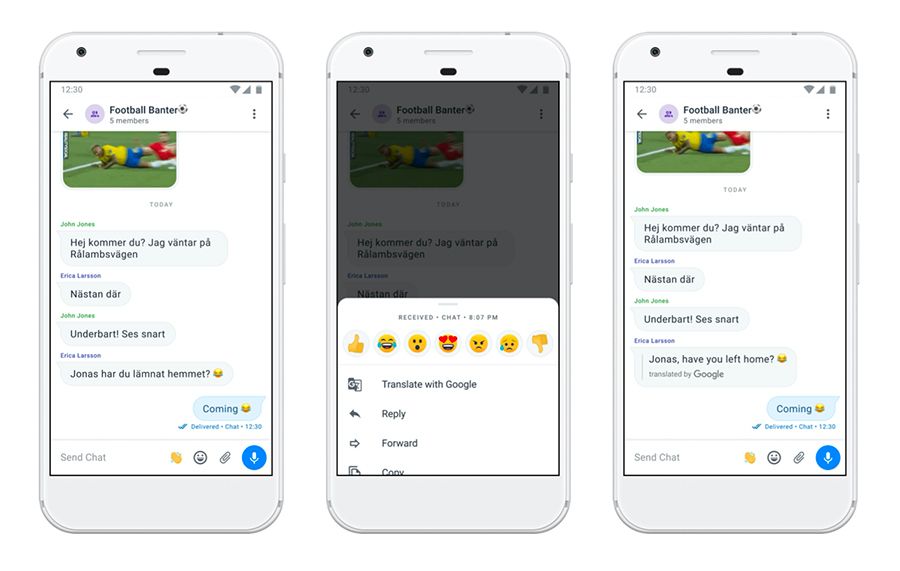
Truecaller is rolling out Call Reason today to all Android users around the world and will be pushing it for iOS users later this year. In addition to Cal Reason, Truecaller is also releasing scheduling and translation in SMSes.

sms schedule sms google translate

Truecaller: Caller ID, block fraud & scam calls (Free+, Google Play) →

The post Truecaller brings Call Reason support, letting callers state their intention when calling appeared first on xda-developers.


from xda-developers https://ift.tt/37sqyEA
via IFTTT

Truecaller brings Call Reason support, letting callers state their intention when calling

Caller ID has been one of the most crucial features that users desire on their smartphones. The demand has inspired Google as well as other smartphone manufacturers to pre-build a caller ID system in their dialer apps, especially to restrict scammers and spam calls. With the COVID-19 pandemic disrupting how we operate and communicate, and increasing our dependency on modes of virtual communications, especially calls, this kind of filtering has become essential. Truecaller, one of the most popular caller ID app on Android and iOS devices for several years, is now adding a feature that will help callers add a reason for their call while allowing receivers to judge whether to pick the call at the moment or not.

Truecaller adds the extra step for callers using their app as the default dialer to set a “Call Reason” before getting on the call. Users can choose from a set of default messages curated from their previous messages or create new messages. The receiver of the call will be able to see this message and decide whether the call is relevant or not.

truecaller call reason message when you call truecaller call reason message received in caller id

To be able to see the message, the receiver must have Truecaller installed and set up on their device even though they would not need to set it as the default dialer app. The company also claims the messages are encrypted and not visible to them but, they have AI algorithms to filter out objectionable messages.

Truecaller hopes that specifying the reason for the call will increase the call pickup rate for callers. In reality, it might also allow users to avoid more calls While the feature is currently going live for users, Truecaller plans to onboard businesses and show calls from them with specific badges and different color tones. These features may aid users in making a quicker decision about which calls to pick and which ones to avoid. The company will also bring integration for call center calls.

Truecaller Call Reason business

Truecaller is rolling out Call Reason today to all Android users around the world and will be pushing it for iOS users later this year. In addition to Cal Reason, Truecaller is also releasing scheduling and translation in SMSes.

sms schedule sms google translate

Truecaller: Caller ID, block fraud & scam calls (Free+, Google Play) →

The post Truecaller brings Call Reason support, letting callers state their intention when calling appeared first on xda-developers.


from xda-developers https://ift.tt/37sqyEA
via IFTTT

OPPO A33 with 90Hz HD+ display, Snapdragon 460 launched in India for ₹11,990 (~$163)

OPPO has announced the launch of its OPPO A33 early-mid-tier handset in India, boasting a combination of stunning display specs with a very ordinary chipset. The 6.5-inch HD+ (1600×720) display clocks in at an impressive 90Hz refresh rate, likely a first in this price range. But for some reason, the Chinese giant has paired it with a Qualcomm Snapdragon 460 processor, released in January this year as an unashamed entry-level offering that will stop you from getting much of the benefit from that supercharged display.

Oppo A33 (2020): Specifications

Specification OPPO A33 (2020)
Build Plastic
Dimensions & Weight
  • 8.4mm height
  • 186g
Display
  • 6.5″ HD+ (1600 x 720) LCD
  • 269ppi pixel density
  • 90Hz refresh rate
  • 120Hz touch sampling rate
  • Punch-hole camera
SoC Qualcomm Snapdragon 460
RAM & Storage
  • 3GB + 32GB
  • MicroSD expandability up to 256GB
Battery & Charging
  • 5000mAh battery
  • 18W fast charge
Security Rear fingerprint sensor
Rear Camera(s)
  • Primary: 13MP
  • Secondary: 2MP, depth
  • Tertiary: 2MP, macro
Front Camera(s) 8MP
Port(s) USB-C port
Audio Twin bottom-firing speakers with Dirac 2.0
Connectivity
  • Wi-Fi 2.4/5
  • Bluetooth 4.0
Software ColorOS 7.2  based on Android 10
Other Features

The OPPO A33 is certainly a pocket-friendly device, with a mere 8.4mm thickness, and with a 120Hz touch sampling, it should be super-responsive. The punch-hole front camera leaves room for the display to sprawl all over the front with thin bezels. That front camera boasts 8MP, enough for high-definition selfies, whilst the triple-camera array on the rear maxes out at 13MP, flanked by a 2MP depth camera and 2MP macro lens. As you’d expect, there are plenty of beautification filters available including Bokeh, Portrait, and Dazzle Color.

For audio, there are dual, downward-firing speakers with Dirac 2.0 digital sound correction, which, we’re told, will enhance the enjoyment of your movie or music. Other features include a rear-mounted fingerprint sensor, 32GB of internal memory, plus a MicroSD slot for expansion up to 256GB. The 5000mAh battery can be charged with an 18W fast charger. Sadly, there’s no sign of OPPO’s trademark VOOC charging here.

Now, before we go further, we need to talk about that Snapdragon 460. It’s tuned to 1.8GHz and although its quad-core, it’s only backed up by 3GB of RAM, well below what we’d hope to take advantage of the feature set. We haven’t been able to test one yet, but we’d expect any kind of heavy use to show up the limitations very quickly, through lackluster performance.

All in all and at first glance, the OPPO A33 feels like a wasted opportunity which could lure people in with its first-in-class display, before they realize the number of compromises that have been made to bring it to a phone at this price. Make no mistake – this is a budget handset with a good display and mid-tier pricing. We’d suggest holding on for the rumored OnePlus Clover, which is likely to be a far better-specced version, including a 6000mAh battery, in an almost identical chassis (though beware of the Snapdragon 460 processor once again), or even the OOOP A53 which offers a more-rounded range of specs for a little more money. And of course, there are always options from the likes of Xiaomi, POCO, and Realme, which are in a different game of their own.

Pricing and Availability

The OPPO A33 (2020) will be available this month across India in either Moonlight Black or Mint Cream. There’s a single specification variant charged at ₹11,990 (~$163) and available from the OPPO Website or the usual retailers such as Flipkart. If you do decide that this is the phone for you, buy with care – an OPPO A33 was released 5 years ago and the specs on that one are even less impressive!

The post OPPO A33 with 90Hz HD+ display, Snapdragon 460 launched in India for ₹11,990 (~$163) appeared first on xda-developers.


from xda-developers https://ift.tt/3kjyXOd
via IFTTT

OPPO A33 with 90Hz HD+ display, Snapdragon 460 launched in India for ₹11,990 (~$163)

OPPO has announced the launch of its OPPO A33 early-mid-tier handset in India, boasting a combination of stunning display specs with a very ordinary chipset. The 6.5-inch HD+ (1600×720) display clocks in at an impressive 90Hz refresh rate, likely a first in this price range. But for some reason, the Chinese giant has paired it with a Qualcomm Snapdragon 460 processor, released in January this year as an unashamed entry-level offering that will stop you from getting much of the benefit from that supercharged display.

Oppo A33 (2020): Specifications

Specification OPPO A33 (2020)
Build Plastic
Dimensions & Weight
  • 8.4mm height
  • 186g
Display
  • 6.5″ HD+ (1600 x 720) LCD
  • 269ppi pixel density
  • 90Hz refresh rate
  • 120Hz touch sampling rate
  • Punch-hole camera
SoC Qualcomm Snapdragon 460
RAM & Storage
  • 3GB + 32GB
  • MicroSD expandability up to 256GB
Battery & Charging
  • 5000mAh battery
  • 18W fast charge
Security Rear fingerprint sensor
Rear Camera(s)
  • Primary: 13MP
  • Secondary: 2MP, depth
  • Tertiary: 2MP, macro
Front Camera(s) 8MP
Port(s) USB-C port
Audio Twin bottom-firing speakers with Dirac 2.0
Connectivity
  • Wi-Fi 2.4/5
  • Bluetooth 4.0
Software ColorOS 7.2  based on Android 10
Other Features

The OPPO A33 is certainly a pocket-friendly device, with a mere 8.4mm thickness, and with a 120Hz touch sampling, it should be super-responsive. The punch-hole front camera leaves room for the display to sprawl all over the front with thin bezels. That front camera boasts 8MP, enough for high-definition selfies, whilst the triple-camera array on the rear maxes out at 13MP, flanked by a 2MP depth camera and 2MP macro lens. As you’d expect, there are plenty of beautification filters available including Bokeh, Portrait, and Dazzle Color.

For audio, there are dual, downward-firing speakers with Dirac 2.0 digital sound correction, which, we’re told, will enhance the enjoyment of your movie or music. Other features include a rear-mounted fingerprint sensor, 32GB of internal memory, plus a MicroSD slot for expansion up to 256GB. The 5000mAh battery can be charged with an 18W fast charger. Sadly, there’s no sign of OPPO’s trademark VOOC charging here.

Now, before we go further, we need to talk about that Snapdragon 460. It’s tuned to 1.8GHz and although its quad-core, it’s only backed up by 3GB of RAM, well below what we’d hope to take advantage of the feature set. We haven’t been able to test one yet, but we’d expect any kind of heavy use to show up the limitations very quickly, through lackluster performance.

All in all and at first glance, the OPPO A33 feels like a wasted opportunity which could lure people in with its first-in-class display, before they realize the number of compromises that have been made to bring it to a phone at this price. Make no mistake – this is a budget handset with a good display and mid-tier pricing. We’d suggest holding on for the rumored OnePlus Clover, which is likely to be a far better-specced version, including a 6000mAh battery, in an almost identical chassis (though beware of the Snapdragon 460 processor once again), or even the OOOP A53 which offers a more-rounded range of specs for a little more money. And of course, there are always options from the likes of Xiaomi, POCO, and Realme, which are in a different game of their own.

Pricing and Availability

The OPPO A33 (2020) will be available this month across India in either Moonlight Black or Mint Cream. There’s a single specification variant charged at ₹11,990 (~$163) and available from the OPPO Website or the usual retailers such as Flipkart. If you do decide that this is the phone for you, buy with care – an OPPO A33 was released 5 years ago and the specs on that one are even less impressive!

The post OPPO A33 with 90Hz HD+ display, Snapdragon 460 launched in India for ₹11,990 (~$163) appeared first on xda-developers.


from xda-developers https://ift.tt/3kjyXOd
via IFTTT

[Update: Early access begins] Amazon takes on Google, Microsoft, and NVIDIA with new Luna cloud gaming service

Update (10/21/2020 @ 06:00 AM ET): Amazon Luna early access is now live. Scroll to the bottom for more information. The article as published on September 25, 2020, is preserved below.

In a bid to capture a slice of the steadily growing cloud gaming pie, Amazon today announced a new cloud gaming service called Luna. The service takes on similar offerings from Google, Microsoft, and NVIDIA, and gives users the option to play the latest games without any additional hardware requirements. Luna is currently available in early access exclusively in the U.S. on compatible Fire TV, PC, Mac, and iOS devices. Amazon plans to add support for Android devices in the near future.

As with other cloud gaming services, Amazon is offering a Luna+ subscription at an early access pricing of $5.99 per month. As part of the subscription, you will get access to unlimited hours of play, a growing library of AAA games, up to 1080p/60fps gameplay (4K/60fps coming soon), and the ability to stream on two devices simultaneously. During early access, Luna+ includes games like Resident Evil 7, Control, and Panzer Dragoon; adventure games like A Plague Tale: Innocence and The Surge 2; platformers like Yooka-Laylee and The Impossible Lair and Iconoclasts; and fan favorites like GRID, ABZU, and Brothers: A Tale of Two Sons.

Amazon Luna


Along with the Luna+ subscription, Amazon has partnered with Ubisoft to offer a new gaming channel. Players who subscribe to this channel will get access to their favorite Ubisoft titles in 4K resolution, mobile gameplay support, and access to new Ubisoft titles as soon as they launch. This will include upcoming titles like Assassins Creed Valhalla, Far Cry 6, and Immortals Fenyx Rising, which will go live on the service the same day they are launched. Furthermore, Luna will offer players native Twitch integration, giving them access to game streams from the platform right on their device.


Amazon Luna subscribers will be able to play their favorite games with the controller of their choice, as the service supports both keyboard/mouse input and Bluetooth controller input. Amazon is also releasing its own Luna Controller with Cloud Direct technology, which features Alexa integration and a multiple-antenna design for low latency gaming. Amazon claims that its first-party controller can reduce latency by 17-30 milliseconds compared to other supported input devices. The Luna controller is available at an introductory price of $49.99 during the early access period.

If you’re in the U.S. and you’re interested in trying out Amazon Luna, you can request an early access invitation by following the link below.

Request an invitation to Amazon Luna


Update: Amazon Luna early access is now live

In a recent blog post, Amazon has announced that it will begin granting invitations to a small set of early access applicants in the US starting today. Those who receive the Amazon Luna early access invitation will get access to the following:

  • Amazon Luna
  • The Luna+ Game Channel — For $5.99/month during the early access period. Includes 50 games, with more to be added over time.
  • The Ubisoft Channel — Coming soon.
  • The Luna Controller — For $49.99 during the early access period.

Source: Amazon blog

The post [Update: Early access begins] Amazon takes on Google, Microsoft, and NVIDIA with new Luna cloud gaming service appeared first on xda-developers.


from xda-developers https://ift.tt/3cCGJQg
via IFTTT