LightBlog

jeudi 8 octobre 2020

Google’s Sound Notifications feature alerts you about important household noises

Accessibility features are an important part of the mobile experience. They allow more people to take advantage of features we might take for granted. To further expand Android’s accessibility, Google is introducing Sound Notifications designed to listen for “critical sounds.”

There’s an estimated 466 million people in the world who are hard of hearing, so Sound Notifications can make a big difference in people’s everyday lives. Going forward, users will be served a push notification, a flash from their camera light, or a vibration when a certain sound is detected.

Using machine learning, the feature works completely offline and uses your device’s microphone to recognize ten different noises:

  • Smoke and fire alarms
  • Siren
  • Shouting
  • Baby sounds
  • Doorbell ringing
  • Knocking
  • Dog barking
  • Appliance beeping
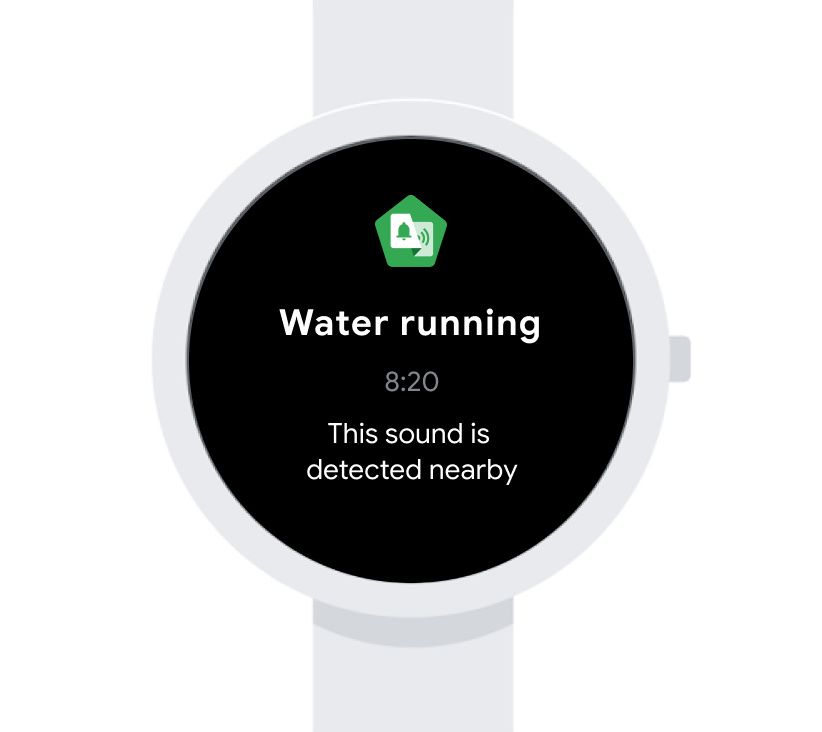
  • Water running
  • Landline phone ringing

Other devices support Sound Notifications, including Wear OS devices, by sending text notifications with vibrations to your watch. Google said this will allow users to get notifications while they’re asleep — something many in the deaf and hard of hearing community requested. There’s also a timeline view so you can scroll through a snapshot of detected sounds from the last few hours.

Google first put sound detection features in Live Transcribe, showing over 30 sound events alongside real time captions. The company also added an “Attention Alerts” feature to the Pixel Buds, which temporarily lowers the volume whenever an important sound is heard, such as a baby crying or dog barking.

You can turn on the Sound Notifications feature by going to Settings > Accessibility. Google said if you don’t see this option, you can download Live Transcribe from Google Play, then go to your settings and turn on Sound Notifications.

Live Transcribe (Free, Google Play) →

The post Google’s Sound Notifications feature alerts you about important household noises appeared first on xda-developers.


from xda-developers https://ift.tt/34DfzVB
via IFTTT

The popular Moovit transit app lands on Huawei’s AppGallery

Huawei’s AppGallery is the company’s homegrown alternative to the Google Play Store. It comes preloaded on all new Huawei and Honor devices, but it offers a significantly smaller collection of apps. To remedy this, Huawei has been making constant efforts to bring more developers to the platform. And developers have taken notice. Over the last few months, several apps have made their way to the platform, including popular ones like HERE WeGo, Deezer, Tidal, BBC News, Tinder, Telegram, and TikTok. Now, Intel-owned mobility service provider Moovit has also published its app on AppGallery.

For the unaware, Moovit is a Mobility as a Service (MaaS) solutions provider that offers guides to help users travel several major cities using any mode of transport. The app generates these guides by collecting information from public transport operators, micro-transport operators, and transport authorities. And it even collects live information from its community to improve its guides.

Moovit

As a result, Moovit’s guides offer accurate, real-time routes for any journey with several urban mobility solutions. Additionally, Moovit gives users the option to plan their journey beforehand, it provides real-time arrival information for public transport, a Live Directions feature with Get Off alerts, and Service Alerts to notify users of any disruptions.

Huawei and Honor users in over 100 countries will now be able to download the Moovit app on their devices directly from the AppGallery. Furthermore, Moovit will also be available in a customized format in the Huawei browser. Huawei has also revealed that it will collaborate with Moovit on in-app promotions for Huawei/Honor users, which will be announced through the app soon.

Download Moovit on AppGallery

The post The popular Moovit transit app lands on Huawei’s AppGallery appeared first on xda-developers.


from xda-developers https://ift.tt/36FShkN
via IFTTT

Future ARM CPUs will drop support for 32-bit apps

In May 2020, ARM announced its 2020 CPU lineup, consisting of the ARM Cortex-A78 A-series CPU core and the new ARM Cortex-X1 core, the first coming under the Cortex-X custom CPU program. The new cores haven’t made their way to any shipping devices yet – users will have to wait for early 2021 to see phones powered by the new IP. That’s the way ARM announces its new products: the ARM Cortex-A77 CPU core, announced in May 2019, only made its way to shipping phones in February 2020. The ARM Cortex-A78 and the Cortex-X1 are 64-bit cores like their predecessors, but they also have hardware support for old 32-bit apps. ARM has now confirmed that this will change, though. Future ARM Cortex-A CPU cores will become 64-bit only starting 2022.

This announcement was made by Paul Williamson, VP and GM of Client Business at ARM, at an ARM DevSummit keynote. The news announcement means there will be no hardware support for old 32-bit applications in the future.

This shouldn’t mean bad news for the vast majority of apps, however. That is because Google has required apps submitted to Google Play since August 2019 to be 64-bit. ARM also notes that about 60% of apps are 64-bit compliant already. Most of the apps that aren’t 64-bit don’t belong to Western ecosystems. For app developers, there is plenty of time to update their old apps, considering that CPU cores announced in 2022 will probably make their way to shipping devices only in early 2023. If a 32-bit app is no longer being updated, though, this announcement means it will stop working in 64-bit-only devices that will launch featuring the future ARM Cortex-A cores.

Android itself is already 64-bit, as the operating system introduced 64-bit support with version 5.0 Lollipop back in 2014. However, Android and ARM’s CPU cores continue to support 32-bit applications, which means Android is not a 64-bit-only OS as of now, unlike iOS, which went 64-bit-only in 2017 with iOS 11. The legacy support of 32-bit applications will end in 2022 from the hardware part of the equation, and it’s fair to expect Google to follow this announcement by removing 32-bit app support in future versions of Android. As previously mentioned, this should be mostly invisible to end users.

What are the benefits in moving to 64-bit-only? These include improved performance in the operating system and for apps and games, up to 20% in some cases. It’s also easier for developers as they won’t have to support two binaries. They can focus on optimizing a single 64-bit binary, which could mean quicker update times.

For ARM, the news means that it can drop additional silicon from its CPU designs that it has needed to have legacy 32-bit support. This could save on silicon area, which could mean more powerful CPUs in the same die size. ARM’s 2021 and 2022 Cortex-A CPUs are code-named Matterhorn and Makalu respectively. It’s Makalu that will be making the switch to exclusively 64-bit. ARM has promised a 30% performance increase between the Cortex-A78 announced this year and Makalu, as the company keeps progressing with its CAGR (compounded annual growth rate).

The transition to exclusively 64-bit will start with the big CPU cores. (ARM didn’t state when the Cortex-X series will migrate to 64-bit only, but it’s likely that it will happen either at the same time or before the Cortex-A series.) The Cortex-A55 “little core”, announced in 2017, is a 32-bit/64-bit design, and its successor, which could launch next year, will still have 32-bit support for legacy apps. So the end result will be a CPU cluster design that mixes 64-bit-only Makalu with a smaller 32-bit/64-bit little core such as the successor of the Cortex-A55. The final product, however, will be 64-bit-only from the perspectives of developers and users. The Cortex-A55’s successor will presumably support support 32-bit for a while longer, but it will be irrelevant for users with Makalu powered devices and beyond.

So Android’s move to 64-bit exclusively will take place roughly five years after iOS completed its transition to 64-bit-only in 2017. Again, all of this shouldn’t make much of an effect for end-users, except for the benefit of improved performance. The onus is on app developers to update all of their legacy apps with 64-bit support before devices powered by ARM’s Makalu CPU arrive.


Via: Android Authority

The post Future ARM CPUs will drop support for 32-bit apps appeared first on xda-developers.


from xda-developers https://ift.tt/34ynQKt
via IFTTT

Amazon Fire TV gets Live TV support in India through SonyLIV, Voot, Discovery+, NextG TV

Amazon recently launched two new Fire TV Sticks and completely revamped the Fire TV UI to offer users a more personalized experience. The new Fire TV Stick and Fire TV Stick Lite are scheduled to go on sale in India later this month. And just a few days ahead of the first sale, the company has now announced that it’s bringing Live TV support to Fire TV in the country.

The feature adds a ‘Live’ tab on the navigation page and an ‘On Now’ row on the Fire TV home screen. In these new sections, users will be able to access Live TV channels from content providers like SonyLIV, Voot, Discovery+, and NextG TV. It will soon support live channels from Zee5 as well. Live TV on Fire TV will give users access to channels like Sony SAB HD, Colors HD, SET HD, Nick HD+, Dangal, DD National, News18 India, MTV Beats HD, SONY BBC Earth HD, Mastii TV Music, and Discovery.

Amazon Fire TV

Users who have subscribed to the services of any of the content providers mentioned above will see the ‘On Now’ on the Fire TV home screen, with a red bar at the bottom of each thumbnail indicating the real-time progress of the show. The feature also supports Alexa voice commands, and users will be able to access their favorite channels by saying commands like “Alexa, Watch Colors HD.”

Channel guide

Furthermore, users will also gain access to the Fire TV channel guide. The guide will be available in the Options row of the Live tab. Fire TV Lite users will be able to access the guide by pressing the guide button on their Alexa Voice Remote Lite.

Speaking about the new Live TV support, Parag Gupta, Head of Amazon Devices in India, said, “Since launching in India, Fire TV has been offering a vast selection of on demand movies, TV shows, popular apps and features to customers. With Live TV integration, we are making this experience even better by providing instant access to popular, real-time content for our customers without having to switch inputs. It enriches the content experience by streaming live TV on the much-loved Fire TV interface, just by asking Alexa. Amazon will continuously expand this selection and offer the best of live TV experience to our customers.”

The addition of Live TV support to Amazon’s Fire TV spells trouble for India’s already declining cable TV industry. The steep rise in the adoption of OTT platforms during the lockdown seems to have cemented the fate of cable TV in the country.

The post Amazon Fire TV gets Live TV support in India through SonyLIV, Voot, Discovery+, NextG TV appeared first on xda-developers.


from xda-developers https://ift.tt/33KaX0Z
via IFTTT

Future ARM CPUs will drop support for 32-bit apps

In May 2020, ARM announced its 2020 CPU lineup, consisting of the ARM Cortex-A78 A-series CPU core and the new ARM Cortex-X1 core, the first coming under the Cortex-X custom CPU program. The new cores haven’t made their way to any shipping devices yet – users will have to wait for early 2021 to see phones powered by the new IP. That’s the way ARM announces its new products: the ARM Cortex-A77 CPU core, announced in May 2019, only made its way to shipping phones in February 2020. The ARM Cortex-A78 and the Cortex-X1 are 64-bit cores like their predecessors, but they also have hardware support for old 32-bit apps. ARM has now confirmed that this will change, though. Future ARM Cortex-A CPU cores will become 64-bit only starting 2022.

This announcement was made by Paul Williamson, VP and GM of Client Business at ARM, at an ARM DevSummit keynote. The news announcement means there will be no hardware support for old 32-bit applications in the future.

This shouldn’t mean bad news for the vast majority of apps, however. That is because Google has required apps submitted to Google Play since August 2019 to be 64-bit. ARM also notes that about 60% of apps are 64-bit compliant already. Most of the apps that aren’t 64-bit don’t belong to Western ecosystems. For app developers, there is plenty of time to update their old apps, considering that CPU cores announced in 2022 will probably make their way to shipping devices only in early 2023. If a 32-bit app is no longer being updated, though, this announcement means it will stop working in 64-bit-only devices that will launch featuring the future ARM Cortex-A cores.

Android itself is already 64-bit, as the operating system introduced 64-bit support with version 5.0 Lollipop back in 2014. However, Android and ARM’s CPU cores continue to support 32-bit applications, which means Android is not a 64-bit-only OS as of now, unlike iOS, which went 64-bit-only in 2017 with iOS 11. The legacy support of 32-bit applications will end in 2022 from the hardware part of the equation, and it’s fair to expect Google to follow this announcement by removing 32-bit app support in future versions of Android. As previously mentioned, this should be mostly invisible to end users.

What are the benefits in moving to 64-bit-only? These include improved performance in the operating system and for apps and games, up to 20% in some cases. It’s also easier for developers as they won’t have to support two binaries. They can focus on optimizing a single 64-bit binary, which could mean quicker update times.

For ARM, the news means that it can drop additional silicon from its CPU designs that it has needed to have legacy 32-bit support. This could save on silicon area, which could mean more powerful CPUs in the same die size. ARM’s 2021 and 2022 Cortex-A CPUs are code-named Matterhorn and Makalu respectively. It’s Makalu that will be making the switch to exclusively 64-bit. ARM has promised a 30% performance increase between the Cortex-A78 announced this year and Makalu, as the company keeps progressing with its CAGR (compounded annual growth rate).

The transition to exclusively 64-bit will start with the big CPU cores. (ARM didn’t state when the Cortex-X series will migrate to 64-bit only, but it’s likely that it will happen either at the same time or before the Cortex-A series.) The Cortex-A55 “little core”, announced in 2017, is a 32-bit/64-bit design, and its successor, which could launch next year, will still have 32-bit support for legacy apps. So the end result will be a CPU cluster design that mixes 64-bit-only Makalu with a smaller 32-bit/64-bit little core such as the successor of the Cortex-A55. The final product, however, will be 64-bit-only from the perspectives of developers and users. The Cortex-A55’s successor will presumably support support 32-bit for a while longer, but it will be irrelevant for users with Makalu powered devices and beyond.

So Android’s move to 64-bit exclusively will take place roughly five years after iOS completed its transition to 64-bit-only in 2017. Again, all of this shouldn’t make much of an effect for end-users, except for the benefit of improved performance. The onus is on app developers to update all of their legacy apps with 64-bit support before devices powered by ARM’s Makalu CPU arrive.


Via: Android Authority

The post Future ARM CPUs will drop support for 32-bit apps appeared first on xda-developers.


from xda-developers https://ift.tt/34ynQKt
via IFTTT

Amazon Fire TV gets Live TV support in India through SonyLIV, Voot, Discovery+, NextG TV

Amazon recently launched two new Fire TV Sticks and completely revamped the Fire TV UI to offer users a more personalized experience. The new Fire TV Stick and Fire TV Stick Lite are scheduled to go on sale in India later this month. And just a few days ahead of the first sale, the company has now announced that it’s bringing Live TV support to Fire TV in the country.

The feature adds a ‘Live’ tab on the navigation page and an ‘On Now’ row on the Fire TV home screen. In these new sections, users will be able to access Live TV channels from content providers like SonyLIV, Voot, Discovery+, and NextG TV. It will soon support live channels from Zee5 as well. Live TV on Fire TV will give users access to channels like Sony SAB HD, Colors HD, SET HD, Nick HD+, Dangal, DD National, News18 India, MTV Beats HD, SONY BBC Earth HD, Mastii TV Music, and Discovery.

Amazon Fire TV

Users who have subscribed to the services of any of the content providers mentioned above will see the ‘On Now’ on the Fire TV home screen, with a red bar at the bottom of each thumbnail indicating the real-time progress of the show. The feature also supports Alexa voice commands, and users will be able to access their favorite channels by saying commands like “Alexa, Watch Colors HD.”

Channel guide

Furthermore, users will also gain access to the Fire TV channel guide. The guide will be available in the Options row of the Live tab. Fire TV Lite users will be able to access the guide by pressing the guide button on their Alexa Voice Remote Lite.

Speaking about the new Live TV support, Parag Gupta, Head of Amazon Devices in India, said, “Since launching in India, Fire TV has been offering a vast selection of on demand movies, TV shows, popular apps and features to customers. With Live TV integration, we are making this experience even better by providing instant access to popular, real-time content for our customers without having to switch inputs. It enriches the content experience by streaming live TV on the much-loved Fire TV interface, just by asking Alexa. Amazon will continuously expand this selection and offer the best of live TV experience to our customers.”

The addition of Live TV support to Amazon’s Fire TV spells trouble for India’s already declining cable TV industry. The steep rise in the adoption of OTT platforms during the lockdown seems to have cemented the fate of cable TV in the country.

The post Amazon Fire TV gets Live TV support in India through SonyLIV, Voot, Discovery+, NextG TV appeared first on xda-developers.


from xda-developers https://ift.tt/33KaX0Z
via IFTTT

Download Google’s new “Captured on Pixel” and “Art & Culture” wallpapers

Last week, Google announced the Pixel 4a 5G and Pixel 5, the latest premium Pixel smartphones with Qualcomm’s mid-range Snapdragon 765G SoC. The two phones will only be available in a handful of regions, but they won’t reach the hands of consumers until later this month. With each new Pixel phone launch, Google introduces a new set of wallpapers in the Google Wallpapers app. Immediately following the launch event, I grabbed the new set of wallpapers from the Google Wallpapers app under the “For Fun” section, but we’ve since discovered two more sets of wallpapers that are likely for the Pixel 5. Using a modified version of the Google Wallpapers app, we discovered the “Captured on Pixel” and “Art & Culture” sections with loads of new wallpapers.

Google Pixel 4a 5G Forums ||| Google Pixel 5 Forums

Twitter user @forherpieces originally discovered these new wallpapers, and we can confirm that they show up if you modify the Google Wallpapers app to pull wallpapers from Google’s staging server. We can’t confirm if these wallpapers actually appear on the Pixel 4a 5G and Pixel 5, but we do expect they’ll become available for them since these wallpapers only showed up for us when we spoofed the device model. In any case, user @forherpieces was kind enough to extract the wallpapers and upload them for everyone to enjoy.

“Captured on Pixel”, “Art & Culture” Wallpapers

The “Captured on Pixel” wallpaper collection consists of 13 images from different photographers. There are photos from different parts of New York City, London, and Japan. These images were presumably captured on a Pixel phone—likely the Pixel 5.

Download the “Captured on Pixel” Wallpapers

Next up is the “Art & Culture” wallpaper collection. This collection consists of 21 images of various paintings and other artwork.

Download the “Art & Culture” Wallpapers

“For Fun”

Lastly, there are 12 new wallpapers in the existing “For Fun” collection. Like the wallpapers for the Pixel 4a, the new “For Fun” wallpapers are designed specifically with the Pixel 4a 5G and Pixel 5’s hole-punch cutout in mind.

Download the latest “For Fun” Wallpapers

It’s always fun to change your phone’s wallpaper, and Google is one of the best at designing new wallpapers. This time around, though, it looks like they’re spicing up the wallpaper selection with more real-world imagery. We’ll keep an eye out for when the new “Art & Culture” and “Captured on Pixel” collections go live, but you can check for their presence yourself by downloading Google’s Wallpapers app from the Play Store. Keep in mind that Google hides certain wallpapers based on what device you have, so you probably won’t see these new wallpapers unless you have either the Pixel 4a 5G or the Pixel 5.

Wallpapers (Free, Google Play) →

The post Download Google’s new “Captured on Pixel” and “Art & Culture” wallpapers appeared first on xda-developers.


from xda-developers https://ift.tt/2I18Zk8
via IFTTT