LightBlog

vendredi 29 mai 2020

Xiaomi, Apple, Samsung, and Huawei sold more wristbands and earbuds in Q1 2020 despite COVID-19

Smartphone and tablet sales in the first quarter this year took a massive hit due to the ongoing COVID-19 pandemic. Not only has the situation forced manufacturers to scale down production and delay product launches, but the financial uncertainty of it all has also led to potential buyers deferring purchases. However, that doesn’t seem to be the case for the wearables market. According to the IDC’s Worldwide Quarterly Wearable Device Tracker report, Xiaomi, Apple, Samsung, and Huawei saw significant growth in the wearables segment in Q1 2020.

IDC Wearables Q1 2020 Xiaomi Huawei Samsung Apple

As per Business Wire, global shipments of wearable devices grew 29.7% YoY during Q1 2020, with total device volume reaching 72.6 million units. However, the growth was disproportionately spread across different categories in the wearables segment, with fitness bands and wireless earphones surpassing sales of smartwatches. The fitness band category saw a 16.2% growth in the first quarter, thanks to new product launches like the Fitbit Charge 4 and aggressive pricing from Chinese manufacturers like Xiaomi and Huawei. The wireless earbuds category, on the other hand, grew an impressive 68.3% and accounted for 54.9% of the total market share.

IDC Wearables Q1 2020 Xiaomi Apple Samsung Huawei

As far as individual brands are concerned, Apple maintained its top spot in the wearable segment with a 23.9% market share and 21.2 million units shipped in Q1 2020. Xiaomi took the second spot with 7.3 million fitness bands and smartwatches shipped in the quarter. Samsung ranked third with its wearables business accounting for 74% of its total shipments during the quarter, up from 58.9% at the same time last year. Its Galaxy Buds and Galaxy Buds+ were well received and the company managed to ship over 4 million units of the two models. Huawei and its sub-brand Honor took the fourth spot, with 8.1 million units shipped in the time period. The decline in smartwatch sales was directly attributed to the fact that these watches share some components with smartphones which were in short supply during the period.


Source: Business Wire

The post Xiaomi, Apple, Samsung, and Huawei sold more wristbands and earbuds in Q1 2020 despite COVID-19 appeared first on xda-developers.


from xda-developers https://ift.tt/3d9gvnP
via IFTTT

Xiaomi, Apple, Samsung, and Huawei sold more wristbands and earbuds in Q1 2020 despite COVID-19

Smartphone and tablet sales in the first quarter this year took a massive hit due to the ongoing COVID-19 pandemic. Not only has the situation forced manufacturers to scale down production and delay product launches, but the financial uncertainty of it all has also led to potential buyers deferring purchases. However, that doesn’t seem to be the case for the wearables market. According to the IDC’s Worldwide Quarterly Wearable Device Tracker report, Xiaomi, Apple, Samsung, and Huawei saw significant growth in the wearables segment in Q1 2020.

IDC Wearables Q1 2020 Xiaomi Huawei Samsung Apple

As per Business Wire, global shipments of wearable devices grew 29.7% YoY during Q1 2020, with total device volume reaching 72.6 million units. However, the growth was disproportionately spread across different categories in the wearables segment, with fitness bands and wireless earphones surpassing sales of smartwatches. The fitness band category saw a 16.2% growth in the first quarter, thanks to new product launches like the Fitbit Charge 4 and aggressive pricing from Chinese manufacturers like Xiaomi and Huawei. The wireless earbuds category, on the other hand, grew an impressive 68.3% and accounted for 54.9% of the total market share.

IDC Wearables Q1 2020 Xiaomi Apple Samsung Huawei

As far as individual brands are concerned, Apple maintained its top spot in the wearable segment with a 23.9% market share and 21.2 million units shipped in Q1 2020. Xiaomi took the second spot with 7.3 million fitness bands and smartwatches shipped in the quarter. Samsung ranked third with its wearables business accounting for 74% of its total shipments during the quarter, up from 58.9% at the same time last year. Its Galaxy Buds and Galaxy Buds+ were well received and the company managed to ship over 4 million units of the two models. Huawei and its sub-brand Honor took the fourth spot, with 8.1 million units shipped in the time period. The decline in smartwatch sales was directly attributed to the fact that these watches share some components with smartphones which were in short supply during the period.


Source: Business Wire

The post Xiaomi, Apple, Samsung, and Huawei sold more wristbands and earbuds in Q1 2020 despite COVID-19 appeared first on xda-developers.


from xda-developers https://ift.tt/3d9gvnP
via IFTTT

Samsung’s Exynos 992 may be a 5nm chip for the Galaxy Note 20 with ARM’s new CPU and GPU designs

This week, ARM announced the new ARM Cortex-A78 CPU as well as the ARM Mali-G78 GPU as part of its TechDay 2020. The two succeeded last year’s Cortex-A77 CPU and Mali-G77 GPU respectively. The wildcard announcement was the Cortex-X Custom program (CXC), wherein ARM announced that the first CPU made under the CXC would be the Cortex-X1, ARM’s most powerful CPU yet. The Cortex-X1 would specifically target peak performance in lieu of energy efficiency and PPA (performance, power, and area), which would lead it to compete head-on with Apple’s leading A-series chips. At the time of the announcement, I wrote that Samsung was a strong candidate to adopt ARM’s new mobile CPU IP. The Exynos M5 custom core in the Exynos 990 was Samsung’s last fully custom core for the foreseeable future, as the company’s custom CPU core project at SARC has ended (to learn more about why the project failed, read this article). Samsung, thus, was left with no option but to use ARM’s CPU IP starting with its next flagship SoC. Now, a report by ZDNet Korea states that Samsung’s upcoming Exynos 992 will be a 5nm chip for the Galaxy Note 20, featuring both the ARM Cortex-A78 and the Mali-G78, but not the Cortex-X1.

We first heard about the Exynos 992 a month ago thanks to another ZDNet Korea report. At that time, the publication had said the new SoC was intended for the Galaxy Note 20 series, and it would be fabricated on Samsung’s 6nm process, which is one notch lower than its cutting-edge 5nm process. The Exynos 990, on the other hand, is manufactured on Samsung Foundry’s 7nm LPP process with EUV. Now, the publication claims that that the Exynos 992 will, after all, be manufactured on the 5nm process.

The report notes that Samsung continues to fight with TSMC for superiority in the next-generation cutting-edge foundry processes. Over the last few years, Samsung Foundry has lost two high-profile clients to TSMC. It lost Apple as a customer from 2016 when the company fully migrated to TSMC. Then in 2019, it missed out on Qualcomm’s Snapdragon 855 contract because of the superiority of TSMC’s 7nm process over its own 8nm process. This year, Samsung’s 7nm EUV process should have been a candidate for building the Snapdragon 865, but for reasons that are still not fully known, Qualcomm opted to award the contract to TSMC on its technically inferior 7nm N7P (DUV) process. Samsung, therefore, has been fighting a losing battle against TSMC, and because of this reason, it has lost no time in moving on from 7nm EUV to the next-generation 5nm process, while the 6nm process will slot below it.

According to ZDNet Korea, semiconductor industry sources on May 27 said Samsung Electronics recently finished mass production for the next-generation Exynos SoC (tentatively named as the Exynos 992) based on the 5nm process. The SoC will be released in August, which matches the time-frame for the launch of the Galaxy Note 20 series.

The report quotes an unnamed official from the semiconductor industry as saying that all preparations for the launch of a new application processor (Exynos 992) based on the 5nm process in the second half of August are complete. Now, it’s supposedly just a matter of deciding whether it will be used in the Galaxy Note 20.

The Exynos 992 is said to have significantly improved power efficiency and GPU performance compared to the previous Exynos 990 as it features ARM’s latest IP (Cortex-A78 and Mali-G78). There is no mention about the Cortex-X1, which ARM said would be part of next-generation flagship SoCs as a 1+3+4 configuration (1x Cortex-X1 + 3x Cortex-A78 + 4x Cortex-A55). The claims about the significantly improved power efficiency and GPU performance are reasonable because of how poor the Exynos 990 was in terms of efficiency. Its Exynos M5 custom core had a 100% efficiency deficit against the Snapdragon 865’s Cortex-A77 core, so moving to the newer Cortex-A78 (which brings with it 20% better power efficiency and performance improvement of 20% over the last-generation Cortex-A77) should provide enormous energy savings. The Mali-G78 is also 25% faster and more power-efficient than its predecessor, but on account of the numbers, it still won’t be able to match Qualcomm’s Adreno 650 GPU in terms of performance per watt. ARM has noted the Cortex-A78 will be mass-produced on 5nm – the 5nm process provides for 13% of the performance improvement of the A78 over the A77, while the remaining 7% gains are achieved due to better integer single-threaded CPU performance.

ZDNet Korea notes that Samsung did not use the Exynos 990 in the domestic South Korean Galaxy S20 variants, opting to use the Snapdragon 865. At that time, this had been a surprising decision, interpreted by many to signify that Samsung itself lacked confidence in the Exynos 990’s performance and power. Now, though, Samsung Systems LSI hopes to expand its market share by using the Exynos 992 in the domestic South Korean variants of the Galaxy Note 20 series. The Snapdragon 865 will still be used in some overseas markets, however – likely referring to the U.S./China/Hong Kong/Latin America/Japan variants of the phones. The Exynos 992 will, therefore, prove Samsung Foundry’s competitiveness by being the first major mobile SoC to be fabricated on the cutting edge 5nm process.

Samsung Electronics recorded $3.64 billion in revenue in the system semiconductor business in Q1 2020. This came despite the fact that the Galaxy S20’s Korean model excluded the Exynos 990 in favor of the Snapdragon 865. The reduced reach of the Exynos was made up by supplying a high-resolution image sensor (the 108MP ISOCELL Bright HMX) to Xiaomi, which increased sales. Now, the securities industry expects Samsung Systems LSI to record more than $3.77 billion in sales in the third quarter of this year when the Galaxy Note 20 is released. According to Counterpoint Research, Samsung Electronics ranked third in the global application processor (AP) market last year with a 14.1% share, below market leader Qualcomm with
33.4% share and second-placed MediaTek.

ZDNet Korea’s report seems to be reliable on account of what we know. The Exynos variants of the Galaxy Note 20 series, therefore, are expected to be faster and much more power-efficient than the Exynos Galaxy S20 variants. It has to be hoped that Samsung finally manages to overcome the performance deficit against Snapdragon and differentiates its own SoC in a positive manner. If this is finally achieved, the competitive nature of the smartphone market will finally get back on track.


Source: ZDNet Korea

The post Samsung’s Exynos 992 may be a 5nm chip for the Galaxy Note 20 with ARM’s new CPU and GPU designs appeared first on xda-developers.


from xda-developers https://ift.tt/3gCwKfs
via IFTTT

Google’s new AR tool helps you keep 6 feet apart in accordance with COVID-19 social distancing guidelines

There’s no denying that COVID-19 has fundamentally changed how we go about our daily lives. The health advisories issued in light of the pandemic necessitate social distancing, and such practices need to be ingrained deeply into our way of living, at least for the near future. But this change has been sudden, and people need time to break old habits and to adjust and make new habits. If you are finding it difficult to envisage the six-feet social distancing guideline, Google has released a new tool called Sodar that uses AR to help you visualize the space that you need to keep around yourself.

Sodar, which we presume is a play on “social distancing radar”, is a web-based augmented reality tool that superimposes a 2-meter virtual ring on your viewfinder. Since it is web-based, you do not need a special app to run it, though it appears to be restricted to Chrome on Android. Just open up the Sodar website on Chrome on your Android smartphone and grant it the permissions it needs to function. You would need to calibrate it with a view of the ground and space around you, but once done, the virtual ring will show you the distance you need to keep from other human beings.

Keep in mind that AR-based solutions are not fool-proof in their assessment of our real world, despite all the advancements, so treat the boundary suggested as a guideline rather than a measure of accuracy. In matters of health and public safety, it is better to err on the side of caution. Still, it’s a good tool to have to reinforce the ideas of social distancing and just how much distance is needed.


Source: Experiments with Google
Story Via: AndroidPolice

The post Google’s new AR tool helps you keep 6 feet apart in accordance with COVID-19 social distancing guidelines appeared first on xda-developers.


from xda-developers https://ift.tt/2ZNPCSo
via IFTTT

Samsung’s Exynos 992 may be a 5nm chip for the Galaxy Note 20 with ARM’s new CPU and GPU designs

This week, ARM announced the new ARM Cortex-A78 CPU as well as the ARM Mali-G78 GPU as part of its TechDay 2020. The two succeeded last year’s Cortex-A77 CPU and Mali-G77 GPU respectively. The wildcard announcement was the Cortex-X Custom program (CXC), wherein ARM announced that the first CPU made under the CXC would be the Cortex-X1, ARM’s most powerful CPU yet. The Cortex-X1 would specifically target peak performance in lieu of energy efficiency and PPA (performance, power, and area), which would lead it to compete head-on with Apple’s leading A-series chips. At the time of the announcement, I wrote that Samsung was a strong candidate to adopt ARM’s new mobile CPU IP. The Exynos M5 custom core in the Exynos 990 was Samsung’s last fully custom core for the foreseeable future, as the company’s custom CPU core project at SARC has ended (to learn more about why the project failed, read this article). Samsung, thus, was left with no option but to use ARM’s CPU IP starting with its next flagship SoC. Now, a report by ZDNet Korea states that Samsung’s upcoming Exynos 992 will be a 5nm chip for the Galaxy Note 20, featuring both the ARM Cortex-A78 and the Mali-G78, but not the Cortex-X1.

We first heard about the Exynos 992 a month ago thanks to another ZDNet Korea report. At that time, the publication had said the new SoC was intended for the Galaxy Note 20 series, and it would be fabricated on Samsung’s 6nm process, which is one notch lower than its cutting-edge 5nm process. The Exynos 990, on the other hand, is manufactured on Samsung Foundry’s 7nm LPP process with EUV. Now, the publication claims that that the Exynos 992 will, after all, be manufactured on the 5nm process.

The report notes that Samsung continues to fight with TSMC for superiority in the next-generation cutting-edge foundry processes. Over the last few years, Samsung Foundry has lost two high-profile clients to TSMC. It lost Apple as a customer from 2016 when the company fully migrated to TSMC. Then in 2019, it missed out on Qualcomm’s Snapdragon 855 contract because of the superiority of TSMC’s 7nm process over its own 8nm process. This year, Samsung’s 7nm EUV process should have been a candidate for building the Snapdragon 865, but for reasons that are still not fully known, Qualcomm opted to award the contract to TSMC on its technically inferior 7nm N7P (DUV) process. Samsung, therefore, has been fighting a losing battle against TSMC, and because of this reason, it has lost no time in moving on from 7nm EUV to the next-generation 5nm process, while the 6nm process will slot below it.

According to ZDNet Korea, semiconductor industry sources on May 27 said Samsung Electronics recently finished mass production for the next-generation Exynos SoC (tentatively named as the Exynos 992) based on the 5nm process. The SoC will be released in August, which matches the time-frame for the launch of the Galaxy Note 20 series.

The report quotes an unnamed official from the semiconductor industry as saying that all preparations for the launch of a new application processor (Exynos 992) based on the 5nm process in the second half of August are complete. Now, it’s supposedly just a matter of deciding whether it will be used in the Galaxy Note 20.

The Exynos 992 is said to have significantly improved power efficiency and GPU performance compared to the previous Exynos 990 as it features ARM’s latest IP (Cortex-A78 and Mali-G78). There is no mention about the Cortex-X1, which ARM said would be part of next-generation flagship SoCs as a 1+3+4 configuration (1x Cortex-X1 + 3x Cortex-A78 + 4x Cortex-A55). The claims about the significantly improved power efficiency and GPU performance are reasonable because of how poor the Exynos 990 was in terms of efficiency. Its Exynos M5 custom core had a 100% efficiency deficit against the Snapdragon 865’s Cortex-A77 core, so moving to the newer Cortex-A78 (which brings with it 20% better power efficiency and performance improvement of 20% over the last-generation Cortex-A77) should provide enormous energy savings. The Mali-G78 is also 25% faster and more power-efficient than its predecessor, but on account of the numbers, it still won’t be able to match Qualcomm’s Adreno 650 GPU in terms of performance per watt. ARM has noted the Cortex-A78 will be mass-produced on 5nm – the 5nm process provides for 13% of the performance improvement of the A78 over the A77, while the remaining 7% gains are achieved due to better integer single-threaded CPU performance.

ZDNet Korea notes that Samsung did not use the Exynos 990 in the domestic South Korean Galaxy S20 variants, opting to use the Snapdragon 865. At that time, this had been a surprising decision, interpreted by many to signify that Samsung itself lacked confidence in the Exynos 990’s performance and power. Now, though, Samsung Systems LSI hopes to expand its market share by using the Exynos 992 in the domestic South Korean variants of the Galaxy Note 20 series. The Snapdragon 865 will still be used in some overseas markets, however – likely referring to the U.S./China/Hong Kong/Latin America/Japan variants of the phones. The Exynos 992 will, therefore, prove Samsung Foundry’s competitiveness by being the first major mobile SoC to be fabricated on the cutting edge 5nm process.

Samsung Electronics recorded $3.64 billion in revenue in the system semiconductor business in Q1 2020. This came despite the fact that the Galaxy S20’s Korean model excluded the Exynos 990 in favor of the Snapdragon 865. The reduced reach of the Exynos was made up by supplying a high-resolution image sensor (the 108MP ISOCELL Bright HMX) to Xiaomi, which increased sales. Now, the securities industry expects Samsung Systems LSI to record more than $3.77 billion in sales in the third quarter of this year when the Galaxy Note 20 is released. According to Counterpoint Research, Samsung Electronics ranked third in the global application processor (AP) market last year with a 14.1% share, below market leader Qualcomm with
33.4% share and second-placed MediaTek.

ZDNet Korea’s report seems to be reliable on account of what we know. The Exynos variants of the Galaxy Note 20 series, therefore, are expected to be faster and much more power-efficient than the Exynos Galaxy S20 variants. It has to be hoped that Samsung finally manages to overcome the performance deficit against Snapdragon and differentiates its own SoC in a positive manner. If this is finally achieved, the competitive nature of the smartphone market will finally get back on track.


Source: ZDNet Korea

The post Samsung’s Exynos 992 may be a 5nm chip for the Galaxy Note 20 with ARM’s new CPU and GPU designs appeared first on xda-developers.


from xda-developers https://ift.tt/3gCwKfs
via IFTTT

Google’s new AR tool helps you keep 6 feet apart in accordance with COVID-19 social distancing guidelines

There’s no denying that COVID-19 has fundamentally changed how we go about our daily lives. The health advisories issued in light of the pandemic necessitate social distancing, and such practices need to be ingrained deeply into our way of living, at least for the near future. But this change has been sudden, and people need time to break old habits and to adjust and make new habits. If you are finding it difficult to envisage the six-feet social distancing guideline, Google has released a new tool called Sodar that uses AR to help you visualize the space that you need to keep around yourself.

Sodar, which we presume is a play on “social distancing radar”, is a web-based augmented reality tool that superimposes a 2-meter virtual ring on your viewfinder. Since it is web-based, you do not need a special app to run it, though it appears to be restricted to Chrome on Android. Just open up the Sodar website on Chrome on your Android smartphone and grant it the permissions it needs to function. You would need to calibrate it with a view of the ground and space around you, but once done, the virtual ring will show you the distance you need to keep from other human beings.

Keep in mind that AR-based solutions are not fool-proof in their assessment of our real world, despite all the advancements, so treat the boundary suggested as a guideline rather than a measure of accuracy. In matters of health and public safety, it is better to err on the side of caution. Still, it’s a good tool to have to reinforce the ideas of social distancing and just how much distance is needed.


Source: Experiments with Google
Story Via: AndroidPolice

The post Google’s new AR tool helps you keep 6 feet apart in accordance with COVID-19 social distancing guidelines appeared first on xda-developers.


from xda-developers https://ift.tt/2ZNPCSo
via IFTTT

OPPO is selling a smartphone and several accessories with Neon Genesis Evangelion branding, but only in China

It’s a common trend for Chinese smartphone manufacturers to launch special edition variants of their phones in the domestic market. While some of these special edition variants offer better hardware specifications or a transparent back, most others offer a slightly different design/color based on a pop culture reference. For instance, the recently launched Vivo iQOO Z1 is also available in a special edition One Piece variant that has a bright yellow color and features the skull and bones logo from the popular anime/manga on the back. Vivo’s sister company OPPO is also known for launching similar special edition variants of its smartphones and, just last year, it released a Gundam Edition for the Reno Ace in China. And now, according to a recent post on Weibo, the company is offering a limited-edition Neon Genesis Evangelion edition of the OPPO Ace2 along with a couple of similarly themed accessories.

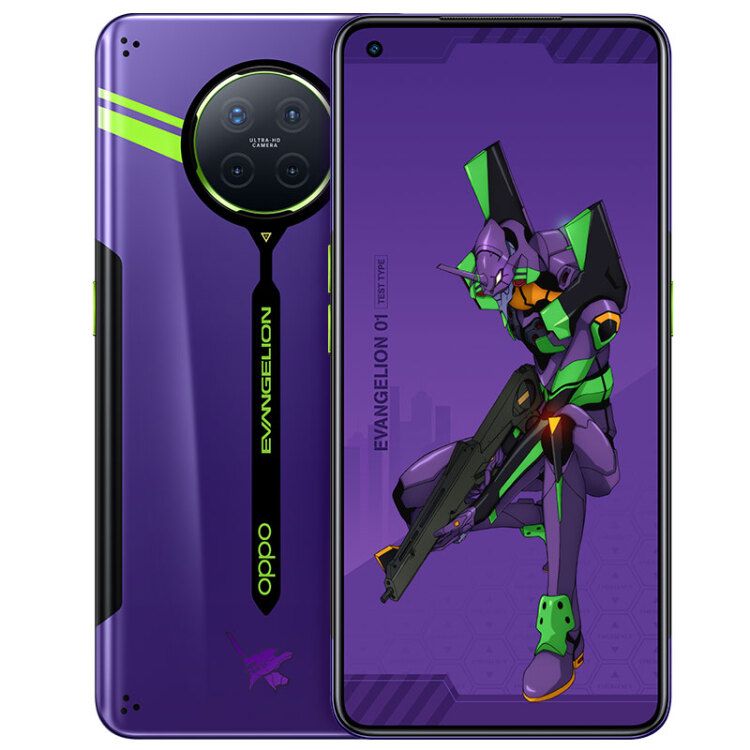
OPPO Ace2 Neon Genesis Evangelion

OPPO will be offering 10,000 units of this special edition Neon Genesis Evangelion model of the OPPO Ace2 starting from June 1st. The company was, most likely, able to obtain the Neon Genesis Evangelion branding license (from Japanese Studio Khara) for distribution only in China. The device is already up for pre-orders on Chinese eCommerce platform JD.com at a price of CNY 4,399 (~$615), which is exactly the same price as the regular 8GB/256GB variant of the OPPO Ace2.

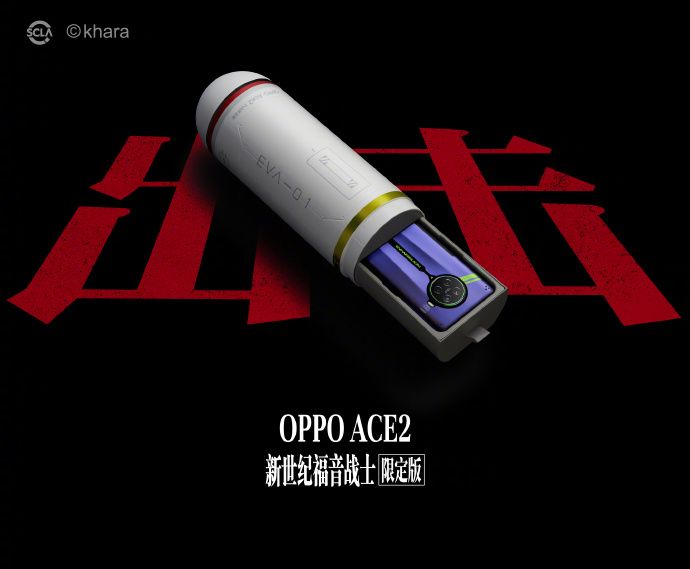
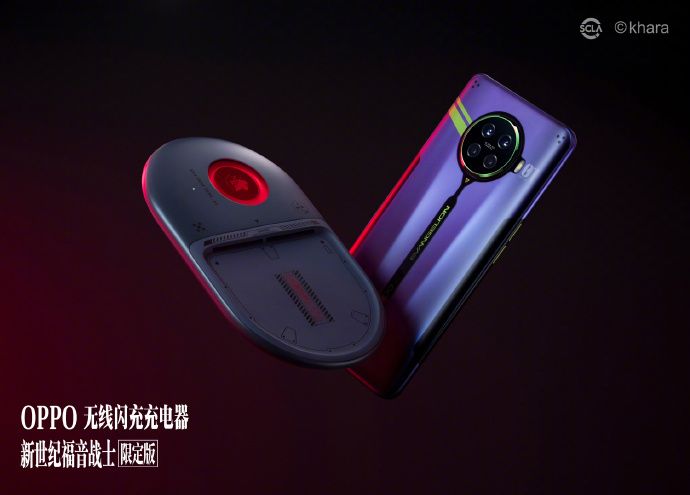
For this price, you get a purple OPPO Ace2 with neon green accents on the back, Qualcomm’s flagship Snapdragon 865 chip, 8GB of LPDDR5 RAM, 256GB of UFS 3.0 storage, a 90Hz high refresh display, and a 4,000mAh battery with support for 65W fast charging. Along with that, you also get a special edition case, charger/cable, wired earphones, and a unique cylindrical box. The Neon Genesis Evangelion special edition lineup also features a couple of accessories, including the Enco W31 TWS earbuds, the OPPO Watch, and a wireless charger.

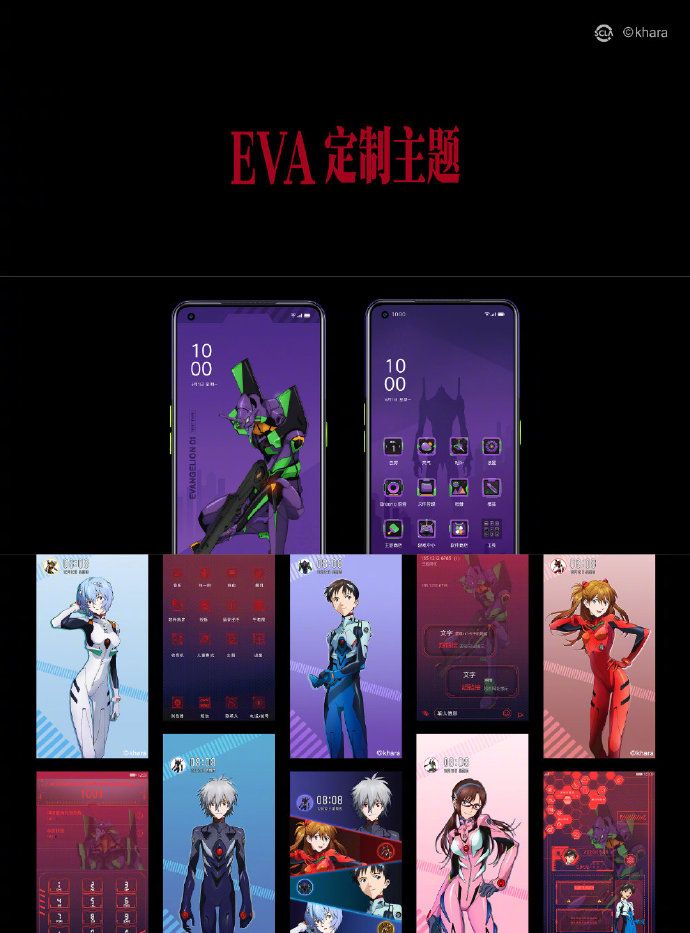
OPPO Neon Genesis Evangelion theme

The limited-edition device also appears to include some additions on the software front, including Neon Genesis Evangelion wallpapers and themes. Unlike the hardware changes, the custom themes will be made available to other OPPO users via the company’s theme store but they’re limited to just 1,000 copies on a first come, first serve basis.


Source: Weibo (1,2)

The post OPPO is selling a smartphone and several accessories with Neon Genesis Evangelion branding, but only in China appeared first on xda-developers.


from xda-developers https://ift.tt/3exoZ8m
via IFTTT