LightBlog

mercredi 27 mai 2020

This $40 Kit Is Loaded with Protective Gear for Going Back Outside

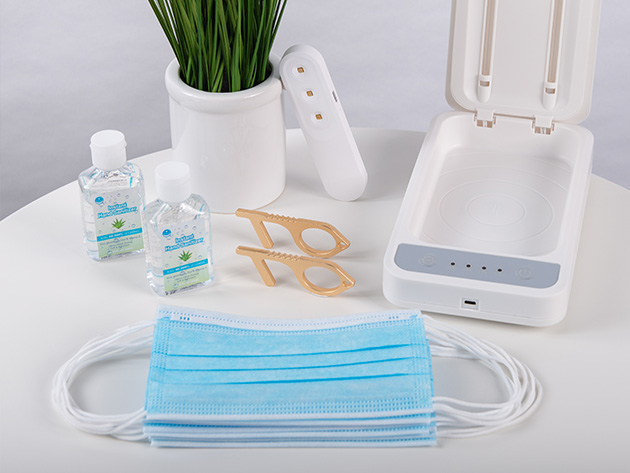
When you can’t see your enemy, your defense is doubly important. In the case of coronavirus, this means stocking up on protective equipment. Many of these products are running low in the shops, but there is another way to acquire the essential gear. The Shelter-In-Place Protective Care Bundle contains hand sanitizer, protective masks, and tools that help you interact with the world safely. You can get the Starter version now for just $39.99 at the XDA Developers Depot.

Although many states are starting to open, there are still over 1.5 million confirmed cases in the country. Whenever you go out, there is a chance you could touch the same surfaces as someone who is infected. This bundle helps you avoid these risks and comply with local laws.

First up, you get a 10-pack of FDA-registered masks. With triple-layer filtration, they provide excellent protection. They also have comfortable ear loops, meaning you can happily wear your mask all day.

To keep your hands clean, the bundle includes a two-pack of 2oz hand sanitizers. Made with active ingredients, the liquid kills 99.99% of germs and bacteria.

You also get two Safe “Touch N Go” Keys. These aluminum tools allow you to push buttons, open doors, and operate switches without touching surfaces directly.

It’s worth $79.95, but you can get the bundle now for $39.99.
 
Shelter-In-Place Protective Care Bundle (Starter) – $39.99

See Deal

Prices subject to change 

More from the XDA Developers Depot

The post This $40 Kit Is Loaded with Protective Gear for Going Back Outside appeared first on xda-developers.


from xda-developers https://ift.tt/36yqtfY
via IFTTT

[Update: Official] Samsung is planning to offer a debit card this summer

Update (5/27/20 @ 9:55 AM ET): The Samsung Money debit card is now official and the company has shared more information about it.

Samsung is the latest tech company looking to get into the personal finance game. According to Samsung, the company is planning to introduce a debit card for Samsung Pay this summer. The card will be backed by SoFi, an online personal finance company that has gained traction in the last five years.

Tech companies getting into personal finance is becoming a trend. The Apple Card is a credit card that was launched in 2019, whereas Google’s rumored to be working on a debit card of its own. Samsung’s plan is more in line with what we’re hearing about Google’s plan. The Samsung debit card will be tied into Samsung Pay and offer users more ways to manage money.

Samsung Pay was launched in 2015 and it allows select Galaxy devices to pay at virtually any terminal thanks to Magnetic Secure Transmission (MST). In contrast, platforms such as Google Pay and Apple Pay only use NFC for payments. To date, Samsung Pay has been about mobile payments and rewards, but the introduction of the debit card will bring new money management tools to the service as well.

This announcement comes as Samsung celebrates 5 years of Samsung Pay. The company says they will have more information to share in the coming weeks. What do you think of the idea of a Samsung debit card? Is this something you’re interested in?

Source: Samsung


Update: Official

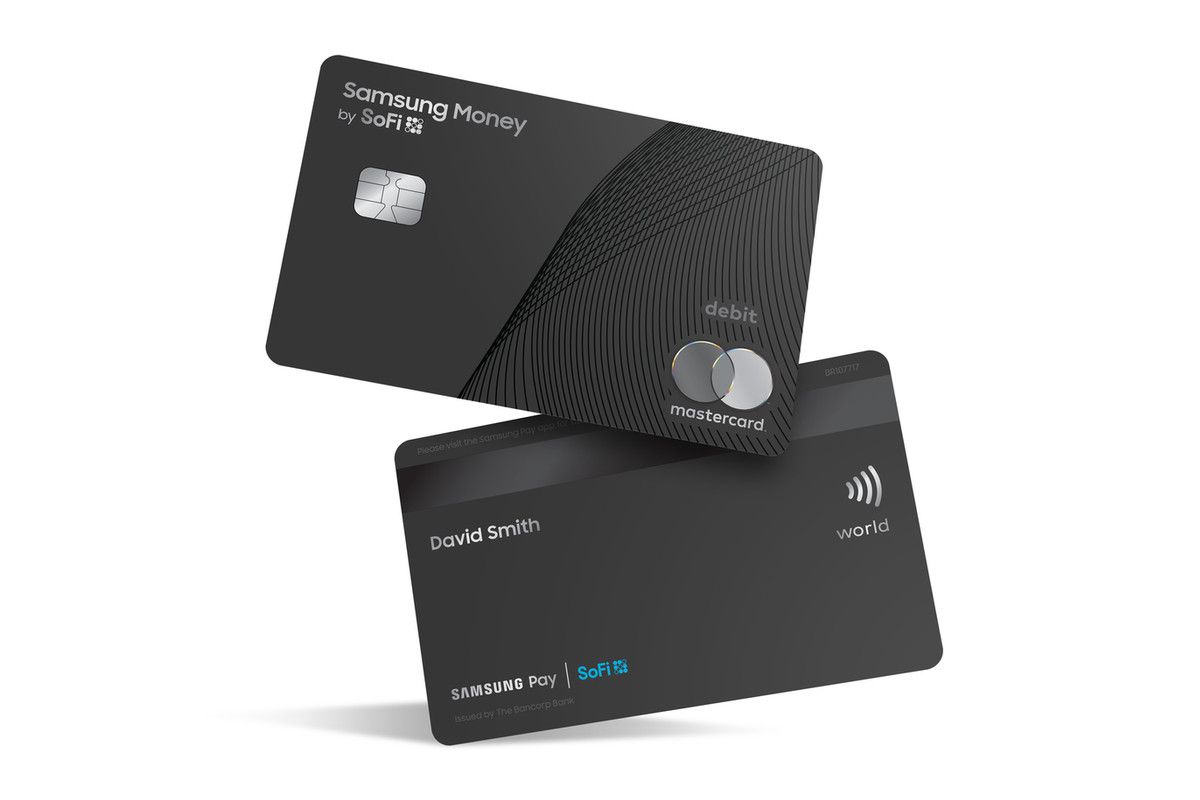
Earlier this month, Samsung revealed it would be releasing a debit card in the coming weeks. The time has come for the full unveiling and that debit card is officially called “Samsung Money by Sofi.” It’s a Mastercard issued by The Bancorp Bank and it ties into Samsung Pay, as expected.

The Samsung Money debit card comes with a cash management account and no account fees and higher interest than the national average. The key here is the Samsung Pay integration, though. Users can apply for the card directly in the Samsung Pay app and they can use it digitally before the physical card arrives. Samsung Pay is where users can check their balance, see a timeline of purchases, freeze the card, and flag charges.

All of that, however, is pretty standard stuff. There are a few Samsung-centric features as well. The Samsung Money debit card earns Samsung Rewards points, which can be redeemed on purchases of Samsung products. The company is also promising that accounts will be FDIC insured for up to $1.5 million, which is 6 times higher than most debit cards. The SoFi partnership also allows Samsung Money users to access 5,000 ATMs in the Allpoint ATM network without any charges.

The card is launching later this summer and people can sign up here for the waitlist.

Via: The Verge

The post [Update: Official] Samsung is planning to offer a debit card this summer appeared first on xda-developers.


from xda-developers https://ift.tt/2SM2u7j
via IFTTT

[Update: Official] Samsung is planning to offer a debit card this summer

Update (5/27/20 @ 9:55 AM ET): The Samsung Money debit card is now official and the company has shared more information about it.

Samsung is the latest tech company looking to get into the personal finance game. According to Samsung, the company is planning to introduce a debit card for Samsung Pay this summer. The card will be backed by SoFi, an online personal finance company that has gained traction in the last five years.

Tech companies getting into personal finance is becoming a trend. The Apple Card is a credit card that was launched in 2019, whereas Google’s rumored to be working on a debit card of its own. Samsung’s plan is more in line with what we’re hearing about Google’s plan. The Samsung debit card will be tied into Samsung Pay and offer users more ways to manage money.

Samsung Pay was launched in 2015 and it allows select Galaxy devices to pay at virtually any terminal thanks to Magnetic Secure Transmission (MST). In contrast, platforms such as Google Pay and Apple Pay only use NFC for payments. To date, Samsung Pay has been about mobile payments and rewards, but the introduction of the debit card will bring new money management tools to the service as well.

This announcement comes as Samsung celebrates 5 years of Samsung Pay. The company says they will have more information to share in the coming weeks. What do you think of the idea of a Samsung debit card? Is this something you’re interested in?

Source: Samsung


Update: Official

Earlier this month, Samsung revealed it would be releasing a debit card in the coming weeks. The time has come for the full unveiling and that debit card is officially called “Samsung Money by Sofi.” It’s a Mastercard issued by The Bancorp Bank and it ties into Samsung Pay, as expected.

The Samsung Money debit card comes with a cash management account and no account fees and higher interest than the national average. The key here is the Samsung Pay integration, though. Users can apply for the card directly in the Samsung Pay app and they can use it digitally before the physical card arrives. Samsung Pay is where users can check their balance, see a timeline of purchases, freeze the card, and flag charges.

All of that, however, is pretty standard stuff. There are a few Samsung-centric features as well. The Samsung Money debit card earns Samsung Rewards points, which can be redeemed on purchases of Samsung products. The company is also promising that accounts will be FDIC insured for up to $1.5 million, which is 6 times higher than most debit cards. The SoFi partnership also allows Samsung Money users to access 5,000 ATMs in the Allpoint ATM network without any charges.

The card is launching later this summer and people can sign up here for the waitlist.

Via: The Verge

The post [Update: Official] Samsung is planning to offer a debit card this summer appeared first on xda-developers.


from xda-developers https://ift.tt/2SM2u7j
via IFTTT

Realme X3 SuperZoom, Redmi 10X, Realme 6i/6s, and iQOO Z1 forums are open

As countries around the globe ease lockdown restrictions and begin their slow march towards normalcy, smartphone companies are also pressing forward with new product launches. This month has been chock-full of announcements with the likes of Realme, Redmi, iQOO, and LG taking the wraps off their latest smartphone offerings. 

To make it easier for device owners and potential buyers to discourse, share tips & tricks, and collaborate on custom developments, we have opened XDA forums for the Realme X3 SuperZoom, Redmi 10X, Realme 6i/6s, and iQOO Z1.

Realme X3 SuerZoom

The Realme X3 SuperZoom is the latest affordable flagship contender from Oppo’s sister company. The phone boasts a 6.57-inch LCD with a 90Hz refresh rate and is powered by last year’s Qualcomm Snapdragon 855+ SoC. The main highlight of the phone is the quad-camera setup on the back with the 8MP telephoto sensor offering up to 60x digital zoom and 5x optical zoom. 

Realme X3 SuperZoom XDA Forums

Redmi 10X/10X Pro

The much-awaited Redmi 10X series was finally announced in China yesterday. The Redmi 10X is powered by the latest MediaTek Dimensity 820 SoC and offers a big 6.57-inch AMOLED panel. The display lacks high refresh rate support, but, for what it’s worth, it does offer 180Hz touch sampling rate. The phone has a sizeable 4,520 mAh battery with 22.5W fast charging support, up to 8GB RAM, 128GB storage, and triple cameras consisting of a 48MP primary, 8MP wide-angle, and 5MP macro sensor. The Redmi 10X Pro is the same as the base 10X 5G in most regards but packs an additional 8MP telephoto camera, up to 25G storage, and faster 33W charging support. 

Redmi 10X/10X Pro XDA Forums

Redmi 6i & Redmi 6s

The Realme 6i was announced earlier in March shortly after the launch of the Redmi 6 series. The phone has a 6.5-inch HD+ display, MediaTek Helio G80 SoC, quad cameras, and a 5,000 mAh battery. The Realme 6s, on the other hand, was launched alongside the Realme X3 SuperZoom just yesterday. The main highlights of the phone include a 6.5-inch Full HD+ display with a 90Hz screen refresh rate and MediaTek Helio G90T SoC. The phone packs a 4,300 mAh battery, four cameras, 4GB RAM, 64GB storage, and comes with Android 10. 

Realme 6i XDA Forums || Realme 6s XDA Forums

iQOO Z1

The iQOO Z1 is the latest flagship from Vivo’s sub-brand. It’s also the first to be powered by MediaTek’s newest flagship SoC: Dimensity 1000 Plus. The 6.57-inch IPS display with a crazy 144Hz screen refresh rate is undoubtedly the main selling point of the iQOO Z1, but it’s equally impressive in other areas as well, packing a 4,500 mAh battery with 44W fast charging, up to 8GB RAM, 256GB storage, and 5G connectivity. 

iQOO Z1 XDA Forums

The post Realme X3 SuperZoom, Redmi 10X, Realme 6i/6s, and iQOO Z1 forums are open appeared first on xda-developers.


from xda-developers https://ift.tt/3gwE0cK
via IFTTT

[Update: Unity Plugin] Google open sources Cardboard so developers can build educative VR experiences in their apps

Update (5/27/20 @ 9:10 AM ET): Google releases the Cardboard Unity SDK so developers can create smartphone XR experiences using Unity.

Last month, Google announced a handful of new products at the annual “Made by Google” event. However, one product was quietly discontinued: Daydream VR. The VR platform was not mentioned on the Pixel 4’s specification sheet and Google later confirmed the absence. Today, the company is making moves in VR to open source the once-popular Google Cardboard.

Like a lot of tech companies, Google was once bullish on the budding potential of VR. They created the Daydream VR platform that other companies could use to make VR headsets and even made their own hardware. Cardboard, on the other hand, was a quirky low-tech approach to VR, and it was probably more successful than Daydream. Google is now open-sourcing Cardboard.

Previously, Google made the technical specifications of the physical Cardboard “headset” available for anyone to download. Now they are taking the same approach on the software side of things. Developers are free to build new experiences for Cardboard and add support to their apps. Google will continue to make some contributions, most notably an SDK package for Unity.

We’re releasing libraries for developers to build their Cardboard apps for iOS and Android and render VR experiences on Cardboard viewers. The open source project provides APIs for head tracking, lens distortion rendering and input handling. We’ve also included an Android QR code library, so that apps can pair any Cardboard viewer without depending on the Cardboard app.

One thing that VR is still useful for is education and Google hopes this opens the door for more experiences in that area. To get started with the Cardboard open source project, head on over to the GitHub page or read the developer documentation. This is a cool move for anyone still interested in mobile VR, but it also shows how Google isn’t really invested in it anymore.

Source: Google


Update: Unity Plugin

Google ceased active development on Cardboard VR last November and open-sourced the project. At that time, the company said it would continue to make some contributions, including an SDK package for Unity. Today, Google makes good on that promise.

Google has released the Cardboard Unity SDK for users who prefer to develop in Unity. The open-source plugin for Unity is now available in the Unity Asset Store. Google is also providing a sample app for iOS and Android to aid developers in debugging their creations. The company says this is another step away from smartphone VR as they leave it in the hands of the community.

Source: Google

The post [Update: Unity Plugin] Google open sources Cardboard so developers can build educative VR experiences in their apps appeared first on xda-developers.


from xda-developers https://ift.tt/2PRTNI9
via IFTTT

Realme X3 SuperZoom, Redmi 10X, Realme 6i/6s, and iQOO Z1 forums are open

As countries around the globe ease lockdown restrictions and begin their slow march towards normalcy, smartphone companies are also pressing forward with new product launches. This month has been chock-full of announcements with the likes of Realme, Redmi, iQOO, and LG taking the wraps off their latest smartphone offerings. 

To make it easier for device owners and potential buyers to discourse, share tips & tricks, and collaborate on custom developments, we have opened XDA forums for the Realme X3 SuperZoom, Redmi 10X, Realme 6i/6s, and iQOO Z1.

Realme X3 SuerZoom

The Realme X3 SuperZoom is the latest affordable flagship contender from Oppo’s sister company. The phone boasts a 6.57-inch LCD with a 90Hz refresh rate and is powered by last year’s Qualcomm Snapdragon 855+ SoC. The main highlight of the phone is the quad-camera setup on the back with the 8MP telephoto sensor offering up to 60x digital zoom and 5x optical zoom. 

Realme X3 SuperZoom XDA Forums

Redmi 10X/10X Pro

The much-awaited Redmi 10X series was finally announced in China yesterday. The Redmi 10X is powered by the latest MediaTek Dimensity 820 SoC and offers a big 6.57-inch AMOLED panel. The display lacks high refresh rate support, but, for what it’s worth, it does offer 180Hz touch sampling rate. The phone has a sizeable 4,520 mAh battery with 22.5W fast charging support, up to 8GB RAM, 128GB storage, and triple cameras consisting of a 48MP primary, 8MP wide-angle, and 5MP macro sensor. The Redmi 10X Pro is the same as the base 10X 5G in most regards but packs an additional 8MP telephoto camera, up to 25G storage, and faster 33W charging support. 

Redmi 10X/10X Pro XDA Forums

Redmi 6i & Redmi 6s

The Realme 6i was announced earlier in March shortly after the launch of the Redmi 6 series. The phone has a 6.5-inch HD+ display, MediaTek Helio G80 SoC, quad cameras, and a 5,000 mAh battery. The Realme 6s, on the other hand, was launched alongside the Realme X3 SuperZoom just yesterday. The main highlights of the phone include a 6.5-inch Full HD+ display with a 90Hz screen refresh rate and MediaTek Helio G90T SoC. The phone packs a 4,300 mAh battery, four cameras, 4GB RAM, 64GB storage, and comes with Android 10. 

Realme 6i XDA Forums || Realme 6s XDA Forums

iQOO Z1

The iQOO Z1 is the latest flagship from Vivo’s sub-brand. It’s also the first to be powered by MediaTek’s newest flagship SoC: Dimensity 1000 Plus. The 6.57-inch IPS display with a crazy 144Hz screen refresh rate is undoubtedly the main selling point of the iQOO Z1, but it’s equally impressive in other areas as well, packing a 4,500 mAh battery with 44W fast charging, up to 8GB RAM, 256GB storage, and 5G connectivity. 

iQOO Z1 XDA Forums

The post Realme X3 SuperZoom, Redmi 10X, Realme 6i/6s, and iQOO Z1 forums are open appeared first on xda-developers.


from xda-developers https://ift.tt/3gwE0cK
via IFTTT

[Update: Unity Plugin] Google open sources Cardboard so developers can build educative VR experiences in their apps

Update (5/27/20 @ 9:10 AM ET): Google releases the Cardboard Unity SDK so developers can create smartphone XR experiences using Unity.

Last month, Google announced a handful of new products at the annual “Made by Google” event. However, one product was quietly discontinued: Daydream VR. The VR platform was not mentioned on the Pixel 4’s specification sheet and Google later confirmed the absence. Today, the company is making moves in VR to open source the once-popular Google Cardboard.

Like a lot of tech companies, Google was once bullish on the budding potential of VR. They created the Daydream VR platform that other companies could use to make VR headsets and even made their own hardware. Cardboard, on the other hand, was a quirky low-tech approach to VR, and it was probably more successful than Daydream. Google is now open-sourcing Cardboard.

Previously, Google made the technical specifications of the physical Cardboard “headset” available for anyone to download. Now they are taking the same approach on the software side of things. Developers are free to build new experiences for Cardboard and add support to their apps. Google will continue to make some contributions, most notably an SDK package for Unity.

We’re releasing libraries for developers to build their Cardboard apps for iOS and Android and render VR experiences on Cardboard viewers. The open source project provides APIs for head tracking, lens distortion rendering and input handling. We’ve also included an Android QR code library, so that apps can pair any Cardboard viewer without depending on the Cardboard app.

One thing that VR is still useful for is education and Google hopes this opens the door for more experiences in that area. To get started with the Cardboard open source project, head on over to the GitHub page or read the developer documentation. This is a cool move for anyone still interested in mobile VR, but it also shows how Google isn’t really invested in it anymore.

Source: Google


Update: Unity Plugin

Google ceased active development on Cardboard VR last November and open-sourced the project. At that time, the company said it would continue to make some contributions, including an SDK package for Unity. Today, Google makes good on that promise.

Google has released the Cardboard Unity SDK for users who prefer to develop in Unity. The open-source plugin for Unity is now available in the Unity Asset Store. Google is also providing a sample app for iOS and Android to aid developers in debugging their creations. The company says this is another step away from smartphone VR as they leave it in the hands of the community.

Source: Google

The post [Update: Unity Plugin] Google open sources Cardboard so developers can build educative VR experiences in their apps appeared first on xda-developers.


from xda-developers https://ift.tt/2PRTNI9
via IFTTT