LightBlog

mardi 19 mai 2020

Honor unveils the ViewPad 6 tablet, a 16.1″ MagicBook Pro laptop, TWS Earbuds X1, and more

Earlier this month, Huawei’s sub-brand Honor shared a render of an upcoming 5G device called the Honor X10 5G. The device, which is expected to launch in China tomorrow, will be powered by Huawei’s HiSilicon Kirin 820 chip and feature a quad-camera setup, a pop-up selfie camera, and a 90Hz display. Just a day ahead of its launch, Honor has unveiled quite a few new devices at the recently concluded Honor All-scenario Smart Life Products launch. Here are some of the most noteworthy Honor devices that were launched today:

Honor MagicBook Pro

The 16.1″ MagicBook Pro is the latest addition to the company’s popular MagicBook lineup, which is powered by Intel’s 10th-gen mobile chips and Nvidia’s MX350 GPU. The notebook will be available in two configurations, with the base variant packing in a Core i5 processor, 16GB of RAM, and a 512GB SSD priced at CNY 5,999 (~$844). The higher-end variant, on the other hand, features a Core i7 processor, 16GB of RAM, and a 512GB SSD priced at CNY 6699 (~$942). The company has also revealed that the MagicBook Pro will be launched in Russia in September this year.

Honor ViewPad 6

The MagicBook Pro is accompanied by a new tablet called the ViewPad 6, which is powered by the HiSilicon Kirin 985 5G chipset. The tablet features a 10.4-inch 2K FullView display, support for WiFi 6+ connectivity, and stereo speakers. The tablet will be offered in two RAM/storage variants but the company will reveal its pricing and availability details on June 13th.

Honor Router 3

Honor Router 3

The company has also unveiled the new Honor Router 3, it’s first wireless router to adopt the latest WiFi 6+ standard. The router features a WiFi 6+ chipset, coupled with a Gigahome dual-core 1.2GHz CPU, which is capable of up to 3,000Mbps throughput across one 2.4GHz band and one 5GHz band. Additionally, the router includes support for OFDMA multi-user technology to enable direct connections to a number of devices with greater stability and low latency. The Honor 3 router has been priced at CNY 219 (~$30) and it will also be sold in other markets starting from July 2020.

Vision X1 Smart TV

Furthermore, Honor has launched its new Vision X1 series of smart TVs that feature 8K decoding and display, motion estimate and motion compensation features, and 4 10W speakers for audio output. The smart TVs are equipped with a smart assistant, that will allow users to seamlessly use the TV with other Honor devices. The Vision X1 Smart TVs will be available in two sizes variants — 65-inch and 55-inch — priced at CNY 3,299 (~$464) and CNY 2299 (~$323), respectively. Honor also plans to launch a 50-inch variant of the Vision X1 smart TV, which will be announced at a later date.

TWS Earbuds X1

Much like other smartphone OEMs, Honor is also doubling down on the truly wireless earbuds segment with the launch of the new TWS Earbuds X1. The new earbuds look a lot like Apple’s AirPods Pro, with a short stem and silicone ear tips for a better fit. The earbuds feature dual microphones and are powered by a new binaural synchronous transmission technology that is capable of transmitting audio with minimal latency. Honor claims that the earbuds and charging case combo can last up to 24-hours on a single charge, which is quite impressive when compared to other TWS earbuds in the market today. The Honor TWS Earbuds X1 has been priced at CNY 169 (~$24).

Honor

Along with the aforementioned devices, Honor has also unveiled a new smart vacuum cleaner, a bladeless fan, a humidifier, a desk lamp, an electronic toothbrush, and a smart kettle.

The post Honor unveils the ViewPad 6 tablet, a 16.1″ MagicBook Pro laptop, TWS Earbuds X1, and more appeared first on xda-developers.


from xda-developers https://ift.tt/2WI1Yd2
via IFTTT

Huawei’s Celia voice assistant is now available on EMUI 10.1 on the Huawei P40

Huawei is trying hard to decouple Google services from their custom Android skin, EMUI, due to the trade ban imposed on the company by the US government. Replacing the Google Play Store with the Huawei AppGallery and shipping Huawei Mobile Services (HMS) instead of Google Mobile Services are some of the notable steps in that direction. The OEM has also created a dedicated voice assistant named Celia as an alternative to the Google Assistant. Celia was originally announced during the online launch event of the Huawei P40 series, but the initial firmware packages didn’t feature the voice assistant.

Around a week ago, the Huawei P40 series received the EMUI 10.1.0.121 update, which introduced a surprising “Huawei Assistant” top-level setting with references to Celia. That was probably a preparatory step, as Celia is now fully accessible on the Huawei P40, Huawei P40 Pro, and the Huawei P40 Pro+ running the latest version of EMUI 10.1. At this moment, the availability is region-restricted, though, as you need to set the locale to the UK, France, Spain, Chile, Mexico, or Columbia beforehand to get this feature unlocked. Celia currently supports three languages: English (UK), French, and Spanish.

huawei_celia_conversation_language huawei_celia_weather huawei_celia_calendar

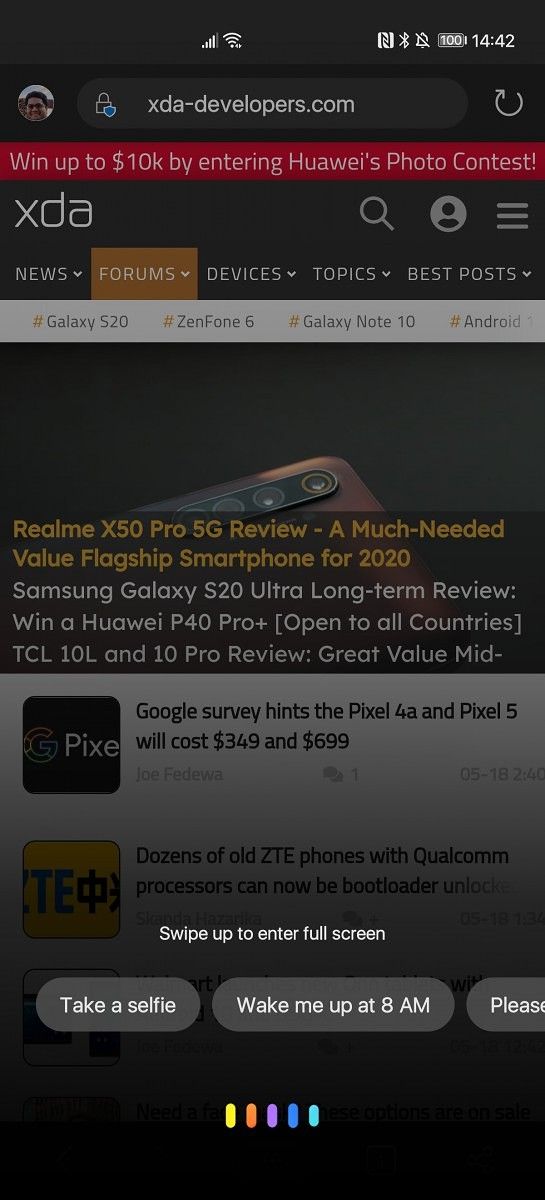
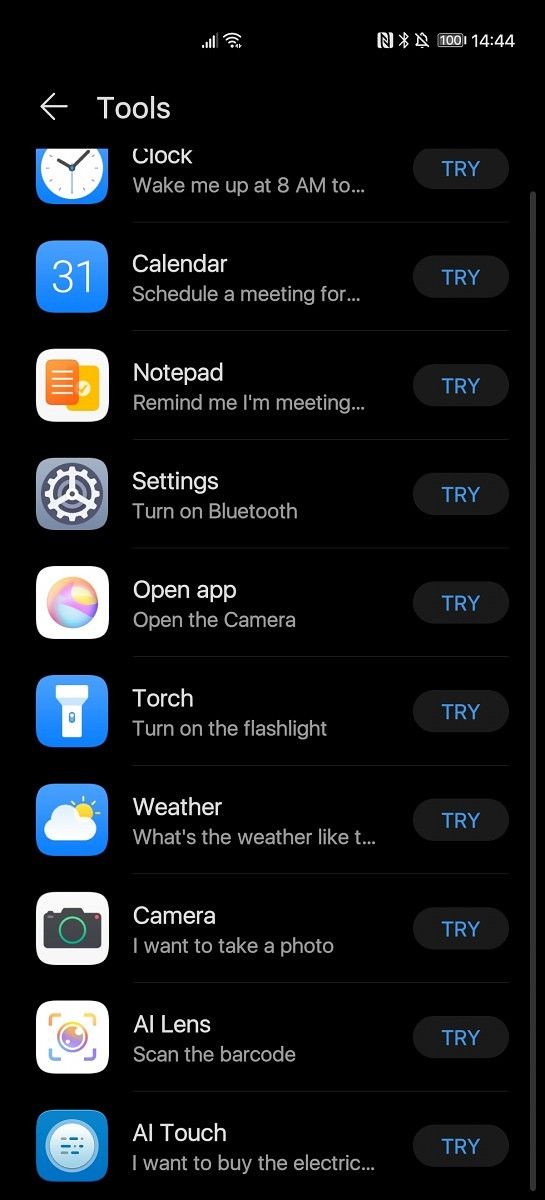
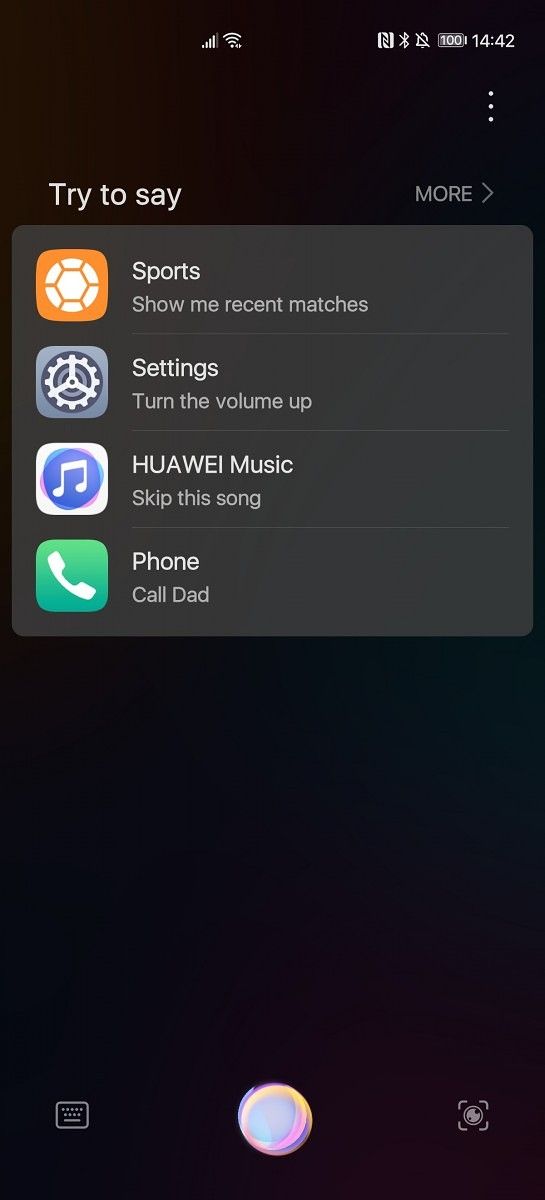
For those not familiar with Celia, the voice assistant can be summoned with the hotword “Hey Celia”. You can hold the power button for a second to activate it as well. Celia should be able to seamlessly integrate itself with the stock EMUI apps and allows users to toggle device settings and flashlight as well as start voice recording, translate sentences, play multimedia contents, and more.

huawei_celia_listening huawei_celia_tools huawei_celia_try_to_say

Celia is also compatible with HiVision AI Lens and AI touch-shopping. Apart from the flagship P40 lineup, the voice assistant should be available on more Huawei and Honor branded devices with the upcoming EMUI 10.1 update. To learn more about Celia and its features, take a look at the official product page.

Would you prefer Celia instead of Google Assistant? Let us know in the comments below!

The post Huawei’s Celia voice assistant is now available on EMUI 10.1 on the Huawei P40 appeared first on xda-developers.


from xda-developers https://ift.tt/3e0vnVI
via IFTTT

Huawei’s Celia voice assistant is now available on EMUI 10.1 on the Huawei P40

Huawei is trying hard to decouple Google services from their custom Android skin, EMUI, due to the trade ban imposed on the company by the US government. Replacing the Google Play Store with the Huawei AppGallery and shipping Huawei Mobile Services (HMS) instead of Google Mobile Services are some of the notable steps in that direction. The OEM has also created a dedicated voice assistant named Celia as an alternative to the Google Assistant. Celia was originally announced during the online launch event of the Huawei P40 series, but the initial firmware packages didn’t feature the voice assistant.

Around a week ago, the Huawei P40 series received the EMUI 10.1.0.121 update, which introduced a surprising “Huawei Assistant” top-level setting with references to Celia. That was probably a preparatory step, as Celia is now fully accessible on the Huawei P40, Huawei P40 Pro, and the Huawei P40 Pro+ running the latest version of EMUI 10.1. At this moment, the availability is region-restricted, though, as you need to set the locale to the UK, France, Spain, Chile, Mexico, or Columbia beforehand to get this feature unlocked. Celia currently supports three languages: English (UK), French, and Spanish.

huawei_celia_conversation_language huawei_celia_weather huawei_celia_calendar

For those not familiar with Celia, the voice assistant can be summoned with the hotword “Hey Celia”. You can hold the power button for a second to activate it as well. Celia should be able to seamlessly integrate itself with the stock EMUI apps and allows users to toggle device settings and flashlight as well as start voice recording, translate sentences, play multimedia contents, and more.

huawei_celia_listening huawei_celia_tools huawei_celia_try_to_say

Celia is also compatible with HiVision AI Lens and AI touch-shopping. Apart from the flagship P40 lineup, the voice assistant should be available on more Huawei and Honor branded devices with the upcoming EMUI 10.1 update. To learn more about Celia and its features, take a look at the official product page.

Would you prefer Celia instead of Google Assistant? Let us know in the comments below!

The post Huawei’s Celia voice assistant is now available on EMUI 10.1 on the Huawei P40 appeared first on xda-developers.


from xda-developers https://ift.tt/3e0vnVI
via IFTTT

[Update: POCO Pop Buds] POCO is working on its own truly wireless earphones

Update 1 (05/19/2020 @ 06:28 AM ET): The POCO earbuds will be called the POCO Pop Buds. Scroll to the bottom for more information. The article as published on April 7, 2020, is preserved below.

Audiophiles may not like the recent trend of omitting the headphone jacks from flagship smartphones, but the practice certainly boosts the sale of truly wireless earbuds. Chipmakers, such as Qualcomm and Samsung have invested heavily in improving the battery life as well as the audio quality of the next-gen TWS earbuds. The potential of the market attracts many OEMs to launch affordable earphones, and it looks like POCO has jumped on the bandwagon.

POCO India General Manager C. Manmohan kickstarted the rumor-engine by running a poll on Twitter, asking fans about what product category they would want POCO to launch next. From among the four options (TWS earphones, Headphones, Fitness Wearable and Gamepad), TWS earphones saw the highest share of votes at 38.2%.

POCO went one step further and organized a virtual fan meet, which saw more than 500 fans tune in. The interactive meet featured an exhaustive Q&A round with the POCO team, which might have served as a preliminary market survey. A recent tweet from POCO India has now put an official seal on the speculations, confirming that the company would indeed be launching a new pair of truly wireless earbuds soon.

It is quite natural for POCO to explore different areas of the market outside of smartphones, especially when their competitors are following the same route. Despite being an independent brand, POCO still has access to Xiaomi’s R&D, which essentially gives them the freedom to pick existing TWS earbuds and rebrand them with minimal efforts. Given that the POCO X2 is itself a rebranded Redmi K30 4G and the Redmi K30 Pro might be launched in India under POCO branding, the company can utilize the first or second-gen Mi True Wireless Earphones or the cost-effective Redmi AirDots as the base of the design for their upcoming earbuds.


Update: To be called the POCO Pop Buds

POCO India’s GM Mr. C. Manmohan recently held a Twitter poll to give fans an opportunity to name the upcoming product.

Consequent to the results of the poll, the upcoming earbuds from the company will be called the POCO Pop Buds. We’re still awaiting details on when the company plans to launch these in the market.


Featured image: Mi True Wireless Earphones

The post [Update: POCO Pop Buds] POCO is working on its own truly wireless earphones appeared first on xda-developers.


from xda-developers https://ift.tt/2xVz5A2
via IFTTT

[Update: POCO Pop Buds] POCO is working on its own truly wireless earphones

Update 1 (05/19/2020 @ 06:28 AM ET): The POCO earbuds will be called the POCO Pop Buds. Scroll to the bottom for more information. The article as published on April 7, 2020, is preserved below.

Audiophiles may not like the recent trend of omitting the headphone jacks from flagship smartphones, but the practice certainly boosts the sale of truly wireless earbuds. Chipmakers, such as Qualcomm and Samsung have invested heavily in improving the battery life as well as the audio quality of the next-gen TWS earbuds. The potential of the market attracts many OEMs to launch affordable earphones, and it looks like POCO has jumped on the bandwagon.

POCO India General Manager C. Manmohan kickstarted the rumor-engine by running a poll on Twitter, asking fans about what product category they would want POCO to launch next. From among the four options (TWS earphones, Headphones, Fitness Wearable and Gamepad), TWS earphones saw the highest share of votes at 38.2%.

POCO went one step further and organized a virtual fan meet, which saw more than 500 fans tune in. The interactive meet featured an exhaustive Q&A round with the POCO team, which might have served as a preliminary market survey. A recent tweet from POCO India has now put an official seal on the speculations, confirming that the company would indeed be launching a new pair of truly wireless earbuds soon.

It is quite natural for POCO to explore different areas of the market outside of smartphones, especially when their competitors are following the same route. Despite being an independent brand, POCO still has access to Xiaomi’s R&D, which essentially gives them the freedom to pick existing TWS earbuds and rebrand them with minimal efforts. Given that the POCO X2 is itself a rebranded Redmi K30 4G and the Redmi K30 Pro might be launched in India under POCO branding, the company can utilize the first or second-gen Mi True Wireless Earphones or the cost-effective Redmi AirDots as the base of the design for their upcoming earbuds.


Update: To be called the POCO Pop Buds

POCO India’s GM Mr. C. Manmohan recently held a Twitter poll to give fans an opportunity to name the upcoming product.

Consequent to the results of the poll, the upcoming earbuds from the company will be called the POCO Pop Buds. We’re still awaiting details on when the company plans to launch these in the market.


Featured image: Mi True Wireless Earphones

The post [Update: POCO Pop Buds] POCO is working on its own truly wireless earphones appeared first on xda-developers.


from xda-developers https://ift.tt/2xVz5A2
via IFTTT

Google is testing a simpler UI for its Nest Hub smart displays

Google recently rolled out a new firmware update for its Nest Hub and Nest Hub Max smart displays. The update (v1.46) introduced a number of interface and usability changes, including a few minor tweaks to the System Settings, new display settings, lighting controls, and more. Now, according to a recent blog post, the company has started testing a new simpler UI designed for the less tech-savvy users.

The new UI aims to make setting up a new Nest Hub even easier for elderly users and it includes a pre-loaded shortlist of contacts that’s aimed at making video calling a simpler process. The UI also includes new “What can you do?” cards that act as shortcuts for showing weather reports, setting alarms, or playing relaxing sounds, allowing users to make the most out of their Nest Hubs with minimal effort.

The easy-to-use UI is part of a new initiative under which Google is giving nearly 1,000 Nest Hub Max displays to residents in seven Merrill Gardens retirement communities in Washington State. The initiative is expected to help the residents easily connect with their friends and family during the COVID-19 induced lockdown. The blog post also notes that the new UI has been designed in a way that preserves privacy for residents, with all the devices managed on Nest’s fleet management system and running in a “signed out” mode, in which no audio is stored and all activity is anonymous. As of now, the company has released no information about a broader rollout for the new Nest Hub UI.

The post Google is testing a simpler UI for its Nest Hub smart displays appeared first on xda-developers.


from xda-developers https://ift.tt/2TjgqWB
via IFTTT

Google may ditch their Active Edge squeeze feature with the Pixel 4a

At this point, we know pretty much everything about the Google Pixel 4a. We know how the photos coming out of its camera look like, we know where it’s gonna stand in terms of performance and we also know the probable pricing. However, there’s an interesting tidbit that flew under our radar. As it turns out, the Pixel 4a will miss out on a feature that has been part of the Pixel lineup since the Pixel 2: Active Edge squeeze feature.

Stephen Hall from 9to5Google revealed in a tweet that the Google Pixel 4a will not feature Active Edge gestures. Our Editor-in-Chief Mishal Rahman was able to confirm this news through Julio Lusson who has a pre-production unit of Pixel 4a in his possession — the same guy who gave us an early look of the camera performance and device performance. The screenshot provided by Julio shows that the option to enable the Active Edge feature has been removed from the Gesture section.

Active Edge is a feature that made its debut on the Google Pixel 2 and 2 XL and has been present on every Pixel phone since then, including the Pixel 3 series, Pixel 3a series, and Pixel 4 series. The feature came from Google’s acquisition of HTC — HTC flagships such as HTC U11 and U12 had a similar feature called Edge Sense. The feature lets you squeeze the sides of the phone to invoke certain actions, which in the case of Pixel phones is to launch the Google Assistant.

The Pixel 4a could be the first Pixel phone in a while without Active Edge. Google may have removed it to save cost and/or they may have removed it because it’s no longer needed since you can launch the Google Assistant using a diagonal swipe with gestures, and soon, with a double tap on the rear of the phone.

It’s unclear whether Google will ditch the Active Edge feature on the upcoming Google Pixel 5 as well — we won’t be too surprised if that turns out to be the case, though.

Google Pixel 4a XDA Forums

What are your thoughts on Google’s decision to remove the Active Edge functionality? Did you use it extensively on your Pixel phone? Let us know in the comments below.


Source 1: @hallstephenj
Source 2: @MishaalRahman

The post Google may ditch their Active Edge squeeze feature with the Pixel 4a appeared first on xda-developers.


from xda-developers https://ift.tt/2ycsGRs
via IFTTT