LightBlog

lundi 16 mars 2020

[Update: More renders] Motorola Edge+ leaked renders show off waterfall display and triple cameras

Update 1 (03/17/2020 @ 02:25 AM ET): Evan ‘evleaks’ Blass has shared two high quality renders of the Motorola Edge+, corroborating previous renders. Scroll to the bottom for more information. The article as published on March 5, 2020, is preserved below.

Motorola (owned by Lenovo) has been doing a bang-up job in the low-end and mid-range smartphone segment. The Moto G7 series was very successful, and they’ve followed it up with the Moto G8 series. However, the company is set to return to the flagship market this year with the Motorola Edge+. We’re getting a new look at the device thanks to some leaked renders.

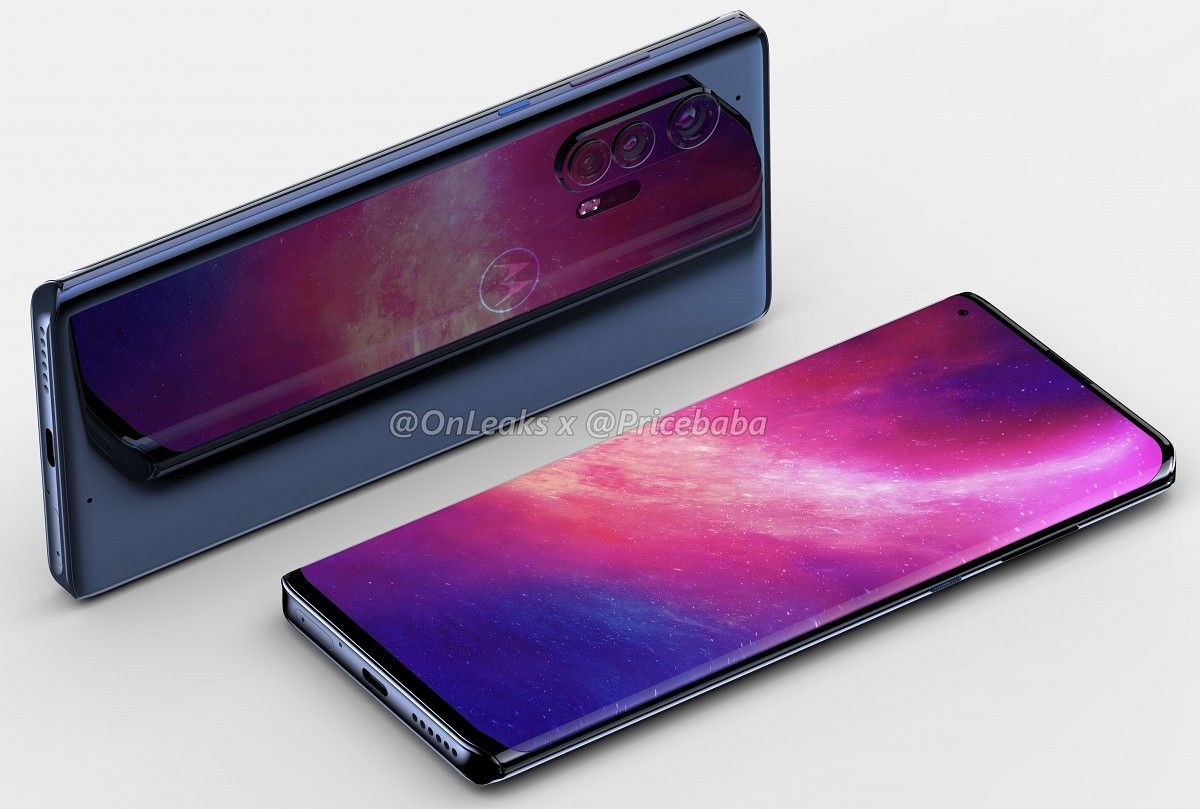
We exclusively reported on two Motorola devices 5G and 90Hz waterfall displays last month. At the time, we didn’t have a confirmed name for either model, but we’ve since discovered the flagship model will be called the Motorola Edge+. We also had a few real-life photos of the upper mid-range Motorola device that will share the same design as the Edge+. Today, we’re getting our first look at the Edge+ itself through some renders.

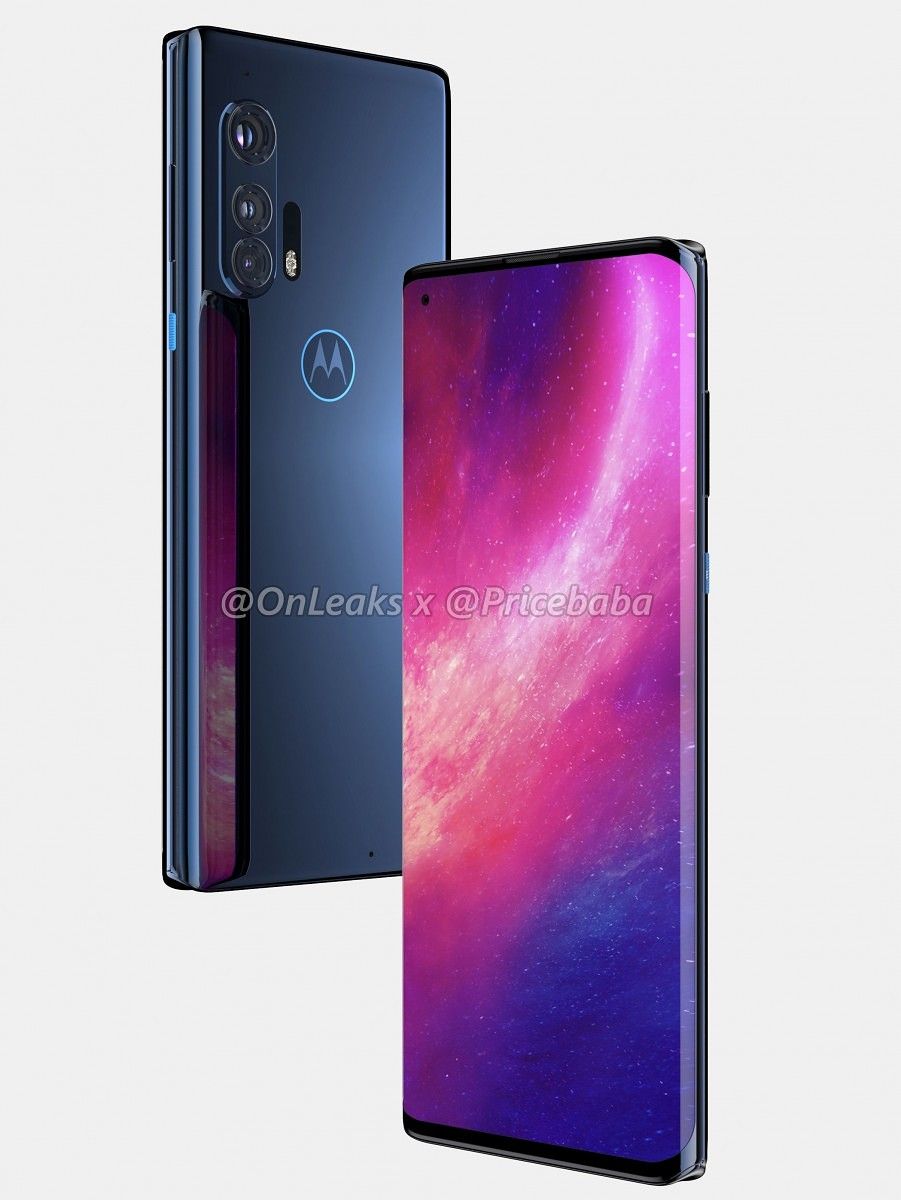
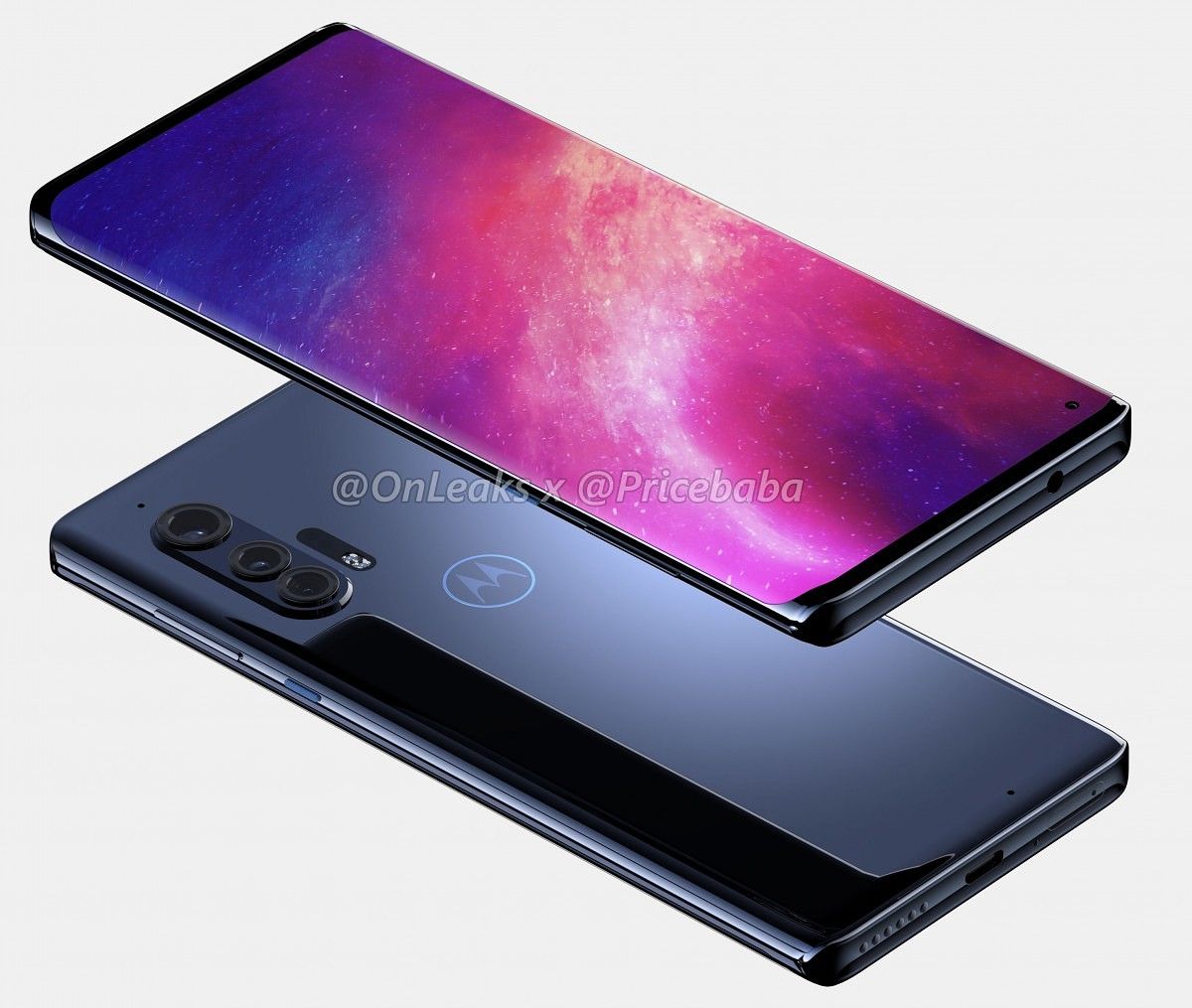
The leaked renders give us a much clearer look at the Motorola Edge+. The front of the phone features a small hole-punch in the top left corner and a display that wraps dramatically around the edges. This matches up perfectly with what we saw from the other 5G Moto phone. Around back, we can see the three cameras arranged in a vertical stack and an LED ring around the Motorola logo.

The bottom edge of the phone features a USB-C port and a speaker grill. Surprisingly for a flagship phone, the top edge looks to have a 3.5mm headphone jack. There is said to be an under-display fingerprint scanner as well. Unlike some previous phones with waterfall displays, the Motorola Edge+ appears to still have physical volume and power buttons.

There aren’t any new specifications to note from this report, but we can recap what we know already. The display is 6.67-inches with a resolution of 2340 x 1080 and 90Hz refresh rate. It will be powered by the Snapdragon 865 with support for 5G. The device will have 8 or 12GB of RAM, a 5,169mAh battery, and Android 10. There’s still a lot we don’t know about this upcoming device.

Source: Pricebaba


Update: New Renders of the Motorola Edge+ from Evleaks

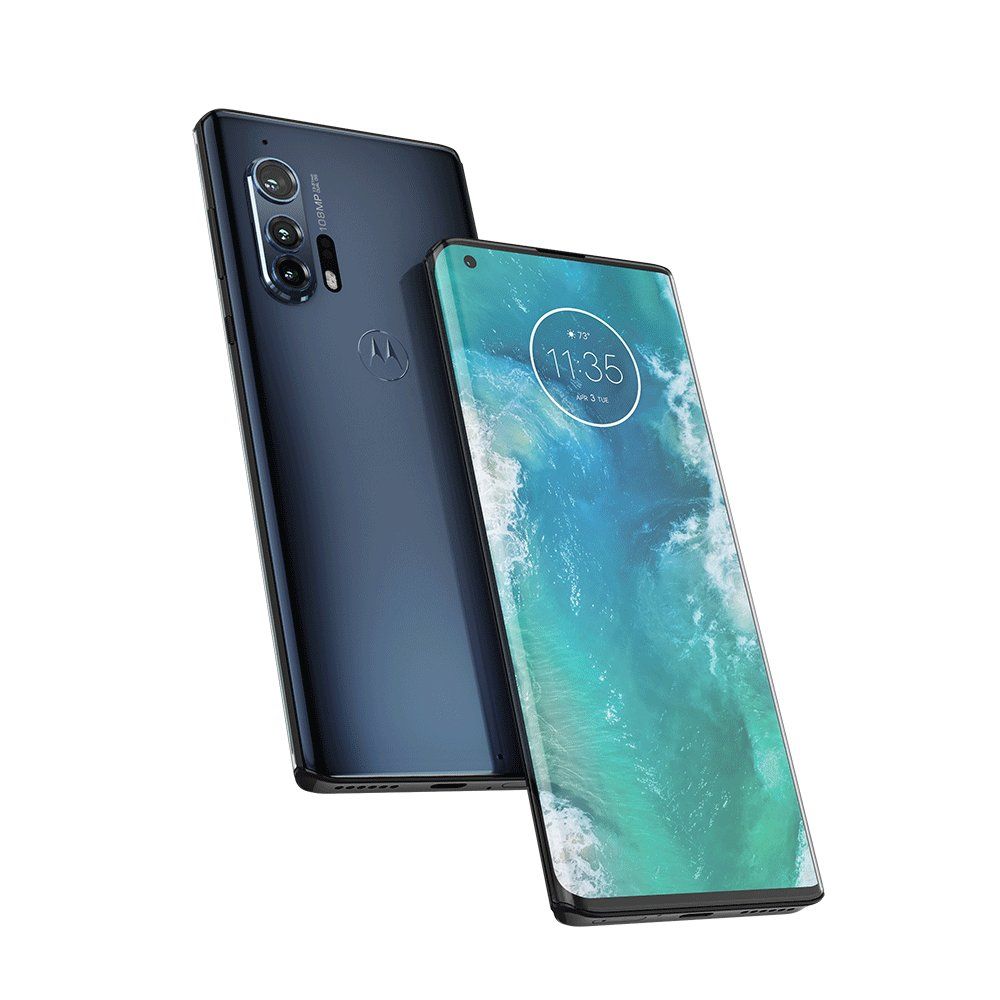
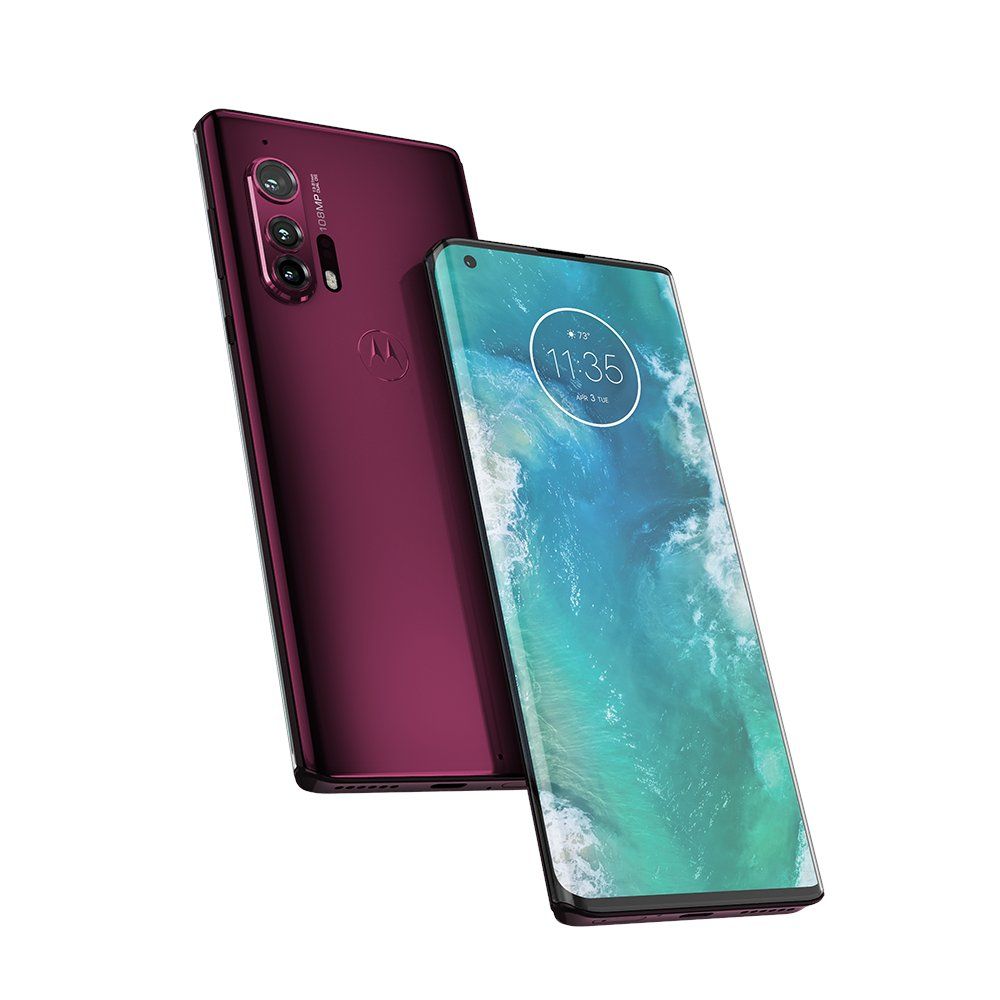
Evan ‘evleaks’ Blass has shared new renders of the Motorola Edge+, showing off the phone in high quality.

The renders shared by Evan corroborate the renders shared by @OnLeaks, and add value by showing off the Burgundy color option as well.

Source: @evleaks

The post [Update: More renders] Motorola Edge+ leaked renders show off waterfall display and triple cameras appeared first on xda-developers.


from xda-developers https://ift.tt/3cBl2PR
via IFTTT

Imint partners with Qualcomm to optimize its video enhancement tech for the Snapdragon 865

The hardware in smartphone cameras has gotten incredibly good. We’re seeing phones launch with crazy high megapixel counts, “SuperZoom” abilities, macro lenses, wide-angle lenses, and much more. What has become even more important that hardware, however, is camera software. Qualcomm announced that they are partnering with Imint to optimize its video enhancement tech for the Snapdragon 865.

Imint is a Swedish company that produces video software used by several smartphone brands, including Huawei, Xiaomi, OPPO, Vivo, OnePlus, and others. We wrote about Imint and its new Vidhance Selfie Mode software last month. The Selfie Mode technology uses AI and facial recognition to continuously track the user’s face and subtly reposition it within the frame. This is similar to Google Duo’s Auto-Framing feature.

The folks at Imint worked with Qualcomm to optimize the Vidhance Selfie Mode technology for the Snapdragon 865. They’re using Qualcomm’s Spectra 480 ISP’s AI-based facial recognition for the face tracking and repositioning. This is Qualcomm’s first ISP to employ machine learning to improve facial recognition accuracy.

The Selfie Mode technology is part of Imint’s Vidhance suite of video enhancement products. The company is working with Qualcomm to upgrade some of the other products as well, such as Vidhance Super Stabilization, Vidhance Multi-Camera Transition, and Vidhance Dynamic Motion Blur Reduction. The hope is for these solutions to use less power when running on Snapdragon devices.

One thing to note about this partnership is the video technology is not part of the Snapdragon platform. This means you won’t see these features come standard on any device with the Snapdragon 865. OEMs have to license the technology to use it on their devices.

The post Imint partners with Qualcomm to optimize its video enhancement tech for the Snapdragon 865 appeared first on xda-developers.


from xda-developers https://ift.tt/38S8K2M
via IFTTT

[Update: Pricing] The LG V60 ThinQ is launching with the 5G Snapdragon 865, triple rear cameras, and Dual Screen attachment

Update (3/16/20 @ 11:25 AM ET): US carriers are finally revealing the pricing details for the LG V60 ThinQ.

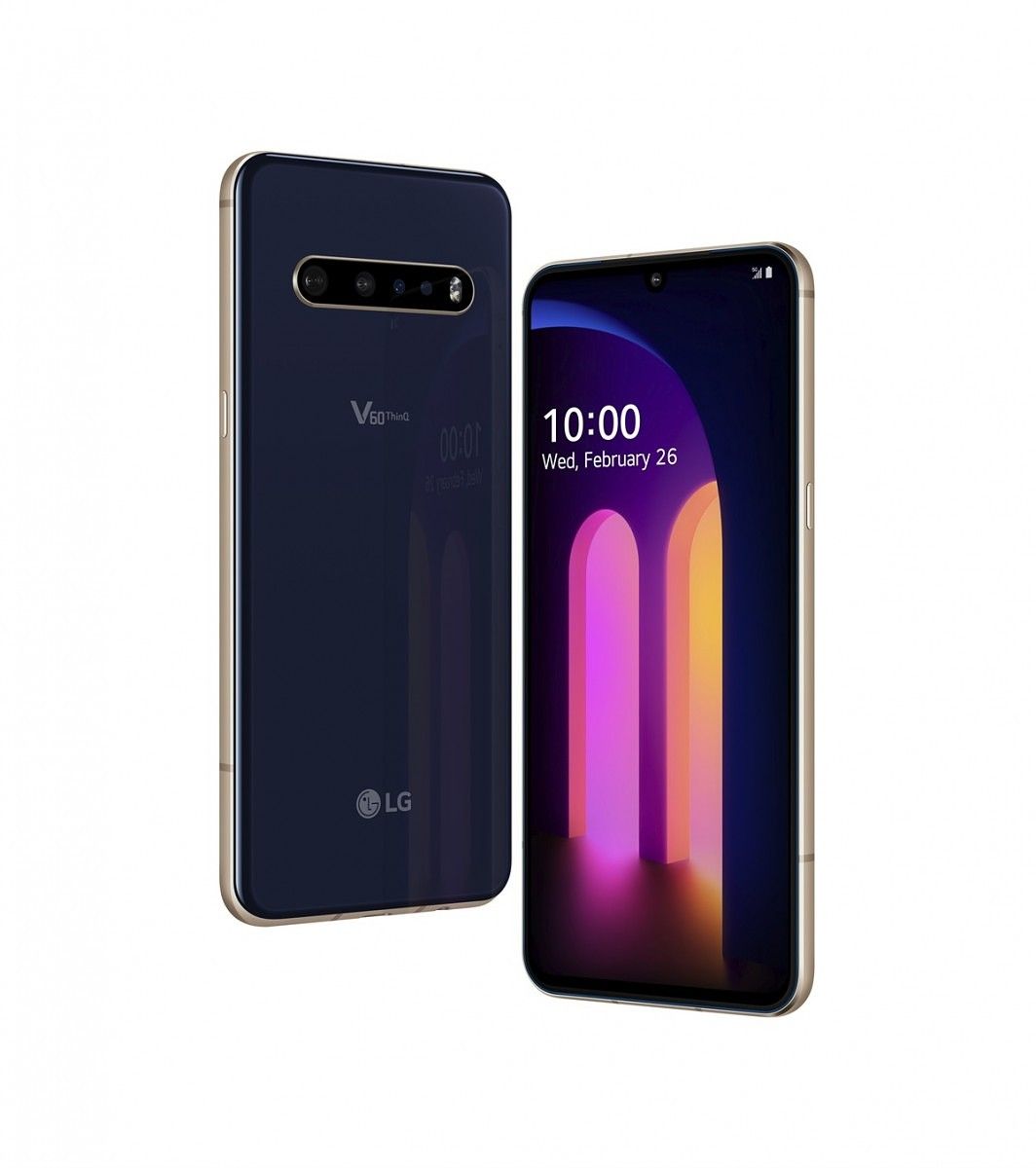
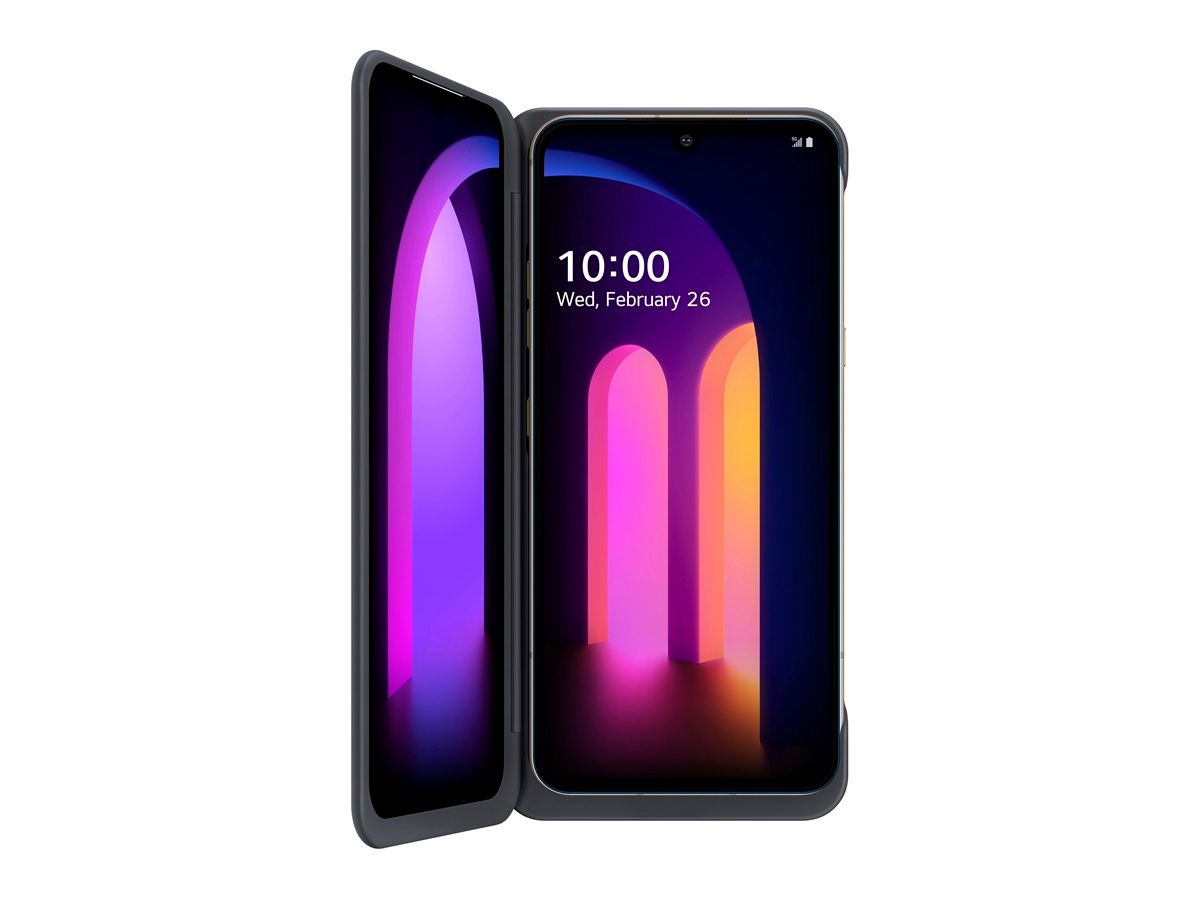
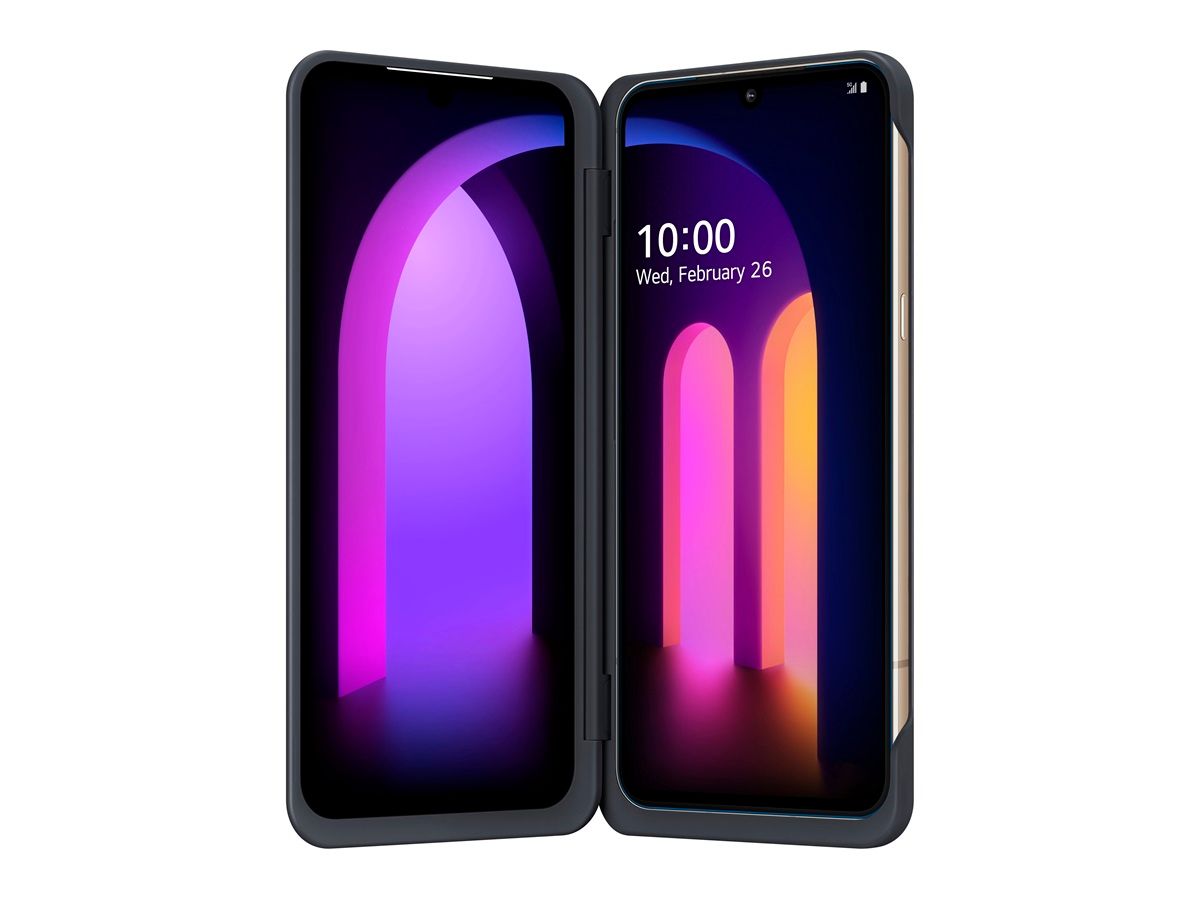
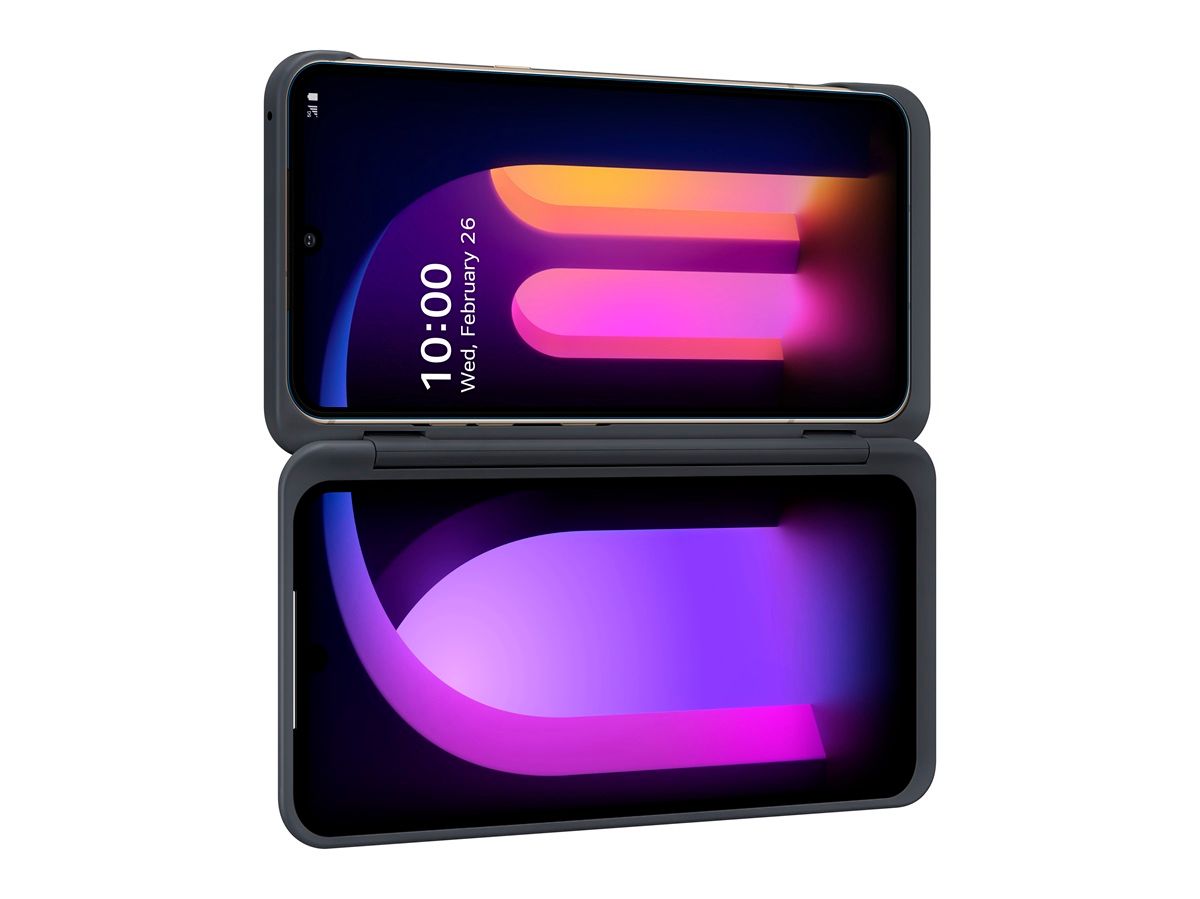
We have been hearing about LG’s next flagship smartphone, the LG V60 ThinQ, for a while now. LG was scheduled to launch the phone at MWC 2020, but after the cancellation of the event, the company has decided to announce the device via an online press release, skipping on holding an event at a later date. The phone that was once supposed to be the LG G9 ThinQ has now been revealed to be the LG V60 ThinQ. LG’s 2020 V-series flagship has what it takes to compete with the Samsung Galaxy S20 series, at least on paper. The V60 ThinQ is a proper flagship with the Qualcomm Snapdragon 865, big 6.8-inch display, 5000mAh battery, and more. It also comes with a Dual Screen accessory like last year’s LG V50 ThinQ and LG G8X ThinQ (first impressions). There are a few interesting decisions that LG made with the hardware as well, which we will go into below.

Let’s jump onto the specifications list of the LG V60 ThinQ before we talk more about the hardware:

LG V60 ThinQ – Specifications

Specifications LG V60 ThinQ (T-Mobile variant)
Dimensions & Weight
  • 169.3 x 77.6 x 8.9mm
  • 214 g
Display
  • 6.8-inch Full HD+ P-OLED
  • 2460×1080 pixels, 395 PPI
  • 20.5:9 aspect ratio
  • 500 nits brightness
  • 83.1% screen-to-body ratio
  • Gorilla Glass 5
SoC
  • Qualcomm Snapdragon 865:
    • 1x Kryo 585 Prime core (ARM Cortex-A77 based) clocked at 2.84GHz
      3x Kryo 585 Performance cores (ARM Cortex-A77 based) clocked at 2.4GHz)
      4x Kryo 585 Efficiency cores (ARM Cortex-A55 based) clocked at 1.8GHz
  • Adreno 650 GPU
RAM & Storage
  • 8GB/128GB
  • microSD card slot
Battery
  • 5,000mAh
  • Qualcomm Quick Charge 4.0+
  • Wireless charging
Fingerprint Sensor In-display fingerprint sensor
Rear Cameras
  • 64MP primary sensor, 1/1.72″, 0.8-micron, f/1.8, 78-degree FOV, OIS, Dual Pixel PDAF, pixel binning to 16MP with 1.6-micron effective pixel size
  • 13MP ultra-wide angle sensor, 1/3.4″, 1.0-micron, f/1.9, 117-degree FOV, Dual Pixel PDAF
  • ToF Z Camera with HQVGA resolution, 80-degree FOV, 1/4″, 14-micron, f/1.4
  • Video recording:
    • 8K at 26fps
    • 4K at 60fps
    • HDR10+ video recording
    • 4K time lapse
    • AI time lapse
    • EIS
    • Video Portrait
    • Voice Bokeh
Front Camera
  • 10MP, 1/3.1″, 1.22-micron, f/1.9, 72.5-degree FOV
Audio
  • 3.5mm headphone jack, 32-bit Hi-Fi Quad DAC
  • Balanced stereo speakers
  • 4 microphones on the top, bottom, left, and back to capture 3D audio recording
  • 3D Sound Engine
Network Bands
  • 4×4 MIMO, 256QAM with 3CA, CAT 22; Carrier Aggregation: 1UL 7DL
  • 5G: Sub-6GHz Bands N25, N2, N41, N66, N71
  • 4G LTE: Bands B2, B4, B5, B12, B46, B48, B66, B71 (TMUS) B25, B26, B41, B46, B48 (SPCS)
  • 3G
    UMTS: Bands B2, B4, B5;
  • 2G
    GSM: Bands 850/900/1800/1900 MHz
  • 1.9 GHz CDMA PCS, 800 MHz CDMA
Connectivity
  • Wi-Fi 6
  • Bluetooth 5.1
  • S-GPS and Qualcomm Service for Enhanced Location Accuracy
  • USB 3.1 Type-C port
  • NFC
Android Version Android 10

LG V60 ThinQ – Hardware

Design

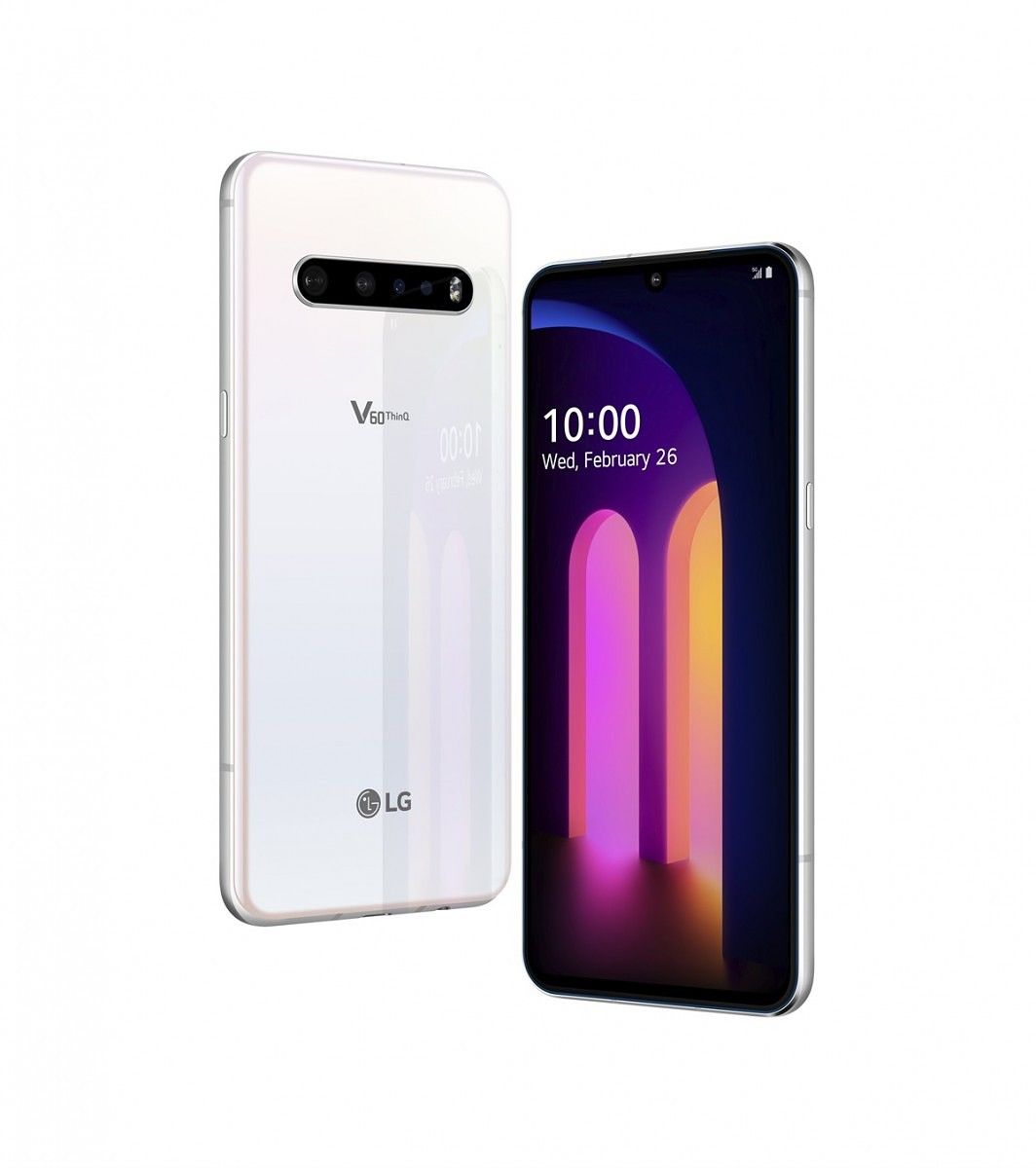
The LG V60 ThinQ’s design may seem to be a typical metal-and-glass phone, but it isn’t. That’s because it has chamfered edges, which has become a rare design feature in recent years. The chamfered edges means that the metal frame has a sand-blasted finish, instead of the glossy finish that we see on so many phones. The phone comes in two colors: black and white. Interestingly, the black color variant has a gold color frame, differentiating it from other phones on the market. In terms of build quality, LG has oddly chosen to go with Corning’s Gorilla Glass 5 on the front, while using the newer, stronger Gorilla Glass 6 on the back. This doesn’t appear to make much sense.

LG has chosen to go with a waterdrop notch at the front. This makes it the first V-series phone to have a waterdrop notch, dropping the wide notch that was seen in the LG V40 ThinQ and LG V50 ThinQ. The front-facing TOF sensor from the LG G8 ThinQ is not present, as LG has moved to a rear-facing TOF sensor, which it calls the Z Camera. Therefore, the V60 ThinQ doesn’t support 3D face unlock. Instead, it has an in-display fingerprint sensor, a first for the V-series. 2D face unlock is not mentioned as an unlocking method.

Hand ID, another gimmick that was brought with the LG G8 ThinQ, has also been removed. This was actually not present in the LG V50 ThinQ and the LG G8X ThinQ as well, and it’s unlikely that many users will miss this feature. Another removed feature is the Crystal Sound OLED feature, which was also brought with the LG G8 ThinQ. There is no mention of it in the announcement, and the fact that LG is promoting stereo speakers without having front-facing speakers means the physical earpiece is doubling up as a speaker.

The rear cameras of the phone are placed horizontally on the center, reminiscent of the Samsung Galaxy S10 series.

Connectivity

In terms of connectivity, the LG V60 ThinQ supports 5G in both the sub-6GHz and mmWave varieties, but the exact configuration will depend on carrier. The T-Mobile variant, for example, won’t support T-Mobile’s mmWave 5G network, but will supports its low-band sub-6GHz network. Verizon will offer the phone with access to its 5G Ultra Wideband (read: mmWave) network and 5G low-band network (read: sub-6GHz), launching later this year. LG U.S. says that the V60 ThinQ 5G with LG Dual Screen will be available in the coming weeks from AT&T, T-Mobile, U.S. Cellular, and Verizon.

The phone supports Wi-Fi 6 with Qualcomm’s FastConnect 6800 mobile connectivity system for more advanced performance. The rest of the connectivity is standard.

Display

The LG V60 ThinQ has a 6.8-inch display—the largest in an LG phone. Its display diagonal is half an inch larger than that of the LG G8X ThinQ, but LG has changed the aspect ratio from 19.5:9 to a taller, narrower 20.5:9. This means the display isn’t as wide as the 6.8-inch diagonal makes it seem. The display area, therefore, is actually smaller than the Samsung Galaxy S20+’s 6.7-inch 20:9 display.

The display’s resolution is Full HD+. This is a curious downgrade from the QHD+ resolutions that were seen in LG’s V-series phones, going all the way back to the LG V10. With the downgrade in resolution comes the downgrade in pixel density. Huawei did the same downgrade with the Mate 30 Pro. Samsung also doesn’t currently allow users to use QHD+ resolution with the display’s native 120Hz refresh rate, as they can only use FHD+ with 120Hz (the default) or QHD+ with 60Hz. LG’s decision to go with Full HD+ on the V60 ThinQ may make sense because of 5G’s increased power requirements, but it still makes less sense than Samsung’s decision. This is because the V60 ThinQ doesn’t have a high refresh rate display; its refresh rate is limited to 60Hz. If LG had gone with a 120Hz OLED display, then FHD+ would have been a worthwhile trade-off. As it is, this is quite a disappointment considering that lower mid-range phones now incorporate 90Hz or 120Hz displays.

The V60 ThinQ’s P-OLED display is rated for a brightness of 500 nits. If this is the maximum it can reach in High Brightness Mode, this is lower than Samsung’s competing AMOLED displays, which could go as high as 700 nits at 100% APL in the previous generation.

Cameras

The LG V60 ThinQ’s camera setup consists of a 64MP primary camera and a 13MP ultra-wide angle camera. LG has chosen to forgo a dedicated telephoto camera for optical zoom, just like Samsung did with the regular Galaxy S20 and the Galaxy S20+. Instead, the company is promoting crop zoom for 2x – 10x. Again, this is similar to what Samsung is doing. Samsung promotes “3x hybrid optic zoom” for the Galaxy S20 with 30x digital space zoom, while LG is going for a relatively conservative 2x – 10x zoom. Unlike Samsung, LG is using the primary camera for crop zoom as it has enough resolution to handle it, unlike Samsung’s 12MP primary camera on the Galaxy S20/Galaxy S20+. The third sensor hole is a rear-facing TOF sensor with HQVGA resolution.

We currently don’t know whether the 64MP primary sensor is the Samsung ISOCELL GW1 (unlikely) or the Sony IMX686 (much more likely). The sensor is paired with an f/1.8 aperture and it has OIS. With 4-in-1 pixel binning, its native 0.8-micron pixel size becomes a 1.6-micron effective pixel size for 16MP pixel binned photos. Interestingly, it has Dual Pixel PDAF as well. This seems to be the first time any device maker has incorporated the feature in a high megapixel sensor.

The 13MP ultra-wide angle unit is also a new one. It has a 1/3.4″ sensor with 1.0-micron pixel size, which is not good news for low light photos. Thankfully, it does have an f/1.9 aperture, and it also comes with Dual Pixel PDAF. The 119-degree field-of-view is wider than the FOV offered by the ultra-wide angle modules in the LG V40 ThinQ and LG V50 ThinQ.

In terms of video recording, LG is going after Samsung with 8K at 26fps video recording, matching the video recording capabilities of the Galaxy S20 series. This feature is of limited use in itself. More interestingly, it features HDR10+ video recording, which is a feature that Samsung first implemented on the Galaxy S10. We also get time lapse at 4K, and there is an AI time lapse feature that can automatically or manually adjust the speed during capture. LG has added the video portrait mode for blurring out the background while keeping the subject in focus. “Voice bokeh” minimizes background noise and focuses on the user’s voice during recording. Other camera features include LG’s customary AI Cam, Night View for low light photos, AI Composition, manual mode, and Depth mode with the Z 3D ToF sensor.

The front camera is a 10MP sensor with 1.22-micron pixel size. Front cameras have been LG’s weak point since a few generations, so expectations are low here.

The factor letting down LG’s smartphone cameras since the past few generations has been image processing, so I am curious to see if LG has solved its woes in this respect. LG had a rich history in the past in this aspect, with phones like the LG G4, LG V10, and LG G5. However, the company has squandered its lead and gone backwards in recent years.

Audio

As expected, the LG V60 ThinQ retains a 3.5mm headphone jack with LG’s customary 32-bit Hi-Fi Quad DAC. Morevoer, Four microphones are placed on the top, bottom, left, and back for better audio recording from various directions. Finally, the LG 3D Sound Engine separates sounds into different categories to optimize the audio playback experience.

Battery and Charging

The LG V60 ThinQ’s 5,000mAh battery lasts 30% longer than the LG G8X’s battery, according to LG. It supports Qualcomm Quick Charge 4.0+, but the company didn’t specify the exact charging speeds. Does it support 27W chargers, for example? This information is currently unknown.

LG Dual Screen
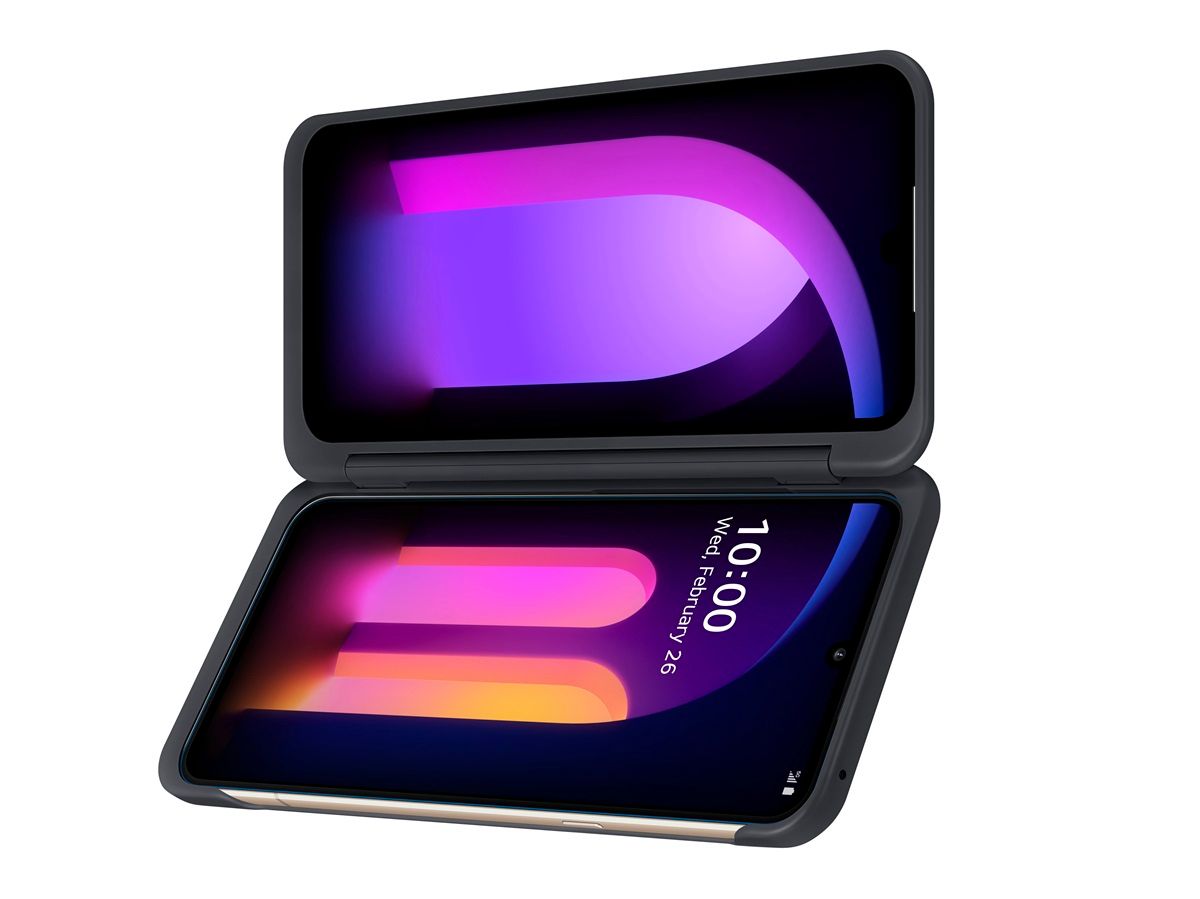
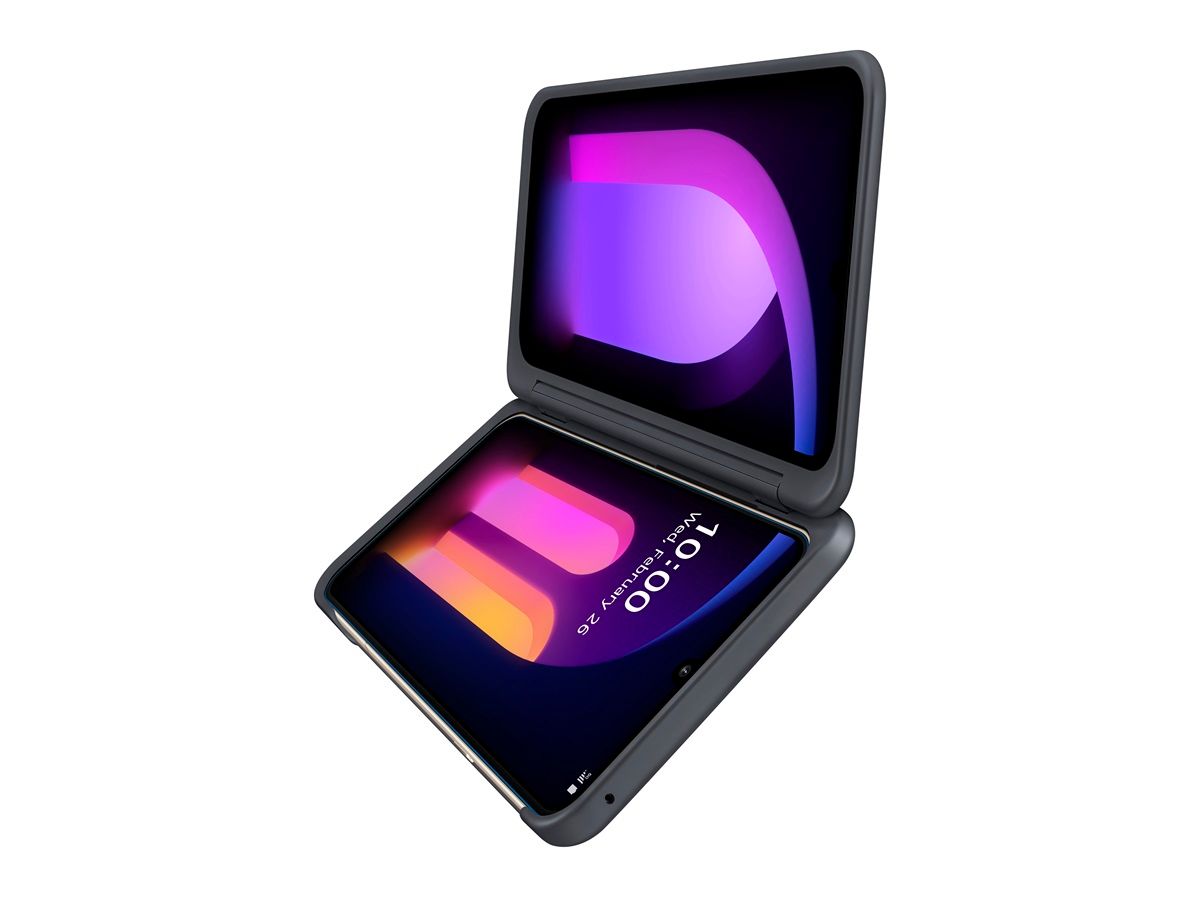
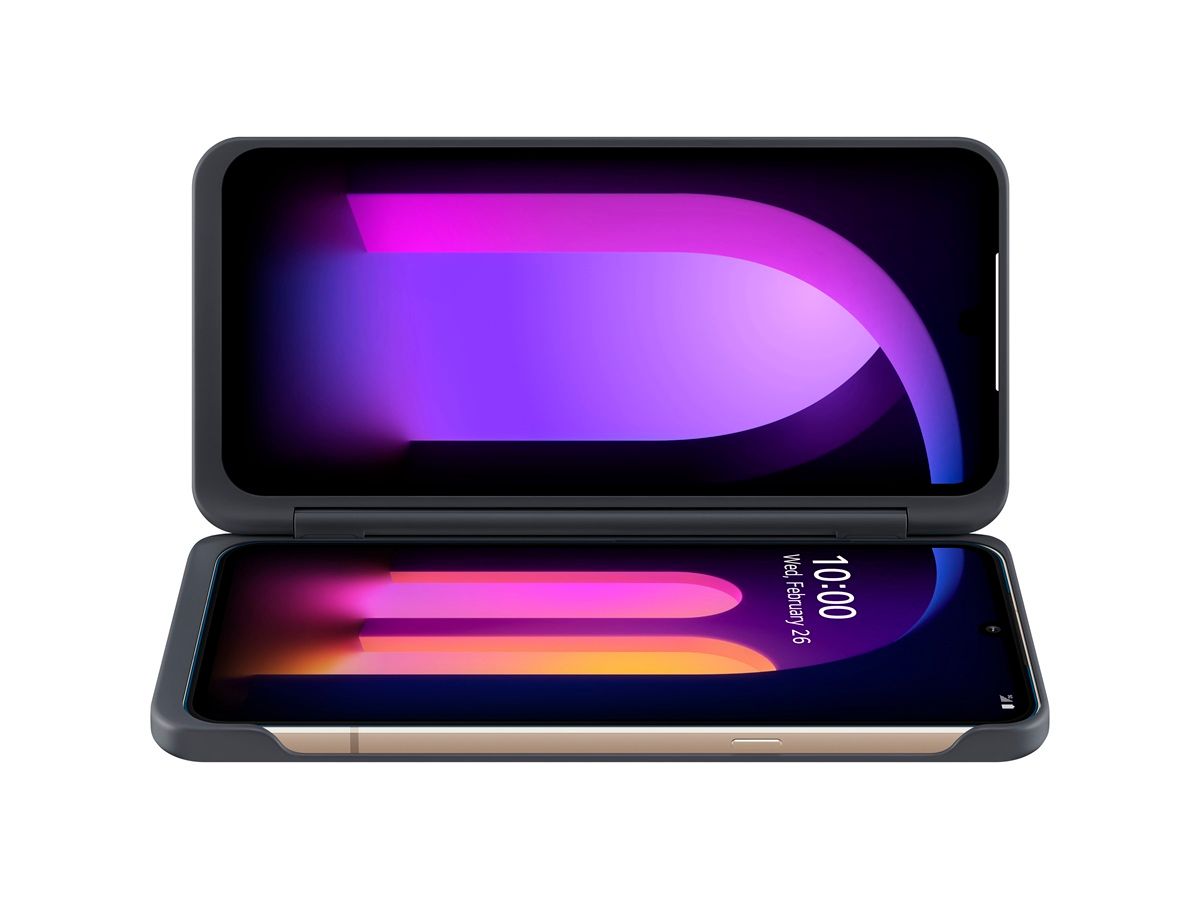
The LG Dual Screen accessory returns for the V60 ThinQ. It has the same weight (134 grams) as its predecessor thanks to a thinner P-OLED panel, even though the display size is 6.8-inch. It has a ribbed back for additional grip, and the display is actually the same as the V60 ThinQ’s display. The Dual Screen doubles the available screen real estate to improve multitasking. Microsoft is going after the same goal here with the upcoming Surface Duo. While the Dual Screen isn’t a replacement for a true foldable display, it unlocks different workflows. It has a 2.1-inch Cover Display that is used for displaying key information at a glance.


 LG V60 ThinQ – Pricing and availability

Update (3/16/20 @ 11 AM ET): US carriers are finally revealing the pricing details for the LG V60 ThinQ. Verizon will offer the V60 with Dual Screen accessory for $950 or $40 per month. T-Mobile will be offering the device without the Dual Screen for $800 or $900 with it. We’re still waiting on details from AT&T and other carriers, including the unlock model. The device will be available on March 20th.

Source: Verizon, T-Mobile

The post [Update: Pricing] The LG V60 ThinQ is launching with the 5G Snapdragon 865, triple rear cameras, and Dual Screen attachment appeared first on xda-developers.


from xda-developers https://ift.tt/2w4enNw
via IFTTT

[Update: Pricing] The LG V60 ThinQ is launching with the 5G Snapdragon 865, triple rear cameras, and Dual Screen attachment

Update (3/16/20 @ 11:25 AM ET): US carriers are finally revealing the pricing details for the LG V60 ThinQ.

We have been hearing about LG’s next flagship smartphone, the LG V60 ThinQ, for a while now. LG was scheduled to launch the phone at MWC 2020, but after the cancellation of the event, the company has decided to announce the device via an online press release, skipping on holding an event at a later date. The phone that was once supposed to be the LG G9 ThinQ has now been revealed to be the LG V60 ThinQ. LG’s 2020 V-series flagship has what it takes to compete with the Samsung Galaxy S20 series, at least on paper. The V60 ThinQ is a proper flagship with the Qualcomm Snapdragon 865, big 6.8-inch display, 5000mAh battery, and more. It also comes with a Dual Screen accessory like last year’s LG V50 ThinQ and LG G8X ThinQ (first impressions). There are a few interesting decisions that LG made with the hardware as well, which we will go into below.

Let’s jump onto the specifications list of the LG V60 ThinQ before we talk more about the hardware:

LG V60 ThinQ – Specifications

Specifications LG V60 ThinQ (T-Mobile variant)
Dimensions & Weight
  • 169.3 x 77.6 x 8.9mm
  • 214 g
Display
  • 6.8-inch Full HD+ P-OLED
  • 2460×1080 pixels, 395 PPI
  • 20.5:9 aspect ratio
  • 500 nits brightness
  • 83.1% screen-to-body ratio
  • Gorilla Glass 5
SoC
  • Qualcomm Snapdragon 865:
    • 1x Kryo 585 Prime core (ARM Cortex-A77 based) clocked at 2.84GHz
      3x Kryo 585 Performance cores (ARM Cortex-A77 based) clocked at 2.4GHz)
      4x Kryo 585 Efficiency cores (ARM Cortex-A55 based) clocked at 1.8GHz
  • Adreno 650 GPU
RAM & Storage
  • 8GB/128GB
  • microSD card slot
Battery
  • 5,000mAh
  • Qualcomm Quick Charge 4.0+
  • Wireless charging
Fingerprint Sensor In-display fingerprint sensor
Rear Cameras
  • 64MP primary sensor, 1/1.72″, 0.8-micron, f/1.8, 78-degree FOV, OIS, Dual Pixel PDAF, pixel binning to 16MP with 1.6-micron effective pixel size
  • 13MP ultra-wide angle sensor, 1/3.4″, 1.0-micron, f/1.9, 117-degree FOV, Dual Pixel PDAF
  • ToF Z Camera with HQVGA resolution, 80-degree FOV, 1/4″, 14-micron, f/1.4
  • Video recording:
    • 8K at 26fps
    • 4K at 60fps
    • HDR10+ video recording
    • 4K time lapse
    • AI time lapse
    • EIS
    • Video Portrait
    • Voice Bokeh
Front Camera
  • 10MP, 1/3.1″, 1.22-micron, f/1.9, 72.5-degree FOV
Audio
  • 3.5mm headphone jack, 32-bit Hi-Fi Quad DAC
  • Balanced stereo speakers
  • 4 microphones on the top, bottom, left, and back to capture 3D audio recording
  • 3D Sound Engine
Network Bands
  • 4×4 MIMO, 256QAM with 3CA, CAT 22; Carrier Aggregation: 1UL 7DL
  • 5G: Sub-6GHz Bands N25, N2, N41, N66, N71
  • 4G LTE: Bands B2, B4, B5, B12, B46, B48, B66, B71 (TMUS) B25, B26, B41, B46, B48 (SPCS)
  • 3G
    UMTS: Bands B2, B4, B5;
  • 2G
    GSM: Bands 850/900/1800/1900 MHz
  • 1.9 GHz CDMA PCS, 800 MHz CDMA
Connectivity
  • Wi-Fi 6
  • Bluetooth 5.1
  • S-GPS and Qualcomm Service for Enhanced Location Accuracy
  • USB 3.1 Type-C port
  • NFC
Android Version Android 10

LG V60 ThinQ – Hardware

Design

The LG V60 ThinQ’s design may seem to be a typical metal-and-glass phone, but it isn’t. That’s because it has chamfered edges, which has become a rare design feature in recent years. The chamfered edges means that the metal frame has a sand-blasted finish, instead of the glossy finish that we see on so many phones. The phone comes in two colors: black and white. Interestingly, the black color variant has a gold color frame, differentiating it from other phones on the market. In terms of build quality, LG has oddly chosen to go with Corning’s Gorilla Glass 5 on the front, while using the newer, stronger Gorilla Glass 6 on the back. This doesn’t appear to make much sense.

LG has chosen to go with a waterdrop notch at the front. This makes it the first V-series phone to have a waterdrop notch, dropping the wide notch that was seen in the LG V40 ThinQ and LG V50 ThinQ. The front-facing TOF sensor from the LG G8 ThinQ is not present, as LG has moved to a rear-facing TOF sensor, which it calls the Z Camera. Therefore, the V60 ThinQ doesn’t support 3D face unlock. Instead, it has an in-display fingerprint sensor, a first for the V-series. 2D face unlock is not mentioned as an unlocking method.

Hand ID, another gimmick that was brought with the LG G8 ThinQ, has also been removed. This was actually not present in the LG V50 ThinQ and the LG G8X ThinQ as well, and it’s unlikely that many users will miss this feature. Another removed feature is the Crystal Sound OLED feature, which was also brought with the LG G8 ThinQ. There is no mention of it in the announcement, and the fact that LG is promoting stereo speakers without having front-facing speakers means the physical earpiece is doubling up as a speaker.

The rear cameras of the phone are placed horizontally on the center, reminiscent of the Samsung Galaxy S10 series.

Connectivity

In terms of connectivity, the LG V60 ThinQ supports 5G in both the sub-6GHz and mmWave varieties, but the exact configuration will depend on carrier. The T-Mobile variant, for example, won’t support T-Mobile’s mmWave 5G network, but will supports its low-band sub-6GHz network. Verizon will offer the phone with access to its 5G Ultra Wideband (read: mmWave) network and 5G low-band network (read: sub-6GHz), launching later this year. LG U.S. says that the V60 ThinQ 5G with LG Dual Screen will be available in the coming weeks from AT&T, T-Mobile, U.S. Cellular, and Verizon.

The phone supports Wi-Fi 6 with Qualcomm’s FastConnect 6800 mobile connectivity system for more advanced performance. The rest of the connectivity is standard.

Display

The LG V60 ThinQ has a 6.8-inch display—the largest in an LG phone. Its display diagonal is half an inch larger than that of the LG G8X ThinQ, but LG has changed the aspect ratio from 19.5:9 to a taller, narrower 20.5:9. This means the display isn’t as wide as the 6.8-inch diagonal makes it seem. The display area, therefore, is actually smaller than the Samsung Galaxy S20+’s 6.7-inch 20:9 display.

The display’s resolution is Full HD+. This is a curious downgrade from the QHD+ resolutions that were seen in LG’s V-series phones, going all the way back to the LG V10. With the downgrade in resolution comes the downgrade in pixel density. Huawei did the same downgrade with the Mate 30 Pro. Samsung also doesn’t currently allow users to use QHD+ resolution with the display’s native 120Hz refresh rate, as they can only use FHD+ with 120Hz (the default) or QHD+ with 60Hz. LG’s decision to go with Full HD+ on the V60 ThinQ may make sense because of 5G’s increased power requirements, but it still makes less sense than Samsung’s decision. This is because the V60 ThinQ doesn’t have a high refresh rate display; its refresh rate is limited to 60Hz. If LG had gone with a 120Hz OLED display, then FHD+ would have been a worthwhile trade-off. As it is, this is quite a disappointment considering that lower mid-range phones now incorporate 90Hz or 120Hz displays.

The V60 ThinQ’s P-OLED display is rated for a brightness of 500 nits. If this is the maximum it can reach in High Brightness Mode, this is lower than Samsung’s competing AMOLED displays, which could go as high as 700 nits at 100% APL in the previous generation.

Cameras

The LG V60 ThinQ’s camera setup consists of a 64MP primary camera and a 13MP ultra-wide angle camera. LG has chosen to forgo a dedicated telephoto camera for optical zoom, just like Samsung did with the regular Galaxy S20 and the Galaxy S20+. Instead, the company is promoting crop zoom for 2x – 10x. Again, this is similar to what Samsung is doing. Samsung promotes “3x hybrid optic zoom” for the Galaxy S20 with 30x digital space zoom, while LG is going for a relatively conservative 2x – 10x zoom. Unlike Samsung, LG is using the primary camera for crop zoom as it has enough resolution to handle it, unlike Samsung’s 12MP primary camera on the Galaxy S20/Galaxy S20+. The third sensor hole is a rear-facing TOF sensor with HQVGA resolution.

We currently don’t know whether the 64MP primary sensor is the Samsung ISOCELL GW1 (unlikely) or the Sony IMX686 (much more likely). The sensor is paired with an f/1.8 aperture and it has OIS. With 4-in-1 pixel binning, its native 0.8-micron pixel size becomes a 1.6-micron effective pixel size for 16MP pixel binned photos. Interestingly, it has Dual Pixel PDAF as well. This seems to be the first time any device maker has incorporated the feature in a high megapixel sensor.

The 13MP ultra-wide angle unit is also a new one. It has a 1/3.4″ sensor with 1.0-micron pixel size, which is not good news for low light photos. Thankfully, it does have an f/1.9 aperture, and it also comes with Dual Pixel PDAF. The 119-degree field-of-view is wider than the FOV offered by the ultra-wide angle modules in the LG V40 ThinQ and LG V50 ThinQ.

In terms of video recording, LG is going after Samsung with 8K at 26fps video recording, matching the video recording capabilities of the Galaxy S20 series. This feature is of limited use in itself. More interestingly, it features HDR10+ video recording, which is a feature that Samsung first implemented on the Galaxy S10. We also get time lapse at 4K, and there is an AI time lapse feature that can automatically or manually adjust the speed during capture. LG has added the video portrait mode for blurring out the background while keeping the subject in focus. “Voice bokeh” minimizes background noise and focuses on the user’s voice during recording. Other camera features include LG’s customary AI Cam, Night View for low light photos, AI Composition, manual mode, and Depth mode with the Z 3D ToF sensor.

The front camera is a 10MP sensor with 1.22-micron pixel size. Front cameras have been LG’s weak point since a few generations, so expectations are low here.

The factor letting down LG’s smartphone cameras since the past few generations has been image processing, so I am curious to see if LG has solved its woes in this respect. LG had a rich history in the past in this aspect, with phones like the LG G4, LG V10, and LG G5. However, the company has squandered its lead and gone backwards in recent years.

Audio

As expected, the LG V60 ThinQ retains a 3.5mm headphone jack with LG’s customary 32-bit Hi-Fi Quad DAC. Morevoer, Four microphones are placed on the top, bottom, left, and back for better audio recording from various directions. Finally, the LG 3D Sound Engine separates sounds into different categories to optimize the audio playback experience.

Battery and Charging

The LG V60 ThinQ’s 5,000mAh battery lasts 30% longer than the LG G8X’s battery, according to LG. It supports Qualcomm Quick Charge 4.0+, but the company didn’t specify the exact charging speeds. Does it support 27W chargers, for example? This information is currently unknown.

LG Dual Screen

The LG Dual Screen accessory returns for the V60 ThinQ. It has the same weight (134 grams) as its predecessor thanks to a thinner P-OLED panel, even though the display size is 6.8-inch. It has a ribbed back for additional grip, and the display is actually the same as the V60 ThinQ’s display. The Dual Screen doubles the available screen real estate to improve multitasking. Microsoft is going after the same goal here with the upcoming Surface Duo. While the Dual Screen isn’t a replacement for a true foldable display, it unlocks different workflows. It has a 2.1-inch Cover Display that is used for displaying key information at a glance.


 LG V60 ThinQ – Pricing and availability

Update (3/16/20 @ 11 AM ET): US carriers are finally revealing the pricing details for the LG V60 ThinQ. Verizon will offer the V60 with Dual Screen accessory for $950 or $40 per month. T-Mobile will be offering the device without the Dual Screen for $800 or $900 with it. We’re still waiting on details from AT&T and other carriers, including the unlock model. The device will be available on March 20th.

Source: Verizon, T-Mobile

The post [Update: Pricing] The LG V60 ThinQ is launching with the 5G Snapdragon 865, triple rear cameras, and Dual Screen attachment appeared first on xda-developers.


from xda-developers https://ift.tt/2w4enNw
via IFTTT

Start a Lucrative Project Management Career with this $70 Training

Looking for a better paycheck? Top project managers can earn upwards of six-figures according to Glassdoor, and you don’t need a college degree to get started. The Ultimate Lean Certification Prep Bundle provides a great starting point for aspiring PMs, with 66 hours of training focusing on a popular framework. The training also works towards important professional exams. You can grab this bundle now for $69.99 at the XDA Developers Depot.

https://www.youtube.com/embed/yzXjtQoxXkY

Used by the likes of Nike and Intel, the Lean framework helps many companies to reduce waste and improve efficiency. If you want to work as a project manager, it’s essential to understand the methodology. 

This bundle offers an excellent education, with four courses covering the fundamentals of Lean and Lean Six Sigma. Through video tutorials, you discover how to assess the current state of any project and develop a forward plan. The training comes from GoLeanSixSigma.com, an online school with 4.5 stars on Indeed. 

Along with essential know-how, you get 25 Lean tools and full prep for certification exams — including Lean, Lean Six Sigma White Belt, and Lean Six Sigma Yellow Belt. All in all, this collection is an incredible resource for anyone looking to dip their feet into this lucrative field.

This training is worth $1,697, but you can get it now for $69.99.

 
The Ultimate Lean Certification Prep Bundle – $69.99

See Deal

Prices subject to change

The post Start a Lucrative Project Management Career with this $70 Training appeared first on xda-developers.


from xda-developers https://ift.tt/2INa8cn
via IFTTT

Start a Lucrative Project Management Career with this $70 Training

Looking for a better paycheck? Top project managers can earn upwards of six-figures according to Glassdoor, and you don’t need a college degree to get started. The Ultimate Lean Certification Prep Bundle provides a great starting point for aspiring PMs, with 66 hours of training focusing on a popular framework. The training also works towards important professional exams. You can grab this bundle now for $69.99 at the XDA Developers Depot.

https://www.youtube.com/embed/yzXjtQoxXkY

Used by the likes of Nike and Intel, the Lean framework helps many companies to reduce waste and improve efficiency. If you want to work as a project manager, it’s essential to understand the methodology. 

This bundle offers an excellent education, with four courses covering the fundamentals of Lean and Lean Six Sigma. Through video tutorials, you discover how to assess the current state of any project and develop a forward plan. The training comes from GoLeanSixSigma.com, an online school with 4.5 stars on Indeed. 

Along with essential know-how, you get 25 Lean tools and full prep for certification exams — including Lean, Lean Six Sigma White Belt, and Lean Six Sigma Yellow Belt. All in all, this collection is an incredible resource for anyone looking to dip their feet into this lucrative field.

This training is worth $1,697, but you can get it now for $69.99.

 
The Ultimate Lean Certification Prep Bundle – $69.99

See Deal

Prices subject to change

The post Start a Lucrative Project Management Career with this $70 Training appeared first on xda-developers.


from xda-developers https://ift.tt/2INa8cn
via IFTTT

Xiaomi launches its first Wireless Power Bank in India for ₹2,499

Xiaomi commands a respectable chunk of the Indian smartphone market, but the company is more than just smartphones. The Chinese company also makes some very enticing smartphone accessories and smart home ecosystem products, all of which have contributed towards making Xiaomi a much more recognizable brand in India. Xiaomi also sells a few different power banks in the country, usually across 10,000 mAh and 20,000 mAh battery capacities. Today, Xiaomi has launched its first wireless power bank in India, with a slew of features that justify its pricing.

The new Mi Wireless Power Bank 10,000 mAh is a Qi-certified power bank that supports up to 10W fast wireless charging, as well as 18W wired charging both in and out of the power bank. The power bank features a large non-skid surface for placing devices on it to charge wirelessly. It also features a USB Type-C input port and a USB Type-A output port. Input is accepted at 5V-3A, 9V-2A, and 12V-1.5A, while wired output ranges between 5V-2.4A, 9V-2A, and 12V-1.5A. The power bank claims to use high-quality lithium-polymer batteries as well as several protection features to safeguard the product against voltage, temperature, current and electrostatic anomalies.


Curiously, while the power bank has wireless charging as its highlight feature, none of Xiaomi’s or Redmi’s smartphones that are currently sold in India feature wireless charging. Though we do expect the Mi 10 and the Mi 10 Pro to land in India in the near future, and these do feature wireless charging. Xiaomi has a much more expansive power bank and charger lineup in China, but for now, we get only this combination product. Xiaomi is also testing out 40W fast wireless charging, but that tech has yet to make its way to a commercial product, even in China, so there’s still some time to wait on for that.

The Xiaomi Mi 10,000 mAh Wireless Power Bank is priced at ₹2,499 (~$34) in India and will be available in Black color only for now. You can buy the power bank from Mi.com, Mi Homes and Mi Studios. We also expect to see the product being made available across popular online stores as well in the future.

Buy the Xiaomi Mi 10,000 mAh Wireless Power Bank from Mi.com

If you are looking for product alternatives, Samsung has a very similar product that you can purchase for ₹3,399 (~$46).

The post Xiaomi launches its first Wireless Power Bank in India for ₹2,499 appeared first on xda-developers.


from xda-developers https://ift.tt/2TRfSIh
via IFTTT