LightBlog

jeudi 12 mars 2020

Google reportedly blocks Android TV makers from also using Amazon Fire TV

Google and Amazon have long been engaged in a cold war for user share. The two internet giants cross each other’s path in several product categories – TV dongles, smart speakers and smart displays, voice assistants and a host of voice-activated products, and even app stores for Android devices. The feud took an ugly turn in 2017 when Amazon and Google started dropping support for each other’s services on their devices. It’s irrelevant who started it first but last year, things seemed to ease out a bit as YouTube returned Amazon Fire TV while the Prime Video apps gained Chromecast support. However, a recent report suggests Google may have restricted TV manufacturers from using the Fire TV operating system if they were already signed up for Android TV.

Google reportedly expects smart TV manufacturers to commit to Android TV and not experiment with other alternatives like Amazon’s Fire TV interface. Protocol reports that among the conditions that a smart TV manufacturer has to agree for an Android TV license, one condition also prevents them from engaging in the making other smart TVs that use forks of open-source Android, including Amazon Fire TV. A major TV manufacturer’s senior employee told Protocol, a company “cannot do Android TV and Fire TV simultaneously.“.

Notably, Android TV is not open-sourced and runs a customized version of the launcher and Play Store along with other Google apps that are optimized for large-screen experiences.
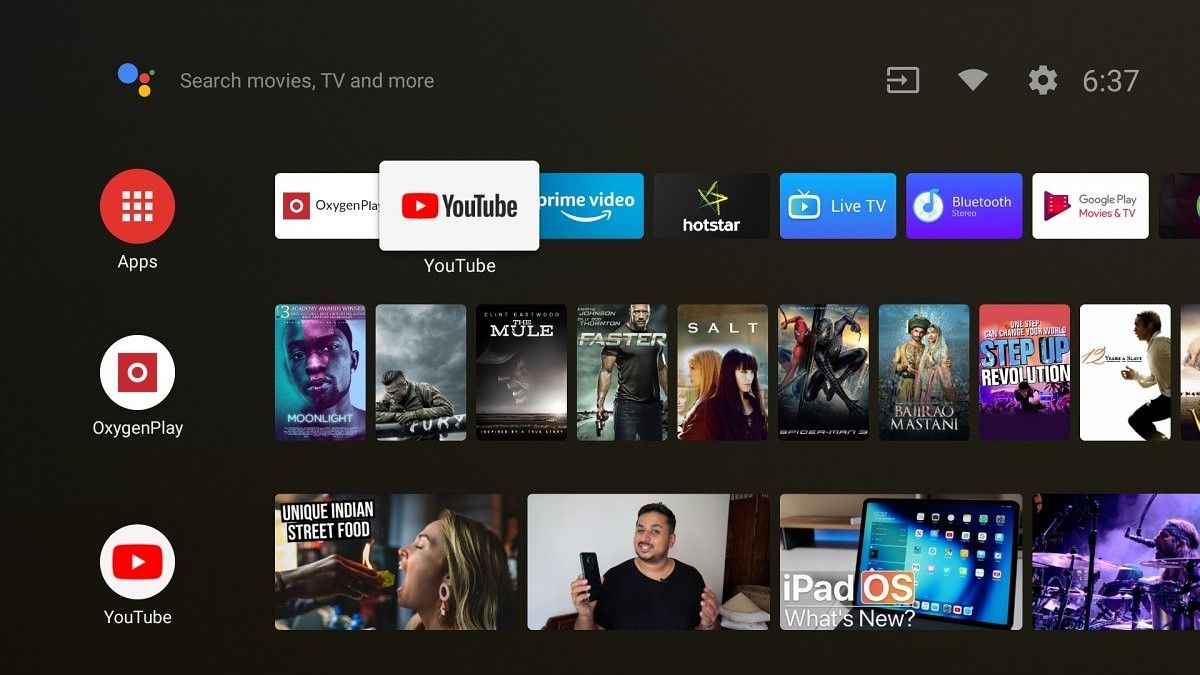
Homescreens of Android TV and Amazon Fire TV 

In the Android Compatibility Definition Document (CDD), Google has laid out guidelines for device manufacturers to follow along with the minimum requirements they’re required to meet if they want Play Store and other Google apps to be accessible on the device. While Google allows developers and device manufacturers to customize their versions of Android by making modifications to Android’s source code, these forks must be sanctioned and verified by Google and Amazon Fire TV apparently does not make the cut for obvious reasons. The restrictions are even valid across categories and manufacturers who have agreed to the CDD for mobile devices still cannot make TVs with Fire TV interface.

Google does grant exceptions to equipment manufacturers if the devices operating on different software products are manufactured for different brands. It can also allow some leeway to those brands which sell products with variations in Android according to the region.

Google’s past troubles

Google’s CCD, formerly known as Anti-Fragmentation Agreement, has caused legal trouble for the tech giant in the past. Last year, India’s Competition Commission initiated a probe against Google on allegations that these policies prevent manufacturers from working on devices running on alternatives to Android. Similarly, the European Union had previously fined Google with €4.34 billion (approximated $4.85 billion) on the grounds that Google was “preventing manufacturers from selling smart mobile devices running on competing operating systems based on the Android open source code.

Besides Amazon’s Fire TV, the CCD also blocks other forks of Android. Other than biggies such as Amazon, the agreement also prevents smaller manufacturers from developing their own custom versions of TV interface based on Android, if they have signed up for CCD for any other device. This ultimately prevents any significant competition from sprouting and giving absolute control over the smart TV landscape.

Whether this disclosure about Google’s binding agreement targetting and harming Amazon’s Fire TV will gain the same impetus as similar cases did in the case of Google’s monopoly in smartphone operating systems and search engines is something we’ll learn over time. For now, Google can be seen benefiting from this as it announced signing deals with six out of the top 10 smart TV manufacturers and 140 cable TV operators around the globe.

The post Google reportedly blocks Android TV makers from also using Amazon Fire TV appeared first on xda-developers.


from xda-developers https://ift.tt/2TYpqAe
via IFTTT

Samsung Galaxy A70 receives Android 10 based One UI 2.0 once again

Samsung’s current-gen flagship Galaxy S20 family comes with One UI 2.1, a small increment over the Android 10 based One UI 2.0 skin found in Galaxy S10 and Note 10 lineup. The OEM will eventually deliver the new update to legacy phones, although a proper timeline is not available yet. To Samsung’s credit, the mid-rangers are not exactly left behind in terms of software updates either, as Galaxy M30 secured the Android 10 OTA a few days ago. One UI 2.0 also reached Galaxy A30 and Galaxy A50s in February, but the update story has a few twists in case of the Galaxy A70.

As a matter of fact, some Galaxy A70 owners from Ukraine reportedly received a similar treatment last month, as many woke up to find a pending Android 10 OTA update notification on their phones. However, the particular build i.e. A705FNXXU5BTB9 was apparently pulled back. The internal firmware tracker for the corresponding device variant (SM-A705FN) still shows Android Pie based A705FNXXU5ASL4 build with January 2020 security patches as the latest firmware.

Samsung Galaxy A70 XDA Forums

In some good news, a new software update appeared on the FOTA server earlier this week. Tagged as A705FNXXU5BTC2, this build is carrying February 2020 security patches like the previous one. There is no advancement in the bootloader version (v5), and it is possible to revert back to Pie due to the same reason.

Seems that Samsung squashed out most of the showstopper bugs, as they decided to resume the Android 10 update rollout with this new build. Once again, the OTA is available only in Ukraine (country code: SEK) at the time of reporting. It may take several weeks to reach other regional markets, but enthusiast users can manually flash the firmware on their phones. Tools like Frija can be useful for downloading the firmware.

galaxy_a70_btc2_software_information

Besides system-wide dark mode and advanced app permissions, Galaxy A70 users can now enjoy One‌ UI 2.0-specific features such as an overhauled camera app UI. The built-in screen recorder might also be included in this build, but there is no such confirmation yet.

Samsung has yet to publish the kernel source code for this update. It is worth mentioning that the Indian variant of Galaxy A70 (SM-A705GM) might not be compatible with the aforementioned firmware, so our Indian readers have to wait a little longer to get the taste of Android 10.


Thanks to XDA member C192-0 for the screenshot!

The post Samsung Galaxy A70 receives Android 10 based One UI 2.0 once again appeared first on xda-developers.


from xda-developers https://ift.tt/3aN6rzi
via IFTTT

Samsung Galaxy A70 receives Android 10 based One UI 2.0 once again

Samsung’s current-gen flagship Galaxy S20 family comes with One UI 2.1, a small increment over the Android 10 based One UI 2.0 skin found in Galaxy S10 and Note 10 lineup. The OEM will eventually deliver the new update to legacy phones, although a proper timeline is not available yet. To Samsung’s credit, the mid-rangers are not exactly left behind in terms of software updates either, as Galaxy M30 secured the Android 10 OTA a few days ago. One UI 2.0 also reached Galaxy A30 and Galaxy A50s in February, but the update story has a few twists in case of the Galaxy A70.

As a matter of fact, some Galaxy A70 owners from Ukraine reportedly received a similar treatment last month, as many woke up to find a pending Android 10 OTA update notification on their phones. However, the particular build i.e. A705FNXXU5BTB9 was apparently pulled back. The internal firmware tracker for the corresponding device variant (SM-A705FN) still shows Android Pie based A705FNXXU5ASL4 build with January 2020 security patches as the latest firmware.

Samsung Galaxy A70 XDA Forums

In some good news, a new software update appeared on the FOTA server earlier this week. Tagged as A705FNXXU5BTC2, this build is carrying February 2020 security patches like the previous one. There is no advancement in the bootloader version (v5), and it is possible to revert back to Pie due to the same reason.

Seems that Samsung squashed out most of the showstopper bugs, as they decided to resume the Android 10 update rollout with this new build. Once again, the OTA is available only in Ukraine (country code: SEK) at the time of reporting. It may take several weeks to reach other regional markets, but enthusiast users can manually flash the firmware on their phones. Tools like Frija can be useful for downloading the firmware.

galaxy_a70_btc2_software_information

Besides system-wide dark mode and advanced app permissions, Galaxy A70 users can now enjoy One‌ UI 2.0-specific features such as an overhauled camera app UI. The built-in screen recorder might also be included in this build, but there is no such confirmation yet.

Samsung has yet to publish the kernel source code for this update. It is worth mentioning that the Indian variant of Galaxy A70 (SM-A705GM) might not be compatible with the aforementioned firmware, so our Indian readers have to wait a little longer to get the taste of Android 10.


Thanks to XDA member C192-0 for the screenshot!

The post Samsung Galaxy A70 receives Android 10 based One UI 2.0 once again appeared first on xda-developers.


from xda-developers https://ift.tt/3aN6rzi
via IFTTT

Xiaomi launches Redmi Note 9 Pro and Redmi Note 9 Pro Max with Snapdragon 720G, up to 33W fast charging

Xiaomi has been leading India’s smartphone market uninterruptedly for almost three years now. In the last quarter, Xiaomi grew from strong sales of the phones in the Redmi series and offline expansion in the country. Unquestionably, the Redmi Note series has been instrumental to this growth and popularity. Since 2018, Xiaomi has been following a biannual upgrade cycle for its smartphones to meet the growing demands of markets like India. The Redmi Note 8 series was launched in China in August last year and now its successor is ready for a release. Citing constraints due to the COVID-19 pandemic, Xiaomi is unveiling the Redmi Note 9 series through an online India-first launch event.

Redmi Note 9 Pro Max

Xiaomi is now introducing a new “Pro Max” series which will be at the top of the Redmi Note series. The “Max” moniker is also a homage to the classic Mi Max series which included Xiaomi’s early phablets.

The Redmi Note 9 Pro Max comes with a radical design change over the Redmi Note 8 Pro (review). There is now a square camera module on the back with four cameras but no rear-mounted fingerprint scanner. Instead, Redmi is using one side-mounted sensor for biometric authentication. The hole-punch cutout on the front also gives a fresh new appeal to the new Redmi Note series. Unlike the POCO X2 (Redmi K30 4G in China), there is a single camera although the display is the same size.

The Redmi Note 9 Pro Max continues to adorn a glass sandwich design, with Gorilla Glass 5 protection on the back as well as on the 6.67-inch Full HD+ IPS LCD display. Additionally, the quad-camera setup is also protected under Gorilla Glass.

Unlike the recently launched Realme 6 Pro, the refresh rate of the Note 9 Pro Max’s display is restricted to 60Hz.

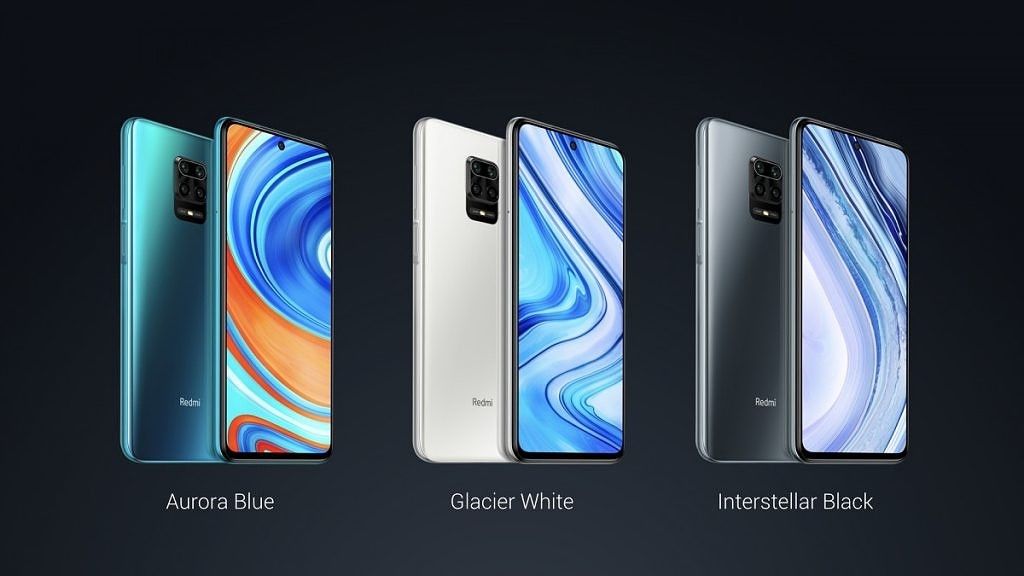
The Xiaomi and Redmi phones launched through the last year came with dazzling back panels and color gradients. Instead of that, the company has opted for soothing color options for the Note 9 Pro and the Note 9 Pro Max. Xiaomi is calling this the “Aura Balance Design” and there are three color variants for the phone – Interstellar Black, Aurora Blue, and Glacier White.

xiaomi redmi note 9 pro max

The Redmi Note 9 Pro Max will feature a flagship-grade haptic response engine. The “z-axis” vibration motor is perpendicular to the surface of the display and has dedicated vibration profiles for a slew of user inputs. Additionally, the smartphone continues to be equipped with a 3.5mm audio jack and an IR blaster.

In terms of cameras, the quadruple setup includes a 64MP Samsung GW1 primary sensor with a 6P lens setup, an 8MP ultra-wide-angle camera, a 5MP macro camera, and a 2MP depth sensor. The wide-angle camera supports 119º wide FOV but has a fixed focus. In contrast, the 5MP macro camera supports auto-focusing for greater detail. Additionally, the hole-punch camera on the front has a resolution of 32MP.

xaiomi redmi note 9 pro max

The Redmi Note 9 Pro Max features support for RAW photography and a Color Pro mode which automatically adjusts the parameters in the RAW shot. In terms of videos, it supports 4K video recording at 30fps and a dedicated mode for 21:9 cinematic capturing.

Internally, there are some expected changes. After a fizgig with MediaTek G90T on the Redmi Note 8 Pro, Xiaomi is taking a route back to Qualcomm and is the first Redmi Note device to feature a Snapdragon 7xx series SoC – i.e. the latest Snapdragon 720G chipset. The Redmi Note 9 Pro Max will come with at least 6GB of LPDDR4X RAM and will also be available in an 8GB variant. The phone comes with up to 128GB UFS 2.1 storage and a dedicated microSD card slot.

In terms of connectivity, the Snapdragon 720G enables 2×2 MIMO for LTE and Wi-Fi. For navigation, the chipset supports dual-frequency GNSS in India and will also support India’s own location satellite – NavIC.

The smartphone also comes with a bigger battery as compared to both – the Redmi Note 8 and the Redmi Note 8 Pro. In fact, this is the largest battery on a Redmi device ever. It features a 5,020mAh battery and supports 33W fast charging and the fast charger will be included within the box.

Redmi Note 9 Pro

The Redmi Note 9 Pro is the second device launched by Xiaomi today. In terms of design and the display, the Note 9 Pro is identical to the Note 9 Pro Max but there are some differences under the hood.

The Redmi Note 9 Pro also comes with a Qualcomm Snapdragon 720G SoC. There are 4GB and 6GB RAM variants and the fact that there is no 8GB RAM variant suggests the Note 9 Pro might succeed the Redmi Note 8 (our review) instead of the former Pro variant, even if Xiaomi claims otherwise. The 4GB and 6GB RAM variants are paired with 64GB and 128GB of UFS 2.1 storage options. There is a dedicated microSD card slot that supports expansion cards with storage capacity up to 512GB.

xiaomi redmi note 9 pro max

The Redmi Note 9 Pro features the 48MP Samsung ISOCELL Bright GM2 as the primary camera. All of the other cameras on the back are identical to the Note 9 Pro Max. Compared to the Max, the Note 9 Pro features a 16MP in-display selfie camera.

The Note 9 Pro also features a 5,020mAh battery but it only supports 18W fast charging as compared to the 33W charging of the Pro Max.

Redmi Note 9 Pro/Note 9 Pro Max Specifications

Specification Redmi Note 9 Pro Series
Dimensions and Weight
  • 165.7 x 76.6 x 8.8 mm
  • 209g
Display
  • 6.67″ FHD+ (2400 x 1080) LCD;
  • Center-weighted Punch-hole display
  • Corning Gorilla Glass 5
SoC
  • Qualcomm Snapdragon 720G
    • 8nm process
    • 2 x Kryo 465 based on Arm’s Cortex-A76 @ 2.3GHz
      6x Kryo 465 based on Arm’s Cortex-A55 @ 1.8GHz
  • Adreno 618
RAM and Storage
  • Redmi Note 9 Pro Max
    • 6GB LPDDR4X + 64GB UFS 2.1
    • 6GB + 128GB
    • 8GB + 128GB
  • Redmi Note 9 Pro
    • 4GB + 64GB
    • 6GB + 128GB
  • Dedicated microSD card slot for up to 512GB cards
Battery & Charging
  • 5,020 mAh battery
  • Redmi Note 9 Pro Max: 33W fast charging
  • Redmi Note 9 Pro: 18W fast charging
  • Respective fast chargers included within the box
Rear Camera Photo:
  • Primary:
    • Note 9 Pro Max:
      • 64MP Samsung ISOCELL Bright GW1 sensor,
      • f/1.89,
      • 1/1.72” sensor
    • Note 9 Pro:
      • 48MP Samsung ISOCELL Bright GM2 sensor,
      • f/1.79
  • Secondary: 8MP 119° Wide-Angle Camera, f/2.2
  • Tertiary: 5MP, Macro with autofocus
  • Quaternary: 2MP, f/2.4, Depth Sensor

Video:

  • 4K @ 30fps
  • 1080p @ 60fps
  • Ultra-wide: 1080p @ 30fps
  • Slow-motion: 1080p @ 120fps, 720p @ 960fps
Front Camera
  • Note 9 Pro Max: 32MP
  • Note 9 Pro: 16MP
Other Features
  • 3.5mm headphone jack
  • IR Blaster
  • Side fingerprint scanner
Android Version MIUI 11 based on Android 10

Price & Availability

The Redmi Note 9 Pro Max will available in three variants for the following prices:

  • 6GB + 64GB: ₹14,999 (~$200)
  • 6GB + 128GB: ₹16,999 (~$230)
  • 8GB + 6128GB: ₹18,999 (~$255)

The two variant of the Redmi Note 9 Pro will be available at the following prices:

  • 4GB + 64GB: ₹12,999 (~$175)
  • 6GB + 128GB: ₹15,999 (~$215)

The Redmi Note 9 Pro will be available via Mi.com, Amazon India, and all Mi Stores starting March 17th while the Note 9 Pro Max will be available starting March 25th through the same portals.

The post Xiaomi launches Redmi Note 9 Pro and Redmi Note 9 Pro Max with Snapdragon 720G, up to 33W fast charging appeared first on xda-developers.


from xda-developers https://ift.tt/2TJuf1i
via IFTTT

Xiaomi launches Redmi Note 9 Pro and Redmi Note 9 Pro Max with Snapdragon 720G, up to 33W fast charging

Xiaomi has been leading India’s smartphone market uninterruptedly for almost three years now. In the last quarter, Xiaomi grew from strong sales of the phones in the Redmi series and offline expansion in the country. Unquestionably, the Redmi Note series has been instrumental to this growth and popularity. Since 2018, Xiaomi has been following a biannual upgrade cycle for its smartphones to meet the growing demands of markets like India. The Redmi Note 8 series was launched in China in August last year and now its successor is ready for a release. Citing constraints due to the COVID-19 pandemic, Xiaomi is unveiling the Redmi Note 9 series through an online India-first launch event.

Redmi Note 9 Pro Max

Xiaomi is now introducing a new “Pro Max” series which will be at the top of the Redmi Note series. The “Max” moniker is also a homage to the classic Mi Max series which included Xiaomi’s early phablets.

The  Redmi Note 9 Pro Max comes with a radical design change over the Redmi Note 8 Pro (review). There is now a square camera module on the back with four cameras but no rear-mounted fingerprint scanner. Instead, Redmi is using one side-mounter sensor for biometric authentication. The hole-punch cutout on the front also gives a fresh new appeal to the new Redmi Note series. Unlike the POCO X2 (Redmi K30 4G in China), there is a single camera although the display is the same size.

The Redmi Note 9 Pro Max continues to adorn a glass sandwich design, with Gorilla Glass 5 protection on the back as well as the 6.67-inch Full HD+ IPS LCD display. Additionally, the quad-camera setup is also protected under Gorilla Glass.

Unlike the recently launched Realme 6 Pro, the refresh rate of the Note 9 Pro Max’s display is restricted to 60Hz.

The Xiaomi and Redmi phones launched through the last year came with dazzling back panels and color gradients. Instead of that, the company has opted for soothing color options for the Note 9 Pro and the Note 9 Pro Max. Xiaomi is calling this the “Aura Balance Design” and there are three color variants for the phone – Interstellar Black, Aurora Blue, and Glacier White.

xiaomi redmi note 9 pro max

The Redmi Note 9 Pro Max will feature a flagship-grade haptic response engine. The “z-axis” vibration motor is perpendicular to the surface of the display and has dedicated vibration profiles for a slew of user inputs. Additionally, the smartphone continues to be equipped with a 3.5mm audio jack and the IR blaster.

In terms of cameras, the quadruple setup includes a 64MP Samsung GW1 primary sensor with a 6P lens setup, an 8MP ultra-wide-angle camera, a 5MP macro camera, and a 2MP depth sensor. The wide-angle camera supports 119º wide FOV but has a fixed focus. in contrast, the 5MP macro camera supports auto-focusing for greater detail. Additionally, the hole-punch camera on the front has a resolution of 32MP.

xaiomi redmi note 9 pro max

The Redmi Note 9 Pro Max features support for RAW photography and a Color Pro mode which automatically adjusts the parameters in the RAW shot. In terms of videos, it supports 4K video recording at 30fps and a dedicated mode for 21:9 cinematic capturing.

Internally, there are some expected changes. After a fizgig with MediaTek G90T on the Redmi Note 8 Pro, Xiaomi is taking a route back to Qualcomm and is the first Redmi Note device to feature a Snapdragon 7xx series SoC – i.e. the latest Snapdragon 720G chipset. The Redmi Note 9 Pro Max will come with at least 6GB of LPDDR4X RAM and will also be available in an 8GB variant. The phone comes with up to 128GB UFS 2.1 storage and a dedicated microSD card slot.

In terms of connectivity, the Snapdragon 720G enables 2×2 MIMO for LTE and Wi-Fi. For navigation, the chipset supports dual-frequency GNSS in India and will also support India’s own location satellite – NavIC.

The smartphone also comes with a bigger battery as compared to both – the Redmi Note 8 and the Redmi Note 8 Pro. In fact, this is the largest battery on a Redmi device ever. It features a 5,020mAh battery and supports 33W fast charging and the fast charger will be included within the box.

Redmi Note 9 Pro

The Redmi Note 9 Pro is the second device launched by Xiaomi today. In terms of design and the display, the Note 9 Pro is identical to the Note 9 Pro Max but there are some differences under the hood.

The Redmi Note 9 Pro also comes with a Qualcomm Snapdragon 720G SoC. There are 4GB and 6GB RAM variants and the fact that there is no 8GB RAM variant suggests the Note 9 Pro might succeed the Redmi Note 8 (our review) instead of the former Pro variant, even if Xiaomi claims otherwise. The 4GB and 6GB RAM variants are paired with 64GB and 128GB of UFS 2.1 storage options. There is a dedicated microSD card slot that supports expansion cards with storage capacity up to 512GB.

xiaomi redmi note 9 pro max

The Redmi Note 9 Pro features the 48MP Samsung ISOCELL Bright GM2 as the primary camera. All of the other cameras on the back are identical to the Note 9 Pro Max. Compared to the Max, the Note 9 Pro features a 16MP in-display selfie camera.

The Note 9 Pro also features a 5,020mAh battery but it only supports 18W fast charging as compared to the 33W charging of the Pro Max.

Redmi Note 9 Pro/Note 9 Pro Max Specifications

Specification Redmi Note 9 Pro Series
Dimensions and Weight
  • 165.7 x 76.6 x 8.8 mm
  • 209g
Display
  • 6.67″ FHD+ (2400 x 1080) LCD;
  • Center-weighted Punch-hole display
  • Corning Gorilla Glass 5
SoC
  • Qualcomm Snapdragon 720G
    • 8nm process
    • 2 x Kryo 465 based on Arm’s Cortex-A76 @ 2.3GHz
      6x Kryo 465 based on Arm’s Cortex-A55 @ 1.8GHz
  • Adreno 618
RAM and Storage
  • Redmi Note 9 Pro Max
    • 6GB LPDDR4X + 64GB UFS 2.1
    • 6GB + 128GB
    • 8GB + 128GB
  • Redmi Note 9 Pro
    • 4GB + 64GB
    • 6GB + 128GB
  • Dedicated microSD card slot for up to 512GB cards
Battery & Charging
  • 5,020 mAh battery
  • Redmi Note 9 Pro Max: 33W fast charging
  • Redmi Note 9 Pro: 18W fast charging
  • Respective fast chargers included within the box
Rear Camera Photo:
  • Primary:
    • Note 9 Pro Max:
      • 64MP Samsung ISOCELL Bright GW1 sensor,
      • f/1.89,
      • 1/1.72” sensor
    • Note 9 Pro:
      • 48MP Samsung ISOCELL Bright GM2 sensor,
      • f/1.79,
  • Secondary: 8MP 119° Wide-Angle Camera, f/2.2
  • Tertiary: 5MP, Macro with autofocus
  • Quaternary: 2MP, f/2.4, Depth Sensor

Video:

  • 4K @ 30fps
  • 1080p @ 60fps
  • Ultra-wide: 1080p @ 30fps
  • Slow-motion: 1080p @ 120fps, 720p @ 960fps
Front Camera
  • Note 9 Pro Max: 32MP
  • Note 9 Pro: 16MP
Other Features
  • 3.5mm headphone jack
  • IR Blaster
  • Side fingerprint scanner
Android Version MIUI 11 based on Android 10

Price & Availability

The Redmi Note 9 Pro Max will available in three variants for the following prices:

  • 6GB + 64GB – ₹14,999 (~$200)
  • 6GB + 128GB – ₹16,999 (~$230)
  • 8GB + 6128GB – ₹18,999 (~$255)

The two variant of the Redmi Note 9 Pro will be available at the following prices:

  • 4GB + 64GB – ₹12,999 (~$175)
  • 6GB + 128GB – ₹15,999 (~$215)

The Redmi Note 9 Pro will be available via Mi.com, Amazon India, and all Mi Stores starting March 17th while the Note 9 Pro Max will be available starting March 25th through the same portals.

The post Xiaomi launches Redmi Note 9 Pro and Redmi Note 9 Pro Max with Snapdragon 720G, up to 33W fast charging appeared first on xda-developers.


from xda-developers https://ift.tt/2TJuf1i
via IFTTT

Google Play Store adds a dark theme toggle for most Android versions

A system-wide dark mode has been one of the most requested features on Android for quite some time. With the first stable rollout of Android 10 last year, Google finally added a system-wide dark theme for the operating system. In addition to that, the company also rolled out individual dark mode toggles for many of its apps, including Google Keep, Files, Photos, Duo and more. Late last year in October, Google also rolled out a dark theme for the Google Play Store. However, the new dark theme on Android and the aforementioned apps was only available on devices running Android 10. Now, in a bid to bring the dark theme to more users, Google is adding a new toggle to the Google Play Store which will allow users to enable a dark theme on all Android devices.

As per a recent tweet from the company, the new Google Play Store dark theme toggle is now available for all Android devices and can be found within the Play Store settings. To enable the dark theme on your Android device, you can now tap on the hamburger menu button in the top left corner of the app, select the Settings option from the following menu, then tap on Theme and finally select the Dark option from the following pop-up window. As you can see in the attached video, the new Google Play Store dark theme toggle completely transforms the color scheme of the home page, Settings page, and search page of the app. Just like the system-wide dark theme on Android 10, the toggle also transforms the search results page, the detailed overview for an app listing, and even the ratings and review page for any given app. As mentioned in the tweet, the new dark theme toggle in Google Play is already available for all Android users now. In case you haven’t received it yet, you should receive an update with the toggle in the next couple of days.

The post Google Play Store adds a dark theme toggle for most Android versions appeared first on xda-developers.


from xda-developers https://ift.tt/38PuUCQ
via IFTTT

Google Play Store adds a dark theme toggle for most Android versions

A system-wide dark mode has been one of the most requested features on Android for quite some time. With the first stable rollout of Android 10 last year, Google finally added a system-wide dark theme for the operating system. In addition to that, the company also rolled out individual dark mode toggles for many of its apps, including Google Keep, Files, Photos, Duo and more. Late last year in October, Google also rolled out a dark theme for the Google Play Store. However, the new dark theme on Android and the aforementioned apps was only available on devices running Android 10. Now, in a bid to bring the dark theme to more users, Google is adding a new toggle to the Google Play Store which will allow users to enable a dark theme on all Android devices.

As per a recent tweet from the company, the new Google Play Store dark theme toggle is now available for all Android devices and can be found within the Play Store settings. To enable the dark theme on your Android device, you can now tap on the hamburger menu button in the top left corner of the app, select the Settings option from the following menu, then tap on Theme and finally select the Dark option from the following pop-up window. As you can see in the attached video, the new Google Play Store dark theme toggle completely transforms the color scheme of the home page, Settings page, and search page of the app. Just like the system-wide dark theme on Android 10, the toggle also transforms the search results page, the detailed overview for an app listing, and even the ratings and review page for any given app. As mentioned in the tweet, the new dark theme toggle in Google Play is already available for all Android users now. In case you haven’t received it yet, you should receive an update with the toggle in the next couple of days.

The post Google Play Store adds a dark theme toggle for most Android versions appeared first on xda-developers.


from xda-developers https://ift.tt/38PuUCQ
via IFTTT