Update 2 (02/26/2020 @ 5:40 AM ET): The Skagen Falster 3 has been launched in India for ₹21,995.
Update 1 (01/07/2020 @ 5:10 PM ET): The Skagen Falster 3 has been officially announced at CES. The original article as published on January 3, 2020, is preserved as below. Scroll to the bottom for more information.
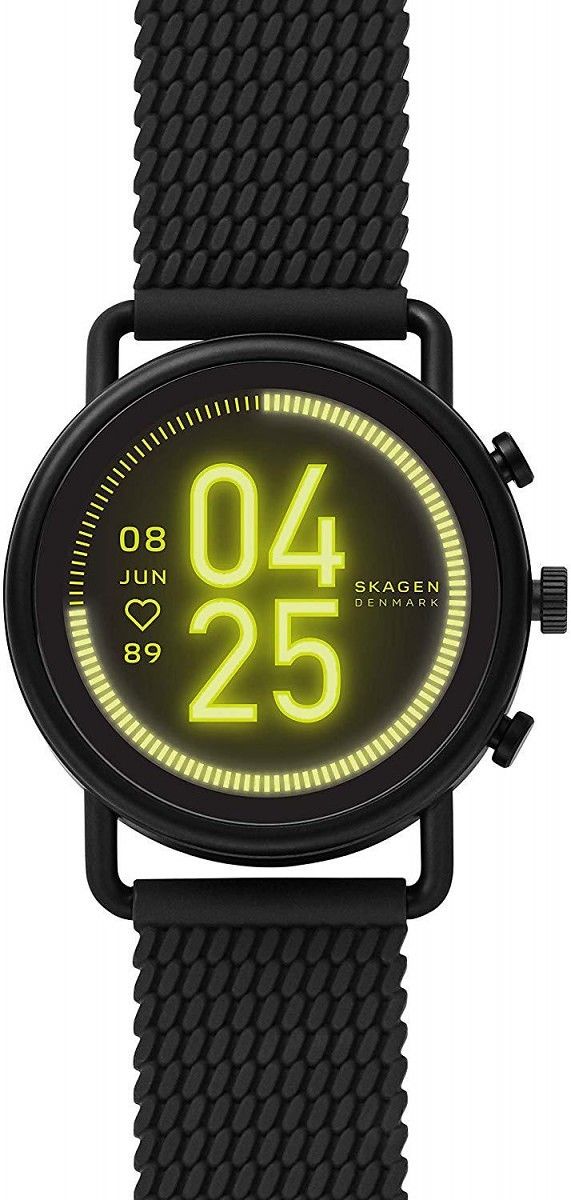
Wear OS may not be a super popular smartwatch platform, but it does have some big names behind it. One of the brands that is most responsible for pumping out solid Wear OS smartwatches is Fossil. Skagen is a subsidiary of Fossil, and the Skagen brand has also been behind some very nice looking smartwatches. The next device in their line up appears to be the Skagen Falster 3, which has appeared online ahead of its launch on a now-removed Amazon listing.
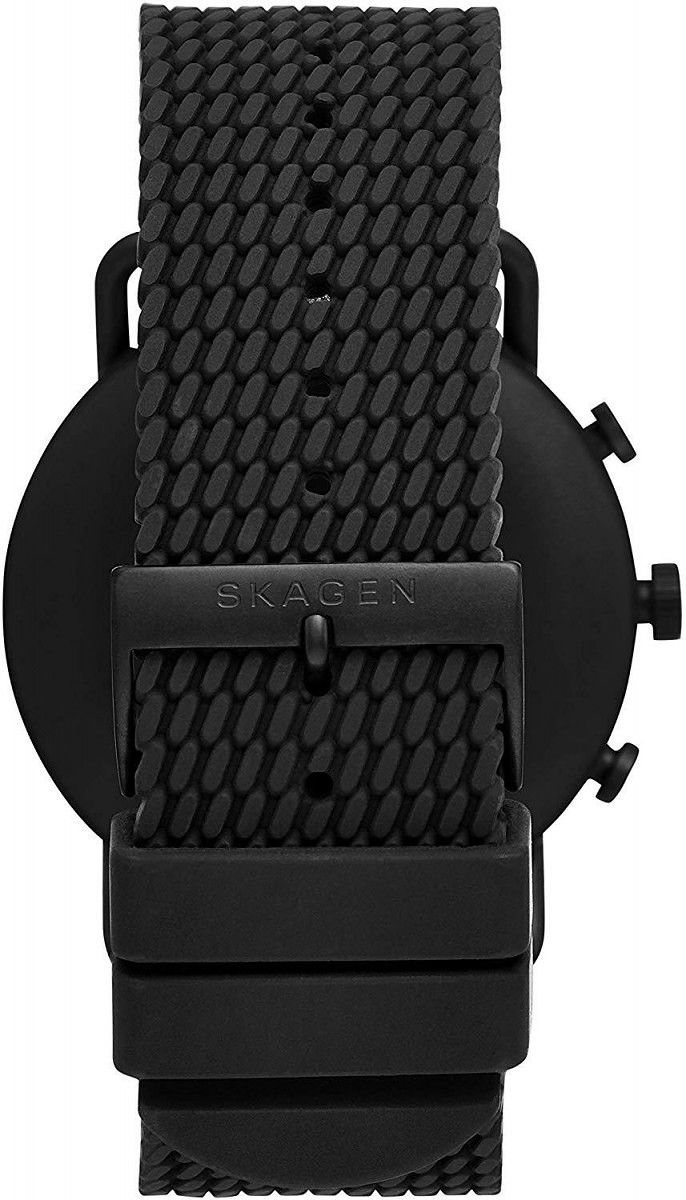
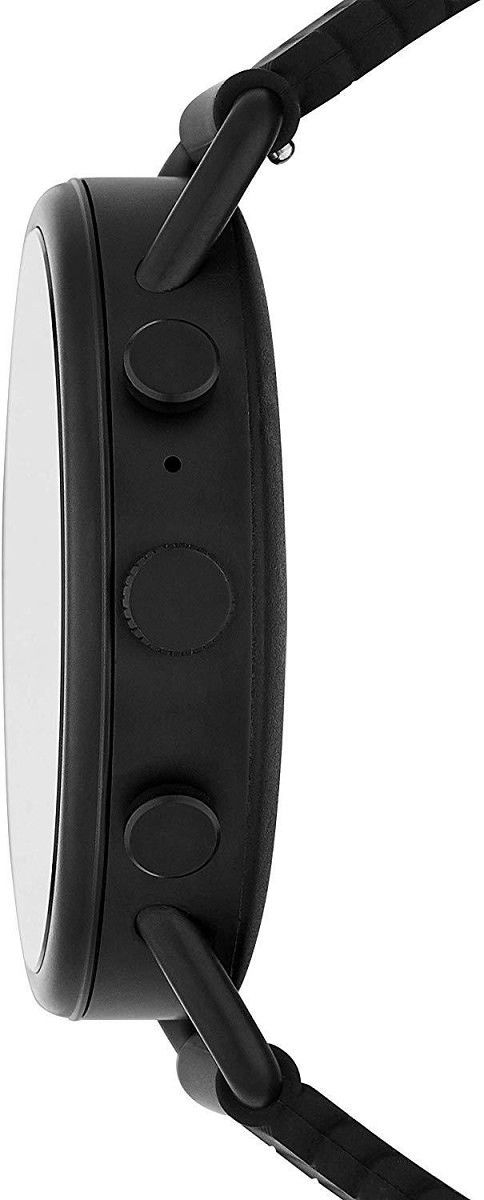
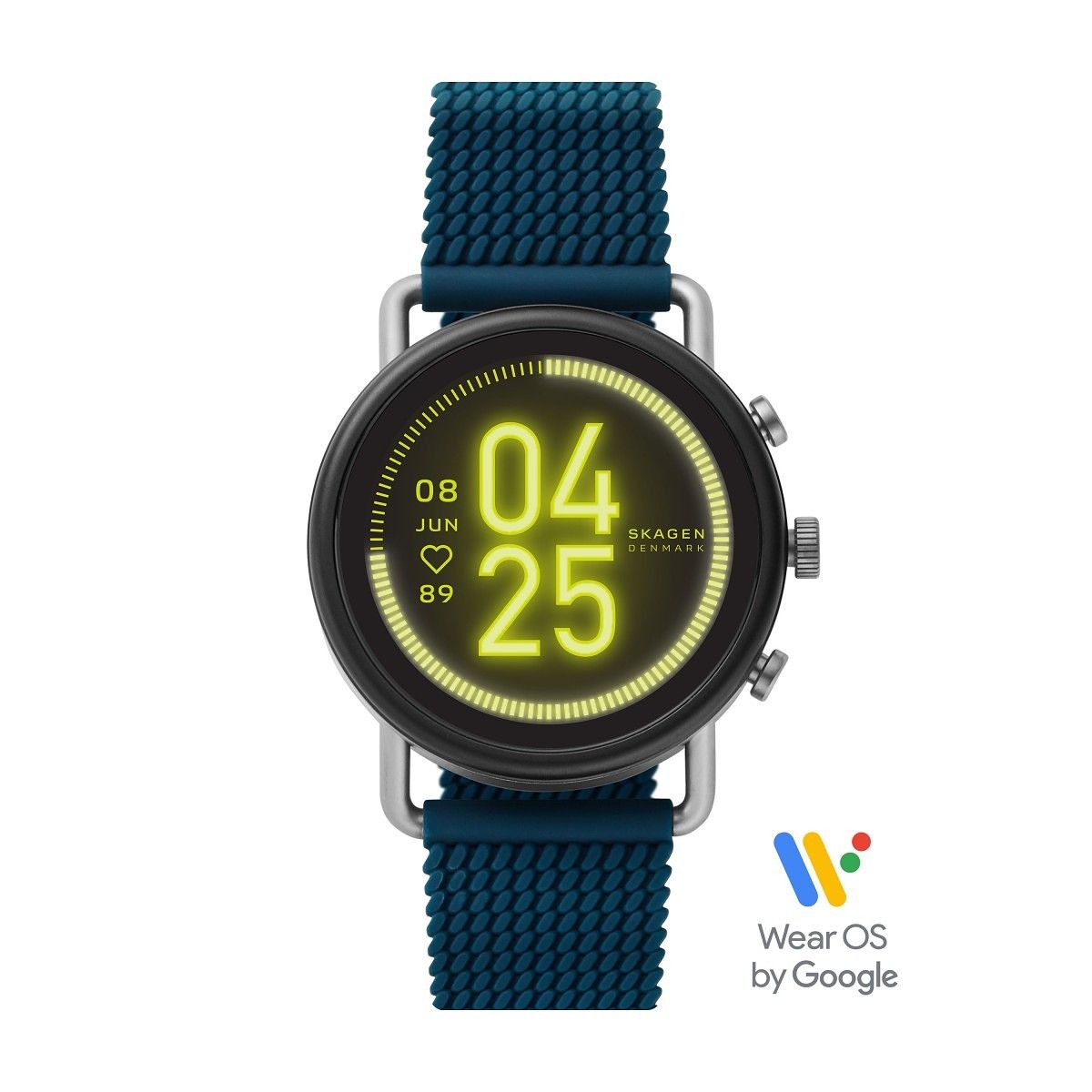
The Skagen Falster 2 was a very well-designed smartwatch and the Falster 3 doesn’t change a lot about that. It retains the same flat sides, pronounced watchband lugs, and three buttons along the right side. Unfortunately, the Amazon listing doesn’t give much information about the specifications. We can see is it will be available in four color options: Black Silicone, Blue Silicone, Gunmetal Steel Mesh, and Leather – Silicone Backed. It will be water-resistant to a depth of 50 meters with NFC and GPS as well. The listing mentions “24 hours of battery life based on usage.”
It should be safe to assume the Skagen Falster 3 will feature the Snapdragon Wear 3100 processor and 1GB of RAM to match the Fossil Gen 5 series. Skagen watches are typically more expensive than the regular Fossil watches, and that’s the case here as well. The Amazon listing shows a price of $295 and a release date of January 25th.
After prematurely showing up on Amazon earlier this week, the Skagen Falster 3 has been officially announced. The Amazon listing took a lot of the wind out of the sails as we’ve already seen what the device looks like. As expected, the watch features the Snapdragon Wear 3100 chip and 1GB of RAM. It also has a speaker for alerts and taking calls, a 1.3-inch OLED display, a 42mm case, NFC support, GPS positioning, swim-proofing (down to 30m depth) and 8GB of internal storage. The Falster 3 has leather, metal, and silicone mesh band options. The watch costs $295 and is available right now.
Update 2: Skagen Falster 3 smartwatch with Wear OS launched in India for ₹21,995 ($307)
Skagen has launched the Falster 3 smartwatch in India for ₹21,995 ($307). The watch will be available at “all leading retail channels”, but at the time of writing, we could not locate product listings on Amazon.in and Flipkart.
The classic Moto Razr was much more than an iconic piece of technology – it was a status symbol. Almost 15 years ago, when candy bar phones were the most prevalent, the Moto Razr captured everyone’s attention with its style quotient, sharp looks, and dazzling metallic colors. The Moto Razr V3 (which was actually the first in the Razr family) is believed to be the world’s best-selling clamshell phone ever. Over the course of four years – i.e. from 2004 to 2008, Motorola brought about various iterations in design but none so compelling and beguiling as the razor-sharp V3. Sadly, over the years, as technology progressed and users migrated to smartphones with touchscreen, buying choices were no longer being dominated by just design. Specifications started playing a big role and it was then that the popularity of clamshells, sliders, candy bars, and other peculiarly designed phones started dwindling. In 2011, Motorola tried to reanimate the Razr branding with the Droid Razr series running Android. However, most of the OG Razr’s fans did not accept a Razr without the iconic sharp edges and foldable design.
Behind the scenes, Motorola kept on working on a foldable smartphone over the last decade, and its vision was just realized last year in November when it launched the Motorola Razr as an Android smartphone with a vertically folding display. We first learned about Motorola’s vision to revive the Razr in January last year, when the WSJ published a report about the intended revival of the phone. Almost a week later, we witnessed the design being registered with the World Intellectual Property Organization (WIPO). Soon after, our Editor-in-Chief, Mishaal Rahman, scored some valuable information about the Razr (codenamed “voyager”) including some preliminary specifications and software features exclusive to the device. Over the course of 2019, we kept getting tidbits about the phone until the official launch later in the year.
Despite some hiccups in shipments, the phone finally became available in the U.S. earlier this month and Motorola is now vying to bring the Motorola Razr to India. I was invited to the Lenovo-Motorola office in Gurugram, India, for an interactive hands-on session with the new and equally enticing Motorola Razr. Besides letting me take a look at the phone and also allowing me to touch it and challenge the hinge design with vigorous flips, Motorola India also shared some insights about the phone.
But before I start, here’s a recap of the specifications of the new Motorola Razr.
eSIM, NFC, CDMA, LTE bands 2/3/4/5/7/13/20/28/66, Bluetooth 5.0 LE, GPS/GLONASS, WiFi 802.11 a/b/g/n/ac
Security
Capacitive fingerprint scanner
IP Rating
None, splash-proof nano-coating
Audio
Speaker at the bottom, no 3.5mm headphone jack, 4 microphones
Software
Android 9 Pie
Ports & Buttons
USB 3.0 Type-C port at the bottom, fingerprint scanner in the bottom bezel, power and volume buttons on the right side
Motorola Razr: Facts & Claims
Before I begin with the design, I want to throw some light on the facts shared and claims made by representatives of Motorola India. First, the work on the foldable Motorola Razr Android smartphone began about 10 years ago and the initial design for the phone was ready in 2011. Over the next four years, Motorola made several iterations and multiple prototypes while trying to perfect the design. In the process, Motorola filed for about 100 patents for the hinge that is meant to prevent the display from slacking.
While the final shape of the phone was nearly ready by 2015, the lack of a proper folding screen technology resulted in Motorola having to delay the fold till 2019. The fit of the foldable display was further perfected over around 14 generations to make sure there’s no bulge or crease to hamper the premium experience that this $1,400 phone aims to offer.
Furthermore, the international media noticed that the Motorola Razr bears a label saying it’s “Made in India.” The brand’s representatives, however, helped me with some insights on this. According to them, while the PCBs for the phone are being assembled in Lenovo’s factory in Sriperambudur, India, the rest of the phone is being made in China. As per the Federal Trade Commission’s regulations, the country of origin of an imported phone is where the PCB or the logic board of the phone is assembled. These regulations may vary with the region. For instance, for the phones to be sold in India, the place of origin is where the majority of the phone – not just the PCB – is assembled. Therefore, the Indian units, when available in India, are most likely to come with a “Made in China” label, instead. Since I did not see an Indian retail unit, I can’t make a solid claim. The prototype unit that I was handling had no clear indication of the place of manufacture.
With these set on the side, let me take you through my impressions of the Motorola Razr’s design.
Motorola Razr Hands-on: First Impressions of the Design
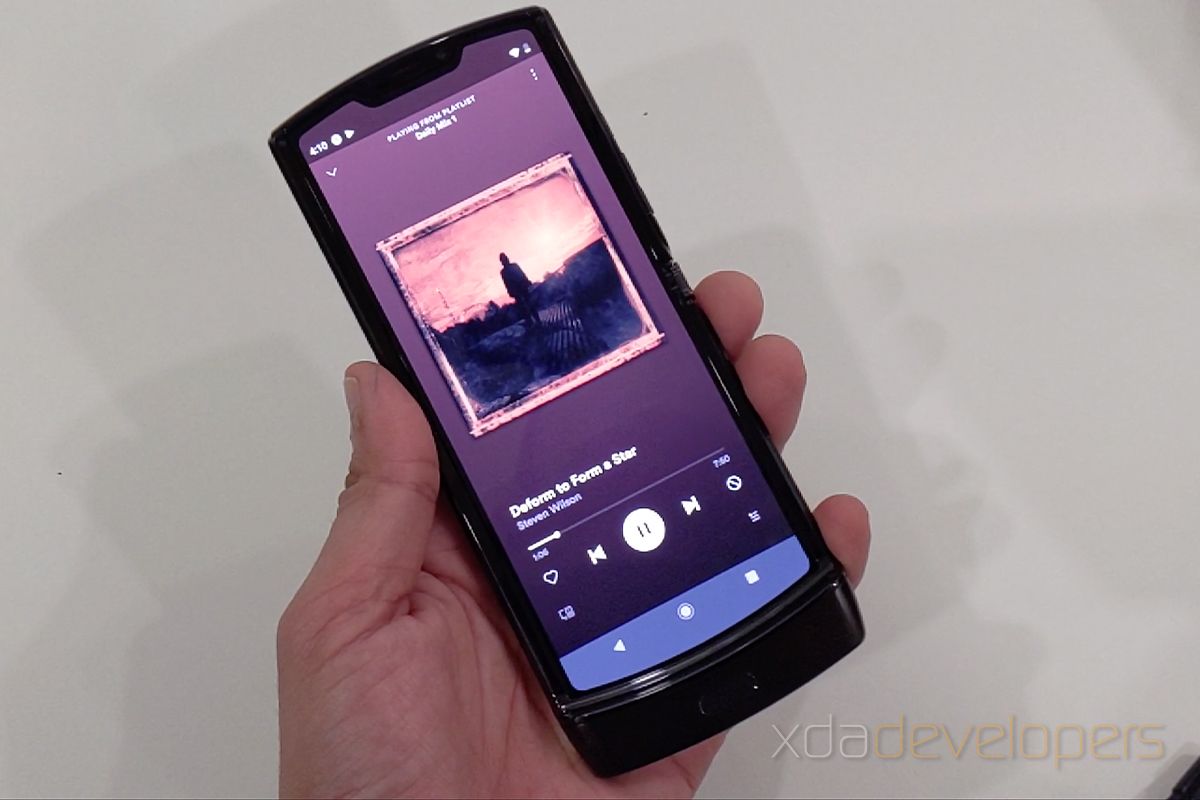
The Motorola Razr from the very first glimpse appears laced with nostalgia and makes you wanna reach out for it. Even though I’d seen the phone in several photos and videos, I was totally awestruck with the design. Despite being notably chunkier and heavier than the original Moto Razr, the new foldable phone fits very comfortably in the hand. It is also curvier on the edges which improves handling to quite an extent. The phone is bulky but the weight has been shifted towards the lower part so that it doesn’t tend to topple when you’re using it.
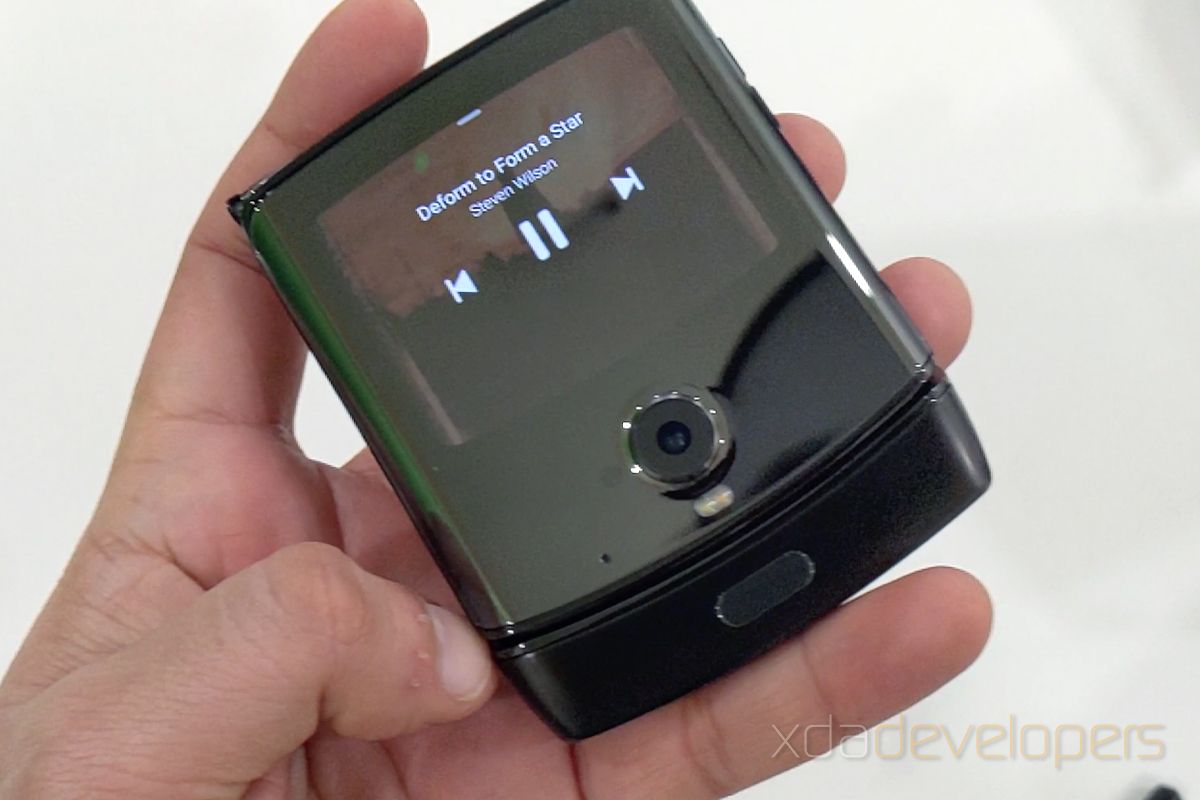
Unlike the older phone, the new Motorola Razr uses much less metal. The lower part of the Razr’s back is made of a rigid polycarbonate with a dotted surface for a good grip while the top half is protected under glass which also covers the 2.69-inch Quick View display and wraps around the periphery of the single camera. The backside of the hinge is made of metal and so are the side edges of the Razr. Despite this change in technology, the Motorola Razr also retains the chin and this houses a capacitive fingerprint scanner on the top. I initially mistook it for a push-button but it is rigid. The bottom of the phone features a USB-C port along with a mono speaker under a metallic grille that encompasses across the entire bottom edge. The volume rocker and the power button are on the upper right side of the phone.
The two sections of the folding Motorola Razr sit completely joined when folded and there’s no gap in between, unlike the Galaxy Fold. This is because of the hinge has scope for the foldable display to get slightly curved inwards when the phone is folded instead of forming a sharp crease. When opened, the Motorola Razr is not entirely flat and the upper half is slightly lifted when the phone rests on a flat surface opened but this should not be a problem for most users.
To me, what does seem to be a problem is the slight lift in the display when the phone is being opened. While Motorola claims that the internals of the phone under the display are tightly sealed, the lift can allow dust or small grain-sized particles to enter the area behind the display and cause damage from the behind when the display is flat open. However, it is also possible that the problem is rectified in the production units since the one I was using was a pre-launch prototype.
When opened, the Motorola Razr has a 6.2-inch flexible plastic OLED display. The upper and the lower edges of the display are curved to help with the classic shape while there’s a notch on the top for the selfie camera, the earpiece, and the ambient and proximity sensors. There are thin bezels around the display and you can also see the gears of the hinge mechanism that Motorola is very proud of. Inside the chin, there’s a primary microphone while there are three other microphones – i.e. four in total – for spatial audio capture.
The screen is attached to the top bezel around the display but is free from the bottom, such that it slides very slightly when you open or close the phone. As per Motorola, this reduces the stress on the display and also reduced the chances of creases or lumps around the fold – although a recently released marketing video says, “bumps and lumps are normal“. But are they acceptable? Absolutely not! And this is why depending on not just the looping hinge but also the sliding display makes sense. While this could initially freak you out, you should get used to the moving, especially since there’s a negligible chance you’ll use the display while opening or closing the phone.
The Motorola Razr runs stock Android currently on Android 9 Pie. Additionally, it has custom software like the Moto Camera and support for Moto gestures for camera and flashlight. You can also trigger the classic mode which launches an interface designed as an homage to the original Razr.
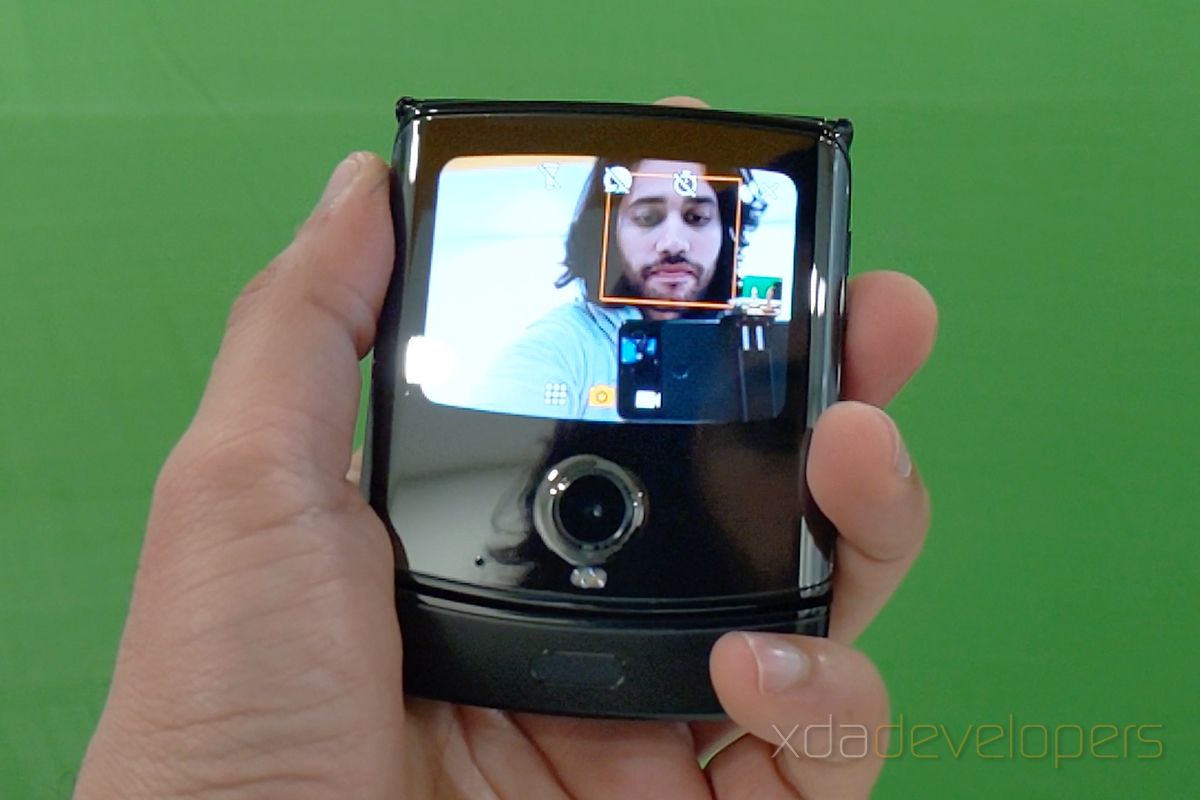
Coming back to the secondary Quick View display, it does not run a full version of Android – unlike Galaxy Fold – but you can use it for a seamless transition with certain music apps like Spotify, Gaana, Wynk Music, etc. When idle, the display shows the time as well as the battery and network statuses. It can also be used as a viewfinder for the camera for selfies – you can simply flick the phone twice to open the camera and tap the screen to click a picture. Additionally, the Quick View display on the Motorola Razr also lets you see notification alerts but you may not be able to see the content of the entire message fully and there’s no way you can reply to the notifications. Motorola is also working to bring support for Google Assitant and Google Maps for the smaller display. Lastly, when you’re clicking pictures of others when the phone is unfolded, the display shows animated smiling emojis to help capture everyone’s attention towards the camera.
All Charms and No Antics
As for the performance, the choice of Snapdragon 710 does feel odd, especially since Samsung has been using flagship chipsets on its foldable devices – Snapdragon 855 on the Galaxy Fold and Snapdragon 855+ on the Galaxy Z Flip. But, Motorola is confident that the phone can handle all the challenges of everyday usage. The target group for the Razr is unlikely to use it for gaming and will primarily use it as a style statement – and, there’s no doubt about the latter.
The Motorola Razr definitely feels like a phone that will attract a lot of attention. But how well will it sell? That depends on the pricing of the phone. In Indian currency, the $1,400 price tag translates to approximately ₹1,00,500 – a premium price that limits the Motorola Razr to the wealthy people in the country.
But, Motorola also told me that they are establishing the Razr as a franchise and will not restrict themselves to a single product. Will they bring more “affordable” phones in the series? We’ll learn soon. Meanwhile, you can also check out the hands-on video that our friends at Pocketnow shot during the international launch of the Motorola Razr:
What are your views on the Motorola Razr? Let us know in the comments below!
Nubia’s Red Magic series of gaming smartphones are known for offering high-end hardware at an affordable price. The Nubia Red Magic 3 (review) from last year packed in a Snapdragon 855, up to 12GB of RAM, and a 5,000mAh battery, making it a great choice for mobile gamers. However, it did have some shortcomings when compared to other devices in the price range. With its successor, the upcoming Nubia Red Magic 5G, the company aims to bring even more to the table and help the device stand out in the ever-growing affordable flagship space. Nubia was expected to launch the Red Magic 5G at the Mobile World Congress trade show this year. But, as you’d already know, the trade show was canceled due to the ongoing coronavirus situation and this delayed the launch of several devices, including the Nubia Red Magic 5G.
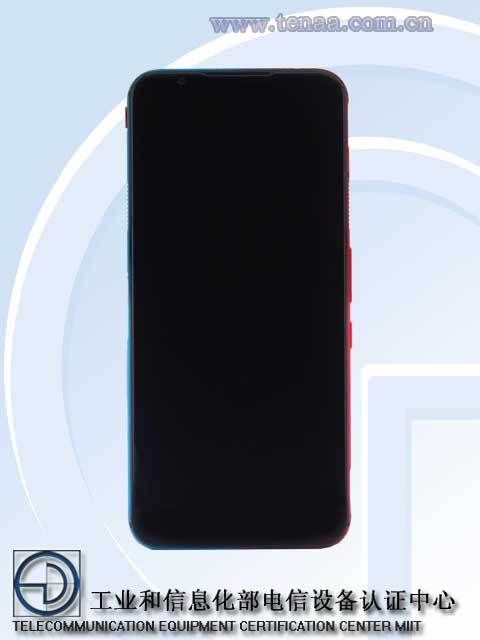
While Nubia hasn’t revealed when exactly it plans to launch the Red Magic 5G, we have seen quite a teasers from the company regarding some of its specifications. Earlier this month, the company’s President and co-founder, Ni Fei, shared a couple of posters revealing that the device will feature a 144Hz high refresh rate display. He also confirmed that the device will feature Samsung’s LPDDR5 RAM and support 80W fast charging. Shortly after this revelation, we learned that the Nubia Red Magic 5G will launch with up to 16GB of RAM, much like the recently launched Galaxy S20 Ultra. And now, we finally have our first look at the upcoming device. The Nubia Red Magic 5G was recently certified by China’s regulatory agency TENAA and the certification listing includes a few images of the device.
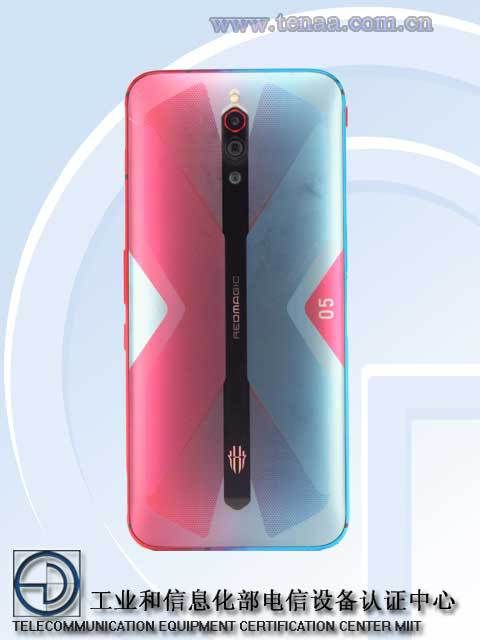
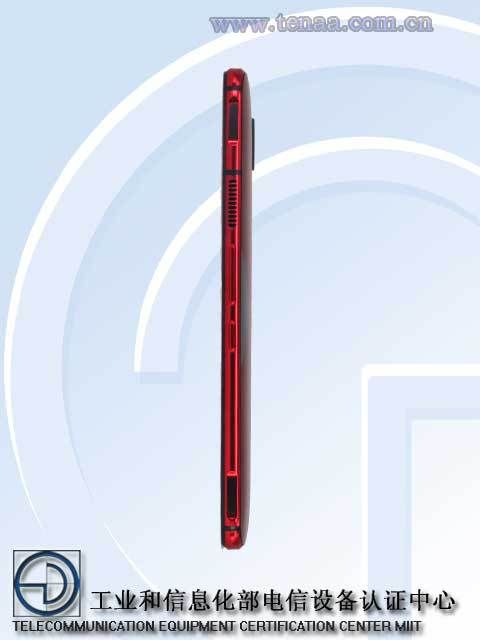
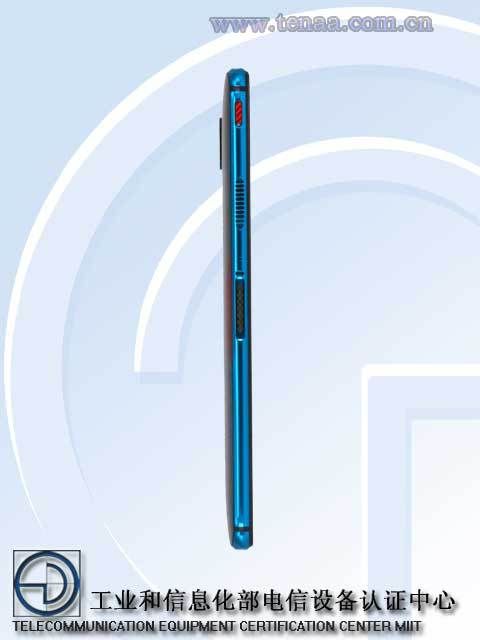
As you can see in the attached images, the Nubia Red Magic 5G will feature a funky red and blue color scheme that forms an X on the back panel and falls in line with the Red Magic series’ gamery aesthetic. The device will feature a triple camera setup on the back, which is housed within a black strip that runs vertically down the back panel. Additionally, we can see that the Red Magic 5G’s power and volume buttons can be found on the right edge, flanked by two more buttons that could possibly be somewhat like the air-triggers that we’ve seen on the ASUS ROG Phone II. The device also has an alert slider in the top left corner, along with what looks to be some sort of grills on either side. There’s an additional button in the center of the left edge, but we can’t be sure of its functionality yet.
Nubia’s Red Magic series of gaming smartphones are known for offering high-end hardware at an affordable price. The Nubia Red Magic 3 (review) from last year packed in a Snapdragon 855, up to 12GB of RAM, and a 5,000mAh battery, making it a great choice for mobile gamers. However, it did have some shortcomings when compared to other devices in the price range. With its successor, the upcoming Nubia Red Magic 5G, the company aims to bring even more to the table and help the device stand out in the ever-growing affordable flagship space. Nubia was expected to launch the Red Magic 5G at the Mobile World Congress trade show this year. But, as you’d already know, the trade show was canceled due to the ongoing coronavirus situation and this delayed the launch of several devices, including the Nubia Red Magic 5G.
While Nubia hasn’t revealed when exactly it plans to launch the Red Magic 5G, we have seen quite a teasers from the company regarding some of its specifications. Earlier this month, the company’s President and co-founder, Ni Fei, shared a couple of posters revealing that the device will feature a 144Hz high refresh rate display. He also confirmed that the device will feature Samsung’s LPDDR5 RAM and support 80W fast charging. Shortly after this revelation, we learned that the Nubia Red Magic 5G will launch with up to 16GB of RAM, much like the recently launched Galaxy S20 Ultra. And now, we finally have our first look at the upcoming device. The Nubia Red Magic 5G was recently certified by China’s regulatory agency TENAA and the certification listing includes a few images of the device.
As you can see in the attached images, the Nubia Red Magic 5G will feature a funky red and blue color scheme that forms an X on the back panel and falls in line with the Red Magic series’ gamery aesthetic. The device will feature a triple camera setup on the back, which is housed within a black strip that runs vertically down the back panel. Additionally, we can see that the Red Magic 5G’s power and volume buttons can be found on the right edge, flanked by two more buttons that could possibly be somewhat like the air-triggers that we’ve seen on the ASUS ROG Phone II. The device also has an alert slider in the top left corner, along with what looks to be some sort of grills on either side. There’s an additional button in the center of the left edge, but we can’t be sure of its functionality yet.
As part of the Realme 6 series, the company is expected to launch two devices — the Realme 6 and Realme 6 Pro. Along with these two devices, the company will also be launching a Realme 6i, a direct successor to the Realme 5i from earlier this year, which we’ve previously spotted in an FCC listing. Just a couple of days ahead of the launch, Realme has set up a teaser website for the upcoming Realme 6 series which reveals a few key details about the upcoming devices.
As per the website, both devices in the Realme 6 series will feature a quad-camera setup on the back with a 64MP primary sensor, a wide-angle lens, a telephoto lens with support for up to 20x zoom, and a macro lens. On the front, the device will feature a hole-punch display for the selfie-shooter, with the Realme 6 featuring a single circular cutout and the Realme 6 Pro featuring a pill-shaped dual camera cutout.
Both the devices will also feature a high refresh rate 90Hz FHD+ display and support for 30W fast charging. Features like high refresh rate displays and 30W fast charging were previously limited to flagship devices and it’s great to see manufacturers bringing them to mid-range devices. It’s worth noting that the Realme 6 series won’t be the first to bring these features to the mid-range segment. Xiaomi’s sub-brand POCO launched the POCO X2 (review) earlier this month and that too features a 120Hz high refresh-rate display and support for 27W fast charging at a very affordable price point.
As part of the Realme 6 series, the company is expected to launch two devices — the Realme 6 and Realme 6 Pro. Along with these two devices, the company will also be launching a Realme 6i, a direct successor to the Realme 5i from earlier this year, which we’ve previously spotted in an FCC listing. Just a couple of days ahead of the launch, Realme has set up a teaser website for the upcoming Realme 6 series which reveals a few key details about the upcoming devices.
As per the website, both devices in the Realme 6 series will feature a quad-camera setup on the back with a 64MP primary sensor, a wide-angle lens, a telephoto lens with support for up to 20x zoom, and a macro lens. On the front, the device will feature a hole-punch display for the selfie-shooter, with the Realme 6 featuring a single circular cutout and the Realme 6 Pro featuring a pill-shaped dual camera cutout.
Both the devices will also feature a high refresh rate 90Hz FHD+ display and support for 30W fast charging. Features like high refresh rate displays and 30W fast charging were previously limited to flagship devices and it’s great to see manufacturers bringing them to mid-range devices. It’s worth noting that the Realme 6 series won’t be the first to bring these features to the mid-range segment. Xiaomi’s sub-brand POCO launched the POCO X2 (review) earlier this month and that too features a 120Hz high refresh-rate display and support for 27W fast charging at a very affordable price point.
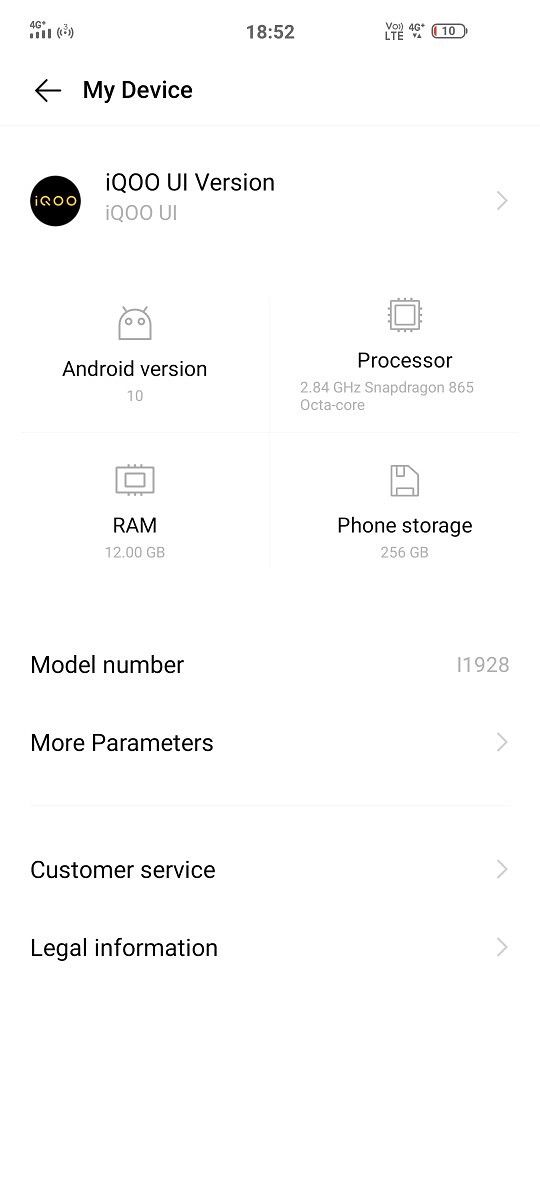
Gaming phones have quickly emerged as a new smartphone category in recent years and there’s a profound interest surrounding them. Smartphone makers are going to great length to ride on this new wave and have come up with their own interpretation of a gaming-focused smartphone. It was all started back in 2017 with the launch of the Razer Phone (not that razr), the first smartphone that was aimed specifically at the hardcore gaming community. Since then, the list of gaming phones has only grown in size with companies such as Asus, Nubia, and Black Shark jumping on the bandwagon with their take on gaming-centric phones. The latest to join this club is the newly announced iQOO 3, a gaming-focused flagship smartphone from Vivo’s spinoff brand iQOO. The iQOO 3 is the first Snapdragon 865 powered smartphone to launch in both 4G and 5G variants. And even though its 5G-ready pitch makes no real sense in the context of the Indian market, the phone itself is quite solid, packing up to 12GB of RAM and 256GB of UFS 3.1 storage, 55W fast charging support, quad cameras, and a massive 6.4-inch display.
I’ve been using the iQOO 3 5G for the past three days now and here are my first impressions.
Note: The iQOO 3 5G review unit was loaned to us by iQOO India.
Starting with the design, the iQOO 3 has avoided going with the typical gaming phone aesthetic with funky exteriors and glowing RGB lights. Instead, the iQOO 3 has opted for a clean, industrial design that should appeal to a broader demographic. Despite its massive size, the device fits snugly in hand, providing a firm and reassuring grip. The narrow form factor lent by the 20.9 aspect ratio definitely helps here.
The backplate is protected by Gorilla Glass 6 and features a gradient pattern underneath it that sparkles under direct sunlight. The square camera module is located on the upper left corner. The sensors are arranged on two vertical design bars with the taller one housing the primary, wide-angle and telephoto sensors while the smaller design bar accommodating the depth sensor.
The iQOO branding is on the bottom left corner — but other than these, the back is a clean affair. The device is comfortable to hold thanks to the curved back and rounded corners but at the same time, it’s also quite heavy, coming in at 216g. The weight is especially noticeable when you’re using the device with one hand but over time you can get used to it.
On the front, the 6.4-inch Super AMOLED display with a pinhole takes the center stage. The display is protected with Schott Xensation UP glass and has a factory-applied screen protector on top. We attempted to get the scratch guard off, but very surprisingly, it did not budge despite repeated strong attempts. We hope to get it off in time for the full review.
The absence of a high refresh rate display is a big letdown given the phone’s gaming pitch. High refresh displays have become an essential part of the flagship smartphone experience and here is where I think iQOO has missed a big opportunity and put itself at a disadvantage in terms of competitiveness. For what it’s worth, the display offers 180Hz touch refresh rate which the company claims improves the gaming experience.
The display itself is really bright (claimed 800 nits max brightness) and offers a great viewing experience. It’s a massive improvement if you’re coming from an LCD. Colors are a bit oversaturated out-of-the-box but you can opt for a more faithful reproduction using the provided display settings. The bezels around the display are pretty slim with the bottom chin measuring just 5.3mm thick. The power button and volume keys are on the right side. The orange-colored power button adds a nice contrasting touch to the black frame. But I’m not fond of its placement as it’s located a bit too downward and not easily reachable. There’s also a dedicated key, located on the left, to trigger Google Assistant.
However, perhaps the more interesting bit of hardware is the two pressure-sensitive buttons located on the right side of the frame. These buttons can be a big deal for gamers as they come in really handy when playing games such as PUBG that usually require multiple fingers to control in-game movements.
The iQOO 3 is powered by Qualcomm’s latest and greatest Snapdragon 865 SoC which claims to offer up to 25% performance jump while at the same time reducing the power consumption by 30%. In day to day use, the phone feels rapid and every interaction — be it opening apps or jumping through menus — is nearly instantaneous. There’s no slowing down whatsoever even while you’re juggling through multiple things at once. Things like stutters and frame drops are a rarity and the overall experience grows up to the expectations one often assumes from a modern flagship.
We’ll be diving deeper into the benchmarks, gaming performance and UI tests to paint a full picture of the overall performance in our full review.
With that said let’s move to the other important aspect: Camera performance. The quad-camera setup of the iQOO 3 is composed of a 48MP Sony IMX582 primary sensor, 13MP wide-angle sensor, 13MP telephoto lens (2X lossless zoom) and 2MP depth camera. It’s interesting to see that iQOO has opted for last year’s Sony sensor and not the more recent 64MP Samsung or Sony IMX686 sensor. The IMX582, which debuted on the Redmi K20, is a different variant of the IMX586 with the same sensor size and pixel size with the only difference being the lack of 4K@90fps support on the IMX582.
During our limited test run, the camera seemed capable of producing stellar images under good lighting, showcasing vibrant colors and a good dynamic range. The low-light results, although not the best around, are still impressive too but the night photos leave a bit to be desired. You can check out the camera samples in the gallery attached below.
The 4,400 mAh battery cell of the iQOO 3 may not be enough to make your jaw drop but its charging speed sure will. The device comes with a 55W Super FlashCharge inside the box and the company claims it takes only 15 minutes to charge the battery up to 50%. I had to charge the device three times during this period and it still blows my mind how fast this thing is. It’s a total gamechanger, especially if you want to game but don’t want to stay plugged to a wall. It’s so quick, a 10-minute top-up is enough to last you through half a day of non-game usage usually. We’ll be doing multiple charging runs for our full review.
The battery life, on the other hand, has been pretty average — nothing extraordinary here. But I guess it’s too early to come to any conclusion, so we reserve our judgment for the final review.
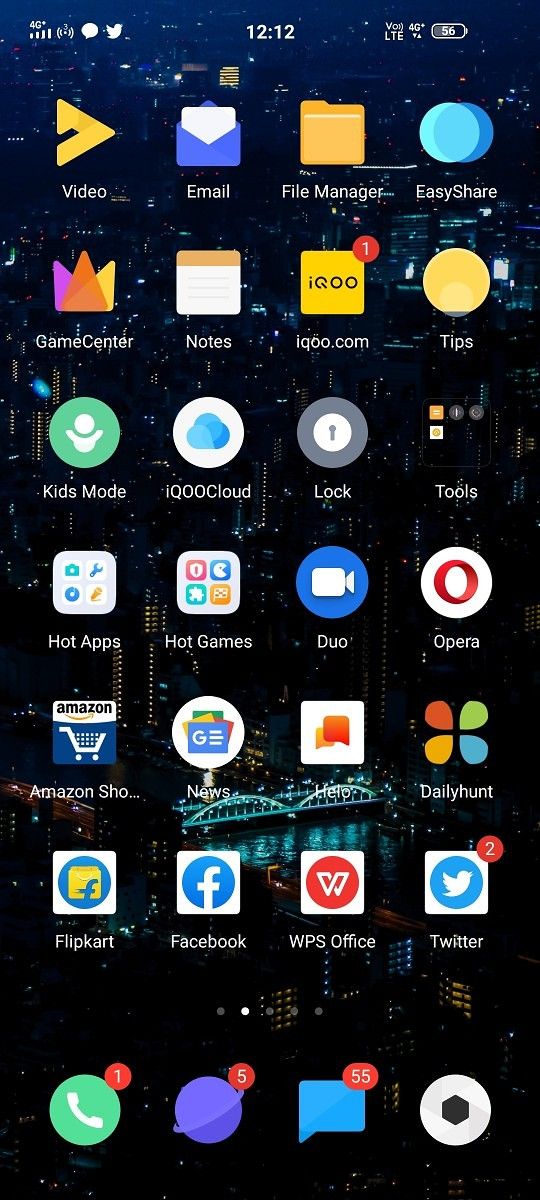
On the software front, the iQOO 3 runs a slightly modified version of FuntouchOS called iQOO UI. If you have used MIUI or ColorOS, you should feel right at home. From home screen arrangement and iconography to the notification shade, you can spot many similarities between these custom skins. You can choose your apps to be arranged on the home screen in iOS style or inside the app drawer. There’s a fair share of junk apps, many of which can’t be uninstalled. The software fully supports Android 10’s Navigation Gestures and can be swapped in favor of the default on-screen buttons to fully take advantage of the display. You also get system-wide dark mode, Always on Display, theme support, Ultra Game mode, long screenshots and much more.
Concluding Note
My first impressions of the iQOO 3 are largely positive. The display is fantastic, performance is great, and charging speed is just mind-blowing. A few negatives that come to mind are the omission of the high refresh rate display and not-so-great low-light camera performance.
The iQOO 3 is an interesting device as it sets the tone for what to expect in the affordable flagship space in the months to come. We’ll be putting the device through its paces to assess its camera, performance, battery life, software and more. My final review of the iQOO 3 should follow in the next couple of weeks.