LightBlog

dimanche 16 février 2020

[Update: Launching on 25th Feb] Samsung teases the Galaxy M31 with a 64MP camera

Update 1 (02/17/2020 @ 01:42 AM ET): Samsung will launch the Samsung Galaxy M31 in India on February 25, 2020. Scroll to the bottom for more information. The article as published on February 4, 2020, is preserved as below.

After years of cheapening out its budget phones with sub-standard specifications and an absence of basic sensors, Samsung finally woke up in 2019. The company upgraded the Galaxy A series with better specifications to make them more competitive in the upper mid-range segments of the smartphone market. More importantly, it took the fight to Xiaomi and Realme by releasing the online-only Galaxy M series in the lower mid-range segment. The Galaxy M30, Galaxy M20, and Galaxy M10 were launched in early 2019. While the phones couldn’t beat Xiaomi and Realme’s competitors in every respect, they were at least in the same league. Samsung became respectable in the lower mid-range segment after a long time. In September, the company upgraded the Galaxy M30 by launching the Galaxy M30s (review), its highlight features being its massive 6,000mAh battery and a 48MP primary camera. Despite the improvement in specifications, Samsung’s market share has continued to decrease in India, allowing Vivo to sneak past into second position in the Indian smartphone market. Something more needs to be done.

To that end, Samsung has kept launching new phones in the mid-range market. The company launched the Galaxy A51 earlier this month, a phone that was a mild refresh of its predecessor, the Galaxy A50s (review). Now, two prominent Indian YouTubers, GeekyRanjit and Technical Guruji respectively, have released exclusive teasers of the upcoming Samsung Galaxy M31, which will be the successor of the Galaxy M30s. The teaser reveals the phone’s name and proclaims a 64MP camera with the tagline “Mega Monster”. The “mega monster” tagline suggests that it will probably have the same 6,000mAh battery capacity as its predecessor—beating all of its competitors in this respect. No other details were provided, but we can expect Samsung to announce the phone’s launch date soon. The 64MP primary camera is expected to use Samsung’s own 64MP ISOCELL GW1 sensor.

The upcoming Galaxy M31 recently received Bluetooth SIG and Wi-Fi certifications, which revealed that it would come out of the box with Android 10, feature dual-band Wi-Fi and Bluetooth 5.0 connectivity. Earlier unverified rumors suggested that it could have a quad camera setup consisting of a 64MP primary camera, an ultra-wide-angle camera, a depth sensor, and a macro camera—imitating the camera setups of the Redmi Note 8 Pro (review), Realme XT (review) and the Realme X2 (review). It was also said to be powered by the same Exynos 9611 SoC that powered both its predecessor and the Galaxy A50s/Galaxy A51. It could be paired with up to 6GB RAM and up to 128GB of expandable storage. It should be noted these details haven’t been confirmed.

The Galaxy M30s recently received a price cut in India, with the 4GB RAM/64GB storage variant now available at ₹12,999, down from its launch price of ₹13,999. The 6GB RAM/128GB storage variant received a ₹2,000 price cut from ₹16,999 to ₹14,999. These prices are now applicable across retailers. This is another indication that Samsung is gearing up to launch the Galaxy M31 soon.

Via: 91mobiles


Update: Samsung Galaxy M31 launching in India on 25th February

Samsung is launching the new Galaxy M31 in India on 25th February, according to product promotional pages on Amazon.in. The page not only confirms the release date for the upcoming phone, but also the product design, camera setup, some display specifications, and battery size.

The highlight of the Galaxy M31 will be its 6,000 mAh battery as well as the 64MP Quad Camera setup that focuses on scene optimization, macro mode, and night mode according to the details on the promotional page. The phone will also come with a FHD+ sAMOLED Infinity-U display with thin bezels. Samsung is also sticking with a conventional fingerprint scanner which can be spotted on the back of the device. Other specifications and differences from its predecessors have not been mentioned, so we’ll have to wait for the phone to be launched to find out more.

Source: Amazon.in

The post [Update: Launching on 25th Feb] Samsung teases the Galaxy M31 with a 64MP camera appeared first on xda-developers.


from xda-developers https://ift.tt/2vNqcHH
via IFTTT

Samsung is preparing a Galaxy A70e with a rear fingerprint scanner and microUSB port

Since Samsung formally streamlined its mid-range and budget devices into the Galaxy A line, they’ve seen a great degree of success in price-conscious markets. You have cheap phones like the Galaxy A10, flagship-lite devices like the Galaxy A90 5G, and in the middle, proper mid-range smartphones like the Galaxy A70. The A70 was quite successful, and it has already been revised with the Galaxy A70s and been succeeded by the 2020 Galaxy A71. However, it doesn’t look like the A70 line is done yet, as there could be a Galaxy A70e coming to market soon.

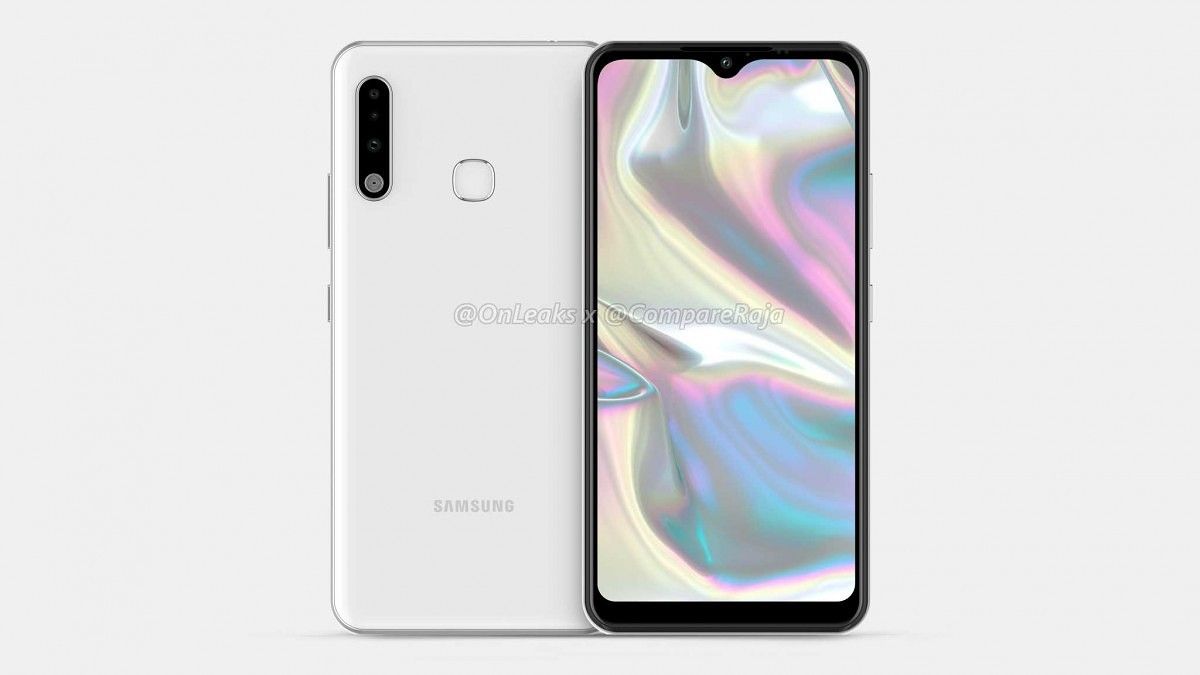
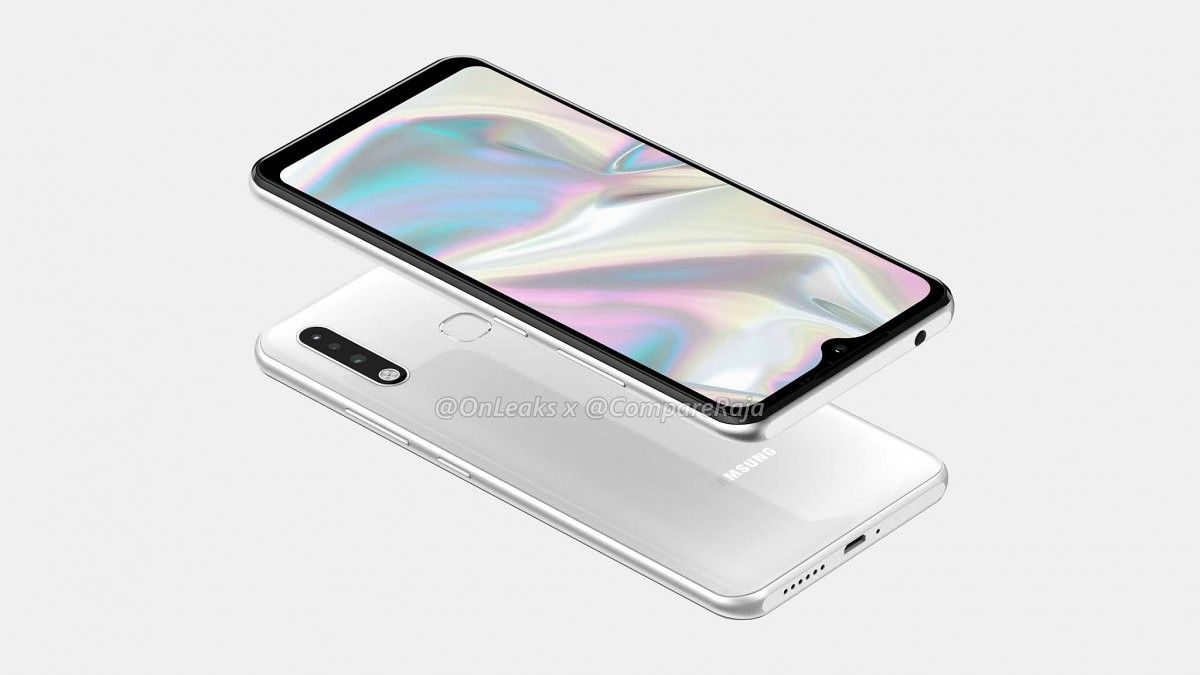
If the newest leak from OnLeaks published on Compareraja is anything to go by, the alleged Galaxy A70e could be a cheaper model than the A70, A70s, and A71. Typically, the “e” signifies a cheaper model in Samsung’s naming scheme, which means the Galaxy A70e should have a few compromises to achieve a lower price point. One of these compromises could be the removal of the optical under-screen fingerprint scanner, which has been swapped instead for a more traditional, physical rear fingerprint sensor. The phone’s USB-C port could also be swapped for an older microUSB charging port.

Alleged Galaxy A70e CAD renders. Source: @OnLeaks/Compareraja

Although the design seems to be pretty similar to its higher-end siblings, the rumored display size of 6.1-inches is smaller than the 6.7-inch displays of the A70 and A70s. The A70e has a triple rear camera, albeit in a camera mount that looks visually different, but the sensors could be inferior to the ones on the other A70 devices. The phone does have a waterdrop notched display, although the bezels seem to be noticeably bigger. There is a possibility that the display has been swapped from AMOLED to LCD, although Samsung is pretty good at keeping their AMOLED displays even on more budget-oriented phones.

We have no word on the internal specifications, but we could be seeing the same Qualcomm Snapdragon 675 that powered the original or a lower-tier processor. We also expect to see lower storage/RAM combos. Samsung might surprise us and offer higher-end internal hardware, though.

Specification Samsung Galaxy A70 Samsung Galaxy A70s
Dimensions 164.3 x 76.7 x 7.9mm 164.3 x 76.7 x 7.9mm
Display  6.7” FHD+ (1080×2400) Super AMOLED
Infinity-U Display
6.7” FHD+ (1080×2400) Super AMOLED
Infinity-U Display
CPU Qualcomm Snapdragon 675 (Dual 2.0GHz + Hexa 1.7GHz) Qualcomm Snapdragon 675 (Dual 2.0GHz + Hexa 1.7GHz)
RAM 6/8GB 6/8GB
Storage 128GB, expandable up to 512GB using microSD 128GB, expandable up to 512GB using microSD
Battery 4,500 mAh, 25W Super Fast Charging 4,500 mAh, 25W Super Fast Charging
Rear Camera(s) 32MP, f/1.7
8MP, f/2.2 ultra-wide (123°)
5MP, f/2.2
64MP, f/1.8
8MP, f/2.2 ultra-wide (123°)
5MP, f/2.2
Front Camera(s) 32MP, f/2.0 32MP, f/2.0
Software OneUI based on Android 9 Pie OneUI based on Android 9 Pie
Security On-display fingerprint, facial recognition On-display fingerprint, facial recognition

There is no word on when this device will be launching, but it’s likely Samsung will opt for a quiet release, so stay tuned for that.

The post Samsung is preparing a Galaxy A70e with a rear fingerprint scanner and microUSB port appeared first on xda-developers.


from xda-developers https://ift.tt/2u8hmE6
via IFTTT

Samsung is preparing a Galaxy A70e with a rear fingerprint scanner and microUSB port

Since Samsung formally streamlined its mid-range and budget devices into the Galaxy A line, they’ve seen a great degree of success in price-conscious markets. You have cheap phones like the Galaxy A10, flagship-lite devices like the Galaxy A90 5G, and in the middle, proper mid-range smartphones like the Galaxy A70. The A70 was quite successful, and it has already been revised with the Galaxy A70s and been succeeded by the 2020 Galaxy A71. However, it doesn’t look like the A70 line is done yet, as there could be a Galaxy A70e coming to market soon.

If the newest leak from OnLeaks published on Compareraja is anything to go by, the alleged Galaxy A70e could be a cheaper model than the A70, A70s, and A71. Typically, the “e” signifies a cheaper model in Samsung’s naming scheme, which means the Galaxy A70e should have a few compromises to achieve a lower price point. One of these compromises could be the removal of the optical under-screen fingerprint scanner, which has been swapped instead for a more traditional, physical rear fingerprint sensor. The phone’s USB-C port could also be swapped for an older microUSB charging port.

Alleged Galaxy A70e CAD renders. Source: @OnLeaks/Compareraja

Although the design seems to be pretty similar to its higher-end siblings, the rumored display size of 6.1-inches is smaller than the 6.7-inch displays of the A70 and A70s. The A70e has a triple rear camera, albeit in a camera mount that looks visually different, but the sensors could be inferior to the ones on the other A70 devices. The phone does have a waterdrop notched display, although the bezels seem to be noticeably bigger. There is a possibility that the display has been swapped from AMOLED to LCD, although Samsung is pretty good at keeping their AMOLED displays even on more budget-oriented phones.

We have no word on the internal specifications, but we could be seeing the same Qualcomm Snapdragon 675 that powered the original or a lower-tier processor. We also expect to see lower storage/RAM combos. Samsung might surprise us and offer higher-end internal hardware, though.

Specification Samsung Galaxy A70 Samsung Galaxy A70s
Dimensions 164.3 x 76.7 x 7.9mm 164.3 x 76.7 x 7.9mm
Display  6.7” FHD+ (1080×2400) Super AMOLED
Infinity-U Display
6.7” FHD+ (1080×2400) Super AMOLED
Infinity-U Display
CPU Qualcomm Snapdragon 675 (Dual 2.0GHz + Hexa 1.7GHz) Qualcomm Snapdragon 675 (Dual 2.0GHz + Hexa 1.7GHz)
RAM 6/8GB 6/8GB
Storage 128GB, expandable up to 512GB using microSD 128GB, expandable up to 512GB using microSD
Battery 4,500 mAh, 25W Super Fast Charging 4,500 mAh, 25W Super Fast Charging
Rear Camera(s) 32MP, f/1.7
8MP, f/2.2 ultra-wide (123°)
5MP, f/2.2
64MP, f/1.8
8MP, f/2.2 ultra-wide (123°)
5MP, f/2.2
Front Camera(s) 32MP, f/2.0 32MP, f/2.0
Software OneUI based on Android 9 Pie OneUI based on Android 9 Pie
Security On-display fingerprint, facial recognition On-display fingerprint, facial recognition

There is no word on when this device will be launching, but it’s likely Samsung will opt for a quiet release, so stay tuned for that.

The post Samsung is preparing a Galaxy A70e with a rear fingerprint scanner and microUSB port appeared first on xda-developers.


from xda-developers https://ift.tt/2u8hmE6
via IFTTT

Samsung Galaxy Fold 2 may launch by July with an under-screen camera

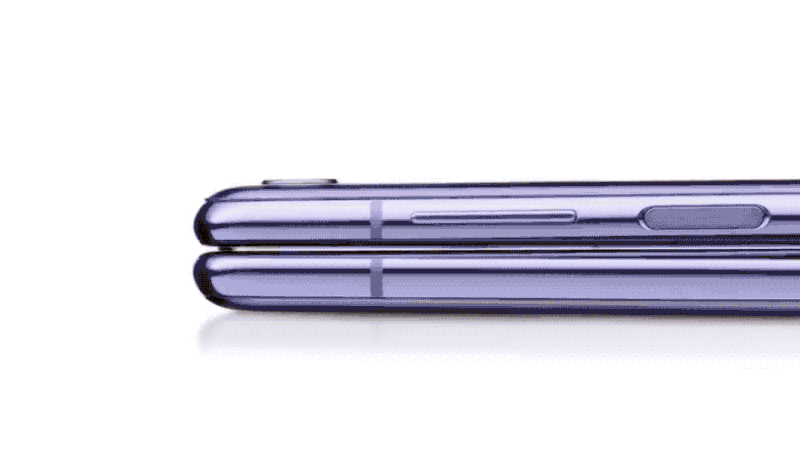
Samsung is going full steam ahead with its plan to dominate the emerging category of foldable smartphones. Last year, the Korean tech giant introduced the Galaxy Fold, which became the first widely available foldable smartphone. The Fold, pictured above, had a tablet-sized display that could fold horizontally inward. While it demonstrated Samsung’s engineering prowess, the phone felt too much like a first-generation product despite its very expensive price. The Fold has a plastic screen that isn’t very durable, and the app support is still slowing catching up to the new form factor. This year, Samsung launched the Galaxy Z Flip, a foldable smartphone that improved upon the Galaxy Fold’s hinge design, but it isn’t a true successor to the Galaxy Fold as the Z Flip folds vertically. Later this year, however, Samsung seems poised to launch a real successor to the Galaxy Fold, a phone we’re tentatively calling the Galaxy Fold 2 as we don’t know its marketing name.

The name is up in the air since we recently learned evidence the Galaxy Fold is now part of the Galaxy Z line of Samsung foldable smartphones. As such, the device could launch as the Galaxy Z Fold, the Galaxy Z Fold 2, or with another name entirely. For now, we have learned it is codenamed “Project Champ” and it will feature the same form factor as the Galaxy Fold. Korean publication Ajunews and the founder of Display Supply Chain Consultants, Ross Young, have independently reported that the new device will have a 7.7-inch foldable display. Both sources have also stated that Samsung is testing an under-display front-facing camera for increased immersion.

Samsung has been working on under-display camera technology since at least 2018, though it was Xiaomi and OPPO that first showed working prototypes of the technology to the public. We had the opportunity to see OPPO’s prototype for ourselves at the company’s Inno Day event in December, but we haven’t seen any progress from Xiaomi. Xiaomi, though, believes that the technology is far from mass-production, which means that Samsung’s introduction of the tech in the next Galaxy Fold would be a major breakthrough. However, the next Galaxy Fold could be available in limited quantities and will very likely carry a hefty price tag, so it wouldn’t be too surprising to see a trial of under-display camera technology in such a device.

Other rumored improvements compared to the first generation Galaxy Fold include the improved hinge design and Samsung’s Ultra Thin Glass technology for the foldable display, both of which were included in the recently-launched Galaxy Z Flip. We should also expect newer internal hardware such as the Qualcomm Snapdragon 865 and/or Exynos 990 processor. The rumored Galaxy Fold 2 is expected to launch by July of this year at the latest, according to both sources.

The post Samsung Galaxy Fold 2 may launch by July with an under-screen camera appeared first on xda-developers.


from xda-developers https://ift.tt/37Csmad
via IFTTT

Samsung Galaxy Fold 2 may launch by July with an under-screen camera

Samsung is going full steam ahead with its plan to dominate the emerging category of foldable smartphones. Last year, the Korean tech giant introduced the Galaxy Fold, which became the first widely available foldable smartphone. The Fold, pictured above, had a tablet-sized display that could fold horizontally inward. While it demonstrated Samsung’s engineering prowess, the phone felt too much like a first-generation product despite its very expensive price. The Fold has a plastic screen that isn’t very durable, and the app support is still slowing catching up to the new form factor. This year, Samsung launched the Galaxy Z Flip, a foldable smartphone that improved upon the Galaxy Fold’s hinge design, but it isn’t a true successor to the Galaxy Fold as the Z Flip folds vertically. Later this year, however, Samsung seems poised to launch a real successor to the Galaxy Fold, a phone we’re tentatively calling the Galaxy Fold 2 as we don’t know its marketing name.

The name is up in the air since we recently learned evidence the Galaxy Fold is now part of the Galaxy Z line of Samsung foldable smartphones. As such, the device could launch as the Galaxy Z Fold, the Galaxy Z Fold 2, or with another name entirely. For now, we have learned it is codenamed “Project Champ” and it will feature the same form factor as the Galaxy Fold. Korean publication Ajunews and the founder of Display Supply Chain Consultants, Ross Young, have independently reported that the new device will have a 7.7-inch foldable display. Both sources have also stated that Samsung is testing an under-display front-facing camera for increased immersion.

Samsung has been working on under-display camera technology since at least 2018, though it was Xiaomi and OPPO that first showed working prototypes of the technology to the public. We had the opportunity to see OPPO’s prototype for ourselves at the company’s Inno Day event in December, but we haven’t seen any progress from Xiaomi. Xiaomi, though, believes that the technology is far from mass-production, which means that Samsung’s introduction of the tech in the next Galaxy Fold would be a major breakthrough. However, the next Galaxy Fold could be available in limited quantities and will very likely carry a hefty price tag, so it wouldn’t be too surprising to see a trial of under-display camera technology in such a device.

Other rumored improvements compared to the first generation Galaxy Fold include the improved hinge design and Samsung’s Ultra Thin Glass technology for the foldable display, both of which were included in the recently-launched Galaxy Z Flip. We should also expect newer internal hardware such as the Qualcomm Snapdragon 865 and/or Exynos 990 processor. The rumored Galaxy Fold 2 is expected to launch by July of this year at the latest, according to both sources.

The post Samsung Galaxy Fold 2 may launch by July with an under-screen camera appeared first on xda-developers.


from xda-developers https://ift.tt/37Csmad
via IFTTT

Samsung’s Ultra Thin Glass scratches as easily as plastic in Galaxy Z Flip durability test

The Galaxy Z Flip was recently announced as Samsung’s first clamshell foldable smartphone, and unlike with the Motorola Razr, there hasn’t been a delay in getting the phone into the hands of consumers. While it’s not a direct successor to the Galaxy Fold, it is a marvel of Samsung’s engineering on its own right. Early impressions of the Z Flip have been positive, with many praising Samsung for offering high-end specifications and seemingly solid build quality at a lower price point than the Razr. One of the reasons the Galaxy Z Flip has been getting praise is its use of Samsung’s bendable Ultra Thin Glass, which users assumed would make the phone durable than older foldable phones. However, it seems that the phone’s durability is not all that amazing.

Popular YouTuber Zach Nelson, who runs the YouTube channel JerryRigEverything, performed one of his signature durability tests on the recently released Galaxy Z Flip. He performed several tests, such as a scratch test and a bend test, on the device. Scratching the phone’s display using his Mohs hardness picks revealed that the device gets visible dents and scratches with just a level 2 pick; a level 3 pick manages to actually scratch the display pretty heavily. Then, a level 4 pick manages to physically puncture the display. These are more or less the same results one would get when testing a plastic display such as the one in the Galaxy Fold and the Motorola Razr.

This means that you can even scratch the display with your own fingernail, which probably isn’t what you would be expecting from a device that is marketed as having a glass display. Customers looking to buy the Galaxy Z Flip and hearing the term “glass” would probably expect durability similar to that of regular smartphones with a glass display, like the recently announced Galaxy S20 lineup.

Ultra Thin Glass isn’t the same kind of glass you’ll find in the average Android smartphone, though, since it needs to be extra thin in order to fold. Thus, it’s not as structurally rigid as normal smartphone glass. Furthermore, just like the Galaxy Fold, the Galaxy Z Flip has an unremovable plastic cover on top for protection, the company confirmed during Galaxy Unpacked. Because of this, it seems that Samsung’s Ultra Thin Glass doesn’t really provide a durability advantage compared to plastic—though it does change how the display looks and feels.

Samsung’s marketing material for the Galaxy Z Flip shows the plastic protective cover as a key part of the display.

There is also the possibility that Samsung’s Ultra Thin Glass is no more than a hybrid glass-plastic polymer, a possibility raised by Mr. Nelson himself, who slammed Samsung for potentially misleading marketing.

In  a statement to The Verge regarding this matter, Samsung said the following:

“Galaxy Z Flip features an Infinity Flex Display with Samsung’s Ultra Thin Glass (UTG) to deliver a sleek, premium look and offer an immersive viewing experience,” a spokesperson said by email. “Samsung’s first-of-its-kind UTG technology is different from other Galaxy flagship devices. While the display does bend, it should be handled with care. Also, Galaxy Z Flip has a protective layer on top of the UTG similar to Galaxy Fold.”

Just as they did with the Galaxy Fold, Samsung will offer a one-time screen replacement for the Galaxy Z Flip that will cost $119. Additionally, Samsung is offering the option to add a screen protector to the device, an option that was not available for the Galaxy Fold:

“As part of Premier Service, we will offer a one-time free application of a screen protector for the Z Flip at select UBIF [U Break I Fix], Samsung branded locations or by sending it to Samsung Premier Service via mail. The screen protector will be applied by a specialist with the proper equipment to align and apply it. The program is rolling out soon.”

As long as you take proper care of your device, though, you shouldn’t have anything catastrophic happen. The device will be kept closed most of the time whether it’s in your pockets or while not in use, which should reduce dust accumulation and scratching while it’s in your pocket. Furthermore, Samsung has implemented additional improvements to the hinge design which should also improve durability and keep most dust and debris intake at bay.

The Galaxy Z Flip has just been released so it’s way too early to talk about its real-world durability. There may be issues here and there that could be going under the radar right now. If you were concerned that foldable phones are still not ready for the mass market, then today’s news will unfortunately not sway your mind. If you are still interested in the device, Samsung’s offering of a screen protector and one-time screen replacement may assuage your fears.

The post Samsung’s Ultra Thin Glass scratches as easily as plastic in Galaxy Z Flip durability test appeared first on xda-developers.


from xda-developers https://ift.tt/39EvxzF
via IFTTT

Samsung’s Ultra Thin Glass scratches as easily as plastic in Galaxy Z Flip durability test

The Galaxy Z Flip was recently announced as Samsung’s first clamshell foldable smartphone, and unlike with the Motorola Razr, there hasn’t been a delay in getting the phone into the hands of consumers. While it’s not a direct successor to the Galaxy Fold, it is a marvel of Samsung’s engineering on its own right. Early impressions of the Z Flip have been positive, with many praising Samsung for offering high-end specifications and seemingly solid build quality at a lower price point than the Razr. One of the reasons the Galaxy Z Flip has been getting praise is its use of Samsung’s bendable Ultra Thin Glass, which users assumed would make the phone durable than older foldable phones. However, it seems that the phone’s durability is not all that amazing.

Popular YouTuber Zach Nelson, who runs the YouTube channel JerryRigEverything, performed one of his signature durability tests on the recently released Galaxy Z Flip. He performed several tests, such as a scratch test and a bend test, on the device. Scratching the phone’s display using his Mohs hardness picks revealed that the device gets visible dents and scratches with just a level 2 pick; a level 3 pick manages to actually scratch the display pretty heavily. Then, a level 4 pick manages to physically puncture the display. These are more or less the same results one would get when testing a plastic display such as the one in the Galaxy Fold and the Motorola Razr.

This means that you can even scratch the display with your own fingernail, which probably isn’t what you would be expecting from a device that is marketed as having a glass display. Customers looking to buy the Galaxy Z Flip and hearing the term “glass” would probably expect durability similar to that of regular smartphones with a glass display, like the recently announced Galaxy S20 lineup.

Ultra Thin Glass isn’t the same kind of glass you’ll find in the average Android smartphone, though, since it needs to be extra thin in order to fold. Thus, it’s not as structurally rigid as normal smartphone glass. Furthermore, just like the Galaxy Fold, the Galaxy Z Flip has an unremovable plastic cover on top for protection, the company confirmed during Galaxy Unpacked. Because of this, it seems that Samsung’s Ultra Thin Glass doesn’t really provide a durability advantage compared to plastic—though it does change how the display looks and feels.

Samsung’s marketing material for the Galaxy Z Flip shows the plastic protective cover as a key part of the display.

There is also the possibility that Samsung’s Ultra Thin Glass is no more than a hybrid glass-plastic polymer, a possibility raised by Mr. Nelson himself, who slammed Samsung for potentially misleading marketing.

In  a statement to The Verge regarding this matter, Samsung said the following:

“Galaxy Z Flip features an Infinity Flex Display with Samsung’s Ultra Thin Glass (UTG) to deliver a sleek, premium look and offer an immersive viewing experience,” a spokesperson said by email. “Samsung’s first-of-its-kind UTG technology is different from other Galaxy flagship devices. While the display does bend, it should be handled with care. Also, Galaxy Z Flip has a protective layer on top of the UTG similar to Galaxy Fold.”

Just as they did with the Galaxy Fold, Samsung will offer a one-time screen replacement for the Galaxy Z Flip that will cost $119. Additionally, Samsung is offering the option to add a screen protector to the device, an option that was not available for the Galaxy Fold:

“As part of Premier Service, we will offer a one-time free application of a screen protector for the Z Flip at select UBIF [U Break I Fix], Samsung branded locations or by sending it to Samsung Premier Service via mail. The screen protector will be applied by a specialist with the proper equipment to align and apply it. The program is rolling out soon.”

As long as you take proper care of your device, though, you shouldn’t have anything catastrophic happen. The device will be kept closed most of the time whether it’s in your pockets or while not in use, which should reduce dust accumulation and scratching while it’s in your pocket. Furthermore, Samsung has implemented additional improvements to the hinge design which should also improve durability and keep most dust and debris intake at bay.

The Galaxy Z Flip has just been released so it’s way too early to talk about its real-world durability. There may be issues here and there that could be going under the radar right now. If you were concerned that foldable phones are still not ready for the mass market, then today’s news will unfortunately not sway your mind. If you are still interested in the device, Samsung’s offering of a screen protector and one-time screen replacement may assuage your fears.

The post Samsung’s Ultra Thin Glass scratches as easily as plastic in Galaxy Z Flip durability test appeared first on xda-developers.


from xda-developers https://ift.tt/39EvxzF
via IFTTT