LightBlog

lundi 10 février 2020

Razer Cortex update adds a new “Analyzer” feature with an FPS counter and other gaming options

Gaming hardware manufacturer Razer made its debut in the smartphone world back in 2017. The company is responsible for kickstarting the “gaming smartphone” trend with the original Razer Phone, which featured a Snapdragon 835 SoC, a 120Hz QHD LCD panel, a 4,000mAh battery, and a near-stock Android build. Razer followed that up with the Razer Phone 2 (review) which featured some minor design changes, hardware upgrades, and a few additional software features to improve gaming performance. This included the Razer Cortex game launcher, which was designed to help you play every game in its most optimal settings. Soon after the launch, Razer partnered with Chinese conglomerate Tencent to enhance the gaming performance on Razer’s smartphones even further. As part of the deal, the company worked with Tencent to optimize games like PUBG Mobile to work well with Razer Cortex. Now, Razer is rolling out an update for the app bringing even more new features into the mix.

Razer Cortex update

According to a recent post from Reddit, the latest update for Razer Cortex brings a new feature called Analyzer which includes useful things like a native FPS counter, a connection lock feature to prevent users from accidentally switching off Bluetooth and WiFi, and a screen brightness lock.

Additionally, the Analyzer also includes a Gaming Data Analysis tool that you can use to keep a track of the time you’ve spent playing games on your phone, the type of games you played the most, and the length of an average gaming session. Along with the new features, the Razer Cortex update also includes performance enhancements and bug fixes to address several issues in the app. The Razer Cortex update is live and rolling out to Razer Phone 2 users right now. In case you haven’t received the update yet, Razer recommends enabling the app auto-update feature on your device to receive it as soon as possible.


Via: Reddit

The post Razer Cortex update adds a new “Analyzer” feature with an FPS counter and other gaming options appeared first on xda-developers.


from xda-developers https://ift.tt/31HG7Dr
via IFTTT

Google Assistant’s Ambient Mode is rolling out to OnePlus phones

At the IFA trade show last year, Google announced a new feature for the Google Assistant called Ambient Mode. The feature is designed to turn any Android smartphone or tablet into a smart display. You can use the smart display to show information from your calendar, the current weather, notifications, reminders, music controls, and smart home controls. You can even use it to display a photo slideshow from Google Photos, which is a great way to repurpose old Android tablets. At launch, the feature was only made available for two tablets — the Lenovo Smart Tab M8 HD and Lenovo Yoga Smart Tab — and two smartphones — the Nokia 7.2 and Nokia 6.2. Now, the feature is finally rolling out to OnePlus devices.

In a recent post on the OnePlus Forums, the company announced a partnership with Google to bring the Google Assistant-powered Ambient Mode to OnePlus devices. The mode will be available for all OnePlus devices starting from the OnePlus 3. In order to use the mode, you’ll first have to connect your device to the charger, click on the new notification and then follow the steps in the setup process. Alternatively, you can open up the Google App, head over to the Assistant tab, select your device and then enable the Ambient Mode from the subsequent menu. As with all updates from OnePlus, the new Ambient Mode is rolling out to devices in a staged fashion and it might take up to a week to reach all eligible devices.


Source: OnePlus Forums

The post Google Assistant’s Ambient Mode is rolling out to OnePlus phones appeared first on xda-developers.


from xda-developers https://ift.tt/39npUG4
via IFTTT

Google Assistant’s Ambient Mode is rolling out to OnePlus phones

At the IFA trade show last year, Google announced a new feature for the Google Assistant called Ambient Mode. The feature is designed to turn any Android smartphone or tablet into a smart display. You can use the smart display to show information from your calendar, the current weather, notifications, reminders, music controls, and smart home controls. You can even use it to display a photo slideshow from Google Photos, which is a great way to repurpose old Android tablets. At launch, the feature was only made available for two tablets — the Lenovo Smart Tab M8 HD and Lenovo Yoga Smart Tab — and two smartphones — the Nokia 7.2 and Nokia 6.2. Now, the feature is finally rolling out to OnePlus devices.

In a recent post on the OnePlus Forums, the company announced a partnership with Google to bring the Google Assistant-powered Ambient Mode to OnePlus devices. The mode will be available for all OnePlus devices starting from the OnePlus 3. In order to use the mode, you’ll first have to connect your device to the charger, click on the new notification and then follow the steps in the setup process. Alternatively, you can open up the Google App, head over to the Assistant tab, select your device and then enable the Ambient Mode from the subsequent menu. As with all updates from OnePlus, the new Ambient Mode is rolling out to devices in a staged fashion and it might take up to a week to reach all eligible devices.


Source: OnePlus Forums

The post Google Assistant’s Ambient Mode is rolling out to OnePlus phones appeared first on xda-developers.


from xda-developers https://ift.tt/39npUG4
via IFTTT

Vivo’s Snapdragon 865-powered iQOO 3 could be the first phone with UFS 3.1 storage

Quite a few Qualcomm Snapdragon 865-powered flagship phones are still scheduled to launch this month despite the fact that many companies have withdrawn from MWC 2020. Vivo’s iQOO brand is also among them. The iQOO sub-brand was launched last year with a Qualcomm Snapdragon 855-powered flagship, named as the iQOO phone. At that time, it was a China-only brand. iQOO went on to launch two more phones only in China last year. This month, though, the brand confirmed that it was expanding to India with the launch of a Snapdragon 865-powered flagship, which would launch in both 4G and 5G variants. This was confirmed by the Marketing Director of iQOO India. The upcoming iQOO flagship will be called the iQOO 3, and its specifications have been confirmed via its TENAA listing. Recently, iQOO officially teased on Weibo that the phone will have UFS 3.1 storage. Qualcomm PR separately confirmed to us that the Snapdragon 865 supports UFS 3.1 storage.

The UFS 3.1 standard was announced last week as an upgrade over last year’s UFS 3.0 storage. Although the theoretical maximum bandwidth remains the same, real-world performance and battery life will be improved in UFS 3.1-powered devices because of new advancements, including an SLC cache to bring UFS storage closer to SSDs. Last year, the OnePlus 7 series was the first to adopt UFS 3.0 storage. This year, though, it seems that it will be iQOO that will be the first brand to launch a phone with UFS 3.1 storage. This means it could have a theoretical performance edge over other upcoming Snapdragon 865-powered flagships such as the Xiaomi Mi 10 series, OPPO Find X2, Realme X50 Pro 5G, ZTE Axon 10s Pro 5G, LG V60 ThinQ, and others.

According to its TENAA listing, the upcoming iQOO 3 is expected to have a 6.44-inch Full HD+ OLED display, Snapdragon 865 SoC, 6GB/8GB/128GB of RAM with 128GB/256GB storage, 64MP primary camera, 13MP ultra-wide and telephoto cameras, 2MP depth sensor, 16MP punch-hole front camera, and a 4,370mAh battery with 55W fast charging. It will be powered by Android 10 out of the box. The phone is expected to be launched before the end of February.


Source: iQOO [1], iQOO [2]

The post Vivo’s Snapdragon 865-powered iQOO 3 could be the first phone with UFS 3.1 storage appeared first on xda-developers.


from xda-developers https://ift.tt/3bvkXg2
via IFTTT

Vivo’s Snapdragon 865-powered iQOO 3 could be the first phone with UFS 3.1 storage

Quite a few Qualcomm Snapdragon 865-powered flagship phones are still scheduled to launch this month despite the fact that many companies have withdrawn from MWC 2020. Vivo’s iQOO brand is also among them. The iQOO sub-brand was launched last year with a Qualcomm Snapdragon 855-powered flagship, named as the iQOO phone. At that time, it was a China-only brand. iQOO went on to launch two more phones only in China last year. This month, though, the brand confirmed that it was expanding to India with the launch of a Snapdragon 865-powered flagship, which would launch in both 4G and 5G variants. This was confirmed by the Marketing Director of iQOO India. The upcoming iQOO flagship will be called the iQOO 3, and its specifications have been confirmed via its TENAA listing. Recently, iQOO officially teased on Weibo that the phone will have UFS 3.1 storage. Qualcomm PR separately confirmed to us that the Snapdragon 865 supports UFS 3.1 storage.

The UFS 3.1 standard was announced last week as an upgrade over last year’s UFS 3.0 storage. Although the theoretical maximum bandwidth remains the same, real-world performance and battery life will be improved in UFS 3.1-powered devices because of new advancements, including an SLC cache to bring UFS storage closer to SSDs. Last year, the OnePlus 7 series was the first to adopt UFS 3.0 storage. This year, though, it seems that it will be iQOO that will be the first brand to launch a phone with UFS 3.1 storage. This means it could have a theoretical performance edge over other upcoming Snapdragon 865-powered flagships such as the Xiaomi Mi 10 series, OPPO Find X2, Realme X50 Pro 5G, ZTE Axon 10s Pro 5G, LG V60 ThinQ, and others.

According to its TENAA listing, the upcoming iQOO 3 is expected to have a 6.44-inch Full HD+ OLED display, Snapdragon 865 SoC, 6GB/8GB/128GB of RAM with 128GB/256GB storage, 64MP primary camera, 13MP ultra-wide and telephoto cameras, 2MP depth sensor, 16MP punch-hole front camera, and a 4,370mAh battery with 55W fast charging. It will be powered by Android 10 out of the box. The phone is expected to be launched before the end of February.


Source: iQOO [1], iQOO [2]

The post Vivo’s Snapdragon 865-powered iQOO 3 could be the first phone with UFS 3.1 storage appeared first on xda-developers.


from xda-developers https://ift.tt/3bvkXg2
via IFTTT

RAVPower 61W PD GaN Charger Review – Incredible Versatility

Generally speaking, my bag plays host to two or three chargers at a time. One for my smartphone, one for my laptop (a MacBook Pro), and one for my Nintendo Switch. That’s a lot of cabling to carry in one bag, and most certainly doesn’t do any wonders for their longevity either. The MacBook Pro charger is specifically quite bulky, and that in tandem with both the Switch and my phone charger is a lot of weight on their own to carry. That’s also before I start cramming other stuff like my actual Switch and my laptop into my bag for the day. But what if I could replace those chargers with just one charger? That’s where the RAVPower 61W PD GaN charger comes in.

RAVPower

The RAVPower 61W PD GaN Packaging

The RAVPower 61W PD GaN comes in a simple box with not much else to show for it. The box is basically the size of the plug, with a small leaflet with some regulatory information on the inside. You don’t get a USB-C cable in the box for use with the plug, so you’ll need to have your own. I repurposed the USB-C to USB-C cable that came with my MacBook for this review in order to charge my devices with it.

The RAVPower 61W PD GaN charges everything

As you may expect from a plug, it does indeed charge the thing that it’s plugged into. It uses the USB Power Delivery standard as well, which means that while it won’t Warp Charge your OnePlus smartphone, for example, it will charge at a pretty respectable speed. The one problem I found is the aforementioned lack of USB-C to USB-C cable in the box.

Speaking of my MacBook Pro, the size of the charging brick which comes with it is actually one of the main selling points of the RAVPower 61W PD charger. It’s about a quarter of the size of the MacBook Pro charger, and if you have the US version, the prongs will actually fold in to make it even smaller. I have the UK version of the plug (as we use UK plugs in Ireland) and that can’t fold inwards to make it even more compact.

But there is a downside to using this charger over the one that comes with the MacBook Pro. MacBook Pro models released after 2016 use an 87W charger, so this RAVPower charger will charge it slower than what you may normally expect. That’s not really an issue most of the time, but under time pressure when I’m at home before I head out I’ve had to opt to use the MacBook Pro charger instead.

However, with everything else, you’ll get more or less exactly what you expect. The Nintendo Switch charges with a USB-C compliant charger, and the dock especially can be very particular about the plugs it uses to power it. I was surprised to find that the RAVPower charger was able to power the dock without any issues, and the Nintendo Switch will charge up to full in about 3 hours.

As for smartphones that it can charge, it charges the OnePlus 7/7T series at 15W while it charges the Pixel 4 at 18W. Any device that supports USB Power Delivery will be avail of the speed of this charger in one way or another.

The RAVPower 61W PD GaN Pricing

The RAVPower 61W PD GaN comes in at £39.99 on Amazon. That may seem like a steep price at first for a plug, but just the MacBook 61W charging brick comes in at £69.99 – that also does not include a cable. When you consider that a Nintendo Switch charger comes in at £24.99 (albeit with a cable) and will only reach 15W, it’s pretty apparent that you’re getting a good deal with the RAVPower charging brick. If you needed a new MacBook Pro charging brick – or even just a charging brick for USB PD-charged devices – the RAVPower 61W PD GaN would be perfectly apt for the job. If you’re interested, you can pick it up from RAVPower’s own site or Amazon from the links below.

Amazon U.S. | RAVPower’s website

Note: We use plugins that automatically generate affiliate links.

The post RAVPower 61W PD GaN Charger Review – Incredible Versatility appeared first on xda-developers.


from xda-developers https://ift.tt/2SfInig
via IFTTT

WiZmote Remote Control Review: The only reason Smart Lights are useful

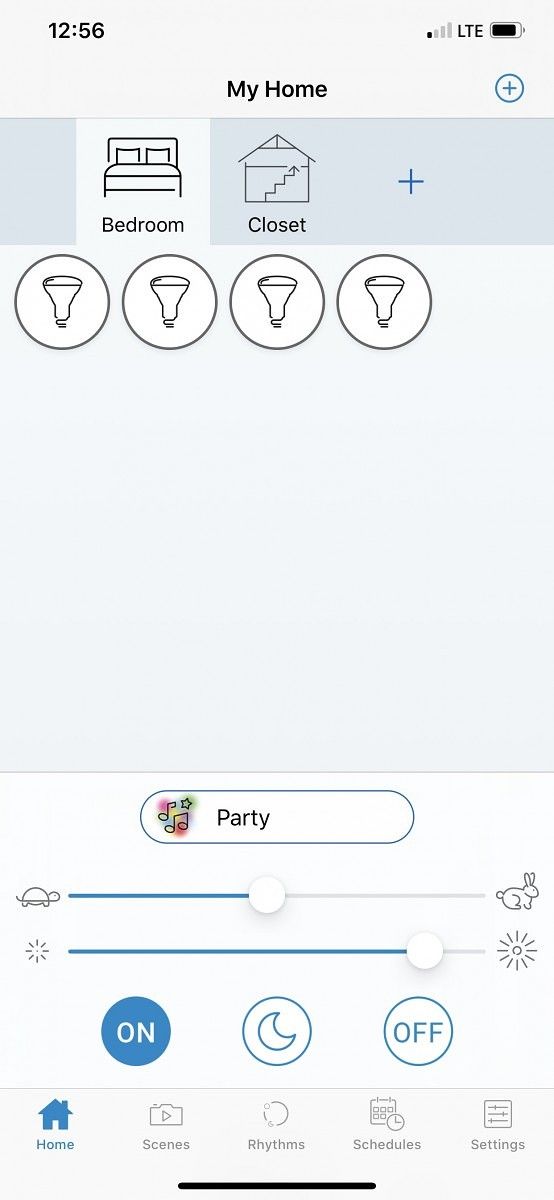
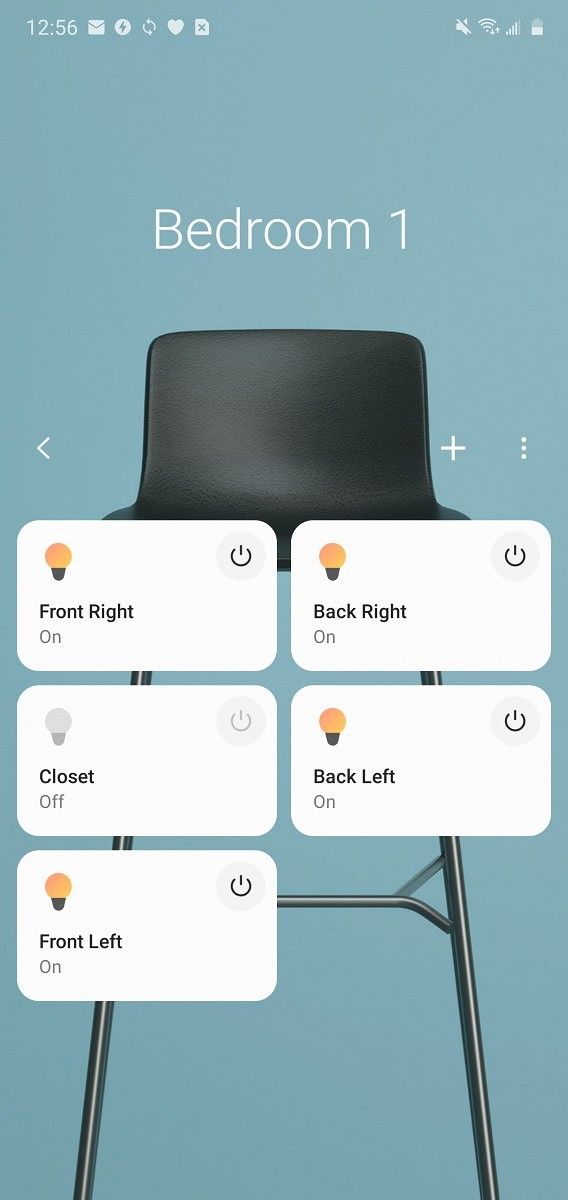
WiZ smart lights are some of the coolest smart lights I’ve ever used. They have great integration with apps like Samsung SmartThings and Google Assistant. Smart bulbs are great for controlling your lights from anywhere, but they do leave something to be desired. There is no physical light switch equivalent that helps control the lights. WiZ looks to solve this with the WiZmote, a wireless controller for your smart home system.

The smart lights from WiZ are really my first real adventure into the world of the smart home ecosystem. Until now, all I’ve had around my house is Google Home devices. I have never had a smart TV or smart lights or something like a Nest thermostat. So getting WiZ, I was really excited because this was my first real adventure into the smart home jungle.

It was great at first. I absolutely loved playing with the lights and changing colors of the lights from down the street and watching the lights change through the window. That fun sort of wears off over time as you start using them in day-to-day life. A lot of people love that you can control smart lights from your phone, but to me, they actually become pretty annoying for that reason.

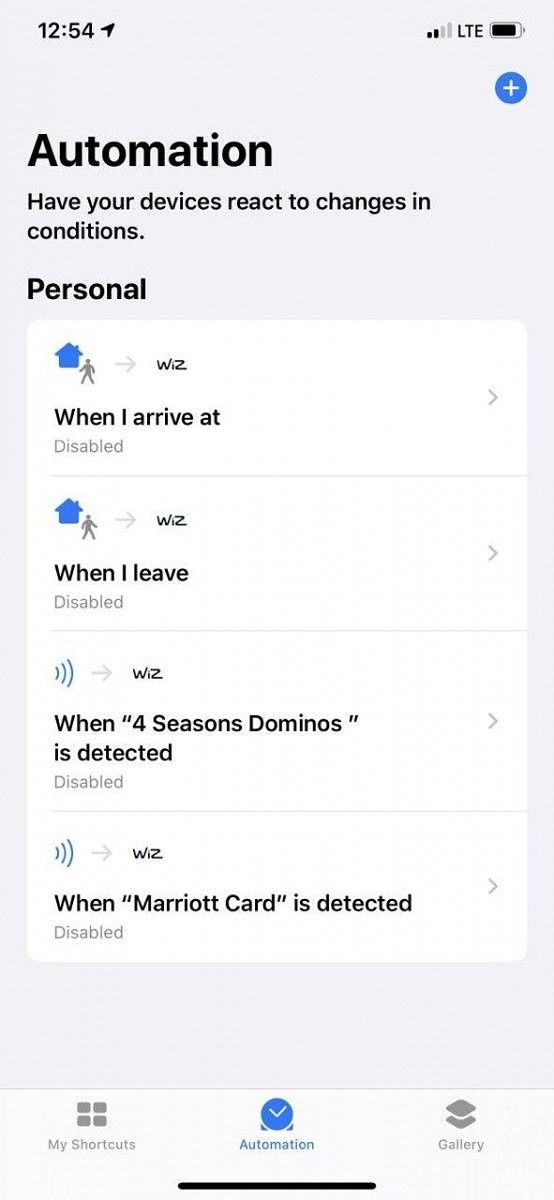
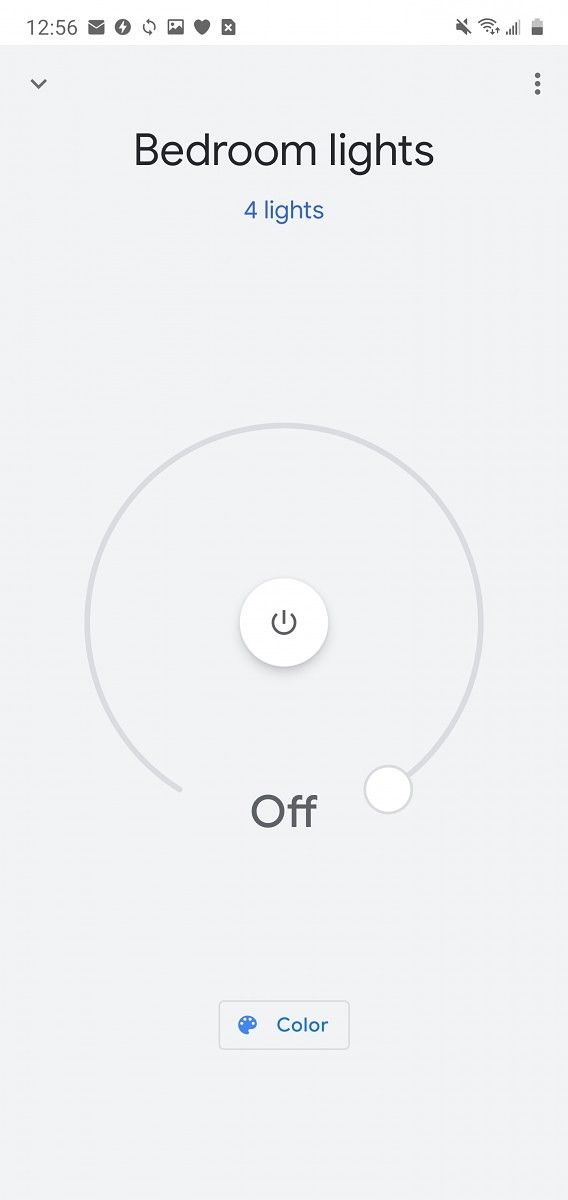
With a normal lightbulb, controlling the lights is simple. You flip the switch up to turn them on and down to turn them off. They immediately turn on and off. We all know this. With smart lights, the same thing happens, you can still flip the switch to turn them on and off. You can also use the smartphone app, Google Assistant, Bixby, SmartThings, NFC tags through Siri automation, and more to control the lights.

However, all these ways to control the lights adds another layer to them which honestly makes them feel inconvenient at times. This isn’t just talking about WiZ lights, which are absolutely amazing lights, but just smart lights in general. There are just too many ways to control the lights to the point at which I found myself just going back to flipping the switch. That was until I remembered WiZ sent me the WiZmote with the smart lights.

The cool thing about the WiZ smart lights is the color options. These colors are fun to just swap and have at random colors. I love just yelling at my Google Home “Hey Google, set the lights to lime green” and moments later I’m bathing in lime green light. You can also use the WiZ app and control the specific color or set it to one of the more fun presets. Some of my favorites are Party, Deep dive, and Ocean. They might not be in any way useful, but fun things really aren’t meant to be useful. They do have an actual useful one called “Plant growth,” which aids in the growth of indoor plants.

The WiZmote is what made the lights actually usable and smart for me. Instead of having to tell Google Assistant to turn on/off the lights or change the color, I just press a button on a wireless remote. It’s arguably easier than flipping a light switch. It makes these lights actually viable as smart lights.

WiZmote in its glory

The remote can do a couple of different things. It can turn on and off the lights, of course, swap between 4 different color profiles, change the light brightness, and enable night light. It’s just a single button for each different option. It’s simple and a perfect replacement for a light switch.

Party Mode on 4 lights

The night light, on, off, and brightness buttons are all set to those specific functions and cannot be changed, as expected. What can be changed are the 4 color profile buttons, and change them I did. I set mine to warm white (which is the closest to an incandescent bulb I could find), daylight, cozy, and party. The first three are more generic modes and are comfortable for daily use. I would use the party mode on weekends to get the experience of the parties I wasn’t invited to.

Using the controller to control the lights made it 100x more useful to have smart lights in the first place. Sometimes using Google Assistant or having to open the app just isn’t as fast as pressing a button. It really does make having smart lights an actually viable solution for your home. If you were going to get smart lights, I would highly recommend the WiZ lights with the WiZmote. The WiZmote really does make the smart home system feel complete.

Purchase WiZmote with Starter Lights || WiZ Smart Lights on Amazon

The post WiZmote Remote Control Review: The only reason Smart Lights are useful appeared first on xda-developers.


from xda-developers https://ift.tt/2SCZo4C
via IFTTT