LightBlog

samedi 8 février 2020

Chrome OS could get macOS’ “hot corners” feature

The desktop functionality of Chrome OS has incrementally improved since its introduction as a web-focused operating system back in 2010. However, it’s undeniable that Windows and macOS still have more desktop-focused features as their philosophy has been different from the beginning. After Google revealed it was getting out of the tablet hardware business, the focus has turned back on competing with Windows and macOS on the desktop keyboard-and-mouse front. To that end, Google has been adding new features and conveniences to make Chrome OS a head-to-head competitor with the established giants. Now, Google may be about to add its own version of the “hot corners” feature.

This feature exists in macOS, lettings Mac users trigger different actions by moving their mouse cursor to a corner of the desktop screen. It also exists in the GNOME desktop environment (which is the default desktop environment for Ubuntu, and many other Linux distributions). Windows, on the other hand, doesn’t have such a feature. On the Mac, hot corners turns each of the four corners of a user’s display into actions. When a user moves their cursor to the top right corner, for example, the action that is assigned to the top right corner will be launched. They can access the Notification Center by moving their cursor to the top left corner, and access screensavers at the bottom right corner, for instance.

A new commit has been submitted to the Chromium Gerrit, which shows that Google may be preparing to add its own version of Hot Corners by adding a Chrome flag for the same. Its description states: “If enabled, the user can configure actions for corners of the display.” As of now, the commit is under review, and it hasn’t been merged yet. Right now, the commit doesn’t state any details about Google’s version of Hot Corners. However, the description makes it clear that it will function similarly to macOS’ and GNOME’s implementations of the feature. What kind of actions will be triggered is something that we don’t know yet.

This isn’t the first time Google has lifted features from other operating systems to make its own better. Chrome OS users now have the feature of a second virtual desktop, which is known as virtual desk. Apple’s Look Up feature was brought to Chrome OS in the form of the Google Assistant-powered Quick Answers.

If the commit is merged, Chrome OS users can expect to see the feature arrive as a flag in future Chrome OS versions, such as Chrome OS 82 or version 83.


Via: 9to5Google

The post Chrome OS could get macOS’ “hot corners” feature appeared first on xda-developers.


from xda-developers https://ift.tt/2vcRSpc
via IFTTT

Net Speed Indicator is a free app to show your download/upload speeds in the status bar

Stock Android is generally acclaimed by users because of its clean user interface, minimalism, speed and smoothness, and simplicity. Custom user interfaces add many features on top of stock Android, but in the process of doing so, they add clutter and reduce simplicity. Equally, though, it’s undeniable that stock Android is generally thought of as a bare-bones variant of the operating system. It lacks many of the features that users of custom user interfaces have come to take for granted, such as dual installation of a single app, one-handed mode, scheduled power on/off, and more. One such feature is network speed indicator. It’s a common feature on custom user interfaces such as OxygenOS, MIUI, EMUI, One UI, ColorOS, FunTouch OS, and others. It’s been adopted by custom ROMs such as LineageOS since a long time. However, it’s still missing in stock Android 10, which means stock users are missing out. While there are many network status indicator apps on the Play Store, some are more feature-rich than others. Enter Net Speed Indicator, a new free app that brings capable functionality.

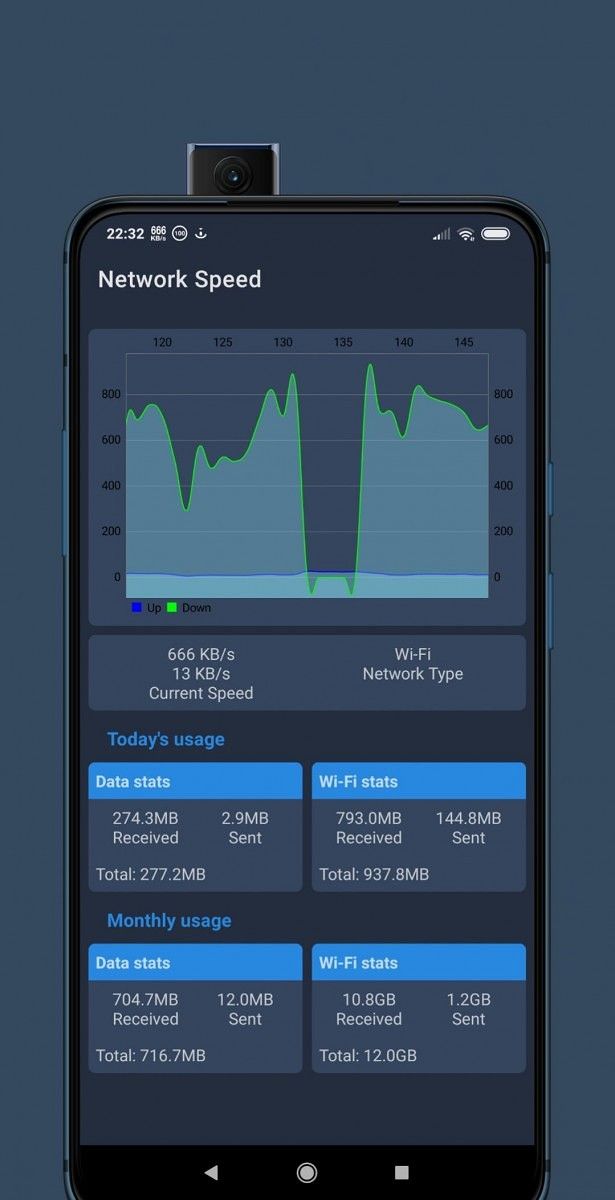
Net Speed Indicator, developed by XDA Recognized Developer Paget96, is said to be “a small network tool”. It allows users to check their download/upload speeds from the status bar, the notifications menu, or in the app itself. This is something that every network speed indicator app can do. However, Network Speed Indicator brings with it more advanced capabilities as well. Users can check their Wi-Fi and mobile data bytes transmitted on a daily and monthly total basis. The transmission includes both sent and received bytes. This feature is included in some custom user interfaces such as MIUI, and it is useful for those users who are on a limited data cap.

The app was released two days ago, and the developer mentions it’s in a early state of development. He is planning to add plenty more features, and he mentions that his to-do list is long. Users are invited to send their suggestions and ideas as well as report bugs for the app in the forum thread.

Net Speed Indicator can be downloaded from the Play Store below.

Net Speed Indicator (Free, Google Play) →


XDA Forum Thread for Net Speed Indicator

The post Net Speed Indicator is a free app to show your download/upload speeds in the status bar appeared first on xda-developers.


from xda-developers https://ift.tt/2OCrFqK
via IFTTT

Net Speed Indicator is a free app to show your download/upload speeds in the status bar

Stock Android is generally acclaimed by users because of its clean user interface, minimalism, speed and smoothness, and simplicity. Custom user interfaces add many features on top of stock Android, but in the process of doing so, they add clutter and reduce simplicity. Equally, though, it’s undeniable that stock Android is generally thought of as a bare-bones variant of the operating system. It lacks many of the features that users of custom user interfaces have come to take for granted, such as dual installation of a single app, one-handed mode, scheduled power on/off, and more. One such feature is network speed indicator. It’s a common feature on custom user interfaces such as OxygenOS, MIUI, EMUI, One UI, ColorOS, FunTouch OS, and others. It’s been adopted by custom ROMs such as LineageOS since a long time. However, it’s still missing in stock Android 10, which means stock users are missing out. While there are many network status indicator apps on the Play Store, some are more feature-rich than others. Enter Net Speed Indicator, a new free app that brings capable functionality.

Net Speed Indicator, developed by XDA Recognized Developer Paget96, is said to be “a small network tool”. It allows users to check their download/upload speeds from the status bar, the notifications menu, or in the app itself. This is something that every network speed indicator app can do. However, Network Speed Indicator brings with it more advanced capabilities as well. Users can check their Wi-Fi and mobile data bytes transmitted on a daily and monthly total basis. The transmission includes both sent and received bytes. This feature is included in some custom user interfaces such as MIUI, and it is useful for those users who are on a limited data cap.

The app was released two days ago, and the developer mentions it’s in a early state of development. He is planning to add plenty more features, and he mentions that his to-do list is long. Users are invited to send their suggestions and ideas as well as report bugs for the app in the forum thread.

Net Speed Indicator can be downloaded from the Play Store below.

Net Speed Indicator (Free, Google Play) →


XDA Forum Thread for Net Speed Indicator

The post Net Speed Indicator is a free app to show your download/upload speeds in the status bar appeared first on xda-developers.


from xda-developers https://ift.tt/2OCrFqK
via IFTTT

vendredi 7 février 2020

Nubia will launch the Red Magic 5G with a 144Hz display and 80W charging at MWC 2020

Nubia’s Red Magic series of gaming smartphones offers high-end hardware at a low price, though excluding the value, I would argue the hardware hasn’t stood out that much. That could change this year with the company’s first flagship gaming phone of 2020: the Red Magic 5G. Nubia has confirmed the phone will launch at MWC 2020, and they also recently confirmed the phone will have several unique features including a 144Hz display and 80W fast charging.

Nubia Red Magic 5G poster Nubia Red Magic 5G poster

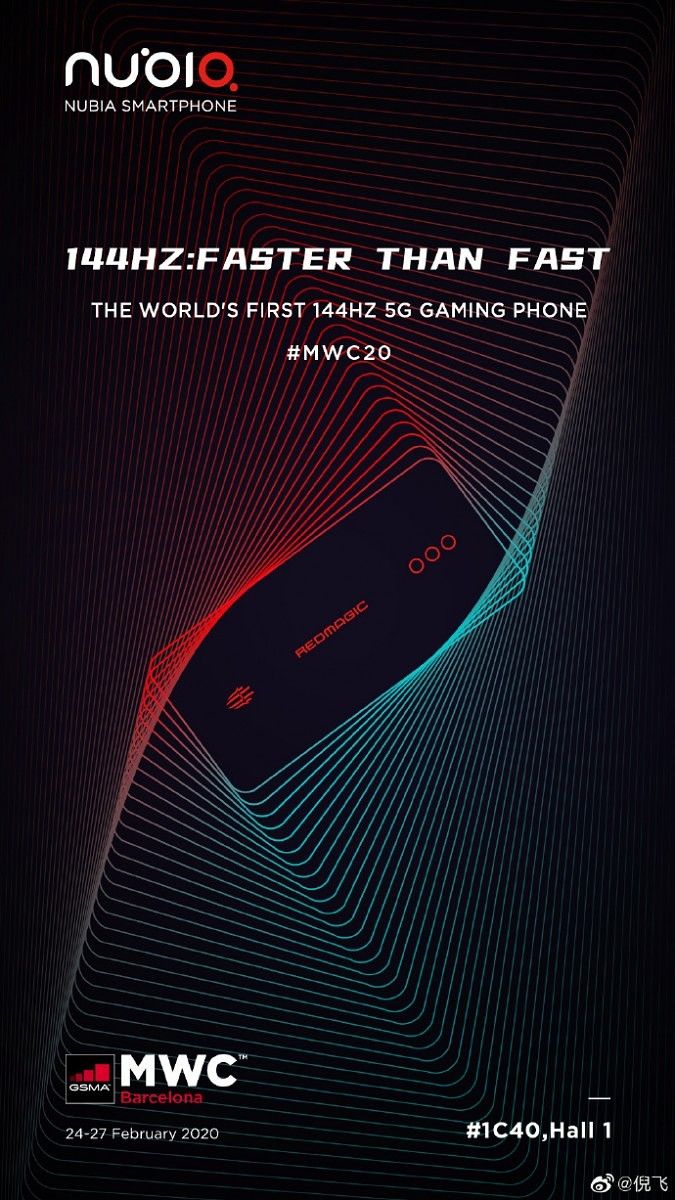
Nubia’s President and co-founder, Mr. Ni Fei, shared the above posters on his personal Weibo account today. The posters claim that Nubia’s upcoming phone will be the “world’s first 144Hz 5G gaming phone.” We don’t know of any other upcoming phone with a 144Hz refresh rate, so it would seem that this claim is true. Support for 144Hz display refresh rates at QHD+ resolution is a feature of the Qualcomm Snapdragon 865 SoC, which Nubia previously confirmed will power the Red Magic 5G. The fact that the phone will support 5G connectivity is also unsurprising, seeing as the only modem that can be paired with the Snapdragon 865 is the Snapdragon X55. It’s likely the phone will only support sub-6GHz 5G networks, though.

Mr. Ni Fei also recently confirmed his company’s phone will come with Samsung’s LPDDR5 RAM, which is supported by the Snapdragon 865’s memory controller. Next, Mr. Ni Fei recently stated the new Red Magic phone will support 80W wired fast charging. The USB-IF confirmed to Android Police that the specific charging rate shown by Nubia (9.6A/8.4V) is incompatible with the official USB Power Delivery specification, so it’s likely that Nubia has developed a custom charging solution. Because the increased heat generated by this incredibly-fast charging technology can reduce the battery’s capacity over time, Mr. Ni Fei says that the company devised a solution using the built-in fan of the Red Magic 5G in order to cool the battery while it’s charging. This not only maintains the battery’s longevity but also ensures the battery can be fast-charged for longer, reducing the charging time.

We will (hopefully) be attending MWC 2020 to check out Nubia’s new Red Magic phone, though there’s still a chance that plans could change due to the ongoing 2019-nCoV situation.

The post Nubia will launch the Red Magic 5G with a 144Hz display and 80W charging at MWC 2020 appeared first on xda-developers.


from xda-developers https://ift.tt/38b0bAm
via IFTTT

Nubia will launch the Red Magic 5G with a 144Hz display and 80W charging at MWC 2020

Nubia’s Red Magic series of gaming smartphones offers high-end hardware at a low price, though excluding the value, I would argue the hardware hasn’t stood out that much. That could change this year with the company’s first flagship gaming phone of 2020: the Red Magic 5G. Nubia has confirmed the phone will launch at MWC 2020, and they also recently confirmed the phone will have several unique features including a 144Hz display and 80W fast charging.

Nubia Red Magic 5G poster Nubia Red Magic 5G poster

Nubia’s President and co-founder, Mr. Ni Fei, shared the above posters on his personal Weibo account today. The posters claim that Nubia’s upcoming phone will be the “world’s first 144Hz 5G gaming phone.” We don’t know of any other upcoming phone with a 144Hz refresh rate, so it would seem that this claim is true. Support for 144Hz display refresh rates at QHD+ resolution is a feature of the Qualcomm Snapdragon 865 SoC, which Nubia previously confirmed will power the Red Magic 5G. The fact that the phone will support 5G connectivity is also unsurprising, seeing as the only modem that can be paired with the Snapdragon 865 is the Snapdragon X55. It’s likely the phone will only support sub-6GHz 5G networks, though.

Mr. Ni Fei also recently confirmed his company’s phone will come with Samsung’s LPDDR5 RAM, which is supported by the Snapdragon 865’s memory controller. Next, Mr. Ni Fei recently stated the new Red Magic phone will support 80W wired fast charging. The USB-IF confirmed to Android Police that the specific charging rate shown by Nubia (9.6A/8.4V) is incompatible with the official USB Power Delivery specification, so it’s likely that Nubia has developed a custom charging solution. Because the increased heat generated by this incredibly-fast charging technology can reduce the battery’s capacity over time, Mr. Ni Fei says that the company devised a solution using the built-in fan of the Red Magic 5G in order to cool the battery while it’s charging. This not only maintains the battery’s longevity but also ensures the battery can be fast-charged for longer, reducing the charging time.

We will (hopefully) be attending MWC 2020 to check out Nubia’s new Red Magic phone, though there’s still a chance that plans could change due to the ongoing 2019-nCoV situation.

The post Nubia will launch the Red Magic 5G with a 144Hz display and 80W charging at MWC 2020 appeared first on xda-developers.


from xda-developers https://ift.tt/38b0bAm
via IFTTT

Xiaomi will launch the Mi 10 on February 13th at an online-only event

Due to concerns surrounding the spread of the 2019 novel Coronavirus (2019-nCoV), several companies have pulled out of or are scaling back their attendance of MWC 2020. So far, that list includes ZTE, LG, Ericsson, and NVIDIA. Another company we’re closely watching is Xiaomi, the value Chinese brand that is expected to unveil the global pricing and availability of its upcoming Mi 10 smartphone series. While the company hasn’t canceled or postponed its global launch plans just yet, the current situation has forced the company to make adjustments to its domestic launch plans. On Chinese social media website Weibo, Xiaomi confirmed that the company will move forward with the Chinese launch of the Mi 10 series, but that the event will only be held online.

This will be the first time Xiaomi is launching a flagship phone without gathering members of the media to attend a physical press conference. The online-only event will take place on February 13th, two days after Samsung launches the Galaxy S20 series in San Francisco. Xiaomi thus won’t be able to claim they’re the first to launch a product on Qualcomm’s new Snapdragon 865 platform, though neither can Samsung if you count ZTE’s quiet launch of the Axon 10s Pro. In any case, the launch of the Mi 10 series will be interesting to observe because of Xiaomi’s history of undercutting its competitors. Few details have been confirmed about Xiaomi’s new flagships besides the fact that both devices will feature the Snapdragon 865 and LPDDR5 RAM sourced from Micron and Samsung. In addition, we expect both devices to feature 108MP primary rear cameras, and we also believe the higher-end Pro model will support 66W fast wired charging. We’ll be watching the event on February 13th to provide all the details on Xiaomi’s new Mi flagships, but we’ll also (hopefully) be on the show floor at MWC to bring you coverage of Xiaomi’s press event.

The post Xiaomi will launch the Mi 10 on February 13th at an online-only event appeared first on xda-developers.


from xda-developers https://ift.tt/2S98aIU
via IFTTT

Xiaomi will launch the Mi 10 on February 13th at an online-only event

Due to concerns surrounding the spread of the 2019 novel Coronavirus (2019-nCoV), several companies have pulled out of or are scaling back their attendance of MWC 2020. So far, that list includes ZTE, LG, Ericsson, and NVIDIA. Another company we’re closely watching is Xiaomi, the value Chinese brand that is expected to unveil the global pricing and availability of its upcoming Mi 10 smartphone series. While the company hasn’t canceled or postponed its global launch plans just yet, the current situation has forced the company to make adjustments to its domestic launch plans. On Chinese social media website Weibo, Xiaomi confirmed that the company will move forward with the Chinese launch of the Mi 10 series, but that the event will only be held online.

This will be the first time Xiaomi is launching a flagship phone without gathering members of the media to attend a physical press conference. The online-only event will take place on February 13th, two days after Samsung launches the Galaxy S20 series in San Francisco. Xiaomi thus won’t be able to claim they’re the first to launch a product on Qualcomm’s new Snapdragon 865 platform, though neither can Samsung if you count ZTE’s quiet launch of the Axon 10s Pro. In any case, the launch of the Mi 10 series will be interesting to observe because of Xiaomi’s history of undercutting its competitors. Few details have been confirmed about Xiaomi’s new flagships besides the fact that both devices will feature the Snapdragon 865 and LPDDR5 RAM sourced from Micron and Samsung. In addition, we expect both devices to feature 108MP primary rear cameras, and we also believe the higher-end Pro model will support 66W fast wired charging. We’ll be watching the event on February 13th to provide all the details on Xiaomi’s new Mi flagships, but we’ll also (hopefully) be on the show floor at MWC to bring you coverage of Xiaomi’s press event.

The post Xiaomi will launch the Mi 10 on February 13th at an online-only event appeared first on xda-developers.


from xda-developers https://ift.tt/2S98aIU
via IFTTT