LightBlog

mercredi 6 novembre 2019

Tasker update adds Logcat detection, allowing for a lot of new automation possibilities

For power users who want to customize every part of their phone, there are a few must-have apps. Apps like MacroDroid, Automate, and Llama all provide automation features, but in my view, none of them hold a candle to Tasker. While it might not have the best UI, Tasker is my personal favorite automation app because of how active the developer is, how many plugins are available for it, and how active the community is. Even though Android APIs are becoming more and more restricted with each new release, the Tasker developer and community have found ways around the restrictions. The latest v5.9.beta.8 release, for example, has added a new feature that opens up a whole new realm of possible automation use cases: logcat detection.

Logcat Detection

Last month, the developer of Tasker released a new beta that enabled clipboard monitoring on Android 10. Since Android 10 prevents background apps from reading the clipboard, you might be wondering how this was possible. The answer is through reading the logcat. Logcat is a shell tool that pulls a log of all system events and other events contributed by apps. Whenever a new clipboard entry is written, the corresponding system log will contain the clipboard text. By reading this log, Tasker is able to detect what the current clipboard entry is.

Normally, apps aren’t allowed to read system logs, and they also can’t ask the user to grant them permission to do so. That’s because sensitive data may exist in the log, and allowing any app the ability to read logs opens up a whole can of worms related to privacy and security. However, it’s possible for a user to manually grant an app permission to read logs. If an app like Tasker declares the READ_LOGS permission, then the user can grant this permission manually via ADB. When you install the latest Tasker beta, it’ll ask you to do just that.

So what can you do with the new Logcat Entry event in Tasker? The developer himself gives you a few examples:

These are all just different use cases that the developer thought up, but this is far from a comprehensive list of things you can do with logcat detection.

Here’s a video demonstrating how to use Tasker to capture and filter the logcat for a desired entry:

The two issues with logcat detection are that setting it up is far from user-friendly and it’s subject to change at any time if developers tweak the logs their apps send. Getting this set up will require a bit of trial and error, but once you’ve set something up, you probably won’t have to make changes to your configuration that often.

New Shortcut Action

The current developer of Tasker is actually not the original developer of the app. The current dev used to primarily work on a suite of Tasker plugins called AutoApps, so when he took over development work on Tasker, he started migrating the functionality of some of his plugins into the main Tasker app. The latest Tasker beta release essentially deprecates the AutoShortcut plugin by adding a new Shortcut action.


The new logcat entry detection and shortcut action are the two biggest changes in the latest beta release, but there are other minor changes such as an improved Get Location action, variable previewing, and bug fixes for two long-standing bugs. You can read the full changelog here. You can sign up for the Tasker beta on Google Play or download the APK right now.

The post Tasker update adds Logcat detection, allowing for a lot of new automation possibilities appeared first on xda-developers.


from xda-developers https://ift.tt/2pLHVws
via IFTTT

Tasker update adds Logcat detection, allowing for a lot of new automation possibilities

For power users who want to customize every part of their phone, there are a few must-have apps. Apps like MacroDroid, Automate, and Llama all provide automation features, but in my view, none of them hold a candle to Tasker. While it might not have the best UI, Tasker is my personal favorite automation app because of how active the developer is, how many plugins are available for it, and how active the community is. Even though Android APIs are becoming more and more restricted with each new release, the Tasker developer and community have found ways around the restrictions. The latest v5.9.beta.8 release, for example, has added a new feature that opens up a whole new realm of possible automation use cases: logcat detection.

Logcat Detection

Last month, the developer of Tasker released a new beta that enabled clipboard monitoring on Android 10. Since Android 10 prevents background apps from reading the clipboard, you might be wondering how this was possible. The answer is through reading the logcat. Logcat is a shell tool that pulls a log of all system events and other events contributed by apps. Whenever a new clipboard entry is written, the corresponding system log will contain the clipboard text. By reading this log, Tasker is able to detect what the current clipboard entry is.

Normally, apps aren’t allowed to read system logs, and they also can’t ask the user to grant them permission to do so. That’s because sensitive data may exist in the log, and allowing any app the ability to read logs opens up a whole can of worms related to privacy and security. However, it’s possible for a user to manually grant an app permission to read logs. If an app like Tasker declares the READ_LOGS permission, then the user can grant this permission manually via ADB. When you install the latest Tasker beta, it’ll ask you to do just that.

So what can you do with the new Logcat Entry event in Tasker? The developer himself gives you a few examples:

These are all just different use cases that the developer thought up, but this is far from a comprehensive list of things you can do with logcat detection.

Here’s a video demonstrating how to use Tasker to capture and filter the logcat for a desired entry:

The two issues with logcat detection are that setting it up is far from user-friendly and it’s subject to change at any time if developers tweak the logs their apps send. Getting this set up will require a bit of trial and error, but once you’ve set something up, you probably won’t have to make changes to your configuration that often.

New Shortcut Action

The current developer of Tasker is actually not the original developer of the app. The current dev used to primarily work on a suite of Tasker plugins called AutoApps, so when he took over development work on Tasker, he started migrating the functionality of some of his plugins into the main Tasker app. The latest Tasker beta release essentially deprecates the AutoShortcut plugin by adding a new Shortcut action.


The new logcat entry detection and shortcut action are the two biggest changes in the latest beta release, but there are other minor changes such as an improved Get Location action, variable previewing, and bug fixes for two long-standing bugs. You can read the full changelog here. You can sign up for the Tasker beta on Google Play or download the APK right now.

The post Tasker update adds Logcat detection, allowing for a lot of new automation possibilities appeared first on xda-developers.


from xda-developers https://ift.tt/2pLHVws
via IFTTT

Xiaomi Mi Note 10, Mi Note 10 Pro and Redmi Note 8T arrive in Europe

Xiaomi announced a new camera-centric lineup of smartphones earlier this year in China. As part of the lineup, the company first released the Xiaomi Mi CC9 and the Mi CC9e. Even though the Mi CC series was restricted to China, the phones were rebranded and released in international markets. The Mi CC9 was released in Europe under the Mi 9 Lite moniker, while the Mi CC9e made its way to Europe and India as the Mi A3. Adding on to the lineup, Xiaomi recently released the Mi CC9 Pro and Mi CC9 Pro Premium Edition in China. Now, these devices are headed to Europe as the Mi Note 10 and Mi Note 10 Pro, along with the budget-friendly Redmi Note 8T.

Specifications: Xiaomi Mi Note 10 Series

Specification Mi Note 10 Series
Dimensions and Weight
  • 157.8 mm × 74.2 mm × 9.67 mm
  • 208g
Display
  • 6.47″ FHD+ curved OLED
  • 19:9
  • Waterdrop notch
  • Corning Gorilla Glass 5
SoC Qualcomm Snapdragon 730G:
  • 8nm FinFET
  • 2x performance Kryo 470 cores +
  • 6x efficiency Kryo 470 cores (Up to 2.2GHz)
  • Adreno 618
RAM and Storage
  • 6GB + 128GB
  • 8GB + 256GB — (Mi Note 10 Pro)
Battery 5,260 mAh
USB & Charging
  • USB Type-C
  • Fast Charging up to 30W
Rear Camera
  • Primary:
  • Secondary:
    • 20MP Sony IMX350 super wide-angle
    • 117° field of view
    • f/2.2
  • Tertiary:
    • 5MP OV08A10 telephoto
    • f/2.0
    • 5x optical zoom, 10x hybrid zoom, 50x digital zoom
    • OIS
  • Quaternary:
    • 12MP Samsung S5K2L7 dedicated portrait camera
    • f/2.0
    • 1.4μm
  • Quinary:
    • Dedicated macro sensor
    • 1.5cm minimum focus distance
    • f/2.4
  • Quad-LED flash
Front Camera 32MP
Additional Features
  • In-Display Fingerprint Sensor
  • 3.5mm headphone jack
  • IR Blaster
  • Hi-Res Audio
  • NFC
Android Version MIUI 11 based on Android 9 Pie

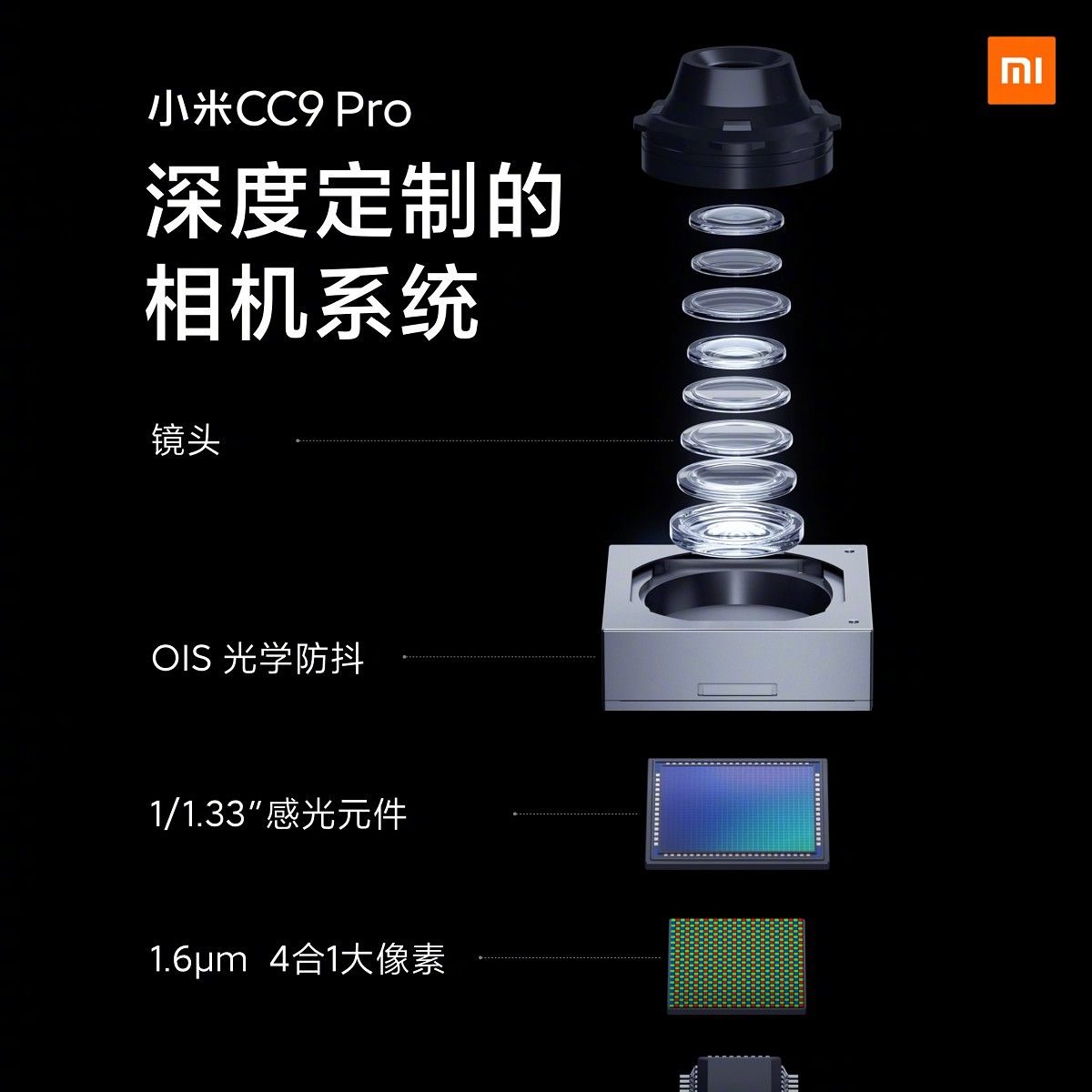
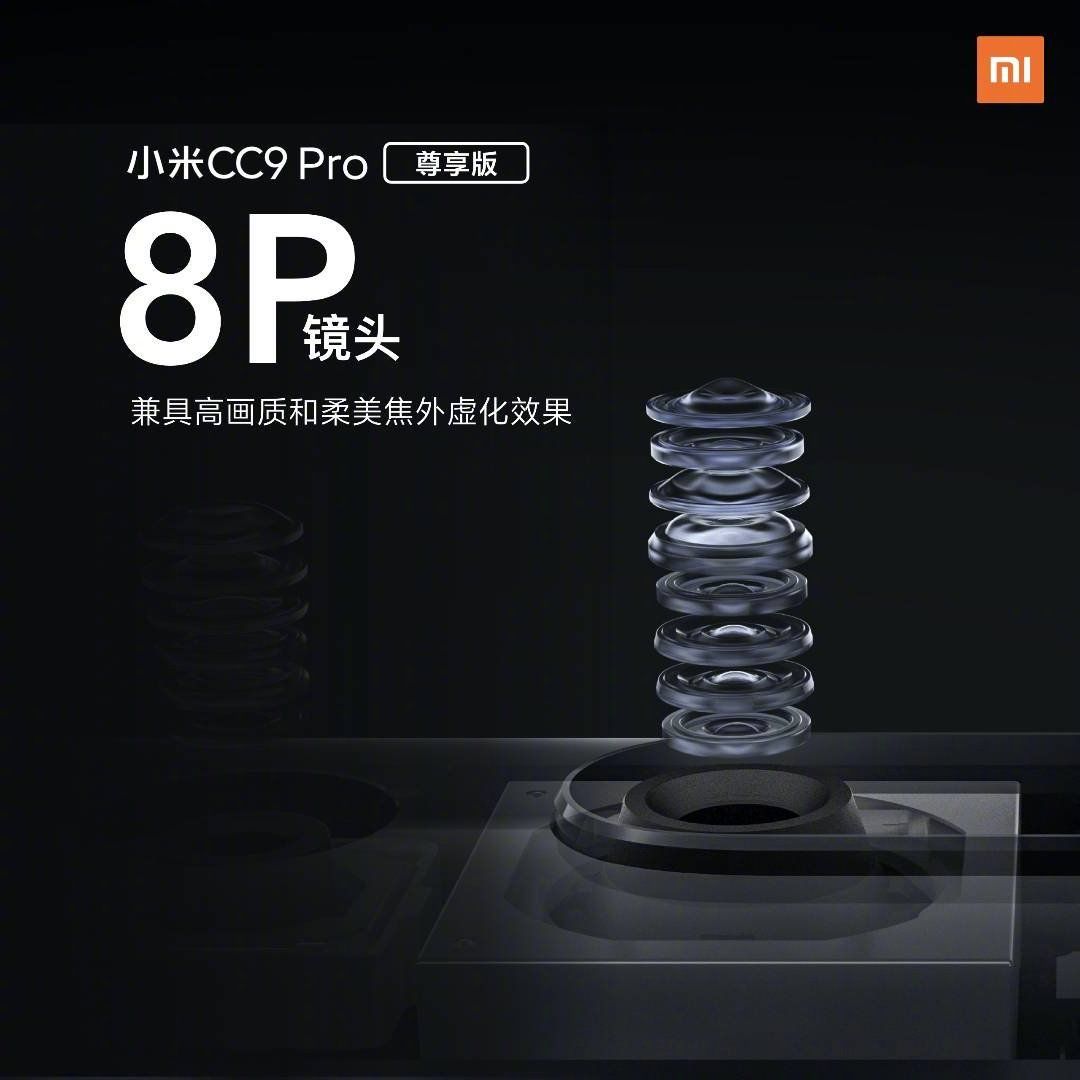
The all-new Xiaomi Mi Note 10 and Mi Note 10 Pro feature a penta-camera setup on the back, with the primary camera making use of the 108MP Samsung ISOCELL Bright HMX sensor. The main advantage of this new sensor is that it’s physically quite large, 1/1.33″ to be exact, which will allow the camera to capture more light in dimly lit conditions. The sensor makes use of pixel binning by default and combines four pixels into one to output a 27MP shot. However, you do get the option to capture full-resolution 108MP shots. The main difference between the Mi note 10 and the Mi Note 10 Pro is that the non-pro variant makes use of a 7 piece (7P) lens setup, while the Pro variant uses an 8P lens setup.

Along with the 108MP primary sensor, the Mi Note 10 duo features a 5MP telephoto camera which boasts of 5x optical zoom along with OIS. The camera is also capable of 10x hybrid zoom and 50x digital zoom, which will allow you to capture subjects that are quite far away. These two cameras are accompanied by a 20MP wide-angle camera, a 12 MP camera for portrait shots, and a dedicated macro camera. The Mi Note 10 will also support video capture in 4K resolution at 30fps on the ultra-wide lens and 960fps slow-mo using the macro lens. The penta-camera array is complemented by a quad-LED flash. Up on the front, the devices feature a 32MP selfie shooter within the waterdrop notch.

Mi Note 10 Series


The Mi Note 10 duo features a 6.43-inch OLED panel that’s curved on the edges, however, it’s quite subtle when compared to the waterfall display on the Huawei Mate 30 Pro. The devices pack  Qualcomm’s Snapdragon 730g chipset, along with up to 8GB of RAM and 256GB of internal storage. It’s worth noting that the Mi Note 10 Pro will only be available in the 8GB/256GB configuration.

Mi Note 10 Series

Powering the devices is a 5,260mAh battery that includes fast-charging support up to 30W. While that’s quite impressive in itself, Xiaomi claims that its fast charging technology works better than 40W fast charging as it doesn’t slow down the charging speed at higher percentages. With the 30W charging brick, you’ll be able to charge the device up to 58 percent in just half an hour, while a full charge to 100 percent takes 65 minutes. The phones also retain other essential features like NFC, IR Blaster, and a 3.5mm headphone jack. The Mi Note 10 will be available in three color options — Aurora Green, Glacier White, and Midnight Black.

Pricing and Availability: Xiaomi Mi Note 10 Series

As expected, the Mi Note 10 will be slightly more expensive in Europe. The Mi Note 10 has been priced at €549 (~$608) for the 6GB/128GB variant, while the Mi Note 10 Pro has been priced at €649 (~$719) for the 8GB/256GB variant. As far as the availability is concerned, the Mi Note 10 series will be up for pre-order in Germany starting November 11th. It will go on sale in Italy and Spain starting November 15th, while the French will have to wait until November 18th to purchase the device. The devices will also make their way to the UK, Netherlands, Belgium, and Luxembourg, however, Xiaomi hasn’t announced the exact release date for these regions.


Specifications: Redmi Note 8T


Specifications Redmi Note 8T
Display
  • 6.3″ FHD+ (2340 x 1080) LCD
  • 19.5:9
  • Waterdrop notch
  • 90% screen-to-body ratio
SoC Qualcomm Snapdragon 665:
  • 4x Kryo 260 @ 2.2GHz
  • 4x Kryo 260 @ 1.8GHz
  • Adreno 610 GPU
RAM & Storage
  • 4GB + 64GB
Battery 4000 mAh
USB & Charging
  • Type-C
  • 18W charging
Connectivity & Extras
  • Wi-Fi AC
  • 2×2 MIMO
  • Bluetooth 5.0
  • AptX HD
  • LDAC
  • A-GPS
  • 3.5mm headphone jack
  • Rear fingerprint scanner
  • IR Blaster
  • NFC
Rear Camera
  • 48MP Samsung ISOCELL, f/1.8, 0.8μm
  • 8MP, wide-angle, 1.12μm
  • 2MP, macro, 1.75μm
  • 2MP, depth sensor, 1.75μm
Front Camera 13MP
Android Version  MIUI 11 based on Android 9 Pie

The Redmi Note 8T making its way to Europe is a slightly upgraded version of the Redmi Note 8 that was launched in India earlier this year. While pretty much all the specifications remain the same, the Redmi Note 8T also includes NFC support, which was missing in the Redmi Note 8. The budget-friendly device is powered by Qualcomm’s mid-range Snapdragon 665 chip, along with 4GB of RAM and 64GB of internal storage. The device features a 6.3-inch FHD+ display with a waterdrop notch and 90% screen-to-body ratio.

Xiaomi Redmi Note 8

The Redmi Note 8 is no slouch in the camera department either, featuring a quad-camera setup on the back. The camera array includes a 48MP Samsung ISOCELL primary sensor with an f/1.8 aperture, an 8MP wide-angle lens, a 2MP macro camera, and a 2MP sensor for depth perception. Up on the front, the device packs in a 13MP selfie shooter housed within the notch. The device is backed by an impressive 4,000mAh battery with support for 18W fast-charging via USB Type-C.

Pricing and Availability: Xiaomi Redmi Note 8T

The Redmi Note 8T has been priced at €199 (~$220) for the 4GB/64GB variant and will be available for purchase in Spain and Italy starting November 8th. The device will make its way to France starting November 13th and while Xiaomi has announced that it will be released in the UK, Netherlands, Belgium, and Luxembourg, the company hasn’t revealed the exact date for the release.

The post Xiaomi Mi Note 10, Mi Note 10 Pro and Redmi Note 8T arrive in Europe appeared first on xda-developers.


from xda-developers https://ift.tt/36CbdhK
via IFTTT

Xiaomi Mi Note 10, Mi Note 10 Pro and Redmi Note 8T arrive in Europe

Xiaomi announced a new camera-centric lineup of smartphones earlier this year in China. As part of the lineup, the company first released the Xiaomi Mi CC9 and the Mi CC9e. Even though the Mi CC series was restricted to China, the phones were rebranded and released in international markets. The Mi CC9 was released in Europe under the Mi 9 Lite moniker, while the Mi CC9e made its way to Europe and India as the Mi A3. Adding on to the lineup, Xiaomi recently released the Mi CC9 Pro and Mi CC9 Pro Premium Edition in China. Now, these devices are headed to Europe as the Mi Note 10 and Mi Note 10 Pro, along with the budget-friendly Redmi Note 8T.

Specifications: Xiaomi Mi Note 10 Series

Specification Mi Note 10 Series
Dimensions and Weight
  • 157.8 mm × 74.2 mm × 9.67 mm
  • 208g
Display
  • 6.47″ FHD+ curved OLED
  • 19:9
  • Waterdrop notch
  • Corning Gorilla Glass 5
SoC Qualcomm Snapdragon 730G:
  • 8nm FinFET
  • 2x performance Kryo 470 cores +
  • 6x efficiency Kryo 470 cores (Up to 2.2GHz)
  • Adreno 618
RAM and Storage
  • 6GB + 128GB
  • 8GB + 256GB — (Mi Note 10 Pro)
Battery 5,260 mAh
USB & Charging
  • USB Type-C
  • Fast Charging up to 30W
Rear Camera
  • Primary:
  • Secondary:
    • 20MP Sony IMX350 super wide-angle
    • 117° field of view
    • f/2.2
  • Tertiary:
    • 5MP OV08A10 telephoto
    • f/2.0
    • 5x optical zoom, 10x hybrid zoom, 50x digital zoom
    • OIS
  • Quaternary:
    • 12MP Samsung S5K2L7 dedicated portrait camera
    • f/2.0
    • 1.4μm
  • Quinary:
    • Dedicated macro sensor
    • 1.5cm minimum focus distance
    • f/2.4
  • Quad-LED flash
Front Camera 32MP
Additional Features
  • In-Display Fingerprint Sensor
  • 3.5mm headphone jack
  • IR Blaster
  • Hi-Res Audio
  • NFC
Android Version MIUI 11 based on Android 9 Pie

The all-new Xiaomi Mi Note 10 and Mi Note 10 Pro feature a penta-camera setup on the back, with the primary camera making use of the 108MP Samsung ISOCELL Bright HMX sensor. The main advantage of this new sensor is that it’s physically quite large, 1/1.33″ to be exact, which will allow the camera to capture more light in dimly lit conditions. The sensor makes use of pixel binning by default and combines four pixels into one to output a 27MP shot. However, you do get the option to capture full-resolution 108MP shots. The main difference between the Mi note 10 and the Mi Note 10 Pro is that the non-pro variant makes use of a 7 piece (7P) lens setup, while the Pro variant uses an 8P lens setup.

Along with the 108MP primary sensor, the Mi Note 10 duo features a 5MP telephoto camera which boasts of 5x optical zoom along with OIS. The camera is also capable of 10x hybrid zoom and 50x digital zoom, which will allow you to capture subjects that are quite far away. These two cameras are accompanied by a 20MP wide-angle camera, a 12 MP camera for portrait shots, and a dedicated macro camera. The Mi Note 10 will also support video capture in 4K resolution at 30fps on the ultra-wide lens and 960fps slow-mo using the macro lens. The penta-camera array is complemented by a quad-LED flash. Up on the front, the devices feature a 32MP selfie shooter within the waterdrop notch.

Mi Note 10 Series


The Mi Note 10 duo features a 6.43-inch OLED panel that’s curved on the edges, however, it’s quite subtle when compared to the waterfall display on the Huawei Mate 30 Pro. The devices pack  Qualcomm’s Snapdragon 730g chipset, along with up to 8GB of RAM and 256GB of internal storage. It’s worth noting that the Mi Note 10 Pro will only be available in the 8GB/256GB configuration.

Mi Note 10 Series

Powering the devices is a 5,260mAh battery that includes fast-charging support up to 30W. While that’s quite impressive in itself, Xiaomi claims that its fast charging technology works better than 40W fast charging as it doesn’t slow down the charging speed at higher percentages. With the 30W charging brick, you’ll be able to charge the device up to 58 percent in just half an hour, while a full charge to 100 percent takes 65 minutes. The phones also retain other essential features like NFC, IR Blaster, and a 3.5mm headphone jack. The Mi Note 10 will be available in three color options — Aurora Green, Glacier White, and Midnight Black.

Pricing and Availability: Xiaomi Mi Note 10 Series

As expected, the Mi Note 10 will be slightly more expensive in Europe. The Mi Note 10 has been priced at €549 (~$608) for the 6GB/128GB variant, while the Mi Note 10 Pro has been priced at €649 (~$719) for the 8GB/256GB variant. As far as the availability is concerned, the Mi Note 10 series will be up for pre-order in Germany starting November 11th. It will go on sale in Italy and Spain starting November 15th, while the French will have to wait until November 18th to purchase the device. The devices will also make their way to the UK, Netherlands, Belgium, and Luxembourg, however, Xiaomi hasn’t announced the exact release date for these regions.


Specifications: Redmi Note 8T


Specifications Redmi Note 8T
Display
  • 6.3″ FHD+ (2340 x 1080) LCD
  • 19.5:9
  • Waterdrop notch
  • 90% screen-to-body ratio
SoC Qualcomm Snapdragon 665:
  • 4x Kryo 260 @ 2.2GHz
  • 4x Kryo 260 @ 1.8GHz
  • Adreno 610 GPU
RAM & Storage
  • 4GB + 64GB
Battery 4000 mAh
USB & Charging
  • Type-C
  • 18W charging
Connectivity & Extras
  • Wi-Fi AC
  • 2×2 MIMO
  • Bluetooth 5.0
  • AptX HD
  • LDAC
  • A-GPS
  • 3.5mm headphone jack
  • Rear fingerprint scanner
  • IR Blaster
  • NFC
Rear Camera
  • 48MP Samsung ISOCELL, f/1.8, 0.8μm
  • 8MP, wide-angle, 1.12μm
  • 2MP, macro, 1.75μm
  • 2MP, depth sensor, 1.75μm
Front Camera 13MP
Android Version  MIUI 11 based on Android 9 Pie

The Redmi Note 8T making its way to Europe is a slightly upgraded version of the Redmi Note 8 that was launched in India earlier this year. While pretty much all the specifications remain the same, the Redmi Note 8T also includes NFC support, which was missing in the Redmi Note 8. The budget-friendly device is powered by Qualcomm’s mid-range Snapdragon 665 chip, along with 4GB of RAM and 64GB of internal storage. The device features a 6.3-inch FHD+ display with a waterdrop notch and 90% screen-to-body ratio.

Xiaomi Redmi Note 8

The Redmi Note 8 is no slouch in the camera department either, featuring a quad-camera setup on the back. The camera array includes a 48MP Samsung ISOCELL primary sensor with an f/1.8 aperture, an 8MP wide-angle lens, a 2MP macro camera, and a 2MP sensor for depth perception. Up on the front, the device packs in a 13MP selfie shooter housed within the notch. The device is backed by an impressive 4,000mAh battery with support for 18W fast-charging via USB Type-C.

Pricing and Availability: Xiaomi Redmi Note 8T

The Redmi Note 8T has been priced at €199 (~$220) for the 4GB/64GB variant and will be available for purchase in Spain and Italy starting November 8th. The device will make its way to France starting November 13th and while Xiaomi has announced that it will be released in the UK, Netherlands, Belgium, and Luxembourg, the company hasn’t revealed the exact date for the release.

The post Xiaomi Mi Note 10, Mi Note 10 Pro and Redmi Note 8T arrive in Europe appeared first on xda-developers.


from xda-developers https://ift.tt/36CbdhK
via IFTTT

MarQ TurboStream AndroidTV box by Flipkart launched for ₹3,499 ($49)

The popularity of streaming services is on the rise in India and many users are canceling their cable TV subscriptions in favor of such services. To cater to the increasing demand, several companies have launched a variety of streaming devices that allow users to convert their traditional TVs into smart TVs, with support for streaming services like Netflix and Amazon Prime Video. Most recently, DishTV India launched a new range of smart connected devices in the country with which users can seamlessly switch between cable TV and streaming services. Domestic e-commerce giant Flipkart is also looking to cash in on the opportunity and has now launched its own AndroidTV box.

The new streaming device has been launched under Flipkart’s home brand MarQ and it’s currently available on the website at a price of INR 3,499 (~$49). The MarQ TurboStream runs Android 9 Pie out of the box and includes a voice-controlled remote with support for the Google Assistant. The new AndroidTV box comes with Chromecast support and it will also let you download a variety of apps from the Play Store. Sadly, the device is only capable of streaming content in Full HD resolution (1920×1080), but on the bright side, it features Dolby Digital Audio support for enhanced audio output. Powering the device is a quad-core SoC, coupled with a Mali 450 GPU, 1GB of DDR3 memory, and 8GB of internal storage. It also includes support for dual-band WiFi for better connectivity.

If you’re interested in purchasing the MarQ TurboStream, you’d be glad to know that it’s available at a no-cost EMI that starts at just INR 292 a month. Furthermore, Flipkart Axis Bank Buzz credit card users can get an additional 5 percent cashback on purchase of the device.

Buy MarQ TurboStream from Flipkart

The post MarQ TurboStream AndroidTV box by Flipkart launched for ₹3,499 ($49) appeared first on xda-developers.


from xda-developers https://ift.tt/2WPv2xr
via IFTTT

MarQ TurboStream AndroidTV box by Flipkart launched for ₹3,499 ($49)

The popularity of streaming services is on the rise in India and many users are canceling their cable TV subscriptions in favor of such services. To cater to the increasing demand, several companies have launched a variety of streaming devices that allow users to convert their traditional TVs into smart TVs, with support for streaming services like Netflix and Amazon Prime Video. Most recently, DishTV India launched a new range of smart connected devices in the country with which users can seamlessly switch between cable TV and streaming services. Domestic e-commerce giant Flipkart is also looking to cash in on the opportunity and has now launched its own AndroidTV box.

The new streaming device has been launched under Flipkart’s home brand MarQ and it’s currently available on the website at a price of INR 3,499 (~$49). The MarQ TurboStream runs Android 9 Pie out of the box and includes a voice-controlled remote with support for the Google Assistant. The new AndroidTV box comes with Chromecast support and it will also let you download a variety of apps from the Play Store. Sadly, the device is only capable of streaming content in Full HD resolution (1920×1080), but on the bright side, it features Dolby Digital Audio support for enhanced audio output. Powering the device is a quad-core SoC, coupled with a Mali 450 GPU, 1GB of DDR3 memory, and 8GB of internal storage. It also includes support for dual-band WiFi for better connectivity.

If you’re interested in purchasing the MarQ TurboStream, you’d be glad to know that it’s available at a no-cost EMI that starts at just INR 292 a month. Furthermore, Flipkart Axis Bank Buzz credit card users can get an additional 5 percent cashback on purchase of the device.

Buy MarQ TurboStream from Flipkart

The post MarQ TurboStream AndroidTV box by Flipkart launched for ₹3,499 ($49) appeared first on xda-developers.


from xda-developers https://ift.tt/2WPv2xr
via IFTTT

mardi 5 novembre 2019

Motorola One Power is getting an Android 10 Beta update

While a couple of manufacturers have already rolled out stable Android 10 to a handful of devices, most others are still in the beta testing phase. A few Xiaomi devices have received closed beta updates for MIUI 11 based on Android 10, Huawei has started beta signups for the P30 and P30 Pro, and Samsung has announced the One UI 2.0 beta for the Galaxy S10 and Note 10 series. Most recently, LG launched an Android 10 preview for its flagship LG G8 ThinQ and now, Motorola is following suit.

Motorola One Power Android 10 beta Motorola One Power Android 10 beta

The company has started rolling out an Android 10 closed beta update for the Motorola One Power. As of now, the update is rolling out to Moto One Power owners who are registered on the Motorola Feedback Network. The update includes all the features introduced in Android 10, however, it’s still on the Android security patch for October 2019. It’s also worth noting that Google Pay doesn’t work in the current release (build version QPT30.52-2), but Motorola has ensured that it should be functional in a few days.

In case you wish to try out the update on your device, you can register on the Motorola Feedback Network by following this link. As of now, there’s no information from the company regarding a stable rollout.


Thanks to Telegram user @Hasaber8 for the tip and screenshots.

The post Motorola One Power is getting an Android 10 Beta update appeared first on xda-developers.


from xda-developers https://ift.tt/32nVdMW
via IFTTT